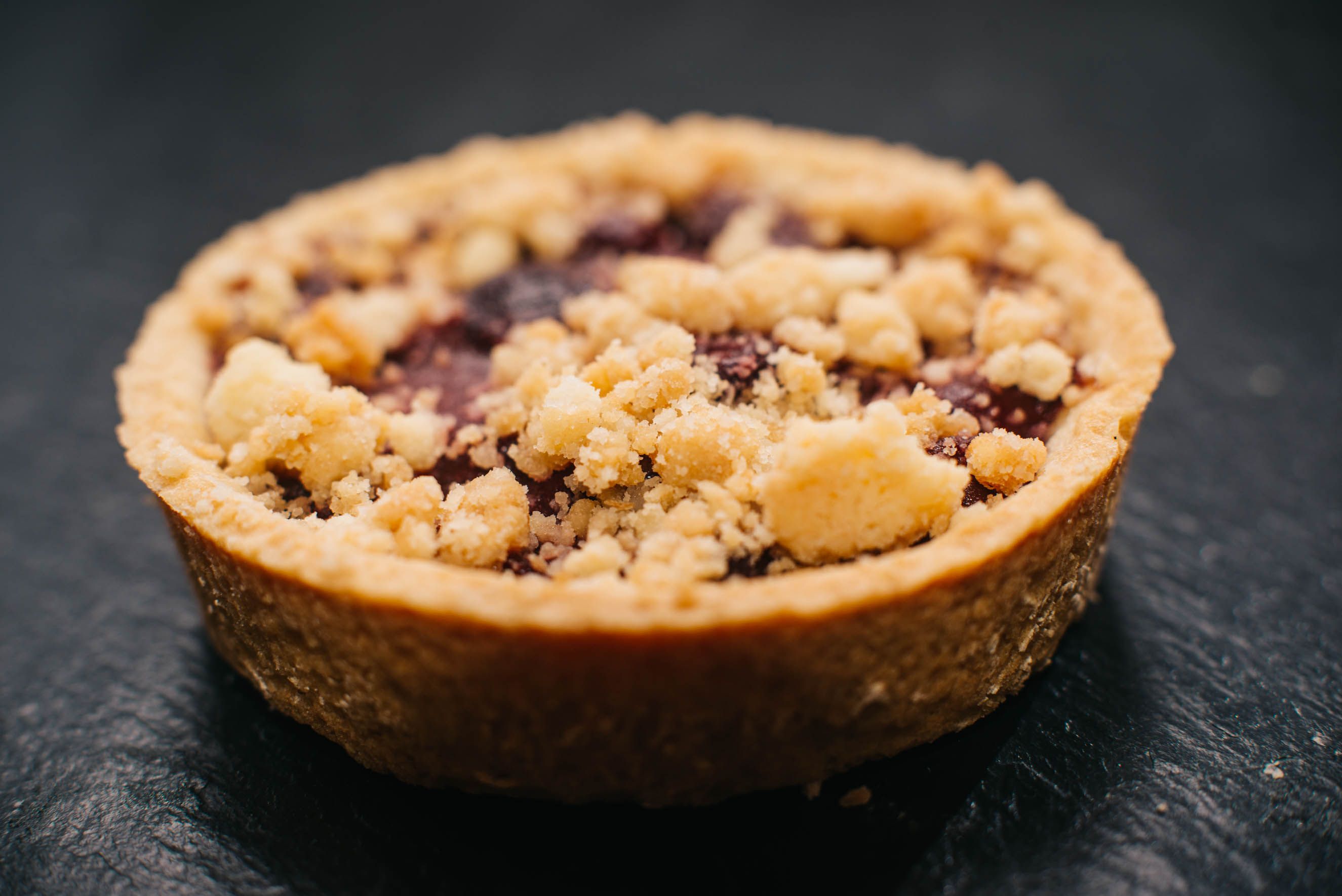
Photo: Novkov Visuals / Pexels
British
Berry Crumble
The diets react (see scores below)
Common Ingredients
- mixed berries
- butter
- oats
- flour
- sugar
- salt
Specific recipes may vary.
Incompatible with 7 of 11 diets
Diet Ratings
Berry Crumble is fundamentally incompatible with a ketogenic diet. It contains three major keto-incompatible ingredients: oats (a grain, very high in carbs), flour (refined grain, high in carbs), and sugar (added sugar, zero tolerance on keto). Even the mixed berries, while lower-carb than many fruits, contribute additional net carbs on top of the already disqualifying ingredients. A standard serving would deliver well over 50g of net carbs, completely breaking ketosis. The only keto-friendly ingredient is butter. There is no portion size small enough to make this dish compatible with ketogenic macros.
Berry Crumble as listed contains butter, which is a dairy product derived from cow's milk and is unambiguously non-vegan. All other ingredients — mixed berries, oats, flour, sugar, and salt — are plant-based and would be perfectly vegan-compliant. The dish itself is not vegan in its traditional British form due to the butter in the crumble topping. A vegan version is easily achievable by substituting butter with a plant-based alternative such as coconut oil, vegan margarine, or cold-pressed vegetable spread.
Berry Crumble contains multiple non-paleo ingredients that make it clearly incompatible with the Paleolithic diet. Oats are a grain and explicitly excluded. Flour (wheat) is a grain and one of the most strictly forbidden paleo foods. Refined sugar is excluded as a processed, refined sweetener. Added salt is discouraged. Butter is dairy. While the mixed berries are fully paleo-approved, they are the only compliant ingredient in this dish. The combination of oats, wheat flour, refined sugar, dairy butter, and salt makes this dish fundamentally incompatible with paleo principles, with no meaningful ambiguity.
Berry Crumble contains mixed berries, which are excellent Mediterranean diet foods, but the overall dish is problematic. Butter replaces olive oil as the fat source, refined white flour is a processed grain, and added sugar contradicts the diet's emphasis on minimal added sugars. The oats are a positive whole-grain element, and the berries provide valuable antioxidants and fiber, but the combination of butter, refined flour, and sugar tips this dessert into 'avoid' territory as a regular snack. It is closer to a Western-style dessert than a Mediterranean staple.
Some Mediterranean diet practitioners argue that occasional fruit-based desserts, even with modest amounts of sugar and butter, are acceptable in the spirit of the diet's flexible, enjoyment-oriented approach to eating — particularly if portion sizes are small and the dish is consumed infrequently. Substituting olive oil or a plant-based fat for butter and using whole wheat flour would bring it closer to Mediterranean principles.
Berry Crumble is almost entirely plant-based and incompatible with the carnivore diet. The dish contains mixed berries (fruit), oats (grain), flour (grain), and sugar (processed plant-derived sweetener) — all of which are explicitly excluded from any tier of the carnivore diet. Salt is acceptable, and butter is the only animal-derived ingredient, but it plays a minor supporting role in a fundamentally plant-based dish. There is no animal protein present. This dish violates nearly every core carnivore principle and would be rejected across all carnivore protocols, from the most lenient to the strictest Lion Diet.
Berry Crumble contains multiple excluded ingredients: butter (dairy, not ghee), oats (grains), flour (grains), and sugar (added sugar). Even if these were substituted with compliant alternatives, a crumble is essentially a baked dessert/junk food recreation that violates Whole30's Rule 4 prohibiting the recreation of baked goods and treats with compliant ingredients. This dish fails on both ingredient and spirit grounds.
Berry Crumble contains two significant FODMAP concerns. First, 'flour' in a traditional British crumble almost certainly refers to wheat flour, which is high in fructans — a major FODMAP. Even a modest crumble topping contains enough wheat flour to exceed safe fructan thresholds during elimination. Second, 'mixed berries' is ambiguous: strawberries and blueberries (in small servings) are low-FODMAP, but blackberries are high in polyols (sorbitol) at standard servings, and many berry mixes include high-FODMAP fruits. The combination of wheat flour and potentially high-FODMAP berries makes this dish unsafe during elimination without ingredient substitutions. Butter, oats (in moderate portions), sugar, and salt are individually low-FODMAP. If wheat flour were replaced with a gluten-free alternative (e.g., rice flour or oat flour) and the berry mix confirmed to exclude high-FODMAP fruits, this dish could be made low-FODMAP — but as standardly prepared, it should be avoided.
Monash University rates oats as low-FODMAP at up to 52g (½ cup) and some FODMAP practitioners suggest gluten-free flour substitutions can make crumbles safe; however, since the recipe specifies plain 'flour' (presumed wheat), most clinical FODMAP dietitians would advise avoiding this dish during the strict elimination phase without confirmed gluten-free substitution. Additionally, mixed berry composition is variable — if the blend contains blackberries or large quantities of any single berry, polyol load increases significantly.
Berry crumble has a mixed DASH profile. The mixed berries are a DASH-approved ingredient — rich in potassium, fiber, antioxidants, and low in sodium. However, the dish also contains butter (saturated fat), refined white flour (not a whole grain), and added sugar — all ingredients DASH guidelines specifically limit. Oats are a DASH-friendly whole grain, but in a crumble topping they are combined with butter and sugar, diminishing their benefit. The salt adds unnecessary sodium. As commonly prepared, the crumble topping significantly increases saturated fat and added sugar content, making this a treat rather than a core DASH food. With modifications — using less butter or substituting a plant-based unsaturated fat spread, reducing sugar, using whole wheat or oat flour, and omitting added salt — the dish could score higher.
NIH DASH guidelines emphasize limiting added sugars and saturated fat (from butter), which this dish contains in meaningful amounts. However, some DASH-oriented dietitians note that a fruit-heavy dessert with moderate added sugar can fit within the DASH plan's allowance for 5 or fewer sweets per week, particularly if portion-controlled and prepared with modifications like reduced butter and sugar.
Berry Crumble is difficult to fit into Zone protocol for several reasons. The dish lacks protein entirely, making the foundational 40/30/30 ratio impossible to achieve without a separate protein source alongside. The carbohydrate profile is mixed: mixed berries are favorable Zone carbs (low-glycemic, polyphenol-rich), but the added sugar and refined flour are high-glycemic and classified as 'unfavorable' carbs in Zone terminology. Oats are a borderline carb — technically usable in Zone in small portions but on the unfavorable side. Butter is a saturated fat, not the preferred monounsaturated fat the Zone recommends. As a snack category item, Zone snacks are meant to be mini-meals with all three macronutrient blocks present; this dish supplies carbs and fat but zero protein. The sugar and flour content significantly raise the glycemic load, causing an unfavorable insulin spike that runs counter to Zone's core anti-inflammatory goal. With careful portioning (small serving, minimizing the crumble topping, pairing with a lean protein like cottage cheese or Greek yogurt), it could be incorporated, but as presented it scores poorly. It avoids the 'avoid' range only because the berries provide genuine Zone value and the dish is not nutritionally empty.
Berry Crumble presents a genuinely mixed anti-inflammatory profile. On the positive side, mixed berries are among the most anti-inflammatory foods available — rich in anthocyanins, polyphenols, and vitamin C, all of which are associated with reduced CRP and oxidative stress markers. Oats provide soluble fiber (beta-glucan) with modest anti-inflammatory benefits. However, the crumble topping introduces several problematic elements from an anti-inflammatory standpoint: butter contributes saturated fat, which at elevated intake is associated with pro-inflammatory signaling; refined white flour offers little nutritional value and acts as a refined carbohydrate; and added sugar — likely a significant quantity in a traditional recipe — is a well-established driver of inflammation, spiking insulin and contributing to AGE (advanced glycation end-product) formation. The dish is not as problematic as a heavily processed dessert, but it is far from an anti-inflammatory-optimized food. The berries are genuinely beneficial, but the topping substantially offsets those benefits. Modifications — swapping butter for coconut oil or reducing sugar, using whole oats only, or adding cinnamon — could improve the profile meaningfully.
Berry crumble is a mixed bag for GLP-1 patients. The mixed berries provide genuine value — fiber, antioxidants, and high water content — but the crumble topping (butter, flour, sugar, oats) undermines this considerably. The dish is moderate-to-high in added sugar and saturated fat from butter, low in protein (none listed), and the refined flour adds empty calories. The oats provide some fiber benefit, but the overall nutritional profile is poor per calorie eaten. Slowed gastric emptying on GLP-1s means the fat and sugar content is more likely to cause nausea or reflux than in unmedicated individuals. As a snack, it delivers little satiety value relative to its caloric cost and offers no meaningful protein contribution — a critical gap for GLP-1 patients who need protein in every eating occasion. A small portion is not catastrophic, but this dish as written is not a good use of limited appetite on GLP-1 therapy.
*See how scores were generated at our methodology page.
Nutritional profile
Six traits that cut across every diet.
Fiber & Plants
How much whole-plant food and fiber it delivers.
Healthy Fats
The quality of its fats (unsaturated, omega-3).
Whole / Unprocessed
How close it is to its natural, unprocessed form.
Gut Gentle
How easy it is on digestion (low FODMAP, few irritants).
Low Glycemic
How little it spikes your blood sugar.
Protein Density
How much protein it packs per calorie.
Controversy Index
Higher controversy = more disagreement between diets.
Diet-Specific Tips
 DASH — 4/10
View tips
- Mixed berries are DASH-approved: high in fiber, potassium, and antioxidants
- Butter adds saturated fat, which DASH guidelines specifically limit
- Added sugar is a DASH-limited ingredient and contributes meaningfully to this dish
- Refined white flour is not a whole grain; whole wheat flour would be preferable per DASH
- Oats are a DASH-friendly whole grain but partially offset by the butter-sugar combination
- Salt is unnecessary and adds sodium
- Portion size is critical — a small serving is more compatible than a large one
- DASH allows up to 5 sweets/week, so occasional small portions can fit within the plan
 Zone — 4/10
View tips
- No protein present — impossible to achieve Zone's 30% protein ratio without a separate protein source
- Mixed berries are favorable Zone carbs: low-glycemic, high in polyphenols and antioxidants
- Added sugar and white flour are high-glycemic 'unfavorable' carbs that spike insulin
- Butter is a saturated fat, contra Zone's preference for monounsaturated fats
- Oats are a borderline-unfavorable carb in Zone — usable in tiny blocks but not ideal
- As a snack, Zone requires all three macronutrient blocks; this dish provides only carbs and fat
- Could be partially salvaged by reducing topping portion and pairing with a lean protein source
 Anti-Inflammatory — 4/10
View tips
- Mixed berries: strongly anti-inflammatory — rich in anthocyanins, polyphenols, and antioxidants
- Added sugar: pro-inflammatory, elevates insulin, promotes AGE formation
- Butter: saturated fat contributes to inflammatory signaling at regular/elevated intake
- Refined flour: refined carbohydrate with negligible anti-inflammatory benefit
- Oats: mild positive — soluble fiber and beta-glucan support gut health and reduce CRP
- Salt: neutral at moderate amounts but worth noting in processed/snack context
 GLP-1 Friendly — 4/10
View tips
- No protein — a significant drawback for a GLP-1 snack occasion
- Butter in crumble topping contributes saturated fat, which worsens nausea and reflux on GLP-1s
- Added sugar from topping reduces nutrient density per calorie
- Mixed berries are a genuine positive — high fiber, antioxidants, hydration support
- Oats provide some fiber but are diluted by refined flour and sugar in a crumble format
- Slowed gastric emptying makes high-fat, high-sugar snacks harder to tolerate
- Small portion reduces harm but also reduces the fiber benefit from berries
- Empty calorie profile conflicts with the nutrient-density priority essential on GLP-1 therapy