The diets react (see scores below)
Common Ingredients
- yeast
- flour
- butter
- sugar
- eggs
- milk
- almonds
- honey
- vanilla
- salt
Specific recipes may vary.
Incompatible with 11 of 11 diets
Diet Ratings
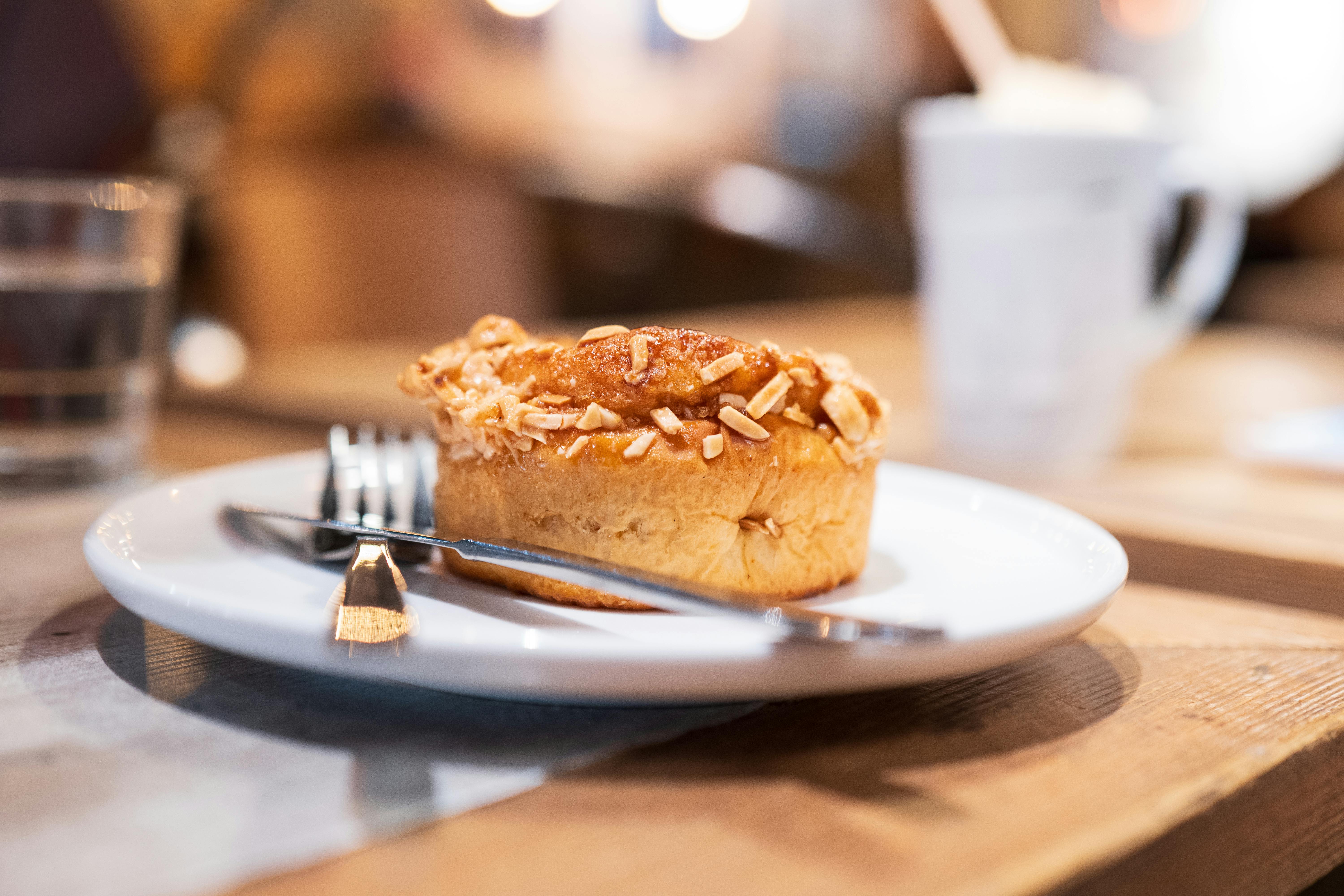
Bienenstich (German 'bee sting cake') is a classic yeasted cake that is fundamentally incompatible with a ketogenic diet. Its primary structure is a yeast-leavened flour dough, making wheat flour the dominant ingredient by volume. It is topped and filled with a caramelized almond-honey mixture and typically a vanilla cream filling, adding layers of high-glycemic sugars. A single serving would deliver an enormous quantity of net carbs — easily 40-60g or more — from the combination of wheat flour, sugar, and honey alone. Every foundational ingredient (flour, sugar, honey, high-lactose milk) directly opposes ketosis. There is no realistic portion size that would make this compatible.
Bienenstich (German 'bee sting cake') contains multiple animal-derived ingredients that make it entirely incompatible with a vegan diet. Butter and milk are dairy products, eggs are an animal product, and honey is excluded by all major vegan organizations (Vegan Society, PETA). This dish has four distinct animal-product violations, making it one of the clearest possible 'avoid' ratings. A vegan version would require substituting all four ingredients (plant-based butter, non-dairy milk, flax or chia egg replacers, and maple syrup or agave instead of honey), which would constitute a fundamentally different recipe.
Bienenstich is a traditional German bee sting cake that is fundamentally incompatible with the paleo diet. The recipe is built on multiple core non-paleo ingredients: flour (wheat grain, strictly excluded), yeast (processed leavening agent), milk (dairy, excluded), butter (dairy, excluded), and refined sugar (excluded). Salt is also added. While eggs, almonds, and honey are paleo-compatible, and vanilla is acceptable, these minor compliant ingredients do not offset the foundational violations. This dish is essentially a grain-and-dairy-based pastry at its core — precisely the type of Neolithic agricultural food the paleo diet excludes.
Bienenstich is a German yeasted cake made primarily from refined white flour, butter, sugar, and a honey-almond caramel topping, often filled with vanilla cream. It is a classic dessert/pastry that directly contradicts core Mediterranean diet principles: it is built on refined grains rather than whole grains, uses butter as the primary fat instead of olive oil, and contains significant added sugar. While it does include small amounts of Mediterranean-friendly ingredients (almonds, honey, eggs), these are insufficient to offset the heavily processed, high-sugar, high-saturated-fat profile of the overall dish. This is not a food that would appear in traditional Mediterranean eating patterns in any meaningful frequency.
Bienenstich (German 'bee sting cake') is a traditional German pastry that is fundamentally incompatible with the carnivore diet. It is composed almost entirely of plant-derived and processed ingredients: yeast, flour, sugar, almonds, honey, and vanilla form the core of the dough and topping. While it does contain some animal-derived ingredients (butter, eggs, milk), these are minor components in a dish that is essentially a sweet yeasted cake with a caramelized almond-honey crust. Flour and grains are strictly excluded on carnivore, sugar is excluded, almonds are excluded as plant seeds, and vanilla is a plant-derived flavoring. The tiny presence of egg, butter, and milk cannot redeem a dish that is by definition a grain-based baked good. This is among the clearest possible 'avoid' cases on the carnivore diet.
Bienenstich (German 'Bee Sting Cake') is a classic yeasted cake filled with cream and topped with caramelized almonds, containing multiple Whole30-excluded ingredients. Flour (grain) is excluded, milk is dairy and excluded, butter (regular, not ghee) is excluded, and sugar is an excluded added sweetener. Beyond individual ingredients, this dish is fundamentally a baked good — a cake — which is explicitly prohibited under Whole30's 'no recreating baked goods' rule even if compliant ingredient swaps were attempted.
Bienenstich (German 'bee sting cake') is a yeast-risen wheat-flour cake topped with a honey-butter-almond caramel and typically filled with vanilla custard cream made with milk. It contains multiple high-FODMAP ingredients that make it unsuitable during the elimination phase. Regular wheat flour is high in fructans — one of the most problematic FODMAPs — and there is no long-fermentation process (as with some sourdoughs) that would meaningfully reduce fructan content. Honey is high in excess fructose and is explicitly listed as a high-FODMAP sweetener by Monash University. Milk-based custard filling introduces significant lactose. Together, these three ingredients (wheat, honey, milk) represent three separate FODMAP categories (fructans, excess fructose, lactose), making this dish a multi-FODMAP offender at any standard serving size. Even a small slice would contain quantities of wheat and honey that exceed safe thresholds. There is no realistic way to consume a standard portion of Bienenstich within low-FODMAP limits without fundamentally altering the recipe.
Bienenstich (German 'bee sting cake') is a sweet yeast cake filled with vanilla cream and topped with a caramelized honey-almond crust. While individual ingredients like almonds, honey, and eggs have some nutritional merit, the overall dish is high in refined flour, butter (saturated fat), and added sugars (honey, sugar topping). The DASH diet explicitly limits sweets, saturated fat, and refined grains. As a dessert/sweet snack, it directly conflicts with core DASH principles: it provides little potassium, fiber, calcium from low-fat sources, or magnesium, and is calorie-dense with high added sugar and saturated fat content. Butter contributes significant saturated fat, and the sugar and honey topping add substantial added sugar — both categories DASH specifically recommends minimizing. This falls squarely into the 'sweets' category that DASH limits to fewer than 5 servings per week with small portion sizes.
Bienenstich (German 'bee sting cake') is a sweet yeast cake topped with a caramelized honey-butter-almond glaze and typically filled with vanilla custard or cream. Its macro profile is dominated by high-glycemic carbohydrates from refined white flour, sugar, and honey, with fat coming almost entirely from saturated butter and minimal lean protein. There is no lean protein source to anchor a Zone block, and the carbohydrate load is essentially all high-glycemic with virtually no fiber offset. The fat profile is saturated rather than monounsaturated. Even with aggressive portion control, this food cannot realistically be incorporated into a Zone-balanced meal without simultaneously consuming large amounts of lean protein and low-GI vegetables to offset the glycemic impact — at which point the Bienenstich itself contributes almost nothing of Zone value. It represents exactly the type of processed, high-sugar baked good that the Zone Diet is designed to minimize. As a snack, it provides no Zone-favorable macronutrient anchor whatsoever.
Bienenstich (German 'bee sting cake') is a yeasted sweet cake topped with a caramelized butter-honey-almond glaze and typically filled with vanilla custard or cream. Despite containing a few individually defensible ingredients (almonds have anti-inflammatory vitamin E and monounsaturated fats; honey has trace antioxidants; eggs provide choline), the overall profile is strongly pro-inflammatory by anti-inflammatory diet standards. The dish is built on refined white flour (high glycemic, drives insulin spikes and pro-inflammatory signaling), substantial added sugar (both granulated and honey in significant quantity as a sweetener), and generous butter (saturated fat is a limit/avoid ingredient). The combination of refined carbohydrates and saturated fat together is particularly problematic from an inflammatory standpoint, as this pairing is associated with elevated post-meal inflammatory markers including IL-6 and CRP. The custard filling adds full-fat dairy. There are no meaningful omega-3 sources, no polyphenol-rich vegetables or fruits, and no anti-inflammatory spices present in meaningful quantities. The almonds and trace vanilla and honey do not offset the dominant pro-inflammatory load. This is an indulgent pastry that sits firmly in the 'occasional treat' category and cannot be considered compatible with an anti-inflammatory eating pattern on any regular basis.
Bienenstich (German 'bee sting cake') is a yeasted sponge cake filled with vanilla cream and topped with a caramelized honey-almond crust. Despite containing eggs and almonds, the dish is fundamentally a high-sugar, high-fat, refined-carbohydrate dessert with negligible protein density and minimal fiber per serving. Butter and sugar dominate the macronutrient profile, and the honey-almond caramel topping adds concentrated sugar and saturated fat. For GLP-1 patients, this food fails on nearly every priority: it provides empty calories in a context where every calorie must be nutritionally justified, the high sugar content risks blood sugar spikes, the high fat content (butter in dough and topping) is likely to worsen nausea and bloating due to slowed gastric emptying, and the refined flour base offers no meaningful fiber. The small amount of protein from eggs and almonds is negligible relative to the caloric load. Even a small portion delivers poor nutritional value, making this a poor fit for GLP-1 dietary goals.
*See how scores were generated at our methodology page.
Nutritional profile
Six traits that cut across every diet.
Fiber & Plants
How much whole-plant food and fiber it delivers.
Healthy Fats
The quality of its fats (unsaturated, omega-3).
Whole / Unprocessed
How close it is to its natural, unprocessed form.
Gut Gentle
How easy it is on digestion (low FODMAP, few irritants).
Low Glycemic
How little it spikes your blood sugar.
Protein Density
How much protein it packs per calorie.
Controversy Index
Higher controversy = more disagreement between diets.