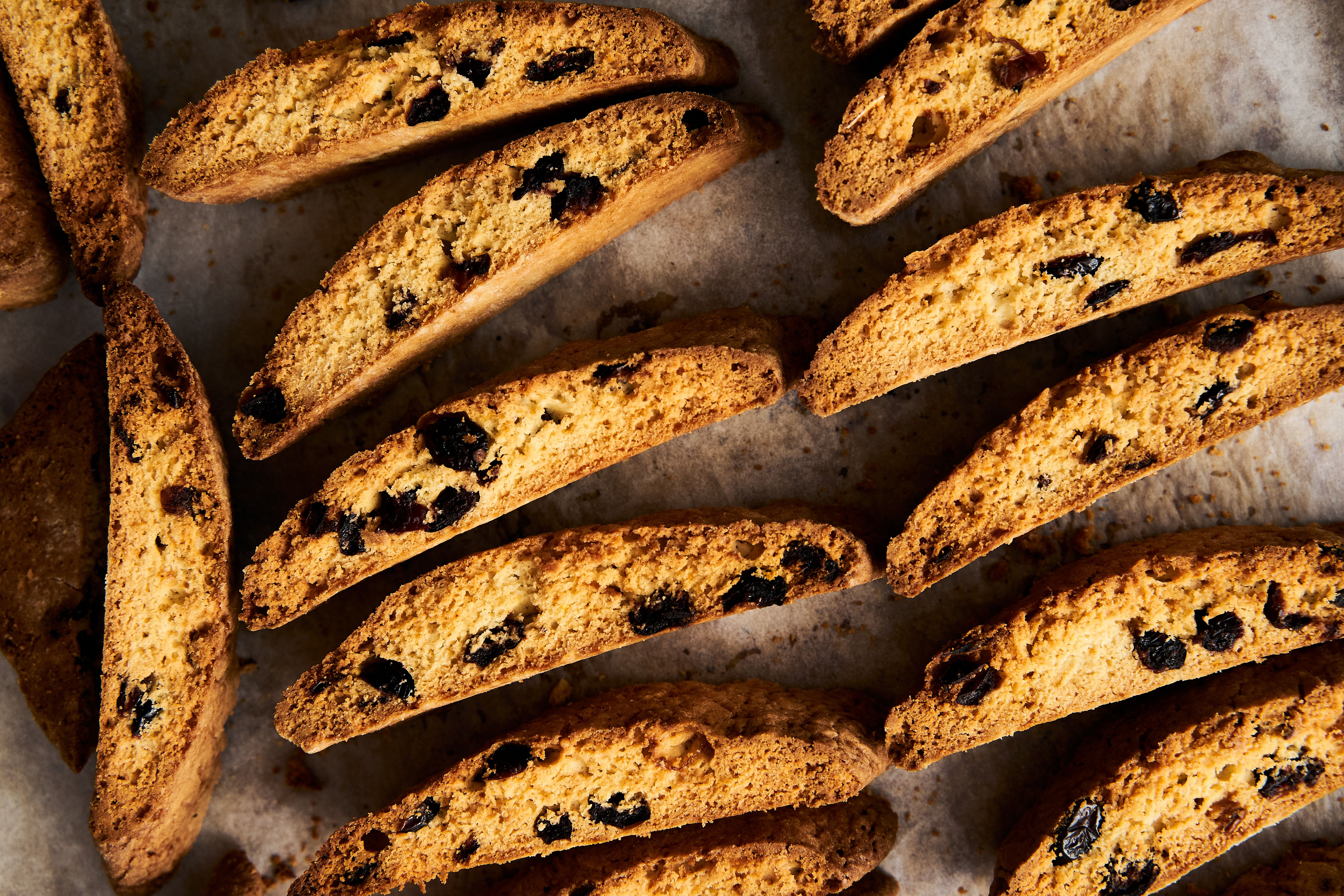
Photo: Alex Bayev / Pexels
The diets react (see scores below)
Common Ingredients
- flour
- sugar
- eggs
- almonds
- baking powder
- salt
- vanilla extract
- butter
Specific recipes may vary.
Incompatible with 7 of 11 diets
Diet Ratings
Biscotti is a grain-based, sugar-laden Italian cookie that is fundamentally incompatible with a ketogenic diet. The primary ingredients — wheat flour and sugar — are the two highest-priority items to eliminate on keto. Flour is a refined grain providing dense net carbs (roughly 20-25g per biscotti), and sugar adds directly to the carbohydrate load with zero fiber offset. Even though almonds, eggs, and butter are keto-friendly ingredients, they are minor contributors overwhelmed by the flour and sugar base. A single standard biscotti can contain 20-30g of net carbs, which alone could exceed an entire day's carb budget on strict keto. There is no meaningful portion size that makes traditional biscotti compatible with ketosis.
Traditional biscotti as listed contains two clear animal-derived ingredients: eggs and butter. Both are excluded under all mainstream vegan definitions. Eggs are an animal product (poultry by-product), and butter is a dairy product derived from cow's milk. The remaining ingredients — flour, sugar, almonds, baking powder, salt, and vanilla extract — are all plant-based, so the base recipe is largely adaptable. Vegan biscotti can be made by substituting flax eggs or aquafaba for eggs and using plant-based butter or coconut oil, but the dish as described with eggs and butter is not vegan-compliant.
Biscotti is fundamentally incompatible with the paleo diet. The recipe's primary base is wheat flour, a grain that is strictly excluded from paleo eating. Beyond flour, it also contains refined sugar (a processed sweetener), added salt, baking powder (a processed leavening agent with additives), and butter (a dairy product). While eggs, almonds, and vanilla extract are paleo-approved, they are minor components that cannot redeem a recipe so heavily built on non-paleo foundations. This is a classic processed grain-based baked good with multiple disqualifying ingredients.
Biscotti is a traditional Italian twice-baked cookie that, while containing some Mediterranean-friendly ingredients (almonds, eggs), is primarily built on refined white flour, added sugar, and butter. The refined grain base and added sugar place it firmly in the 'minimal consumption' category of the Mediterranean diet. Butter, rather than olive oil, is the fat source, further distancing it from Mediterranean principles. The almonds are a positive element, but they are outweighed by the refined carbohydrates and sugar content. As a sweet snack eaten occasionally, it is not a staple and contradicts the emphasis on whole, minimally processed foods.
Traditional Mediterranean cuisine does include small amounts of sweets and pastries, particularly in Italian, Greek, and Spanish traditions, where biscotti are often consumed in modest portions alongside coffee. Some Mediterranean diet authorities, including those following the traditional Cretan model, allow occasional traditional sweets as part of cultural eating patterns, suggesting biscotti enjoyed rarely and in small amounts need not be entirely excluded.
Biscotti is a plant-based Italian biscuit that is fundamentally incompatible with the carnivore diet. The primary ingredients are flour (grain), sugar (processed plant-derived sweetener), and almonds (nuts) — all strictly excluded plant foods. While eggs and butter are animal-derived, they are minor components in a dish that is overwhelmingly plant-based. Additional non-carnivore ingredients include baking powder and vanilla extract. There is no meaningful animal protein content. This dish represents virtually everything the carnivore diet eliminates: grains, sugar, nuts, and plant-based additives.
Biscotti contains multiple excluded ingredients and violates core Whole30 rules. Flour (wheat grain) and sugar (added sugar) are both explicitly excluded on Whole30. Additionally, butter (dairy) is excluded — only ghee/clarified butter is permitted. Beyond the ingredient violations, biscotti is a baked good/cookie, which falls squarely into the 'no recreating baked goods/junk food' rule that prohibits cookies, crackers, and similar items even if made with compliant ingredients.
Traditional biscotti is made with wheat flour as its primary ingredient, which is high in fructans — one of the most problematic FODMAP groups. A standard serving of biscotti (1-2 pieces, ~30-40g) would contain a significant amount of wheat flour, making it unsuitable during the elimination phase. The remaining ingredients are generally low-FODMAP: sugar, eggs, almonds (low-FODMAP at ≤10 almonds/serve), baking powder, salt, vanilla extract, and butter are all acceptable. However, the wheat flour alone is sufficient to classify this dish as high-FODMAP at any standard serving size. A gluten-free flour substitute (e.g., rice flour, almond flour) would be necessary to make biscotti FODMAP-friendly.
Biscotti is a sweetened baked good made primarily from refined flour, sugar, and butter — none of which are emphasized by the DASH diet. The added sugar and refined carbohydrates contribute empty calories without the potassium, magnesium, fiber, or calcium that DASH prioritizes. Butter adds saturated fat, which DASH limits. The almonds are a genuine positive — they provide healthy unsaturated fats, magnesium, and some fiber, which are DASH-aligned. Salt and baking powder contribute modest sodium. Traditional biscotti is lower in fat than many cookies (no oil beyond butter, twice-baked to reduce moisture), and portion sizes are typically small, which keeps saturated fat and sugar intake manageable. It is not a core DASH food, but as an occasional small treat it is not categorically off-limits the way heavily processed or high-sodium snacks would be. The almond content partially redeems it. Moderation and small portions are essential.
Biscotti is a high-carbohydrate, moderately sweet baked good built primarily on refined white flour and sugar — both unfavorable, high-glycemic carbohydrate sources in Zone terminology. The macronutrient ratio is badly skewed: carbs dominate, protein content is minimal (eggs contribute some but not enough to form a meaningful protein block), and fat comes primarily from butter (saturated) rather than the preferred monounsaturated fats. The almonds are a Zone-positive ingredient, providing monounsaturated fat and some protein, but they are a minor component in a typical biscotti recipe. One or two small biscotti could technically be worked into a Zone meal as the carbohydrate block alongside a lean protein source and monounsaturated fat, but the refined flour and sugar make this an 'unfavorable' carb choice. It is not categorically impossible to fit into the Zone (unlike pure candy or soda), but it offers poor Zone value — high-glycemic carbs with no meaningful protein block and unfavorable fat profile. It scores low within the caution range because while it isn't a hard avoid, it requires significant compensating discipline and provides almost no Zone-favorable nutrition.
Traditional biscotti presents a mixed anti-inflammatory profile. On the positive side, almonds are genuinely anti-inflammatory — rich in vitamin E, monounsaturated fats, magnesium, and polyphenols that help reduce oxidative stress. Eggs provide choline and selenium. Vanilla extract contains trace phenolic compounds. However, the dominant ingredients by inflammatory impact are refined white flour and added sugar, both of which are pro-inflammatory when consumed regularly — they spike blood glucose, promote glycation, and can elevate inflammatory markers like CRP and IL-6. Butter contributes saturated fat, which is flagged as a 'limit' ingredient in anti-inflammatory frameworks. Biscotti is typically lower in fat than other cookies due to its dry, twice-baked nature and relatively modest butter content, which is a mild redeeming factor. Overall, biscotti is a refined-carbohydrate-forward snack with modest anti-inflammatory contributions from almonds, landing it firmly in the 'caution' zone — acceptable as an occasional treat, not a dietary staple. The almond content could be increased and refined flour swapped for almond or whole-grain flour to improve the profile meaningfully.
Biscotti is a twice-baked Italian cookie made primarily from refined flour and sugar, with eggs, butter, and almonds. A standard serving (2 biscotti, ~30g) provides roughly 120-140 calories, 2-3g protein, 1-2g fiber, and 4-6g fat. The almonds contribute modest protein and healthy unsaturated fats, and the dry, hard texture means low fat per bite compared to other cookies. However, biscotti is fundamentally a refined-carbohydrate, moderate-sugar snack with very low protein density and minimal fiber — both top priorities for GLP-1 patients. The eggs and almonds prevent it from being a complete nutritional dead end, but they don't elevate it into an approve category. It is not fried, not highly processed, and not carbonated, which keeps it out of avoid territory. The low fat content and easy digestibility (it is very dry and light) also work in its favor compared to richer pastries. For a GLP-1 patient with limited appetite and caloric bandwidth, biscotti occupies a calorie slot that would be far better used by a protein- and fiber-dense snack. Acceptable as an occasional treat in one-piece portions, especially if paired with a protein source, but not a recommended snack staple.
*See how scores were generated at our methodology page.
Nutritional profile
Six traits that cut across every diet.
Fiber & Plants
How much whole-plant food and fiber it delivers.
Healthy Fats
The quality of its fats (unsaturated, omega-3).
Whole / Unprocessed
How close it is to its natural, unprocessed form.
Gut Gentle
How easy it is on digestion (low FODMAP, few irritants).
Low Glycemic
How little it spikes your blood sugar.
Protein Density
How much protein it packs per calorie.
Controversy Index
Higher controversy = more disagreement between diets.
Diet-Specific Tips
 DASH — 4/10
View tips
- Refined flour and added sugar are not DASH-emphasized nutrients
- Butter contributes saturated fat, which DASH limits
- Almonds are a DASH-friendly ingredient providing magnesium and healthy fats
- Sodium is relatively modest compared to many processed snacks
- Biscotti is lower in total fat than most cookies due to twice-baking method
- No fruits, vegetables, whole grains, or low-fat dairy — misses core DASH food groups
- Acceptable only as an occasional small-portion treat, not a regular snack
 Zone — 4/10
View tips
- Primary carbohydrate sources are refined white flour and sugar — both high-glycemic and 'unfavorable' in Zone terminology
- Virtually no lean protein content; eggs contribute minimally and there is no listed protein source
- Butter provides saturated fat rather than the preferred monounsaturated fats (olive oil, avocado, macadamia)
- Almonds are a Zone-positive ingredient but represent a small fraction of the recipe's macronutrient profile
- Could technically serve as a small carbohydrate block in a carefully constructed Zone meal, but offers poor nutritional efficiency
- No vegetables, no omega-3s, no polyphenol-rich ingredients beyond vanilla — anti-inflammatory value is low
 Anti-Inflammatory — 4/10
View tips
- Refined white flour is a pro-inflammatory refined carbohydrate that raises blood glucose and can elevate CRP
- Added sugar is a known driver of inflammatory markers at regular intake levels
- Almonds provide vitamin E, monounsaturated fats, and polyphenols with documented anti-inflammatory benefits
- Butter contributes saturated fat, which anti-inflammatory guidelines recommend limiting
- Lower fat content than most cookies due to twice-baked, dry texture moderately reduces concern
- No omega-3 fatty acids, antioxidant-rich vegetables, or anti-inflammatory spices present
- Acceptable as an occasional treat; not suitable as a regular anti-inflammatory snack
 GLP-1 Friendly — 4/10
View tips
- Low protein density — ~2-3g per serving does not meaningfully contribute to the 100-120g daily protein target
- Refined flour and sugar provide low nutrient density per calorie, a significant concern given reduced appetite on GLP-1s
- Almonds add small amounts of healthy unsaturated fat and protein, partially offsetting the refined carbohydrate base
- Not fried, not heavily processed, and very low fat per serving — avoids worst GLP-1 side effect triggers
- Dry texture and easy digestibility are advantageous given slowed gastric emptying
- Small portion size is naturally built in, reducing risk of overconsumption
- Better than most cookies but still a low-value calorie choice for GLP-1 patients with limited appetite