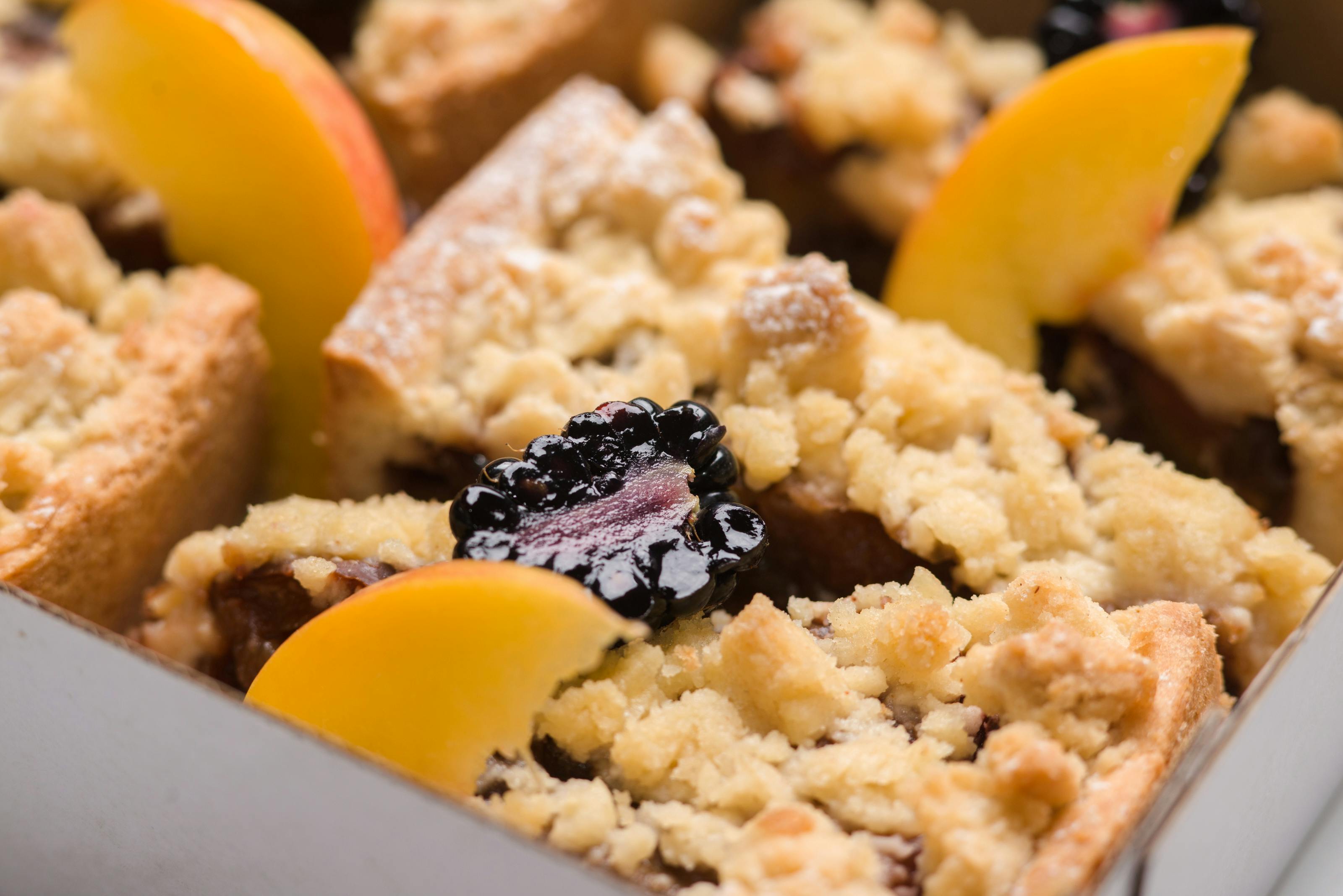
Photo: Novkov Visuals / Pexels
American
Blackberry Cobbler
The diets react (see scores below)
Common Ingredients
- blackberries
- sugar
- butter
- flour
- baking powder
- salt
- milk
- vanilla extract
Specific recipes may vary.
Incompatible with 9 of 11 diets
Diet Ratings
Blackberry Cobbler is fundamentally incompatible with a ketogenic diet. It contains three major keto-incompatible ingredients: wheat flour (a grain-based high-carb ingredient), added sugar, and milk. A standard serving would deliver an enormous carbohydrate load — likely 40-60g+ of net carbs per serving from the flour and sugar alone, far exceeding the entire daily keto carb allowance of 20-50g. While blackberries themselves are one of the lower-carb fruits and could appear in tiny amounts on keto, in a cobbler context they are paired with sugar and flour that make the dish wholly off-limits. There is no meaningful portion size that makes this dish keto-compatible.
Blackberry Cobbler as described contains two clear animal-derived ingredients: butter (dairy fat) and milk (dairy). Both are direct animal products excluded under all vegan standards. The blackberries, sugar, flour, baking powder, salt, and vanilla extract are all plant-based, but the presence of butter and milk makes this dish non-vegan in its standard form. A vegan version is easily achievable by substituting plant-based butter (e.g., Earth Balance) and a non-dairy milk (e.g., oat, almond, or soy milk), which would elevate the verdict to approve.
Blackberry Cobbler is fundamentally incompatible with the Paleo diet. While blackberries themselves are a perfectly Paleo-approved fruit, the recipe is built around multiple non-Paleo ingredients. Flour (wheat) is a grain and one of the most clearly excluded foods in Paleo. Refined sugar is explicitly off-limits. Milk is a dairy product. Baking powder typically contains cornstarch, another grain derivative. Added salt is discouraged. Butter is a dairy product (though debated, it is generally excluded in strict Paleo). Only the blackberries and vanilla extract are Paleo-compliant. The dish is essentially a grain-and-dairy-based dessert with fruit — the antithesis of Paleo eating.
Blackberry Cobbler is a classic American dessert that conflicts significantly with Mediterranean diet principles. While blackberries themselves are an excellent Mediterranean food (rich in antioxidants, fiber, and polyphenols), the overall dish is dominated by ingredients that the Mediterranean diet discourages. Refined white flour, added sugar, butter (saturated fat replacing olive oil as the primary fat), and milk combine to create a high-sugar, refined-grain, saturated-fat-heavy dessert. The baking powder and vanilla extract are neutral, and the blackberries are genuinely beneficial, but they cannot offset the problematic base. As a snack, this is particularly misaligned — Mediterranean snacking emphasizes whole fruits, nuts, and vegetables, not sugar-laden baked goods. This dish represents the processed, high-sugar, refined-grain category that the Mediterranean diet explicitly minimizes.
Blackberry Cobbler is almost entirely incompatible with the carnivore diet. The dish is dominated by plant-based ingredients: blackberries (fruit), flour (grain), sugar (processed plant-derived sweetener), baking powder (plant/mineral leavening), vanilla extract (plant-derived flavoring), and milk (debated dairy). The only marginally carnivore-relevant ingredient is butter, and even that is a minor component in a fundamentally plant-based dessert. This dish has no animal protein source and is essentially a grain-and-fruit baked good loaded with sugar — everything the carnivore diet explicitly excludes. There is unanimous consensus across all carnivore authorities that this dish is completely off-plan.
Blackberry Cobbler contains multiple excluded ingredients: added sugar, butter (regular dairy, not ghee), flour (a grain product), and milk (dairy). Even setting aside the individual excluded ingredients, this dish is explicitly the type of baked good the Whole30 program prohibits by name and spirit — cobblers fall squarely into the 'no recreating baked goods' rule. There is no compliant version of this dish possible while keeping its essential character intact.
Blackberry Cobbler contains multiple high-FODMAP ingredients that make it unsuitable during the elimination phase. The two primary concerns are: (1) Wheat flour is high in fructans, a key FODMAP, and is a primary structural ingredient in the cobbler topping — it cannot be reduced to a 'safe' portion without fundamentally changing the dish. (2) Blackberries are rated by Monash University as high-FODMAP at standard servings (>10 berries / ~80g) due to excess fructose and polyols (sorbitol). A typical cobbler serving would contain well above this threshold. (3) Regular cow's milk contributes lactose, adding another FODMAP source. While butter and sugar are low-FODMAP, vanilla extract at standard quantities is also fine. The combination of wheat flour, blackberries at a typical serving size, and milk makes this dish high-FODMAP overall with no simple substitution possible within the traditional recipe.
Monash University does list blackberries as low-FODMAP at a very small serving (around 10 berries/40g), and some practitioners note that polyol tolerance varies significantly among IBS patients. However, the wheat flour component alone disqualifies this dish during strict elimination phase regardless of blackberry quantity, and clinical FODMAP practitioners would universally advise avoiding this dish as-is.
Blackberry cobbler contains a DASH-friendly ingredient in blackberries, which are rich in fiber, potassium, and antioxioxidants. However, the dish as commonly prepared is a dessert/sweet snack with significant amounts of added sugar, butter (saturated fat), and refined white flour — all of which DASH guidelines explicitly limit. The sugar content contributes to the 'sweets' category that DASH restricts to ≤5 servings per week, and butter adds saturated fat. The refined flour provides little fiber compared to whole grain alternatives. While this is not as problematic as processed or high-sodium foods, it falls into the 'caution' category as an occasional treat rather than a DASH staple. Portions must be strictly controlled, and modifications (reducing sugar, using whole wheat flour, replacing butter with a vegetable oil or reducing quantity) would improve its DASH compatibility.
Blackberry Cobbler is a highly problematic food for Zone adherents. While blackberries themselves are Zone-favorable (low-glycemic, high in polyphenols and fiber), the cobbler preparation buries them under a crust made of refined white flour, sugar, butter, and milk — creating a dish that is predominantly high-glycemic carbohydrates with significant saturated fat and virtually no lean protein. The macronutrient ratio is wildly out of Zone balance: heavily skewed toward carbohydrates (mostly unfavorable, high-GI carbs from flour and sugar), moderate saturated fat from butter, and near-zero protein. There is no lean protein component whatsoever, which means no Zone meal block can be built around this dish without massive external additions. As a snack, it is especially problematic — Zone snacks are meant to be mini-meals with the same 40/30/30 balance, typically a small protein source with a low-GI carb. The added sugar combined with refined flour creates a high glycemic load that would spike insulin sharply, directly opposing the Zone's core objective of insulin management. The only redeeming element is the blackberries, which are genuinely favorable Zone carbs, but they are not sufficient to offset the cobbler components.
Blackberry cobbler presents a mixed anti-inflammatory profile. The blackberries themselves are a genuine anti-inflammatory asset — they are rich in anthocyanins, polyphenols, and vitamin C, all of which have demonstrated ability to reduce inflammatory markers like CRP. However, the cobbler batter introduces several problematic elements. Added sugar is a primary driver of inflammation, elevating insulin response and promoting the release of pro-inflammatory cytokines with regular consumption. Butter contributes saturated fat, which anti-inflammatory guidelines recommend limiting. All-purpose flour is a refined carbohydrate with a high glycemic index, stripping out the fiber and nutrients found in whole grains. Milk is generally considered neutral to mildly inflammatory depending on individual tolerance. The overall dish is essentially a dessert-style baked good where the anti-inflammatory benefits of blackberries are substantially diluted and undermined by sugar, refined flour, and butter. Occasional enjoyment is compatible with an anti-inflammatory lifestyle, but regular consumption would not be. The classification as a 'snack' increases concern, as frequent snacking on this would consistently introduce refined carbs and added sugar.
Blackberry cobbler is a poor fit for GLP-1 patients. The dish is built around sugar and refined flour (the biscuit/cake topping), with butter adding significant saturated fat. It has no meaningful protein source, minimal fiber relative to sugar load (the blackberries offer some fiber, but it is outweighed by the sugar and refined carbs), and provides largely empty calories. GLP-1 patients have dramatically reduced caloric budgets, and a serving of cobbler spends most of that budget on refined carbohydrates and fat with little nutritional return. The butter and high sugar content can worsen nausea, bloating, and reflux — known GLP-1 side effects. As a snack category item, it fails the small-portion-friendliness test for nutrition density: a small serving delivers high sugar and fat but negligible protein or meaningful fiber. The vanilla extract and milk are inconsequential nutritionally at these quantities.
*See how scores were generated at our methodology page.
Nutritional profile
Six traits that cut across every diet.
Fiber & Plants
How much whole-plant food and fiber it delivers.
Healthy Fats
The quality of its fats (unsaturated, omega-3).
Whole / Unprocessed
How close it is to its natural, unprocessed form.
Gut Gentle
How easy it is on digestion (low FODMAP, few irritants).
Low Glycemic
How little it spikes your blood sugar.
Protein Density
How much protein it packs per calorie.
Controversy Index
Higher controversy = more disagreement between diets.
Diet-Specific Tips
 DASH — 4/10
View tips
- Blackberries are DASH-approved: high in fiber, potassium, and antioxidants
- High added sugar content conflicts with DASH limit of ≤5 sweets/week
- Butter contributes saturated fat, which DASH guidelines restrict
- Refined white flour offers minimal fiber; whole wheat flour would be preferable
- Milk is a DASH-compatible ingredient if low-fat
- Overall caloric density and sugar load make this a 'treat' food under DASH
- Portion control is essential if consumed at all on DASH plan
 Anti-Inflammatory — 4/10
View tips
- Blackberries are rich in anthocyanins and polyphenols with documented anti-inflammatory effects
- Added sugar is a significant pro-inflammatory ingredient and a primary component of the batter
- All-purpose flour is a refined carbohydrate that spikes blood glucose and lacks fiber
- Butter contributes saturated fat, which anti-inflammatory guidelines recommend limiting
- Net anti-inflammatory benefit of blackberries is substantially diluted by batter ingredients
- Acceptable as an occasional treat; problematic if consumed regularly as a snack