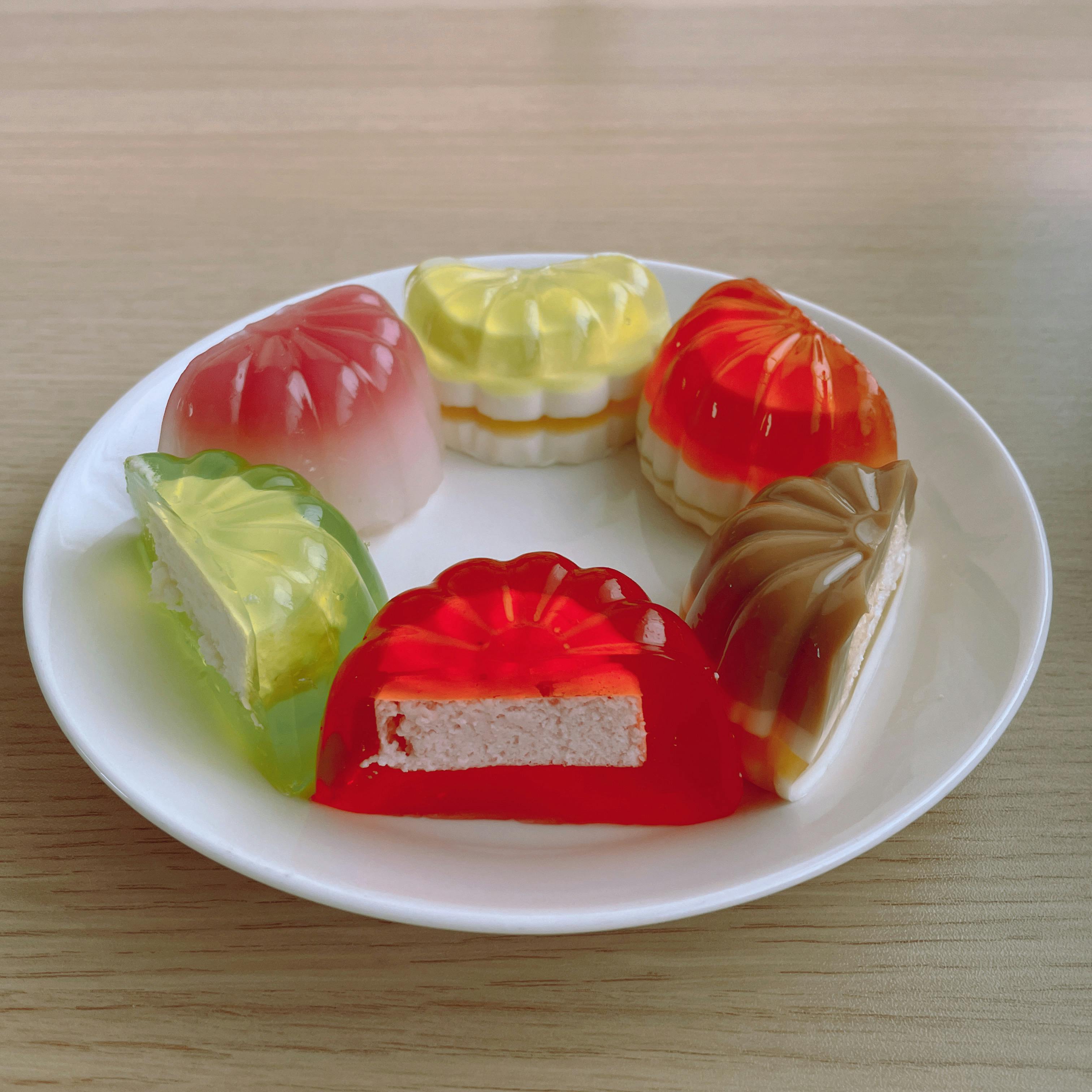
Photo: April Miyako / Pexels
The diets react (see scores below)
Common Ingredients
- milk
- cream
- cornstarch
- sugar
- almond extract
- gelatin
Specific recipes may vary.
Incompatible with 9 of 11 diets
Diet Ratings
Blancmange is fundamentally incompatible with a ketogenic diet. It contains two major anti-keto ingredients: cornstarch and sugar. Cornstarch is a pure starch with virtually no fiber, delivering roughly 7g of net carbs per tablespoon, and a standard blancmange recipe uses several tablespoons. Added sugar compounds the problem, easily pushing a single serving well over the entire daily keto carb budget of 20-50g. The milk base also contributes lactose (milk sugars). While cream and gelatin are keto-friendly, they cannot offset the dominant carb load from cornstarch and sugar. This dessert's entire texture and structure depend on the cornstarch, meaning there is no trivial substitution that preserves the dish.
Blancmange contains multiple animal-derived ingredients that make it entirely incompatible with a vegan diet. Milk and cream are dairy products, gelatin is derived from animal collagen (typically from pig or cow bones and connective tissue), and together these ingredients place this dish firmly in the 'avoid' category. There is no ambiguity here — this is a classic dairy-and-gelatin-based dessert. Vegan adaptations exist using plant milks (almond, oat, coconut) and agar-agar as a gelatin substitute, but the traditional recipe as listed is not vegan.
Blancmange is fundamentally incompatible with the Paleo diet. It contains multiple non-paleo ingredients: milk and cream are dairy products explicitly excluded from Paleo; cornstarch is derived from corn, a grain that is off-limits; and refined sugar is a processed sweetener that Paleolithic humans had no access to. Almond extract is typically a processed product containing alcohol and artificial flavorings. Gelatin is the only ingredient that could be considered Paleo-compliant. With four out of six ingredients being clear Paleo violations — including dairy, a grain derivative, and refined sugar — this dish earns the lowest possible score.
Blancmange is a dessert pudding made primarily from milk, cream, cornstarch, and added sugar — a combination that conflicts with several Mediterranean diet principles. The high sugar content and refined cornstarch place it firmly in the 'minimize' category, while the heavy cream adds significant saturated fat without the benefits of olive oil or other Mediterranean fats. Dairy in moderate amounts is acceptable, but this dish is defined by processed, sugar-laden dairy rather than traditional Mediterranean dairy like small portions of yogurt or cheese. It offers little nutritional value aligned with Mediterranean principles.
Some traditional Mediterranean regions, particularly in southern France and parts of the Maghreb, have historical versions of blancmange using almond milk rather than cream, which would shift the fat profile toward plant-based sources. A modern Mediterranean-aligned adaptation using almond milk and minimal sugar could be considered an occasional treat within the diet's allowance for modest sweets.
Blancmange is fundamentally incompatible with the carnivore diet. While it does contain dairy ingredients (milk, cream) and gelatin (animal-derived), the dish is dominated by plant-based and processed non-animal ingredients. Cornstarch is a plant-derived carbohydrate, sugar is a plant-derived sweetener explicitly excluded from carnivore, and almond extract is plant-derived. Even the dairy components are heavily processed and combined in a dessert format that runs contrary to carnivore principles. The only carnivore-friendly components are cream, milk (debated), and gelatin — but the plant-based fillers, sugar, and almond extract make this a clear avoid regardless of which tier of carnivore one follows.
Blancmange contains multiple excluded ingredients under Whole30 rules. Milk and cream are dairy products, which are explicitly excluded. Cornstarch is explicitly excluded. Sugar is an added sugar, which is explicitly excluded. Even without these violations, this dish resembles a pudding/dessert that would fall under the spirit violation of recreating junk food or dessert-like treats. There is no compliant version of this dish possible without fundamentally changing its nature.
Blancmange's FODMAP status hinges primarily on the milk content. Regular cow's milk is high in lactose, which is a key FODMAP (disaccharide). A standard serving of blancmange would typically contain a significant quantity of milk, making lactose the primary concern. Heavy cream, however, is low-FODMAP even in standard servings because the fat-to-lactose ratio is favorable (lactose is minimal per serving). Cornstarch, sugar, almond extract (in small amounts), and gelatin are all low-FODMAP. If the recipe uses lactose-free milk or a suitable dairy-free milk (e.g., rice milk or almond milk in low-FODMAP quantities), the dish could become low-FODMAP. As traditionally made with regular milk, a standard serving would contain enough lactose to be problematic during the elimination phase. The proportion of cream vs. milk matters considerably — a cream-heavy recipe reduces lactose burden significantly.
Monash University rates lactose-free milk as low-FODMAP and heavy cream as low-FODMAP even in moderate servings; if a blancmange recipe is cream-heavy with minimal milk, some clinical FODMAP practitioners might approve it cautiously. However, traditional recipes using substantial regular milk would be flagged as high-FODMAP during strict elimination due to lactose content.
Blancmange is a sweetened milk pudding made with whole milk, cream, cornstarch, sugar, almond extract, and gelatin. From a DASH perspective, it presents several concerns: the combination of whole milk and cream contributes saturated fat, which DASH guidelines recommend limiting. The added sugar content places it in the 'sweets' category that DASH restricts to 5 or fewer servings per week. On the positive side, it is low in sodium, and the dairy component provides some calcium. However, full-fat dairy (cream) is not aligned with DASH's emphasis on fat-free or low-fat dairy. As an occasional small-portion snack it is not categorically prohibited, but it is not a food DASH would emphasize or encourage regularly. A modified version using low-fat or skim milk instead of cream and reducing sugar would score meaningfully higher.
NIH DASH guidelines specify low-fat or fat-free dairy and limit sweets, which would place cream-based, sugar-sweetened desserts firmly in the 'limit' category. However, some updated clinical interpretations note that emerging research on full-fat dairy and cardiovascular risk is less conclusive than previously thought, and a small occasional serving of a low-sodium dessert like blancmange may be acceptable within an otherwise DASH-compliant diet — particularly if made with reduced-fat milk.
Blancmange is a sweetened milk-and-cream dessert thickened with cornstarch and set with gelatin. From a Zone perspective, it presents multiple challenges. The primary carbohydrate sources — sugar and cornstarch — are both high-glycemic, which is precisely what the Zone Diet discourages. Sugar is a direct insulin trigger, and cornstarch has one of the highest glycemic indexes of any thickening agent. The fat profile is dominated by saturated fat from cream and whole milk, whereas Zone favors monounsaturated fats. The protein contribution is minimal and comes from dairy with a relatively poor protein-to-calorie ratio. There is essentially no fiber to moderate the glycemic impact. As a snack, it fails to approximate a 40/30/30 block structure — it skews heavily toward high-GI carbohydrates and saturated fat with insufficient lean protein. While the Zone is ratio-based rather than exclusion-based, blancmange's macro profile is so imbalanced that it cannot be easily corrected by portioning alone without eliminating the dish's identity. It scores a 3 rather than 1-2 only because the gelatin provides some protein, dairy offers calcium and some nutritional value, and very small portions could theoretically be paired with a protein source in a broader Zone-compliant meal — but as a standalone snack it is highly unfavorable.
Blancmange is a classic French dessert pudding that is largely incompatible with anti-inflammatory dietary principles. The ingredient list is dominated by pro-inflammatory components: full-fat cream contributes significant saturated fat, which is associated with increased inflammatory markers (CRP, IL-6) when consumed regularly; added sugar is a primary driver of inflammation and is explicitly limited in all anti-inflammatory frameworks; cornstarch is a highly refined carbohydrate with a high glycemic index offering no fiber or micronutrient benefit; and gelatin, while neutral, adds nothing anti-inflammatory. Whole milk adds more saturated fat. Almond extract is the only marginally positive element, though it is present in negligible flavor quantities and provides no meaningful anti-inflammatory benefit. The dish has no omega-3 fatty acids, no antioxidants, no polyphenols, no fiber, and no colorful plant foods — essentially none of the pillars of anti-inflammatory eating. The combination of full-fat dairy, refined starch, and added sugar in a single snack-sized serving makes this a consistently pro-inflammatory food choice. It is not merely low in beneficial nutrients; it actively features multiple ingredients flagged as problematic across all major anti-inflammatory frameworks, including Dr. Weil's Anti-Inflammatory Food Pyramid and the IF Rating system.
Blancmange is a dessert-style snack built almost entirely from nutritionally poor ingredients for GLP-1 patients. The base is milk and cream (high saturated fat, moderate sugar from lactose), thickened with cornstarch (refined starch, zero fiber), sweetened with added sugar (empty calories), and flavored with almond extract. Gelatin provides a negligible amount of protein — nowhere near the 15–30g target per eating occasion. The dish is essentially empty calories: high in saturated fat from cream, high in refined carbohydrates and sugar, zero fiber, and very low protein density. Every one of the GLP-1 dietary priorities is violated: protein is near zero, fiber is zero, fat is high (saturated), and nutrient density per calorie is extremely poor. The cream content also risks worsening GLP-1 side effects including nausea, bloating, and reflux due to high fat slowing gastric emptying further. As a snack category item, this is especially problematic — snack occasions are critical opportunities to add protein and fiber, and blancmange contributes neither. There is no meaningful clinical argument for including this in a GLP-1 patient's diet.
*See how scores were generated at our methodology page.
Nutritional profile
Six traits that cut across every diet.
Fiber & Plants
How much whole-plant food and fiber it delivers.
Healthy Fats
The quality of its fats (unsaturated, omega-3).
Whole / Unprocessed
How close it is to its natural, unprocessed form.
Gut Gentle
How easy it is on digestion (low FODMAP, few irritants).
Low Glycemic
How little it spikes your blood sugar.
Protein Density
How much protein it packs per calorie.
Controversy Index
Higher controversy = more disagreement between diets.
Diet-Specific Tips
 DASH — 4/10
View tips
- Contains cream (full-fat dairy) — not aligned with DASH low-fat dairy recommendation
- Added sugar qualifies this as a 'sweet' — DASH limits sweets to ≤5 servings/week
- Very low sodium — a positive attribute for DASH
- Provides some calcium from dairy
- Refined cornstarch provides no fiber or micronutrient benefit
- Small portion as an occasional treat is more compatible than regular consumption
- Substituting skim milk for cream would significantly improve DASH compatibility
 Zone — 5/10
View tips
- Sugar is a high-glycemic carbohydrate that directly spikes insulin — a core concern in Zone methodology
- Cornstarch is one of the highest glycemic index starches available, compounding the insulin response
- Fat profile is predominantly saturated (cream, whole milk) rather than the monounsaturated fats Zone favors
- Minimal lean protein — dairy protein present but insufficient relative to the caloric load from fat and carbs
- No fiber to moderate glycemic impact of the sugar and cornstarch
- As a snack, the 40/30/30 block ratio is essentially impossible to approximate with this dish's inherent composition
- Gelatin provides a small amount of protein but not enough to meaningfully improve the Zone balance