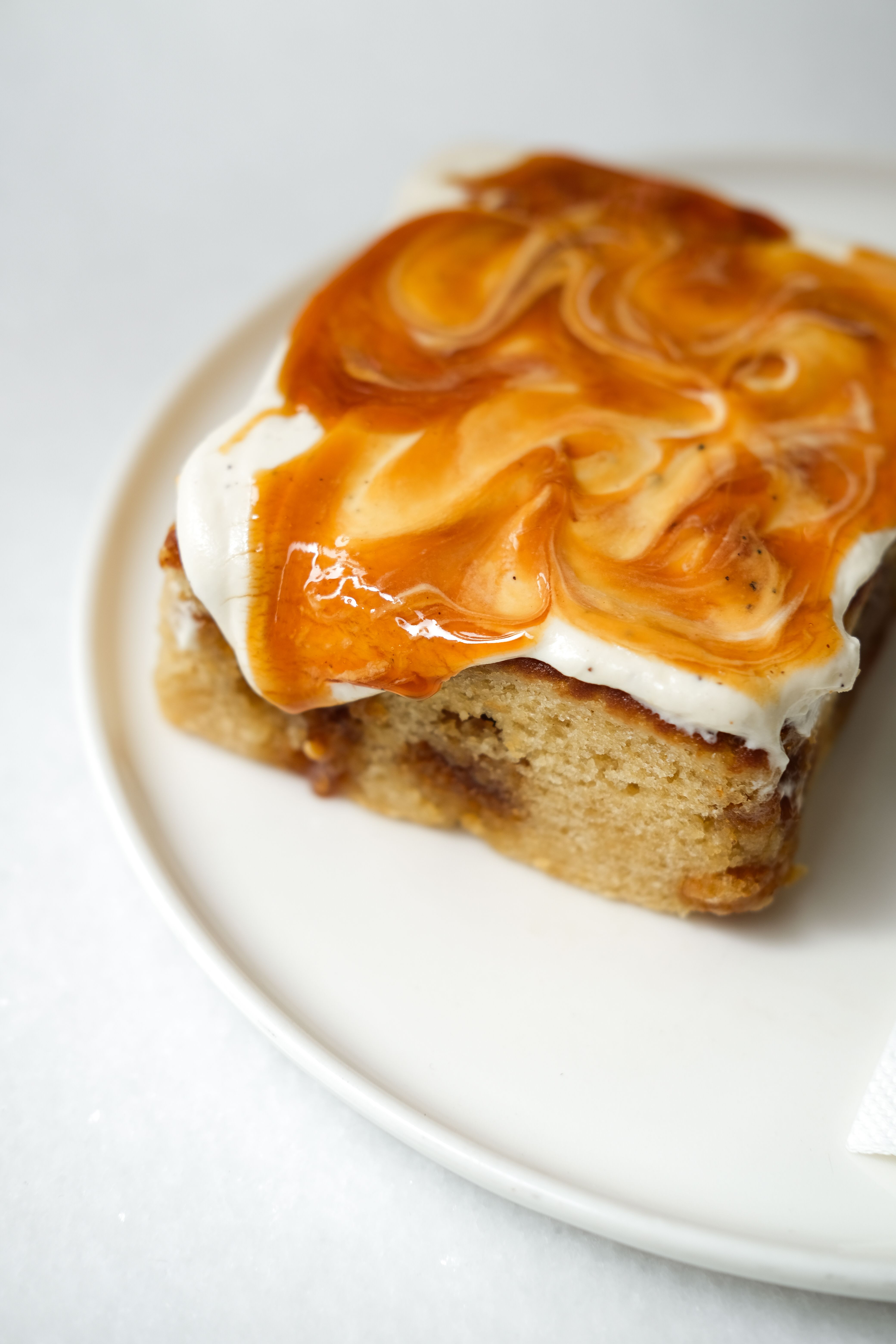
Photo: Esra Afşar / Pexels
The diets react (see scores below)
Common Ingredients
- butter
- brown sugar
- egg
- vanilla extract
- flour
- baking powder
- salt
- chocolate chips
Specific recipes may vary.
Incompatible with 11 of 11 diets
Diet Ratings
Blondies are fundamentally incompatible with a ketogenic diet. The two primary ingredients — brown sugar and wheat flour — are among the most keto-incompatible foods possible. A single standard blondie bar contains roughly 30-45g of net carbs, which meets or exceeds an entire day's carb allowance on keto. Brown sugar is pure sucrose with no fiber offset, and all-purpose flour is a high-glycemic grain product. The chocolate chips add additional sugar. Butter and eggs are keto-friendly, but they are completely overwhelmed by the carbohydrate load of the other ingredients. There is no meaningful portion size that makes this dish compatible with ketosis.
A classic Blondie contains multiple animal-derived ingredients that disqualify it from a vegan diet. Butter is a dairy product (animal fat), egg is a direct animal product, and standard chocolate chips typically contain milk solids or butter fat. All three are non-negotiable exclusions under vegan dietary rules. The remaining ingredients (brown sugar, vanilla extract, flour, baking powder, salt) are plant-based, but the presence of butter, egg, and dairy chocolate chips makes this firmly non-vegan. Vegan versions of this dessert can be made by substituting plant-based butter, a flax or chia egg or commercial egg replacer, and dairy-free chocolate chips, but the dish as described with these ingredients is not vegan.
Blondies are fundamentally incompatible with the Paleo diet. The recipe contains multiple core non-Paleo ingredients: flour (wheat grain, strictly excluded), brown sugar (refined sugar, strictly excluded), butter (dairy, strictly excluded), baking powder (processed leavening agent with additives), and salt (added salt, excluded). Chocolate chips typically contain refined sugar and dairy as well. This dish is essentially a grain-and-sugar-based baked good — the exact type of processed, agricultural-era food the Paleo diet is designed to eliminate. There is no meaningful substitution possible while retaining the identity of this dish.
A Blondie is a classic American dessert bar built almost entirely on ingredients that contradict Mediterranean diet principles. Butter is the primary fat rather than extra virgin olive oil, brown sugar is a significant added sugar, and refined white flour is the structural base. Chocolate chips add further refined sugar and saturated fat. The dish is highly processed in character, calorie-dense, nutrient-poor, and offers none of the plant-forward, whole-food qualities the Mediterranean diet emphasizes. Occasional small treats may be tolerated in a Mediterranean lifestyle, but this item as a standard recipe is fundamentally misaligned with the dietary pattern.
A Blondie is a baked dessert bar that is almost entirely plant-based and processed. The dominant ingredients — flour (grain), brown sugar (refined plant sugar), and chocolate chips (plant-derived, sugar-laden) — are all explicitly excluded on the carnivore diet. While butter and egg are animal-derived, they are minor components in a dish whose foundation is pure carbohydrate and sugar. Vanilla extract is a plant-derived flavoring. Baking powder contains starch fillers. This is a confectionery item with no meaningful animal nutrition and represents exactly the type of processed, sugar-laden food the carnivore diet is designed to eliminate.
Blondies contain multiple excluded ingredients: butter (dairy, not ghee), brown sugar (added sugar), flour (wheat grain), and chocolate chips (typically contain added sugar and dairy). Even if compliant versions of each ingredient could be sourced, a blondie is explicitly the type of baked good/junk food recreation that Whole30 prohibits by rule #4 — it falls squarely into the 'brownies' category of disallowed baked goods.
Blondies contain regular wheat flour as a primary ingredient, which is high in fructans — a key FODMAP. Wheat flour is consistently rated high-FODMAP by Monash University, and a standard blondie serving would contain a significant amount of it. Brown sugar, butter, egg, vanilla extract, baking powder, and salt are all low-FODMAP. Chocolate chips may contain small amounts of lactose but are generally considered low-FODMAP at typical quantities (around 30g dark chocolate chips). However, the wheat flour alone disqualifies this dish during the elimination phase. There is no realistic way to consume a standard portion of a blondie without exceeding the fructan threshold from wheat.
Blondies are a classic American dessert bar that conflicts with nearly every core DASH principle. The primary ingredients — butter (high in saturated fat), brown sugar (high added sugar), and chocolate chips (added sugar plus saturated fat) — directly violate DASH's explicit limits on saturated fat, total fat, and sweets. The dish is energy-dense, nutrient-poor in terms of DASH-relevant micronutrients (potassium, calcium, magnesium, fiber), and provides essentially no lean protein or whole grain content. DASH guidelines explicitly call for limiting sweets to 5 or fewer servings per week (small portions), and a blondie bar as a snack would likely consume that entire weekly allowance in a single serving. There is no meaningful DASH-compatible nutritional upside to this food.
A blondie is essentially a dense sugar-and-butter bar with no redeeming Zone properties. The macronutrient profile is catastrophically misaligned: the bulk of calories come from refined flour (high-glycemic carbohydrates) and brown sugar (high-glycemic, essentially pure sucrose), with fat skewed heavily toward saturated (butter) rather than monounsaturated. There is virtually no lean protein — egg contributes a trivial amount relative to the carbohydrate and fat load, and no protein source is listed as primary. The 40/30/30 ratio is impossible to achieve even with aggressive portioning of this item alone. Brown sugar and refined flour are both explicitly 'unfavorable' carbohydrates in Zone terminology, and butter is a saturated fat source Sears historically discouraged. Chocolate chips add additional sugar and saturated fat. Even a very small portion would represent an enormous carbohydrate block expenditure with essentially zero protein blocks, leaving the meal hopelessly out of balance. This is the archetype of a 'pro-inflammatory' snack Sears warns against — high glycemic load, high saturated fat, no lean protein, no fiber, no polyphenols of significance.
A blondie is a butter-and-brown-sugar bar cookie with virtually no anti-inflammatory redeeming qualities. The dominant ingredients — butter (saturated fat) and brown sugar (added sugar) — are both explicitly limited or avoided in anti-inflammatory frameworks. Refined white flour is a refined carbohydrate with a high glycemic index that promotes insulin spikes and inflammatory cytokines. The combination of saturated fat and high glycemic-load carbohydrates together has been shown in research to acutely elevate inflammatory markers including CRP and IL-6. The chocolate chips offer a minor concession only if they are high-cacao dark chocolate, which would contribute small amounts of anti-inflammatory flavanols, but in a standard blondie recipe the chips are typically semi-sweet or milk chocolate with substantial added sugar, negating that benefit. There is no meaningful source of omega-3 fatty acids, antioxidants, polyphenols, or fiber. This dish is essentially the concentrated combination of the three ingredient categories anti-inflammatory nutrition most strongly discourages: butter, refined sugar, and refined carbohydrates.
A blondie is a butter- and brown sugar-based dessert bar with chocolate chips, offering almost no protein, negligible fiber, high saturated fat from butter, and a very high sugar load. It is the definition of empty calories — exactly what GLP-1 patients cannot afford given their dramatically reduced appetite and caloric intake. The high fat and sugar content can worsen GLP-1 side effects including nausea, reflux, and blood sugar spikes. Chocolate chips add further sugar and fat. There is no meaningful nutritional payoff per calorie. This food directly conflicts with every core GLP-1 dietary priority: low protein density, near-zero fiber, high saturated fat, high sugar, and low nutrient density per calorie.
*See how scores were generated at our methodology page.
Nutritional profile
Six traits that cut across every diet.
Fiber & Plants
How much whole-plant food and fiber it delivers.
Healthy Fats
The quality of its fats (unsaturated, omega-3).
Whole / Unprocessed
How close it is to its natural, unprocessed form.
Gut Gentle
How easy it is on digestion (low FODMAP, few irritants).
Low Glycemic
How little it spikes your blood sugar.
Protein Density
How much protein it packs per calorie.
Controversy Index
Higher controversy = more disagreement between diets.