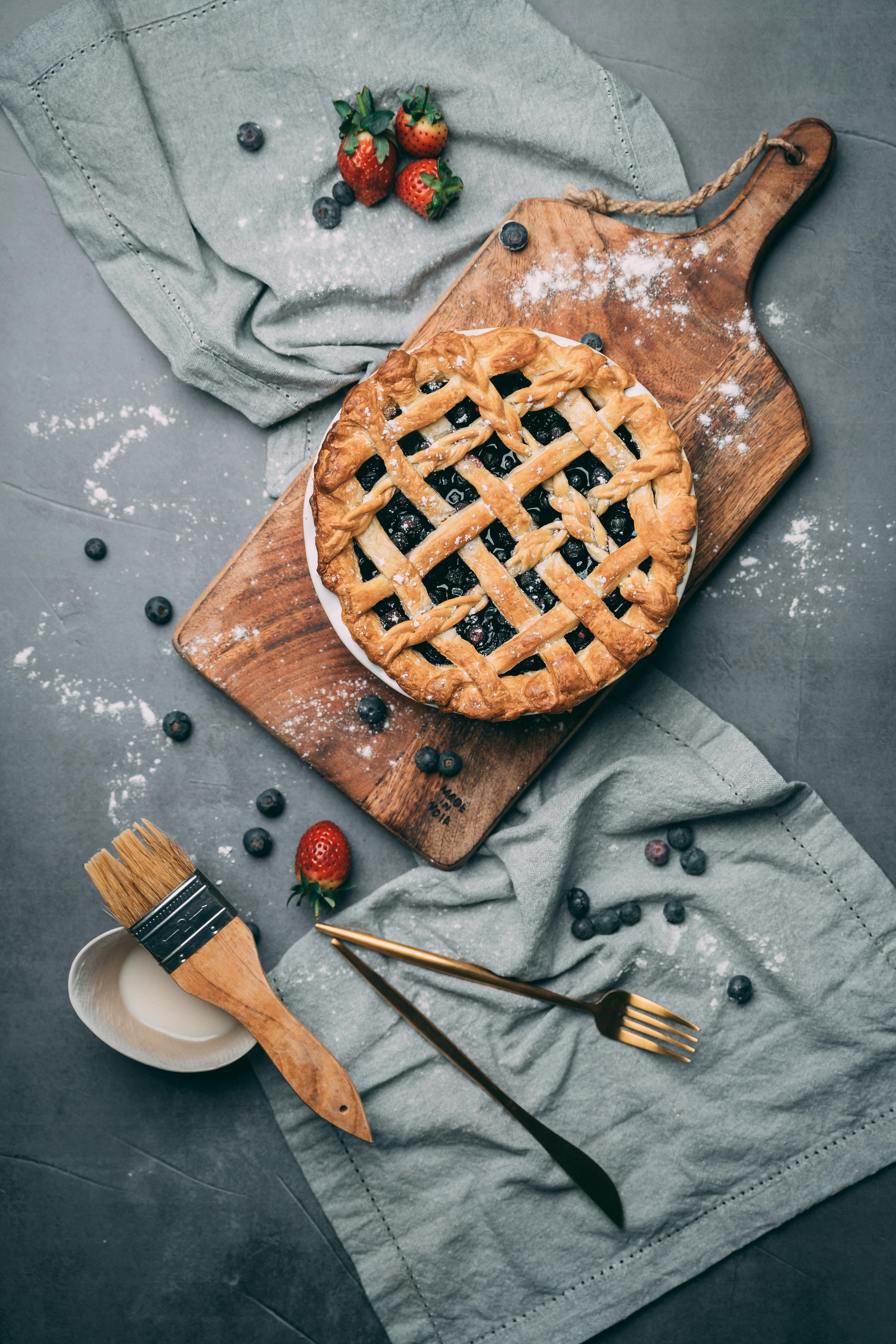
Photo: Taryn Elliott / Pexels
American
Blueberry Pie
The diets react (see scores below)
Common Ingredients
- blueberries
- pie crust
- sugar
- cornstarch
- butter
- lemon juice
- salt
- vanilla extract
Specific recipes may vary.
Incompatible with 10 of 11 diets
Diet Ratings
Blueberry pie is fundamentally incompatible with ketogenic eating. It contains multiple high-carb, keto-incompatible ingredients stacked together: a grain-based pie crust (wheat flour), added sugar, and cornstarch as a thickener. Even the blueberries alone, while lower in carbs among fruits, contribute significant net carbs at pie-filling quantities. A single slice easily delivers 50-70g of net carbs — well above the entire daily keto allowance — with the majority coming from added sugar, the flour crust, and cornstarch. Butter is the only keto-friendly ingredient present. There is no meaningful portion size that would make this compatible with ketosis.
This blueberry pie contains butter, which is a dairy product derived from cow's milk and is unambiguously non-vegan. The pie crust typically also relies on butter as its fat source, compounding the issue. All other ingredients — blueberries, sugar, cornstarch, lemon juice, salt, and vanilla extract — are plant-based. A vegan version is straightforward to make by substituting the butter with a plant-based alternative (coconut oil, vegan margarine) and using a vegan pie crust.
Blueberry pie is fundamentally incompatible with the paleo diet. The pie crust is made from grain-based flour (wheat), which is explicitly excluded. Refined sugar is a non-paleo ingredient. Cornstarch is derived from corn, a grain, and is excluded. Butter is a dairy product. Salt (added) is discouraged. While blueberries, lemon juice, and vanilla extract are paleo-approved, the majority of this dish's structure relies on prohibited ingredients, making it a clear avoid.
Blueberry pie as prepared here contains several ingredients that contradict Mediterranean diet principles. The refined white flour pie crust is a processed refined grain, added sugar is explicitly minimized in the Mediterranean diet, and butter (a saturated animal fat) replaces the preferred olive oil. While blueberries themselves are an excellent Mediterranean-approved fruit, they are embedded in a dessert format that is high in added sugar, refined carbohydrates, and saturated fat. This is a classic American-style dessert with little alignment to Mediterranean eating patterns.
Blueberry Pie is entirely incompatible with the carnivore diet. It contains no animal products as its primary components and is composed almost entirely of plant-derived and processed ingredients: blueberries (fruit), pie crust (grain-based), sugar (processed plant), cornstarch (plant starch), lemon juice (fruit), and vanilla extract (plant). The only marginally carnivore-adjacent ingredient is butter, which is a dairy derivative and represents a negligible fraction of the dish. There is universal consensus across all carnivore diet authorities and protocols — from the strictest Lion Diet to the more permissive animal-based approaches — that fruit pies, grains, sugar, and plant-based fillers are strictly excluded.
Blueberry pie contains multiple excluded ingredients and also violates the 'no recreating baked goods' rule. Sugar is an explicitly excluded added sweetener. Pie crust is made from grains (wheat flour), which are entirely excluded. Butter (regular, not ghee) is an excluded dairy product. Cornstarch is also on the excluded list. Even if those individual ingredients were swapped for compliant versions, pie itself is explicitly listed as a baked good that is off-limits under Whole30's rule against recreating junk food and baked goods.
Blueberry pie contains two significant FODMAP concerns. First, the pie crust is typically made with wheat flour, which is high in fructans — a major FODMAP category — making it a problem during the elimination phase. Second, blueberries are dose-dependent: Monash rates them as low-FODMAP at 40g (approximately 28 berries) but high-FODMAP at larger servings due to excess fructose and polyols. A standard slice of blueberry pie would contain far more than 40g of blueberries, placing it firmly in high-FODMAP territory. Sugar, cornstarch, butter, lemon juice (small amounts), salt, and vanilla extract are generally low-FODMAP and not a concern. However, the combination of a wheat-based crust and a high-blueberry filling makes a standard serving of blueberry pie unsuitable during the elimination phase.
Monash University does approve blueberries at the 40g threshold, and a gluten-free pie crust would eliminate the fructan concern — some FODMAP practitioners may approve a homemade version with a GF crust and carefully portioned blueberry filling. However, commercial or restaurant blueberry pie almost universally uses wheat crust and a generous filling, making a 'caution' rating impractical for real-world consumption.
Blueberry pie is a classic American dessert that conflicts with core DASH diet principles on multiple fronts. While blueberries themselves are an excellent DASH food (rich in potassium, fiber, and antioxidants), the overall dish is heavily compromised by its other components. The pie crust contains refined white flour and significant butter, contributing saturated fat and empty calories. The added sugar content is substantial — a typical slice contains 20-35g of added sugar, far exceeding DASH's guidance to limit sweets. Butter in both the filling and crust adds saturated fat, which DASH explicitly limits. The refined flour crust lacks the fiber benefits of whole grains. As a dessert/sweet, it falls squarely in the 'sweets' category that DASH recommends limiting to ≤5 servings per week with very small portion sizes, and a full slice of blueberry pie would represent a significant dietary indulgence even within that allowance. NIH/NHLBI DASH guidelines explicitly call for limiting sweets, sugary foods, and foods high in saturated fat — blueberry pie checks multiple 'limit' boxes simultaneously.
Blueberry pie is a poor fit for the Zone Diet on multiple fronts. While blueberries themselves are a Zone-favorable fruit rich in polyphenols and antioxidants, the pie format undermines any nutritional benefit. The pie crust is made from refined white flour and butter, delivering high-glycemic, low-fiber carbohydrates alongside saturated fat — the opposite of Zone's preferred monounsaturated fats. Added sugar is a primary ingredient, dramatically spiking the glycemic load. Cornstarch is another high-glycemic thickener. The dish contains no meaningful protein, making it impossible to construct even a rough 40/30/30 macronutrient ratio. As a snack, it would flood the carbohydrate block allocation with unfavorable, high-glycemic sources while contributing zero protein blocks and the wrong type of fat. Even a small portion would be difficult to balance within Zone parameters without a disproportionate amount of lean protein and monounsaturated fat on the side, at which point the pie itself is an obstacle rather than a contribution. This is essentially a dessert masquerading as a snack, built from the foods Zone most discourages: refined flour, added sugar, and high-glycemic starches.
Blueberry pie presents a classic tension: its star ingredient, blueberries, is one of the most anti-inflammatory foods available, rich in anthocyanins, polyphenols, and antioxidants that meaningfully reduce inflammatory markers like CRP and IL-6. Lemon juice adds vitamin C and flavonoids, and vanilla extract contributes minor antioxidant compounds. However, the pie format undermines these benefits substantially. A traditional pie crust is made with refined white flour and butter — refined carbohydrates spike blood glucose and insulin (a pro-inflammatory pathway), while butter adds saturated fat. Added sugar, typically ½–¾ cup, further drives glycemic load and inflammatory response. Cornstarch is an additional refined carbohydrate with no nutritional benefit. The net result is a dessert that dilutes genuinely powerful anti-inflammatory ingredients in a refined, high-sugar, high-saturated-fat vehicle. As an occasional treat, the blueberry content still provides real benefit, but it cannot be considered an anti-inflammatory food in this form. A score of 4 reflects the meaningful anti-inflammatory potential of the blueberries offset by the pro-inflammatory delivery mechanism.
Blueberry pie is a poor choice for GLP-1 patients on nearly every relevant dimension. The pie crust is made with butter and refined flour, delivering significant saturated fat and empty refined carbohydrates. The filling is heavily sweetened with added sugar, spiking blood glucose with minimal nutritional return. There is no meaningful protein — a critical gap given that protein preservation is the top dietary priority on GLP-1 therapy. While blueberries themselves offer some fiber and antioxidants, the net fiber per slice is modest and far outweighed by the sugar and fat load. The high fat and sugar content is likely to worsen GLP-1 side effects including nausea, bloating, and reflux, since slowed gastric emptying means rich, heavy foods sit in the stomach much longer. Caloric density is high relative to nutritional value, making this an archetypal empty-calorie food for patients who are already eating significantly less. As a snack category item, it occupies meal real estate that should be used for protein and fiber.
*See how scores were generated at our methodology page.
Nutritional profile
Six traits that cut across every diet.
Fiber & Plants
How much whole-plant food and fiber it delivers.
Healthy Fats
The quality of its fats (unsaturated, omega-3).
Whole / Unprocessed
How close it is to its natural, unprocessed form.
Gut Gentle
How easy it is on digestion (low FODMAP, few irritants).
Low Glycemic
How little it spikes your blood sugar.
Protein Density
How much protein it packs per calorie.
Controversy Index
Higher controversy = more disagreement between diets.
Diet-Specific Tips
 Anti-Inflammatory — 4/10
View tips
- Blueberries are a top-tier anti-inflammatory ingredient — rich in anthocyanins, quercetin, and polyphenols shown to reduce CRP and IL-6
- Refined white flour pie crust contributes high glycemic load, which promotes inflammation
- Significant added sugar drives insulin response and supports pro-inflammatory pathways
- Butter adds saturated fat, a limited-intake item in anti-inflammatory frameworks
- Cornstarch is a refined carbohydrate with no anti-inflammatory benefit
- Lemon juice and vanilla extract add minor antioxidant properties
- Overall dish is treat food — acceptable occasionally, not a recommended anti-inflammatory snack