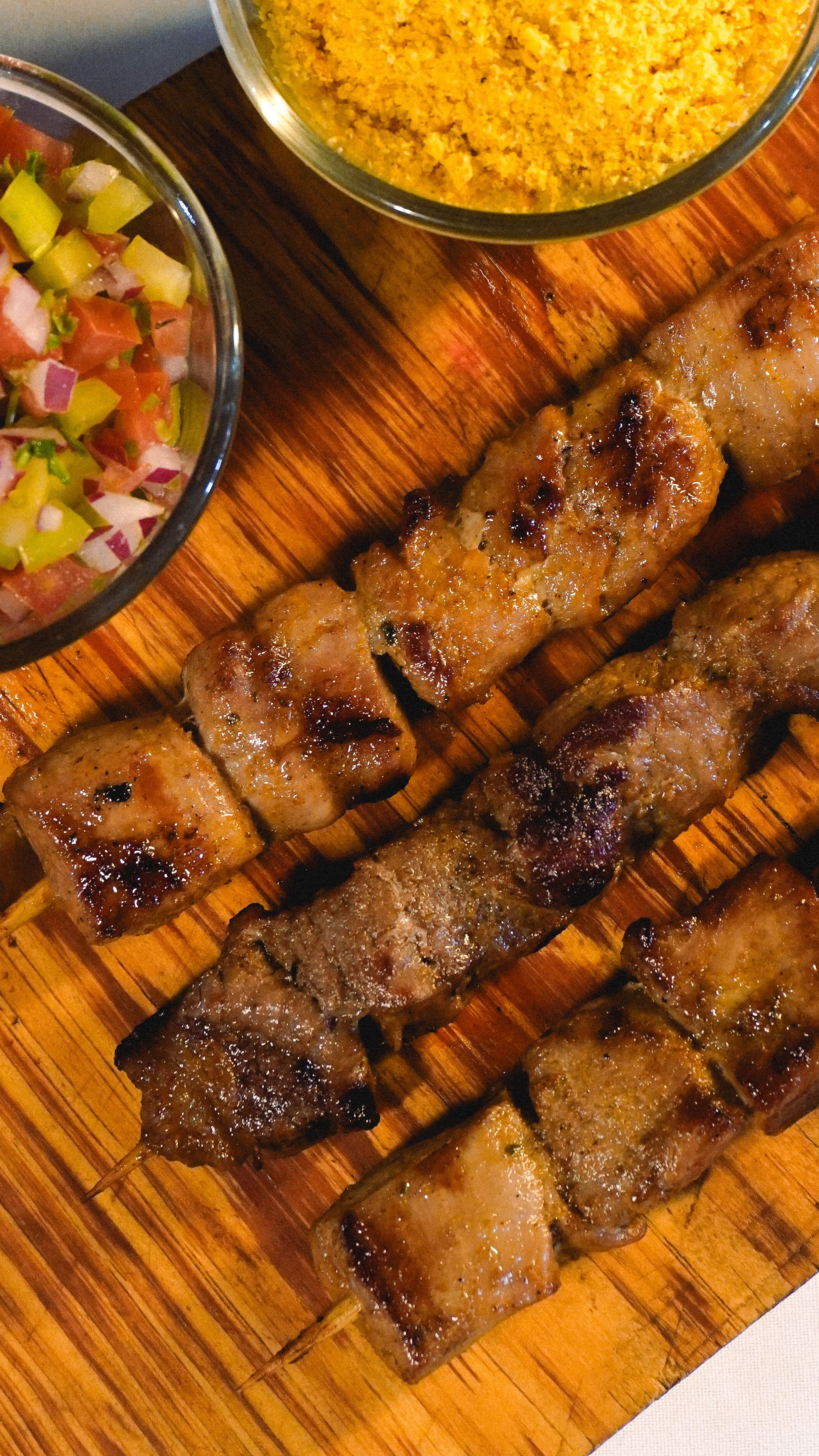
Photo: Debora Silveira / Pexels
The diets react (see scores below)
Common Ingredients
- beef heart
- aji panca
- garlic
- cumin
- vinegar
- potatoes
- peanuts
- onion
Specific recipes may vary.
Incompatible with 7 of 11 diets
Diet Ratings
Anticucho as traditionally prepared contains two major keto-incompatible ingredients: potatoes and peanuts. Potatoes are a high-starch vegetable with roughly 15-17g net carbs per 100g, making even small servings problematic for ketosis. Peanuts add moderate carbs and are often used in significant quantities in the sauce. The base ingredients — beef heart, aji panca, garlic, cumin, vinegar, and onion — are largely keto-friendly; beef heart is a nutrient-dense, moderate-fat protein, and the marinade spices are low-carb. However, the dish cannot be evaluated without its traditional accompaniments and sauce components. In its standard form, the potato and peanut components push the net carb count well beyond keto thresholds for a snack serving.
Anticucho is a traditional Andean dish centered on beef heart as its primary protein. Beef heart is an animal product (organ meat from cattle), making this dish entirely incompatible with a vegan diet. There is no ambiguity here — animal flesh of any kind, including offal, is explicitly excluded from veganism. The remaining ingredients (aji panca, garlic, cumin, vinegar, potatoes, peanuts, onion) are all plant-based, but the core protein renders the dish non-vegan.
Anticucho contains several problematic ingredients from a paleo perspective. Peanuts are legumes and are firmly excluded from paleo. Potatoes are debated — Cordain's original framework excludes them, though some modern paleo authorities allow white potatoes. Vinegar is a gray area (apple cider vinegar is generally accepted, but the type used here is unspecified). The base ingredients — beef heart, aji panca, garlic, cumin, and onion — are all paleo-approved, with organ meats being particularly nutrient-dense and encouraged by paleo advocates. However, the peanuts alone are sufficient to push this dish into 'avoid' territory, as there is strong consensus that legumes are excluded. The potato question adds further complication but is secondary to the peanut issue.
Some ancestral health practitioners following a more relaxed or 'primal' framework (e.g., Mark Sisson's Primal Blueprint) might tolerate white potatoes and overlook small amounts of certain legumes in traditional ethnic dishes, viewing the overall nutrient profile of organ meats favorably. However, no mainstream paleo authority accepts peanuts as compliant.
Anticucho is centered on beef heart, which is red meat (organ meat) — directly contradicting Mediterranean diet principles that limit red meat to a few times per month. While some accompanying ingredients are Mediterranean-compatible (garlic, onion, cumin, vinegar, potatoes), and peanuts add a modest plant-based element, the dish's primary protein is beef offal. Organ meats are among the foods most discouraged in the Mediterranean dietary pattern due to their high saturated fat content and association with increased cardiovascular risk. The dish lacks olive oil, fish, legumes, or whole grains as primary components, and there is no compensation from the side ingredients sufficient to offset the core incompatibility.
Anticucho features beef heart as its primary protein, which is an excellent carnivore-approved organ meat. However, the dish is heavily laden with plant-based ingredients that make it incompatible with the carnivore diet. Aji panca (a plant-based chili pepper), garlic, cumin, vinegar (typically plant-derived), potatoes, peanuts, and onion all violate carnivore principles. Potatoes and peanuts in particular are strictly excluded plant foods. The dish as traditionally prepared cannot be considered carnivore-compatible despite its excellent protein source. Only the beef heart itself would be approved; the entire preparation and accompaniments must be avoided.
Anticucho contains peanuts, which are a legume and explicitly excluded on the Whole30 program. All other ingredients — beef heart, aji panca, garlic, cumin, vinegar, potatoes, and onion — are Whole30-compatible. However, the presence of peanuts makes this dish non-compliant. The dish could be made Whole30-compliant by omitting the peanuts entirely.
Anticucho contains multiple high-FODMAP ingredients that make it unsuitable during the elimination phase. Garlic is one of the highest-FODMAP foods (fructans) and a clear avoid at any amount. Onion is similarly high in fructans and must be avoided entirely during elimination. Peanuts become high-FODMAP (GOS) at standard snack-sized servings (>32g). While beef heart, aji panca (in small amounts), cumin, vinegar, and potatoes are generally low-FODMAP, the combination of garlic, onion, and a meaningful portion of peanuts makes this dish a definitive avoid during elimination. The dish would require significant reformulation — removing garlic and onion entirely, substituting garlic-infused oil, and limiting peanuts — to become elimination-phase compatible.
Anticucho features beef heart as the primary protein, which is an organ meat with a mixed DASH profile. Beef heart is leaner than many cuts of red meat and is rich in B vitamins, iron, and CoQ10, but it still falls under the 'red meat' category that DASH recommends limiting. The marinade ingredients — aji panca (a mild chili paste), garlic, cumin, and vinegar — are DASH-friendly with minimal sodium concerns in their natural forms. Potatoes (a vegetable with good potassium content) and onion are positive DASH elements. Peanuts add heart-healthy unsaturated fats and some protein, consistent with DASH's inclusion of nuts. The overall dish, if prepared without excessive added sodium, is relatively lean and features several DASH-positive ingredients. However, beef heart is still red meat and organ meat, which DASH does not emphasize. The DASH diet steers toward poultry, fish, and plant proteins. Portion control and preparation method (grilled vs. fried) significantly influence the final assessment. As a grilled snack with modest portions, it lands in the caution zone — acceptable occasionally but not a core DASH food.
NIH DASH guidelines categorize all red meat (including organ meats) as foods to limit and favor lean poultry and fish instead. However, some updated clinical interpretations note that beef heart is considerably leaner than most red meat cuts (lower in saturated fat) and that organ meats provide exceptional micronutrient density; some DASH-aligned cardiologists may allow small portions of lean organ meats within the weekly red meat allotment.
Anticucho presents a mixed Zone Diet profile. On the positive side, beef heart is a lean organ meat — actually lower in fat than many cuts of beef and reasonably high in protein, making it a workable Zone protein source. The marinade ingredients (aji panca, garlic, cumin, vinegar, onion) are low-glycemic and anti-inflammatory, adding polyphenols and flavor without significant macro disruption. However, the dish as traditionally prepared includes two significant Zone concerns: potatoes (high-glycemic, explicitly 'unfavorable' in Zone terminology — Sears lists potatoes among carbs to avoid alongside white bread and rice) and peanuts (a legume with a mixed fat profile — some monounsaturated but also notable omega-6 polyunsaturated fats, plus peanuts add fat blocks that are less ideal than almonds or avocado). The combination of a high-GI carb (potatoes) with an omega-6-heavy fat source (peanuts) makes this dish difficult to Zone-balance without significant modification. As a snack, the portion context is also a concern — snacks in Zone should be 1-block mini-meals, and this dish's starchy and fatty components make precise blocking challenging. With modifications (swap potatoes for a low-GI vegetable side, reduce or eliminate peanuts), the beef heart component alone would score much higher.
Some Zone practitioners would argue that small portions of potato and peanuts can be blocked into an otherwise Zone-compliant meal, and that beef heart's lean protein profile partially compensates. Dr. Sears' later anti-inflammatory writings (The OmegaRx Zone) also place greater emphasis on omega-3/omega-6 ratios than strict GI classification, under which framework small amounts of peanuts might be tolerated if omega-3 intake is otherwise robust. In this more flexible reading, Anticucho could score a 5-6 with careful portioning.
Anticucho is a grilled beef heart skewer with a marinade of aji panca, garlic, cumin, and vinegar, served with potatoes and peanuts. The profile is genuinely mixed from an anti-inflammatory standpoint. On the positive side: beef heart, while red meat, is an organ meat with notably higher CoQ10, B vitamins, and zinc than muscle meat, and is leaner than many cuts — making it less categorically pro-inflammatory than, say, fatty red meat. Garlic and cumin are well-regarded anti-inflammatory spices. Aji panca (a dried Peruvian chili) contributes capsaicinoids and carotenoids with antioxidant properties. Vinegar (acidity, acetic acid) is neutral to mildly beneficial. Peanuts provide some anti-inflammatory monounsaturated fats and resveratrol, though they are legumes with a moderate omega-6 load. Potatoes are a nightshade starch — generally acceptable in anti-inflammatory frameworks but higher glycemic. The primary concern is that beef heart is still red meat, and organ meats contain significant arachidonic acid (a precursor to pro-inflammatory eicosanoids), which is a red flag in anti-inflammatory nutrition. However, the preparation — grilled with anti-inflammatory spices and served in moderate portions as a skewer snack — mitigates some concern. This is not an avoid-level food but warrants caution, particularly for those with autoimmune or cardiovascular inflammation concerns.
Some ancestral and nose-to-tail nutrition advocates (e.g., Paul Saladino, Weston A. Price Foundation) argue organ meats like heart are among the most nutrient-dense foods available, with CoQ10, selenium, and B12 offering cellular anti-inflammatory benefits that outweigh arachidonic acid concerns. However, mainstream anti-inflammatory frameworks including Dr. Weil's pyramid limit red and organ meat, and those following autoimmune protocols (AIP) would flag both the arachidonic acid load and the peanuts (a legume sometimes excluded in strict AIP).
Anticucho is a grilled beef heart skewer marinated in aji panca, garlic, cumin, and vinegar, typically served with boiled potatoes and a peanut sauce. Beef heart is a surprisingly lean organ meat with high protein density — roughly 17-20g protein per 100g with relatively low fat compared to other beef cuts — making it a stronger protein source than many expect. The grilling preparation is a positive, avoiding the fried-food concern. However, several factors introduce caution for GLP-1 patients: (1) The peanut sauce adds meaningful fat per serving, and portion control is required to avoid triggering nausea or reflux from fat load. (2) Aji panca is a mild chili pepper — much milder than habanero or sriracha — so spice is a modest concern rather than a disqualifying one, though GLP-1 patients with acid reflux or gastric sensitivity may still react. (3) Boiled potatoes contribute starchy carbohydrates with limited fiber and low protein density, reducing the nutrient-per-calorie efficiency of the overall dish. (4) Beef heart, as organ meat and red meat, sits in a moderate saturated fat category — lower than fatty beef cuts, but not as lean as chicken breast or fish. (5) Vinegar-based marinades are generally well-tolerated and may even support digestion. Overall, a small portion of the grilled beef heart component is the most GLP-1-compatible element; the full dish with potatoes and peanut sauce requires portion discipline.
Some GLP-1-focused dietitians may rate beef heart more favorably given its exceptional protein-to-fat ratio compared to conventional beef cuts, arguing it outperforms many approved proteins on nutrient density per calorie. Others remain cautious about all red and organ meats due to saturated fat content and individual GI tolerance variability on GLP-1 medications, particularly around gastric emptying interactions with denser animal proteins.
*See how scores were generated at our methodology page.
Nutritional profile
Six traits that cut across every diet.
Fiber & Plants
How much whole-plant food and fiber it delivers.
Healthy Fats
The quality of its fats (unsaturated, omega-3).
Whole / Unprocessed
How close it is to its natural, unprocessed form.
Gut Gentle
How easy it is on digestion (low FODMAP, few irritants).
Low Glycemic
How little it spikes your blood sugar.
Protein Density
How much protein it packs per calorie.
Controversy Index
Higher controversy = more disagreement between diets.
Diet-Specific Tips
 DASH — 5/10
View tips
- Beef heart is a red/organ meat, a category DASH recommends limiting
- Beef heart is leaner than most red meat cuts, with lower saturated fat than typical beef
- Potatoes and onion contribute DASH-friendly potassium and fiber
- Peanuts provide DASH-approved healthy unsaturated fats
- Garlic, cumin, aji panca, and vinegar marinade adds minimal sodium in traditional preparation
- Grilling (typical preparation) is preferable to frying for DASH compatibility
- Portion size as a snack helps moderate red meat intake
- No added sugary ingredients or heavy sodium sources in base recipe
 Zone — 4/10
View tips
- Beef heart is a lean organ meat — good Zone protein source with roughly 7g protein per ounce
- Potatoes are explicitly 'unfavorable' high-glycemic carbs in Zone Diet — Sears advises avoiding them
- Peanuts have notable omega-6 fat content, less preferred than monounsaturated sources like almonds or avocado
- Marinade ingredients (aji panca, garlic, cumin, vinegar) are low-glycemic and anti-inflammatory — Zone favorable
- As a snack, the combined starch and fat load makes Zone block balancing difficult without modification
- Dish could be rehabilitated for Zone by substituting sweet potato or vegetables for potato and reducing peanut quantity
 Anti-Inflammatory — 5/10
View tips
- Beef heart is red meat/organ meat — limited in anti-inflammatory frameworks due to arachidonic acid content
- Beef heart is lean and high in CoQ10, B12, and selenium — more nuanced than fatty red meat
- Garlic, cumin, and aji panca chili provide meaningful anti-inflammatory phytochemicals
- Peanuts offer MUFAs and resveratrol but carry moderate omega-6 content
- Potatoes are a moderate-glycemic nightshade — generally acceptable but not strongly anti-inflammatory
- Grilling method is preferable to frying; vinegar marinade is neutral to beneficial
- Arachidonic acid in organ meat is a concern for autoimmune or high-inflammation individuals
 GLP-1 Friendly — 5/10
View tips
- Beef heart is lean and high-protein for a red meat, roughly 17-20g protein per 100g
- Grilled preparation is GLP-1 favorable — avoids fried-food nausea triggers
- Peanut sauce adds significant fat per serving — portion-sensitive
- Aji panca is mild but still a chili pepper — may aggravate reflux in sensitive GLP-1 patients
- Boiled potatoes are low fiber, low protein — reduce overall nutrient density of the dish
- Organ meat / red meat category carries moderate saturated fat concern
- Vinegar marinade is generally well-tolerated and digestion-neutral
- Full dish requires portion control to stay within GLP-1 fat and calorie tolerance