Photo: Campanero M / Pexels
The diets react (see scores below)
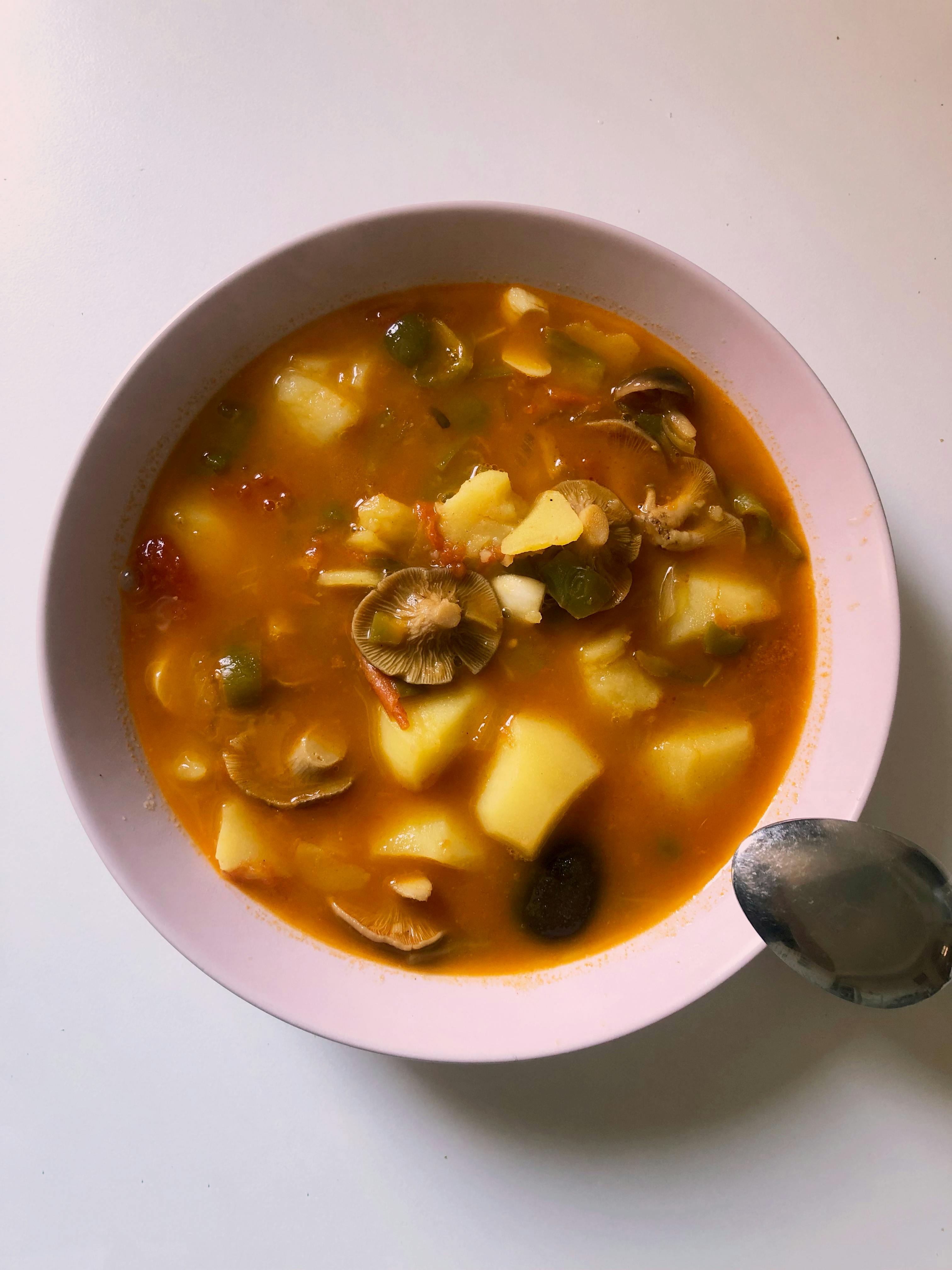
Common Ingredients
- chuno
- lamb
- beef
- wheat
- potatoes
- carrot
- peas
- onion
- garlic
- oregano
Specific recipes may vary.
Incompatible with 7 of 11 diets
Diet Ratings
Chairo is fundamentally incompatible with a ketogenic diet. It contains multiple high-carbohydrate ingredients that would collectively push net carbs far beyond the 20-50g daily limit in a single serving. Chuño (freeze-dried potato) and regular potatoes are starchy vegetables with very high net carbs. Wheat is a grain with significant carbohydrate content. Peas and carrots add additional net carbs. Combined, these ingredients make this dish impossible to consume on keto without completely deconstructing it. The lamb and beef components are keto-friendly, but they are surrounded by a carbohydrate-dense base that cannot be separated from the dish in its traditional form.
Chairo is a traditional Bolivian soup that contains both lamb and beef as primary ingredients. These are unambiguous animal products (mammalian meat) that are strictly excluded from a vegan diet. There is no version of this dish that could be considered vegan without a complete reformulation replacing the animal proteins with plant-based alternatives.
Chairo contains multiple non-paleo ingredients that make it clearly incompatible with the Paleolithic diet. Wheat is a grain and a direct paleo exclusion. Peas are legumes, also excluded. Chuño (freeze-dried potato) is a processed food product, and while potatoes themselves are debated, chuño undergoes significant traditional processing. These three ingredients alone — wheat, peas, and chuño — are firm violations of paleo principles, making the overall dish a clear avoid regardless of the otherwise paleo-compatible ingredients (lamb, beef, carrot, onion, garlic, oregano).
Chairo is a traditional Bolivian stew that combines two types of red meat (lamb and beef) as primary protein sources, which directly conflicts with Mediterranean diet principles. Red meat should be limited to just a few times per month, yet this dish doubles up with both lamb and beef. The vegetable components (potatoes, carrot, peas, onion, garlic) and aromatics (oregano) are positive elements, and chuño (freeze-dried potato) adds whole-food character. However, the dual red meat load is the dominant nutritional concern. The dish also lacks olive oil, fish, legumes in significant quantity, or whole grains as primary components. The wheat presence is minor. Overall, the red meat concentration places this firmly in the 'avoid' category for regular Mediterranean diet consumption.
Chairo is a traditional Bolivian soup that is fundamentally incompatible with the carnivore diet. While it does contain animal proteins (lamb and beef), the dish is overwhelmingly plant-based. It includes chuño (freeze-dried potato), fresh potatoes, carrots, peas, onion, garlic, oregano, and wheat — all of which are strictly excluded on a carnivore diet. Wheat (a grain), legumes (peas), root vegetables, alliums, and spices are all plant-derived and violate core carnivore principles. The presence of lamb and beef cannot redeem a dish where plant foods dominate both the ingredient list and the nutritional profile. There is no version of this dish that could be considered carnivore-compatible without a complete reconstruction.
Chairo contains wheat, which is a grain explicitly excluded on the Whole30 program. Additionally, peas (beyond snow peas and sugar snap peas) are legumes and are not among the specific exceptions granted by Whole30. These two ingredients alone make this dish non-compliant. The remaining ingredients — lamb, beef, chuno (freeze-dried potato), potatoes, carrot, onion, garlic, and oregano — are all Whole30-compatible, but the presence of wheat and peas disqualifies the dish entirely.
Chairo contains multiple high-FODMAP ingredients that make it unsuitable during the elimination phase. Onion and garlic are among the highest-FODMAP foods tested by Monash University, both containing significant fructans at any cooking amount. Wheat is a major fructan source and is high-FODMAP. Peas are high in GOS and fructans at standard serving sizes. These four ingredients alone would disqualify the dish. Chuno (freeze-dried potato) is likely low-FODMAP in small amounts, lamb and beef are protein sources with no FODMAPs, carrots are low-FODMAP, and plain potatoes are low-FODMAP — but the combination of onion, garlic, wheat, and peas makes this dish a clear 'avoid' during the elimination phase.
Chairo is a traditional Bolivian hearty soup containing multiple proteins (lamb and beef), vegetables, chuño (freeze-dried potato), wheat, and aromatics. The vegetable base — carrot, peas, onion, garlic, and potatoes — is strongly aligned with DASH principles, offering potassium, fiber, magnesium, and antioxidants. Chuño adds resistant starch and is a whole-food ingredient, though it may contribute moderate sodium depending on preparation. The primary concern is the dual red meat proteins: both lamb and beef are red meats that DASH guidelines limit due to their saturated fat content. Lamb in particular can be high in saturated fat depending on the cut. The combination of two red meats in one dish pushes the saturated fat load beyond what DASH recommends. Additionally, traditional preparations of this soup can be high in sodium depending on added salt and broth. On the positive side, the soup is not heavily processed and contains no added sugars or tropical oils. If prepared with lean cuts, trimmed fat, and limited salt, it becomes more DASH-compatible, but as commonly prepared it warrants caution.
NIH DASH guidelines explicitly limit red meat and recommend lean poultry or fish as primary proteins; however, some updated DASH-oriented clinicians note that occasional lean red meat in a vegetable-rich, whole-food soup context — with portion control — may not materially harm cardiovascular outcomes, particularly for non-hypertensive individuals with otherwise low saturated fat intake.
Chairo is a traditional Bolivian stew with a challenging macro profile for Zone compliance. The dish contains multiple high-glycemic carbohydrate sources — potatoes, chuño (freeze-dried potatoes), and wheat — which are all 'unfavorable' carbs in Zone terminology. Potatoes and their derivatives are specifically called out by Dr. Sears as high-glycemic foods to limit. The protein sources (lamb and beef) are fatty red meats rather than lean Zone-preferred proteins like skinless chicken or fish, adding saturated fat burden. On the positive side, the dish includes favorable Zone vegetables (carrots, peas, onion, garlic) and aromatic herbs. The fundamental problem is that the carbohydrate foundation is high-glycemic-dominant, and the proteins are not lean. A Zone-adapted version would need to dramatically reduce potato/chuño/wheat portions, increase the vegetable base, and substitute leaner proteins. As served traditionally, achieving the 40/30/30 ratio in a balanced way would be very difficult without significant portion manipulation.
Some Zone practitioners argue that when eating a small portion of a mixed stew like Chairo, the diverse vegetable content (carrots, peas, onion) offsets some glycemic load, and the overall protein-to-carb ratio may be closer to Zone-acceptable than a pure analysis of ingredients suggests. Additionally, Sears' later work on anti-inflammatory eating acknowledges that traditional whole-food diets with minimally processed ingredients — even those with moderate glycemic carbs — may be preferable to modern processed alternatives. In this context, a modest bowl of Chairo with extra protein could be worked into a Zone meal plan.
Chairo is a traditional Bolivian stew with a mixed anti-inflammatory profile. On the positive side, it contains a variety of vegetables (potato, carrot, peas, onion) that provide fiber, antioxidants, and carotenoids. Garlic and oregano are both well-supported anti-inflammatory herbs. Chuño (freeze-dried potato) retains much of the nutritional value of whole potato and provides resistant starch, which supports gut health and may reduce inflammatory markers. On the concerning side, the dish contains both lamb and beef — red meats that are high in saturated fat and arachidonic acid, which are associated with pro-inflammatory pathways. The dual red meat combination is more problematic than either alone. Wheat adds a refined carbohydrate component that is neutral to mildly pro-inflammatory depending on the form and individual gut response. The vegetable-heavy broth format of a soup is generally favorable, as it concentrates polyphenols and reduces the glycemic load of the overall meal. Overall, this dish sits in cautionary territory: traditional, whole-food ingredients with meaningful anti-inflammatory components, but held back by its reliance on two red meats with significant saturated fat content.
Some anti-inflammatory nutritionists would rate this more favorably, noting that lamb from pasture-raised sources contains CLA and some omega-3s, and that the overall vegetable density and herb content of the dish tilts it net-neutral. Others, particularly those following stricter anti-inflammatory protocols (e.g., Dr. Weil's emphasis on limiting red meat to small amounts), would rate this closer to 'avoid' due to the double red meat load without any omega-3-rich ingredients to offset the arachidonic acid burden.
Chairo is a traditional Bolivian stew that combines lamb, beef, chuño (freeze-dried potato), fresh potatoes, wheat, carrots, peas, onion, garlic, and oregano. It offers real nutritional value — a meaningful protein base from lamb and beef, fiber from vegetables, peas, and wheat, and high water content as a broth-based soup. However, lamb and beef together make this a relatively high saturated-fat dish, which is the primary concern for GLP-1 patients. The fat content of lamb in particular (especially if bone-in or fatty cuts are used, as is traditional) can worsen nausea, bloating, and reflux by interacting with already-slowed gastric emptying. The starchy load (chuño, potato, and wheat together) is also significant, reducing the nutrient density per calorie. On the positive side, the soup format is inherently small-portion-friendly, easy to eat in modest quantities, well-hydrating, and the vegetable and legume components (peas, carrots) add fiber and micronutrients. With modifications — skimming fat from the broth, using a leaner lamb cut or reducing lamb in favor of beef loin, and keeping portion modest — this dish becomes more compatible. As served traditionally, it earns a caution rating.
Some GLP-1-focused dietitians would rate this more favorably, noting that broth-based soups with mixed protein and vegetables are generally well-tolerated and the fat is distributed across a large liquid volume, diluting its GI impact per serving. Others would flag lamb specifically as a consistent nausea trigger in clinical practice and rate this closer to avoid for patients in early dose-escalation phases.
*See how scores were generated at our methodology page.
Nutritional profile
Six traits that cut across every diet.
Fiber & Plants
How much whole-plant food and fiber it delivers.
Healthy Fats
The quality of its fats (unsaturated, omega-3).
Whole / Unprocessed
How close it is to its natural, unprocessed form.
Gut Gentle
How easy it is on digestion (low FODMAP, few irritants).
Low Glycemic
How little it spikes your blood sugar.
Protein Density
How much protein it packs per calorie.
Controversy Index
Higher controversy = more disagreement between diets.
Diet-Specific Tips
 DASH — 4/10
View tips
- Dual red meat proteins (lamb and beef) increase saturated fat load beyond DASH recommended limits
- Rich vegetable base (carrot, peas, potato, onion, garlic) strongly supports DASH nutrient goals (potassium, fiber, magnesium)
- Sodium content may be high depending on broth and added salt — a key DASH concern
- Chuño is a minimally processed whole food, generally DASH-neutral
- No added sugars, tropical oils, or heavily processed ingredients — a positive
- Lean cuts and low-sodium preparation could improve DASH compatibility significantly
- Wheat component provides whole-grain benefit if unrefined
 Zone — 4/10
View tips
- Potatoes and chuño (freeze-dried potatoes) are high-glycemic 'unfavorable' carbs explicitly limited in Zone
- Wheat adds additional high-glycemic carbohydrate load
- Lamb and beef are fatty red meats — not preferred Zone proteins; higher saturated fat
- Favorable ingredients include carrots, peas, onion, garlic, and oregano
- Traditional portion sizes likely skew carbohydrate-heavy relative to 40/30/30 target
- Would require significant portion reduction of starches and protein substitution to approach Zone compliance
- No added seed oils or processed ingredients — a modest anti-inflammatory positive
 Anti-Inflammatory — 5/10
View tips
- Contains both lamb and beef — double red meat increases saturated fat and arachidonic acid load
- Garlic and oregano are well-supported anti-inflammatory herbs
- Diverse vegetables (carrot, peas, onion, potato) provide fiber, antioxidants, and carotenoids
- Chuño (freeze-dried potato) provides resistant starch beneficial for gut microbiome
- Soup format concentrates beneficial compounds and supports satiety without excess fat
- Wheat contributes refined carbohydrates with neutral-to-mild pro-inflammatory potential
- No omega-3-rich ingredients to counterbalance the omega-6/saturated fat from red meat
 GLP-1 Friendly — 5/10
View tips
- Lamb and beef together create a high saturated fat burden that can worsen GLP-1 GI side effects
- Broth-based soup format is inherently GLP-1-friendly — hydrating, easy to digest in small portions, and portion-flexible
- Multiple starchy ingredients (chuño, potato, wheat) reduce overall nutrient density per calorie
- Peas, carrots, onion, and garlic contribute fiber and micronutrients
- Protein content is meaningful but fat-to-protein ratio is less favorable than lean protein sources
- Slowed gastric emptying on GLP-1 medications makes fatty cuts of lamb particularly risky for nausea and bloating
- Modification potential is high — skimming broth fat and using leaner cuts significantly improves suitability