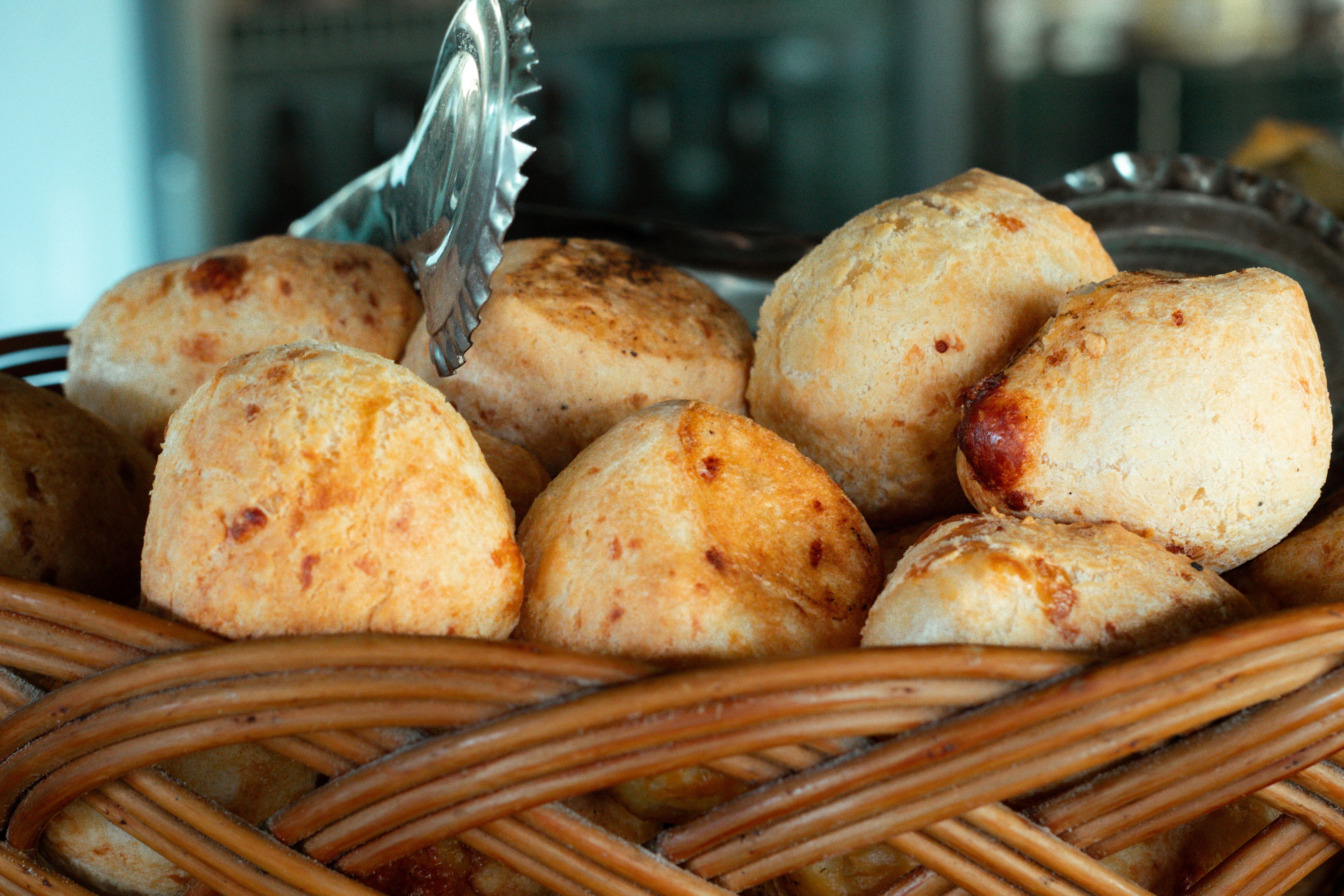
Photo: Giovanna Kamimura / Pexels
The diets react (see scores below)
Common Ingredients
- cassava starch
- cheese
- eggs
- butter
- milk
- salt
Specific recipes may vary.
Incompatible with 6 of 11 diets
Diet Ratings
Cuñapé is a Bolivian cheese bread made primarily from cassava (yuca) starch, which is one of the highest net-carb starches available — nearly pure starch with virtually no fiber to offset it. A single serving (2-3 small rolls) can easily contain 30-50g of net carbs from cassava starch alone, which would consume or exceed an entire day's keto carb allowance. While the cheese, eggs, and butter are keto-friendly, the foundational ingredient — cassava starch — is fundamentally incompatible with ketosis. Unlike almond or coconut flour-based bread substitutes, cassava starch cannot be portioned down to a keto-safe level in any meaningful serving of this dish.
Cuñapé is a traditional Bolivian cheese bread made almost entirely from animal-derived ingredients. Cheese, eggs, butter, and milk are all animal products explicitly excluded from a vegan diet. Only the cassava starch and salt are plant-based. This dish is unambiguously non-vegan and cannot be made compliant without fundamentally replacing its core ingredients.
Cuñapé is a Bolivian cheese bread made primarily from cassava starch, cheese, milk, butter, and salt — nearly every ingredient is non-paleo. Cheese and milk are dairy products excluded under strict paleo rules. Butter is a dairy derivative generally discouraged (unlike ghee, butter retains milk solids and lactose). Salt is an added ingredient excluded by paleo guidelines. Cassava starch, while derived from a paleo-friendly tuber, is a heavily processed, isolated starch stripped of its fiber and nutrients — contradicting the whole-food philosophy of paleo eating. Eggs are the only fully paleo-compliant ingredient. The dish as a whole is fundamentally incompatible with the paleolithic diet framework.
Cuñapé is a Bolivian cheese bread made primarily from cassava starch, cheese, eggs, butter, and milk. From a Mediterranean diet perspective, this snack presents a mixed profile. Cassava starch is a refined, low-nutrient starch with minimal fiber — not a whole grain — which conflicts with Mediterranean whole-grain principles. Cheese and eggs are acceptable in moderation under Mediterranean guidelines (dairy/eggs = a few servings per week). However, butter is discouraged as the primary fat, since extra virgin olive oil is the canonical fat source. The dish contains no vegetables, legumes, or plant-forward components, and is entirely absent of the fiber and micronutrient density expected from Mediterranean snacks. It is not highly processed or laden with added sugar, which keeps it out of the 'avoid' range, but it does not align well with Mediterranean ideals for snack foods (which would favor nuts, olives, fruit, or whole-grain items).
Some Mediterranean diet practitioners adopt a more flexible, inclusive approach to dairy-based snacks, particularly in the context of small portions. Cheese in moderation is widely accepted in Mediterranean traditions (Greek, Italian, Spanish), and if consumed occasionally as part of a varied, plant-rich diet, cuñapé could be tolerated. The concern centers more on the refined cassava starch and butter than on the cheese or eggs themselves.
Cunape is a Bolivian cheese bread made primarily from cassava starch, which is a plant-derived carbohydrate and the dominant ingredient in the dish. While it does contain some carnivore-acceptable ingredients (eggs, butter, milk, cheese, salt), cassava starch is a pure plant-based starch that is explicitly excluded from the carnivore diet. The dish is fundamentally a starch-based baked good — the animal ingredients are supporting components in what is essentially a grain/starch bread analog. No amount of animal-derived additions redeems a dish whose structural base is plant-derived starch.
Cuñapé contains multiple Whole30-excluded ingredients. Cheese and milk are dairy products explicitly banned on Whole30 (only ghee/clarified butter is excepted). Butter is also excluded dairy. Beyond the dairy violations, cuñapé is a cheese bread — a baked good that falls squarely into the 'no recreating baked goods' rule, even if hypothetically reformulated with compliant ingredients. This dish fails on multiple counts: dairy (cheese, milk, butter) and the baked good/junk food recreation prohibition.
Cuñapé is a Bolivian cheese bread made primarily with cassava (tapioca) starch, which is naturally gluten-free and low-FODMAP. Eggs and butter are low-FODMAP. Salt is neutral. The main FODMAP concerns are the cheese and milk. The type of cheese used matters significantly: traditional cuñapé uses fresh white cheese (queso fresco or similar), which can contain moderate to high lactose depending on variety and aging. Aged hard cheeses (like parmesan or cheddar) are low-FODMAP even at standard servings due to minimal lactose, but fresh cheeses like queso fresco are higher in lactose. Milk also contains lactose and is high-FODMAP in standard amounts (over ~30ml regular milk). The milk quantity in cuñapé recipes is typically small (a few tablespoons spread across multiple servings), which may keep per-serving lactose manageable, but the fresh cheese content remains a concern. If made with lactose-free milk and a low-lactose or aged cheese, the dish would be well within low-FODMAP guidelines. As traditionally prepared, the lactose load from fresh cheese and milk creates a moderate FODMAP risk that warrants caution.
Monash University has not specifically tested cuñapé as a dish, so the verdict depends heavily on which cheese is used. Clinical FODMAP practitioners would likely flag any recipe using queso fresco or fresh white cheese as high-risk during elimination due to significant lactose content, while noting the dish becomes much safer if substituted with firm aged cheese and lactose-free milk.
Cuñapé is a Bolivian cheese bread made primarily from cassava starch, cheese, eggs, butter, milk, and salt. From a DASH perspective, this snack presents several concerns: (1) Cheese is typically high in saturated fat and sodium — DASH specifies low-fat or fat-free dairy, not full-fat cheese as a primary ingredient; (2) Butter adds saturated fat, which DASH limits; (3) Cassava starch is a refined carbohydrate with no fiber, unlike whole grains emphasized in DASH; (4) Salt is added on top of the sodium already present in cheese. The combined sodium load from cheese and added salt likely makes this a high-sodium snack. Eggs and milk are more DASH-compatible, but the overall nutritional profile — high saturated fat, refined starch, moderate-to-high sodium, no fiber — places this firmly in cautionary-to-avoid territory. Scoring at 3 rather than 1-2 because portion size for a snack may be small and some ingredients (eggs, milk) are DASH-acceptable in moderation.
NIH DASH guidelines clearly limit full-fat dairy, saturated fat, and refined starches, making cuñapé a poor DASH fit. However, some updated clinical interpretations note that recent research on full-fat dairy and cardiovascular outcomes is less damning than previously thought, and some DASH-oriented practitioners allow small portions of traditional cheese-based snacks if overall daily sodium and saturated fat targets are met.
Cuñape is a Bolivian cheese bread made primarily from cassava starch (tapioca), which is an extremely high-glycemic, nearly pure starch carbohydrate with virtually no fiber — meaning net carbs equal total carbs. This is one of the most unfavorable carb sources in Zone methodology. The protein comes from cheese, which is a moderate Zone protein but brings significant saturated fat. Butter and whole milk add further saturated fat. The fat profile is dominated by saturated fats rather than the preferred monounsaturated fats (olive oil, avocado, almonds). The macro ratio is heavily skewed: the cassava starch dominates calories with high-GI carbs, fat is substantial and primarily saturated, and protein is moderate but not lean. There is no fiber, no polyphenols, and no omega-3 contribution. Fitting cuñape into a Zone-balanced snack would require pairing it with lean protein and a monounsaturated fat source to compensate, but the cassava starch base itself is a fundamental structural problem — similar to white bread or white rice in Zone terms, but with even less nutritional value. It scores at the low end of caution rather than avoid only because small portions could theoretically contribute carb blocks, and it is not nutritionally inert like pure sugar.
Some Zone practitioners apply a more flexible interpretation of Sears' later anti-inflammatory writings, arguing that traditional whole-food preparations — even if high-glycemic — can be incorporated in very small portions as part of a broader Zone-balanced meal. In this view, a single small cuñape alongside a lean protein and vegetable-heavy plate could be managed as an 'unfavorable' carb block rather than a dietary disqualifier. However, this is a minority position; Sears' core framework consistently categorizes high-glycemic, fiber-free starches like cassava/tapioca as unfavorable carbs to minimize.
Cuñapé is a traditional Bolivian cheese bread made primarily from cassava (yuca) starch, cheese, eggs, butter, and milk. From an anti-inflammatory perspective, the profile is mixed. Cassava starch is a refined carbohydrate with a high glycemic index and virtually no fiber, phytonutrients, or anti-inflammatory compounds — it provides empty starch calories and can spike blood sugar, which is mildly pro-inflammatory at regular intake. Eggs are nutritionally complex (some choline and selenium offset by arachidonic acid concerns). The most significant concern is the combination of full-fat cheese, butter, and whole milk, all of which contribute saturated fat — a category explicitly limited in anti-inflammatory frameworks due to its role in elevating inflammatory markers like CRP and IL-6. There are no meaningful anti-inflammatory contributors in this dish: no omega-3s, no polyphenols, no antioxidant-rich vegetables, no herbs or spices with anti-inflammatory activity. The dish is not in 'avoid' territory because it lacks trans fats, processed additives, refined sugar, or high-fructose corn syrup — the ingredients are whole and recognizable. However, as a snack built around refined starch and saturated fat with no redemptive anti-inflammatory properties, it earns a firm 'caution' rating and is best consumed occasionally rather than regularly.
Some anti-inflammatory researchers, including those following Mediterranean-adjacent frameworks, argue that moderate full-fat dairy from quality sources is not meaningfully pro-inflammatory and may even be neutral; the Harvard T.H. Chan School of Public Health notes the evidence on saturated fat and inflammation is more nuanced than once thought. However, the consensus within dedicated anti-inflammatory diet authorities (Dr. Weil, IF Rating system) still recommends limiting butter and full-fat cheese, making 'caution' the appropriate call for this saturated-fat-heavy, antioxidant-poor snack.
Cuñapé is a traditional Bolivian cheese bread made primarily from cassava (yuca) starch, cheese, eggs, butter, and milk. The nutritional profile is problematic for GLP-1 patients in several ways. Cassava starch is almost purely refined carbohydrate with negligible fiber and low nutrient density per calorie — exactly the type of empty starch that GLP-1 patients should minimize. The fat content is moderate-to-high due to cheese, butter, and milk combined, which can worsen GLP-1 side effects like nausea, bloating, and reflux. Protein contribution is modest — cheese and eggs provide some protein, but the starch-to-protein ratio is unfavorable, delivering relatively few grams of protein per serving compared to the calorie load. On the positive side, cuñapé is small-portioned by nature (individual bite-sized rolls), relatively easy to digest as the starch is well-cooked, and does not contain fried components, added sugar, or artificial ingredients. It scores slightly above 'avoid' because it is a whole-food preparation, portion-friendly in size, and provides some protein from real food sources — but it falls firmly in 'caution' territory due to the low fiber, high starch-to-protein ratio, and combined fat load from three fat-containing ingredients.
Some GLP-1-focused dietitians may allow cuñapé occasionally as a small, satisfying snack that supports dietary adherence and cultural food connection, arguing that the egg and cheese content provides enough protein to justify a single piece. Others would flag the butter-plus-cheese fat combination as likely to worsen gastric side effects and recommend avoiding it entirely during the early high-side-effect phase of GLP-1 therapy.
*See how scores were generated at our methodology page.
Nutritional profile
Six traits that cut across every diet.
Fiber & Plants
How much whole-plant food and fiber it delivers.
Healthy Fats
The quality of its fats (unsaturated, omega-3).
Whole / Unprocessed
How close it is to its natural, unprocessed form.
Gut Gentle
How easy it is on digestion (low FODMAP, few irritants).
Low Glycemic
How little it spikes your blood sugar.
Protein Density
How much protein it packs per calorie.
Controversy Index
Higher controversy = more disagreement between diets.
Diet-Specific Tips
 Mediterranean — 4/10
View tips
- Cassava starch is a refined starch, not a whole grain — low fiber, low nutrient density
- Butter is not consistent with Mediterranean fat principles; olive oil is preferred
- Cheese and eggs are acceptable in moderation but dominate this dish's nutritional profile
- No vegetables, legumes, or plant-forward ingredients present
- Not highly processed or high in added sugar, which prevents a lower score
- Small snack portions may mitigate impact if consumed occasionally
 DASH — 5/10
View tips
- High saturated fat from full-fat cheese and butter — not aligned with DASH low-fat dairy guidance
- Refined cassava starch lacks fiber — DASH emphasizes whole grains
- Added salt compounding sodium from cheese raises total sodium concern
- No vegetables, legumes, or whole grains — misses core DASH food groups
- Eggs and milk are conditionally acceptable within DASH but do not redeem the overall profile
- Small snack portions may partially mitigate impact if overall diet is DASH-compliant
 Zone — 5/10
View tips
- Cassava starch is extremely high-glycemic with zero fiber — net carbs equal total carbs, classified as unfavorable in Zone
- Fat profile is primarily saturated (cheese, butter, milk) rather than Zone-preferred monounsaturated fats
- No fiber, no polyphenols, no omega-3s — anti-inflammatory profile is poor
- Cheese provides moderate protein but is not a lean Zone protein source
- Macro ratio is skewed toward high-GI carbs and saturated fat — difficult to fit into 40/30/30 framework
- As a snack, even small portions deliver a high-glycemic carb load relative to protein and favorable fat content
 Anti-Inflammatory — 4/10
View tips
- Cassava starch is a refined, high-glycemic carbohydrate with no fiber or anti-inflammatory phytonutrients
- Full-fat cheese and butter are saturated fat sources explicitly limited in anti-inflammatory frameworks
- Milk adds additional saturated fat load
- Eggs are nutritionally mixed — some beneficial micronutrients offset by arachidonic acid content
- No anti-inflammatory positives: zero omega-3s, polyphenols, antioxidants, or anti-inflammatory herbs/spices
- No trans fats, additives, or refined sugars — not in 'avoid' territory
- Occasional consumption as a traditional food is reasonable; regular snacking is not aligned with anti-inflammatory principles
 GLP-1 Friendly — 4/10
View tips
- Cassava starch is nearly pure refined carbohydrate with virtually zero fiber — poor nutrient density
- Low protein-to-calorie ratio; cheese and eggs contribute some protein but are diluted by starch volume
- Combined fat load from cheese, butter, and milk may worsen GLP-1 GI side effects
- Small individual portion size is a positive — limits overall calorie and fat intake per piece
- No added sugar, artificial ingredients, or frying — a modest advantage over processed snacks
- Not suitable as a protein-forward snack; would need to be paired with a lean protein source to be useful in a GLP-1 diet