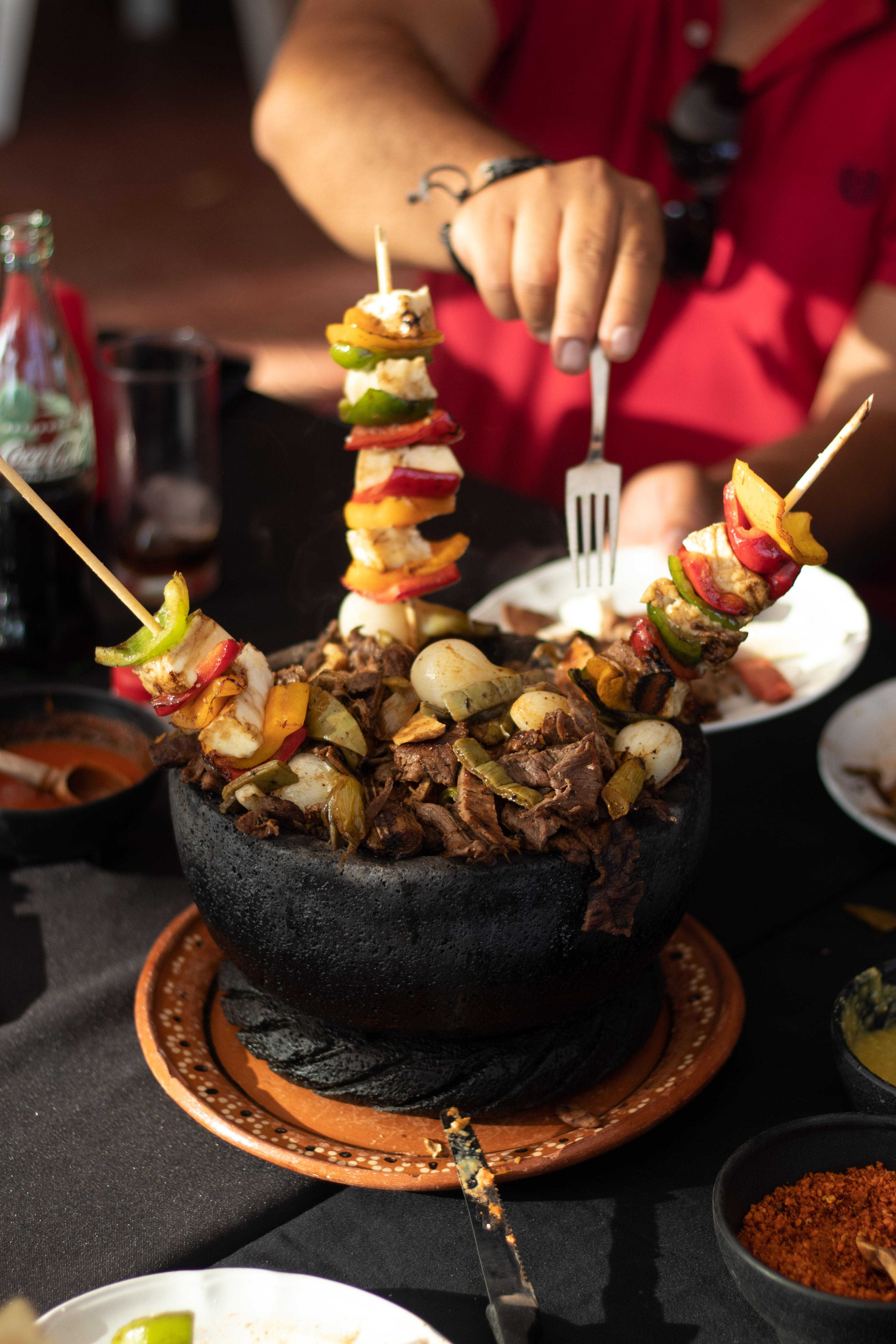
Photo: Fausto Hernández / Pexels
Bolivian
Pique a lo Macho
The diets react (see scores below)
Common Ingredients
- beef
- sausage
- potatoes
- onion
- tomato
- bell pepper
- eggs
- locoto chiles
- garlic
Specific recipes may vary.
Incompatible with 9 of 11 diets
Diet Ratings
Pique a lo Macho is fundamentally incompatible with a ketogenic diet due to its central ingredient: potatoes. Potatoes are a high-starch vegetable with approximately 15-17g net carbs per 100g, and this dish typically features a substantial serving of them as its base. A standard portion could easily contain 200-400g of potatoes, delivering 30-70g of net carbs from that ingredient alone — enough to break ketosis single-handedly. The remaining ingredients (beef, sausage, eggs, onion, tomato, bell pepper, garlic, locoto chiles) are either keto-friendly or manageable in small quantities, but the potatoes are non-negotiable in this dish's traditional preparation. No reasonable portion size of the authentic dish would keep net carbs within keto limits.
Pique a lo Macho is a traditional Bolivian dish that contains multiple animal products, making it entirely incompatible with a vegan diet. The dish features beef and sausage as primary proteins, both of which are direct animal flesh products. Additionally, eggs are listed as an ingredient, which are excluded under all vegan frameworks. There are no vegan versions of this dish in its traditional form — the animal products are not incidental but foundational to the recipe.
Pique a lo Macho contains several paleo-approved ingredients — beef, eggs, onion, tomato, bell pepper, locoto chiles, and garlic are all unambiguously paleo-friendly. However, two ingredients create significant friction. First, sausage is almost always processed, containing added salt, fillers, preservatives, or grain-based binders, making it a processed meat that conflicts with paleo principles unless a verified clean, additive-free version is used. Second, white potatoes are a debated staple: Cordain's original framework excluded them due to glycoalkaloid content and high glycemic load, though modern paleo voices increasingly accept them. The combination of a processed meat and debated starch pushes this dish into caution territory despite its otherwise strong paleo profile.
Mark Sisson (Primal Blueprint) and Whole30 both permit white potatoes, and if the sausage were replaced with or confirmed as an additive-free, minimally processed variety, many contemporary paleo practitioners would consider the dish largely acceptable. Strict Cordain-school adherents would reject both the white potatoes and any commercially processed sausage outright.
Pique a lo Macho is centered on beef and sausage as dual protein sources, both of which are problematic for Mediterranean diet adherence. Red meat should be limited to a few times per month, and processed sausage is a highly processed meat that Mediterranean guidelines actively discourage due to its high saturated fat, sodium, and preservative content. While the dish contains beneficial components — onion, tomato, bell pepper, garlic, and locoto chiles are all Mediterranean-friendly vegetables, and potatoes are acceptable in moderation — these positives are overwhelmed by the heavy reliance on two categories of meat (red meat and processed meat) that sit at the very bottom of the Mediterranean food pyramid. The eggs add further animal protein, though eggs alone would be acceptable in moderation. There is no olive oil emphasis, no legumes, no whole grains, and the protein base fundamentally contradicts Mediterranean principles.
Pique a lo Macho is a Bolivian mixed meat and fry dish that is fundamentally incompatible with the carnivore diet. While it contains carnivore-approved ingredients (beef, sausage, eggs), the dish is built around multiple plant-based foods: potatoes (starchy carbohydrate), onion, tomato, bell pepper, locoto chiles, and garlic. These plant ingredients are not minor garnishes — they are core structural components of the dish. The ratio of plant to animal ingredients makes this dish a clear 'avoid' regardless of the quality of the meat components. The sausage may also contain fillers or additives depending on preparation. No modification short of a complete reconstruction would make this carnivore-compliant.
Pique a lo Macho is a hearty Bolivian dish featuring beef, sausage, potatoes, onion, tomato, bell pepper, eggs, locoto chiles, and garlic — all of which are individually Whole30-compatible ingredients. The core concern is the sausage: most commercially available sausages contain added sugar, fillers, or other excluded ingredients (e.g., dextrose, nitrates with non-compliant carriers, grain-based binders). A compliant version of this dish is entirely achievable if a clean, sugar-free, additive-free sausage is used, but this requires careful label-reading. All other ingredients (beef, potatoes, eggs, vegetables, chiles, garlic) are straightforwardly Whole30-approved. The dish does not fall into the 'junk food recreation' exclusion — it is a legitimate savory meal, not a pancake or bread analog.
The official Whole30 guidelines allow compliant sausage with clean ingredients, and this dish is otherwise whole-food based. However, some Whole30 practitioners caution against relying heavily on processed meats like sausage, noting that Melissa Urban's program encourages prioritizing whole, unprocessed protein sources over processed ones — even when a technically compliant label is found.
Pique a lo Macho contains multiple high-FODMAP ingredients that make it unsuitable during the elimination phase. Onion and garlic are among the highest-FODMAP foods tested by Monash University, both rich in fructans, and they are core structural ingredients in this dish — not minor seasonings that could be easily omitted. Sausage often contains onion and garlic as additives or fillers, adding further fructan load. Locoto chiles (a Bolivian hot pepper) are likely low-FODMAP in small quantities similar to other chiles, but the cumulative FODMAP burden from onion, garlic, and likely sausage additives makes the overall dish clearly high-FODMAP. Beef, potatoes (in moderate portions), eggs, tomato, and bell pepper are all low-FODMAP, but they cannot offset the core problematic ingredients.
Pique a lo Macho is a hearty Bolivian dish that combines multiple protein sources — beef and sausage — with potatoes, eggs, and vegetables. While several individual ingredients (tomato, onion, bell pepper, garlic, locoto chiles, eggs, potatoes) are DASH-friendly, the dish as a whole is problematic. The sausage is the primary concern: sausage is typically high in sodium (400–800mg per serving) and saturated fat, both of which DASH explicitly limits. The combination of red meat and sausage together significantly elevates saturated fat and sodium load. The dish is also calorie-dense and typically served in large portions. The vegetables, eggs, and spices are positive elements, but they are outweighed by the sausage's nutritional profile. Even with the DASH-favorable ingredients, the sausage alone makes this a dish to avoid or substantially modify (e.g., replacing sausage with a lean protein and reducing portion size of beef) for DASH adherence.
NIH DASH guidelines explicitly limit red meat and high-sodium processed meats like sausage. However, some updated clinical interpretations note that if sausage is used in small quantities as a flavoring agent rather than a primary protein, and sodium is managed elsewhere in the day, occasional inclusion may be permissible — though this remains a minority position among DASH-oriented dietitians.
Pique a lo Macho is a hearty Bolivian dish that presents significant challenges for Zone compliance, primarily due to its potato base. Potatoes are explicitly classified as an 'unfavorable' high-glycemic carbohydrate in Zone methodology — they spike blood sugar rapidly and are specifically called out by Dr. Sears as a food to limit or avoid. The sausage component adds saturated fat and is typically processed, conflicting with the Zone's preference for lean proteins and anti-inflammatory eating. On the positive side, the dish contains several Zone-friendly elements: beef (lean cuts can work as protein blocks), eggs (excellent Zone protein), onions, tomatoes, bell peppers, and locoto chiles (all favorable low-glycemic carb sources rich in polyphenols), and garlic (anti-inflammatory). However, the traditional preparation uses a large volume of potatoes as the carbohydrate base, making it very difficult to achieve a 40/30/30 ratio without dramatically reducing the potato portion. The protein mix of beef and sausage together likely overshoots lean protein targets and adds excess saturated fat. To make this Zone-compatible, one would need to: replace most/all potatoes with additional non-starchy vegetables, substitute the sausage with a leaner protein, and add a monounsaturated fat source. As traditionally prepared, the dish skews heavily toward high-glycemic carbs and saturated fat.
Pique a lo Macho is a hearty Bolivian street dish with a mixed anti-inflammatory profile. On the positive side, it contains several genuinely beneficial ingredients: tomatoes and bell peppers provide lycopene, vitamin C, and antioxidant carotenoids; onions and garlic deliver quercetin, allicin, and sulfur compounds with established anti-inflammatory activity; locoto chiles (a Bolivian hot pepper similar to rocoto) contribute capsaicin, which has well-documented anti-inflammatory properties. Eggs are a moderate ingredient under most anti-inflammatory frameworks. However, the dish is anchored by two significant concerns: beef and sausage. Beef is a 'limit' food due to saturated fat and arachidonic acid content, and sausage (typically processed) raises additional red flags — processed meats contain preservatives like nitrates, high sodium, and often pro-inflammatory additives. Potatoes are a starchy vegetable with a moderate glycemic impact, generally neutral in an anti-inflammatory context but not beneficial in large quantities. The dish is also typically prepared with cooking oils that may or may not be anti-inflammatory depending on preparation. Overall, the vegetable and spice components provide real anti-inflammatory value, but the processed sausage and substantial red meat content drag the score into caution territory.
Some anti-inflammatory practitioners following AIP or strict protocols would rate this lower (avoid range) due to the processed sausage and nightshade ingredients (tomatoes, bell peppers, potatoes, chiles), arguing that solanine and lectins trigger inflammation in autoimmune-sensitive individuals, as advocated by Dr. Tom O'Bryan and AIP guidelines. Conversely, a more moderate anti-inflammatory view (aligned with Dr. Weil's pyramid) would note that the abundant vegetables, garlic, and capsaicin-rich chiles provide meaningful anti-inflammatory offset, keeping this in caution rather than avoid for the general population.
Pique a lo Macho is a large, heavy Bolivian platter that stacks several GLP-1 problem ingredients together. The combination of fatty beef cuts and sausage delivers high saturated fat in a single serving, worsening nausea, bloating, and reflux that are already common on GLP-1 medications. Sausage is a processed, high-fat meat explicitly flagged as a category to avoid. Potatoes are the primary carbohydrate base and contribute minimal fiber relative to their glycemic load, especially when cooked soft or pan-fried in oil. Locoto chiles are among the spiciest peppers in Bolivian cuisine — comparable to a habanero in heat — and are a direct risk factor for worsening GLP-1-related reflux and nausea. The dish is served in a very large portion by design, the opposite of the small, portion-friendly meals recommended on GLP-1 therapy. While eggs, onion, tomato, and bell pepper are individually acceptable or positive ingredients, they cannot offset the fat load, the processed meat, the spice level, and the sheer volume of the dish. This is not a borderline case.
*See how scores were generated at our methodology page.
Nutritional profile
Six traits that cut across every diet.
Fiber & Plants
How much whole-plant food and fiber it delivers.
Healthy Fats
The quality of its fats (unsaturated, omega-3).
Whole / Unprocessed
How close it is to its natural, unprocessed form.
Gut Gentle
How easy it is on digestion (low FODMAP, few irritants).
Low Glycemic
How little it spikes your blood sugar.
Protein Density
How much protein it packs per calorie.
Controversy Index
Higher controversy = more disagreement between diets.
Diet-Specific Tips
 Zone — 4/10
View tips
- Potatoes are a high-glycemic carbohydrate explicitly listed as 'unfavorable' by Dr. Sears — they are the primary carb base of this dish
- Sausage is a processed, high-saturated-fat protein that conflicts with Zone's lean protein and anti-inflammatory principles
- Beef can be Zone-compatible if lean cuts are used, but combined with sausage the protein portion likely exceeds Zone targets and adds excess saturated fat
- Eggs are an excellent Zone protein source and are a positive element
- Bell peppers, tomatoes, onion, locoto chiles, and garlic are all favorable low-glycemic, polyphenol-rich Zone carbohydrates
- The dish could theoretically be modified (reduce potatoes, eliminate sausage, add olive oil) but as traditionally prepared it is difficult to Zone-balance
 Anti-Inflammatory — 4/10
View tips
- Beef (red meat) — 'limit' category due to saturated fat and arachidonic acid
- Sausage (processed meat) — pro-inflammatory: nitrates, additives, high sodium
- Garlic and onion — anti-inflammatory: allicin, quercetin
- Locoto chiles — anti-inflammatory: capsaicin, vitamin C
- Bell peppers and tomatoes — anti-inflammatory: carotenoids, lycopene, vitamin C
- Potatoes — neutral to slightly pro-inflammatory: high glycemic index, nightshade
- Eggs — moderate/neutral under most anti-inflammatory frameworks