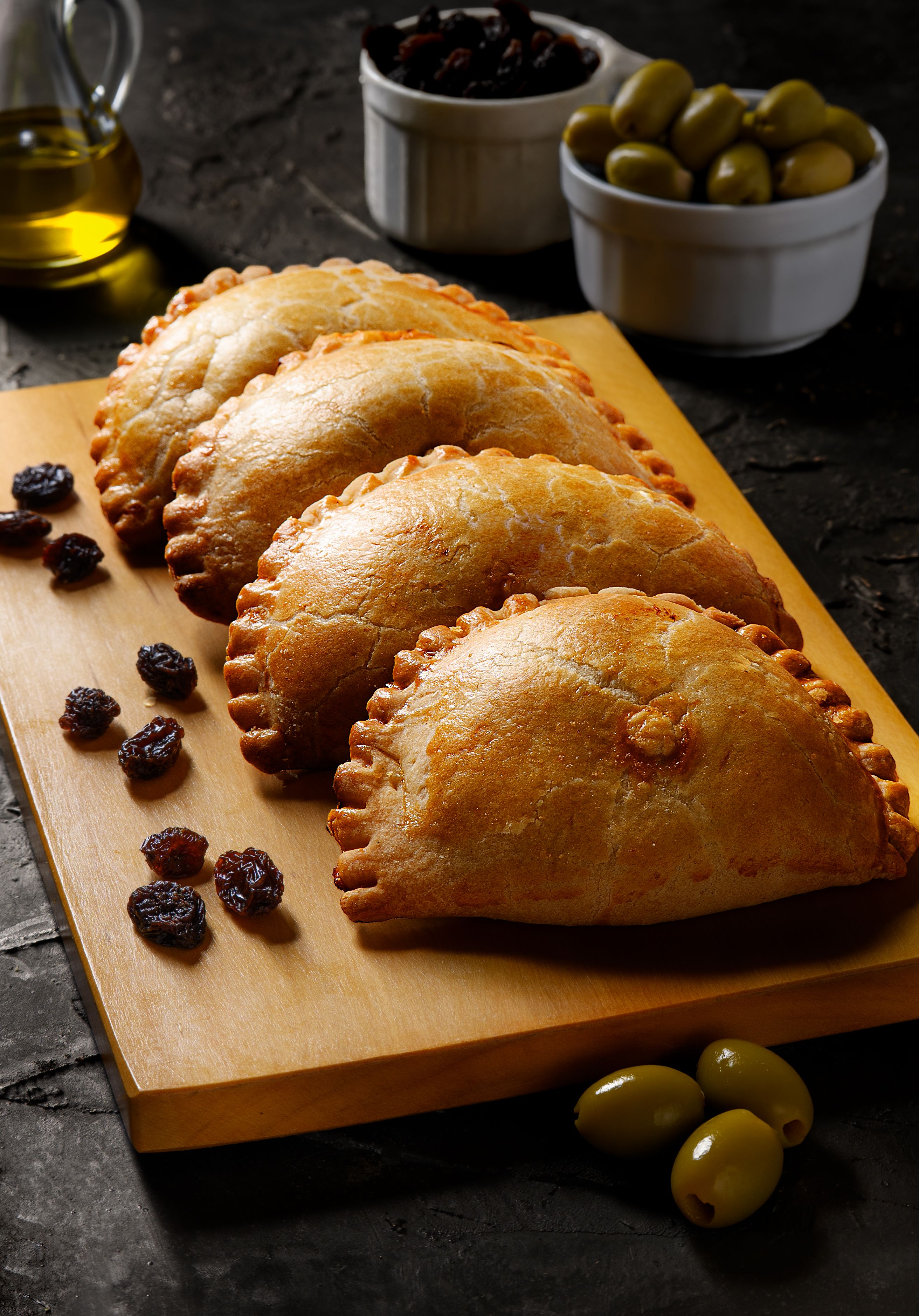
Photo: Christopher Welsch Leveroni / Pexels
The diets react (see scores below)
Common Ingredients
- beef
- potatoes
- peas
- olives
- hard-boiled eggs
- raisins
- aji panca
- onion
- cumin
- wheat flour
Specific recipes may vary.
Incompatible with 8 of 11 diets
Diet Ratings
Salteñas are Bolivian baked pastries with a wheat flour dough casing, making them fundamentally incompatible with ketogenic eating. The crust alone delivers a large dose of high-glycemic carbohydrates. The filling compounds the problem with starchy potatoes, peas (moderate-high carb legume), and raisins (concentrated sugar). Together, a single salteña likely contains 40-60g of net carbs — exceeding or matching the entire daily keto allowance. There is no realistic portion size that makes this dish compatible with ketosis. The beef, eggs, and olives are keto-friendly, but they are overwhelmed by multiple high-carb, keto-incompatible ingredients.
Salteñas contain multiple animal-derived ingredients that are explicitly excluded from a vegan diet. Beef is direct animal flesh, and hard-boiled eggs are an animal product. These two ingredients alone make this dish clearly non-vegan. There is no ambiguity or debate within the vegan community about either beef or eggs being off-limits.
Salteñas are Bolivian baked pastries whose defining feature is a wheat flour dough casing — a non-negotiable grain-based wrapper that immediately disqualifies the dish under all paleo frameworks. Beyond the pastry shell, the filling also contains peas (a legume, excluded from paleo) and white potatoes (debated but discouraged by strict paleo, per The Paleo Diet's guide). While several ingredients are paleo-compatible — beef, hard-boiled eggs, olives, onion, raisins, aji panca, and cumin — the wheat flour crust is a core structural component of the dish, not a minor additive. There is no version of a salteña without the pastry shell; removing it changes the dish entirely. With two clear avoid-tier ingredients (wheat flour, peas) as central components, this dish is firmly in the avoid category.
Salteñas are Bolivian baked pastry pockets made with refined wheat flour dough encasing a filling of beef, vegetables, and spices. From a Mediterranean diet perspective, this dish presents multiple problematic elements: the primary protein is red meat (beef), which should be limited to only a few times per month; the shell is made from refined wheat flour, not a whole grain; and the overall format is a processed, pastry-based snack rather than a whole, minimally processed food. While the filling does include some Mediterranean-friendly components like peas, olives, onion, and eggs, and the spices add flavor without concern, these positives are outweighed by the dominant issues of red meat as the primary protein and a refined grain pastry shell. The dish is not cooked in olive oil as a primary fat and represents the kind of processed, meat-centered snack that the Mediterranean diet explicitly discourages.
Salteñas are Bolivian baked pastries that are fundamentally incompatible with the carnivore diet. While the dish contains beef and eggs (carnivore-approved), the overwhelming majority of ingredients are plant-based or grain-based. The wheat flour pastry shell alone disqualifies this dish entirely — it is a grain-based carbohydrate wrapper. Beyond that, the filling includes potatoes (starchy vegetable), peas (legume), olives (fruit/plant), raisins (fruit), aji panca (plant pepper/spice), onion (vegetable), and cumin (plant spice). This dish is essentially a plant-heavy pastry pocket that happens to contain some beef. There is no version of carnivore — not even the most lenient 'animal-based' approach — that would permit wheat flour, peas, potatoes, and raisins together. This dish fails on nearly every carnivore criterion simultaneously.
Salteñas are Bolivian baked pastry pockets, and their dough is made with wheat flour, which is a grain and explicitly excluded on the Whole30. Even if every filling ingredient were compliant (beef, potatoes, eggs, olives, raisins, aji panca, onion, cumin are generally fine; peas are a legume but snow/snap peas are the exception — regular green peas are excluded), the wheat flour dough alone disqualifies this dish entirely. Furthermore, even if a grain-free dough substitute were used, salteñas are a baked pastry that falls squarely into the 'no recreating baked goods' rule (Rule 4), as they are a bread/pastry analog. Two separate violations make this a clear avoid.
Salteñas contain multiple high-FODMAP ingredients that make them clearly unsuitable during the elimination phase. The wheat flour pastry shell is the primary concern — wheat is high in fructans and would be present in substantial amounts as the main structural component of the pastry. Onion is one of the highest-FODMAP foods tested by Monash University, rich in fructans, and is a core flavoring ingredient in the filling. Peas become high-FODMAP above approximately 1/4 cup (Monash rated), and as a key filling ingredient a standard serving would likely exceed this threshold. Raisins are high-FODMAP due to excess fructose and fructans even in small quantities (Monash rates >1 tablespoon as high-FODMAP). The combination of wheat pastry + onion + peas + raisins creates stacked FODMAP loads across multiple categories (fructans, GOS, excess fructose), making this dish very high-FODMAP regardless of portion size. The remaining ingredients — beef, potatoes, olives, hard-boiled eggs, aji panca, and cumin — are individually low-FODMAP, but they cannot offset the significant FODMAP burden from the other components.
Salteñas are Bolivian baked pastries with a wheat flour dough encasing a savory filling. While the filling contains several DASH-friendly ingredients (peas, potatoes, onion, eggs, and spices like cumin and aji panca), the overall dish presents notable concerns for the DASH diet. The wheat flour pastry shell is typically made with significant amounts of fat (lard or shortening) and contributes refined carbohydrates. Beef as the primary protein is a red meat that DASH recommends limiting. Olives, while containing healthy monounsaturated fats, are high in sodium — a key DASH concern. The pastry dough itself often contains added salt, and the overall sodium content of a salteña can be moderately high. On the positive side, the vegetable-rich filling (peas, potatoes, onion), spices, eggs, and raisins provide potassium, fiber, and micronutrients aligned with DASH principles. The dish is not deeply fried and the baking method is preferable. However, the combination of red meat, high-fat pastry, sodium from olives and seasoning, and refined flour make this a 'caution' food — acceptable occasionally and in portion-controlled amounts, but not a DASH staple.
NIH DASH guidelines would flag the red meat, refined flour pastry fat content, and olive-derived sodium as concerns. However, some updated clinical interpretations note that a single salteña as an occasional snack — with its vegetable-rich filling, moderate protein, and baked (not fried) preparation — can fit within a broadly DASH-compatible eating pattern if overall daily sodium, saturated fat, and red meat intake remain within targets.
Salteñas are a traditional Bolivian baked pastry filled with a savory-sweet beef stew. From a Zone Diet perspective, this dish presents multiple simultaneous red flags that compound one another. The wheat flour pastry shell is a refined high-glycemic carbohydrate that forms the structural base of the dish — not a minor ingredient. The filling compounds the carbohydrate problem with potatoes (high-glycemic, explicitly 'unfavorable' in Zone) and raisins (high-sugar fruit, also explicitly unfavorable). The peas add modest carbs on top. The fat profile is also concerning: the pastry shell typically contains significant saturated fat (lard or shortening), and the beef is not specified as lean. The result is a macro profile that skews heavily toward high-glycemic carbohydrates and saturated fat, with the protein contribution (beef, egg) being the one Zone-compatible element. While technically any food can fit Zone ratios with extreme portion control, salteñas cannot reasonably be portioned down to Zone balance — the pastry shell is the delivery mechanism, not a separable component. The sweet-savory stew filling with raisins and potatoes adds glycemic load that would require an impractically small portion. This scores a 3 rather than 1-2 only because the beef and egg protein and the olives (monounsaturated fat) are genuinely Zone-favorable ingredients buried within an otherwise problematic food vehicle.
Salteñas present a mixed anti-inflammatory profile. On the positive side, they contain several beneficial ingredients: aji panca (a dried red chili) contributes capsaicin and carotenoids with anti-inflammatory properties; onion provides quercetin and flavonoids; cumin offers antioxidant and anti-inflammatory compounds; peas add fiber and plant protein; olives contribute monounsaturated fats and polyphenols; and eggs provide choline and selenium. Raisins add polyphenols, though also concentrated sugar. However, there are meaningful concerns. The wheat flour pastry shell is a refined carbohydrate, and salteñas are typically made with a significant amount of fat (often lard or shortening) in the dough, which would push this toward 'avoid' — but since the ingredient list doesn't specify, we rate the listed ingredients. Beef is classified as a food to limit on anti-inflammatory diets due to saturated fat and potential pro-inflammatory arachidonic acid pathways, though the quantity per salteña is moderate. Potatoes are a neutral starch. The refined flour crust is perhaps the most significant anti-inflammatory concern, as it represents a refined carbohydrate base for an otherwise moderately balanced filling. Overall, this is a traditional snack that is acceptable occasionally but not aligned with anti-inflammatory principles as a regular choice.
Some anti-inflammatory practitioners following AIP or stricter frameworks would flag the refined wheat flour crust, beef, and egg combination more harshly and push this toward 'avoid.' Conversely, those who emphasize whole-food context and the cumulative benefit of spices like cumin and aji panca — as Dr. Weil's broader dietary pattern approach encourages — might view occasional consumption as compatible with an anti-inflammatory lifestyle given the vegetable and spice content.
Salteñas are traditional Bolivian baked pastries with a thick, enriched wheat flour dough encasing a juicy, stew-like filling of beef, potatoes, peas, olives, hard-boiled eggs, and raisins. While the filling contains some protein from beef and egg, and fiber from peas, the overall profile is problematic for GLP-1 patients. The wheat flour pastry shell is a refined carbohydrate casing that adds substantial calories with low nutrient density. The filling is intentionally soupy and gelatinous (from gelatin used in traditional preparation), meaning the fat and calorie load per serving is high relative to usable protein. The beef used is typically a fattier cut braised with oil. Olives add fat. Raisins add sugar. The cumin and aji panca spice blend may irritate a GLP-1-slowed GI tract prone to reflux and nausea. As a handheld snack, portion control is difficult, and the dough-to-filling ratio means protein density per calorie is low. The pastry encasement significantly worsens digestibility given slowed gastric emptying. This is not a small-portion-friendly, protein-dense, or easily digestible food for someone on a GLP-1 medication.
Some GLP-1-focused dietitians might argue that one small salteña occasionally provides a culturally meaningful, mixed-macro snack and that the beef and egg filling does contribute meaningful protein — particularly if the patient is otherwise meeting protein targets. The disagreement centers on whether cultural food access and adherence matter enough to tolerate a lower-quality macro profile on occasion, versus the GI side effect risk from the fatty, dough-heavy format.
*See how scores were generated at our methodology page.
Nutritional profile
Six traits that cut across every diet.
Fiber & Plants
How much whole-plant food and fiber it delivers.
Healthy Fats
The quality of its fats (unsaturated, omega-3).
Whole / Unprocessed
How close it is to its natural, unprocessed form.
Gut Gentle
How easy it is on digestion (low FODMAP, few irritants).
Low Glycemic
How little it spikes your blood sugar.
Protein Density
How much protein it packs per calorie.
Controversy Index
Higher controversy = more disagreement between diets.
Diet-Specific Tips
 DASH — 4/10
View tips
- Red meat (beef) is a DASH-limited protein source
- Wheat flour pastry shell likely contains significant saturated fat (lard/shortening)
- Olives contribute notable sodium, a key DASH concern
- Filling includes DASH-friendly vegetables: peas, potatoes, onion
- Baked preparation is preferable to frying
- Eggs and raisins add nutritional value (protein, potassium, fiber)
- Overall sodium content of the assembled pastry is likely moderate-to-high
- Refined flour pastry lacks the fiber of whole grains recommended by DASH
- Portion size matters — typically consumed as a single unit snack
 Zone — 5/10
View tips
- Wheat flour pastry shell is a refined high-glycemic carbohydrate that dominates the macro profile
- Potatoes are explicitly 'unfavorable' in Zone Diet — high glycemic index
- Raisins are explicitly 'unfavorable' in Zone Diet — high-sugar concentrated fruit
- Pastry typically made with lard or shortening — high saturated fat, poor fat profile for Zone
- Beef protein and hard-boiled egg are Zone-compatible lean protein sources
- Olives provide Zone-favorable monounsaturated fat
- Onion, peas, and aji panca are acceptable Zone carbohydrate sources but are minor contributors
- Cannot be portioned to Zone balance without deconstructing the dish — pastry is integral to the food
 Anti-Inflammatory — 4/10
View tips
- Refined wheat flour pastry crust — pro-inflammatory refined carbohydrate
- Beef as primary protein — to be limited on anti-inflammatory diets (saturated fat, arachidonic acid)
- Aji panca and cumin — anti-inflammatory spices with capsaicin and antioxidant properties
- Olives — contribute monounsaturated fats and polyphenols
- Onion — quercetin and flavonoid content is beneficial
- Peas — fiber and plant protein add anti-inflammatory value
- Raisins — polyphenols but concentrated sugar
- Eggs — mixed profile but moderate amounts provide choline and selenium
- Overall dish is a pastry snack with pro-inflammatory base partially offset by beneficial filling ingredients