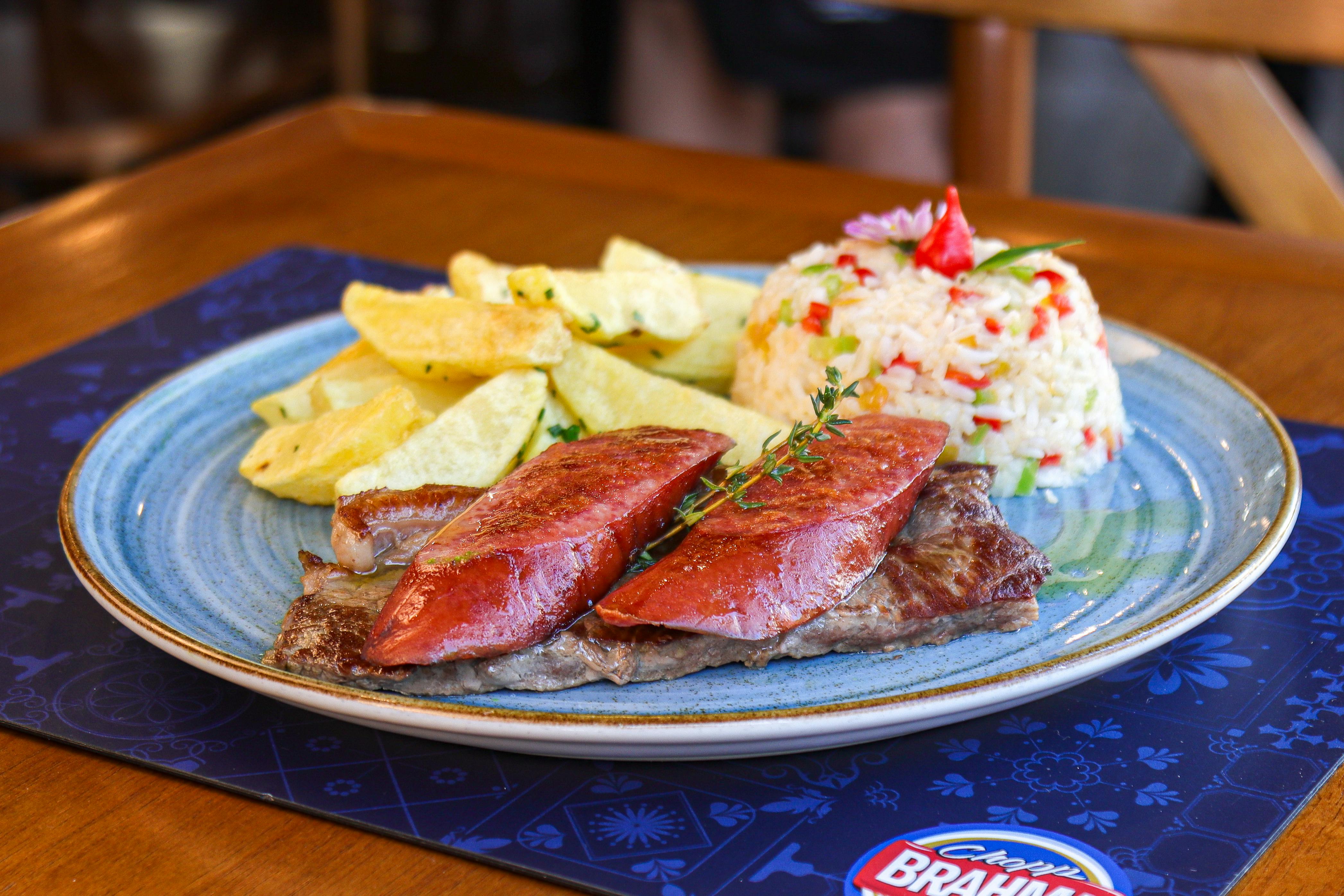
Photo: Aimbere Elorza / Pexels
The diets react (see scores below)
Common Ingredients
- beef
- breadcrumbs
- rice
- potatoes
- eggs
- tomato
- onion
- parsley
- garlic
Specific recipes may vary.
Incompatible with 8 of 11 diets
Diet Ratings
Silpancho is fundamentally incompatible with a ketogenic diet. The dish is built around three major high-carbohydrate components: rice (a grain, ~45g net carbs per cup), potatoes (a starchy vegetable, ~30g net carbs per medium potato), and breadcrumbs coating the beef (wheat-based grain). Even a single standard serving would deliver well over 100g of net carbs, far exceeding the entire daily keto limit of 20-50g. The beef and eggs are keto-friendly, and the tomato, onion, parsley, and garlic contribute only minor carbs, but the core structural components of this dish make it impossible to consume in any meaningful portion while maintaining ketosis.
Silpancho is a traditional Bolivian dish built around multiple animal products. It contains beef (a red meat), eggs (fried on top as a signature element), and breadcrumbs which in this context are standard but may also contain egg or dairy binders. The dish is fundamentally incompatible with a vegan diet, as beef and eggs are unambiguously animal-derived products excluded under all definitions of veganism. There is no meaningful vegan version of silpancho without replacing the two core protein components entirely.
Silpancho contains multiple core paleo violations. Breadcrumbs are a wheat-based grain product — strictly excluded. Rice is a grain and universally excluded from paleo. These two ingredients alone make the dish fundamentally non-paleo. The remaining ingredients (beef, eggs, potatoes, tomato, onion, parsley, garlic) are largely paleo-compatible or at least debated, but the breadcrumbs and rice are unambiguous disqualifiers with high consensus across all major paleo authorities.
Silpancho is a traditional Bolivian dish built around a breaded and fried beef cutlet served over white rice and potatoes, topped with a fried egg. This composition conflicts with Mediterranean diet principles on multiple levels: beef is a red meat that should be consumed only a few times per month, the meat is breaded with refined breadcrumbs and typically deep-fried, white rice and potatoes dominate the carbohydrate base rather than whole grains or legumes, and the cooking fat is likely not olive oil. The only Mediterranean-aligned elements are the egg, tomato, onion, parsley, and garlic — aromatic vegetables that are staples in Mediterranean cooking — but they play a minor role in this dish. The overall caloric and nutritional profile (high saturated fat from fried red meat, refined carbohydrates, minimal fiber or plant-forward emphasis) runs contrary to the foundational principles of the Mediterranean diet.
Silpancho is a Bolivian dish that is fundamentally incompatible with the carnivore diet. While it contains beef and eggs — both carnivore-approved animal products — the dish is built around a core of plant-based and processed ingredients. Breadcrumbs (grain-based coating on the beef), rice, and potatoes are all high-carbohydrate plant foods that are strictly excluded. Tomato, onion, parsley, and garlic are all plant-derived and prohibited. The breadcrumb coating alone disqualifies the beef preparation. There is no meaningful carnivore modification possible while retaining the dish's identity — removing rice, potatoes, breadcrumbs, tomato, onion, parsley, and garlic would leave only plain beef and eggs, which is a different dish entirely.
Silpancho contains two clearly excluded ingredients: breadcrumbs (a grain-based product, typically made from wheat bread) and rice (an excluded grain). These are core, non-negotiable components of the dish — the beef is pounded thin and coated in breadcrumbs before frying, and rice is served as a foundational base. Removing either would fundamentally change the dish into something else entirely. The remaining ingredients (beef, potatoes, eggs, tomato, onion, parsley, garlic) are individually Whole30-compliant, but the dish as traditionally prepared cannot be made compliant without a complete reconstruction.
Silpancho contains multiple high-FODMAP ingredients that make it unsuitable during the elimination phase. Garlic is one of the highest-FODMAP foods known, rich in fructans, and is a core flavoring in this dish. Onion is equally problematic — also very high in fructans — and is typically used both in the rice preparation and as a raw topping. Breadcrumbs used to coat the beef are almost certainly wheat-based, adding significant fructans. While some components are individually low-FODMAP (beef, rice, potatoes, eggs, tomato at standard serving, parsley), the combination of garlic, onion, and wheat breadcrumbs makes the dish clearly high-FODMAP at any realistic serving size. There is no practical way to order or consume a standard Silpancho and remain within elimination-phase FODMAP limits without fundamental recipe modification.
Silpancho is a Bolivian dish featuring a thin, breaded and pan-fried beef cutlet served over rice and potatoes, topped with a fried egg, and accompanied by a fresh tomato-onion-parsley salsa. While it contains several DASH-friendly components — tomato, onion, parsley, garlic are all encouraged vegetables, and the dish provides potassium from potatoes — it has multiple features that conflict with DASH principles. Beef is a red meat that DASH limits; the breaded and fried preparation adds saturated fat and refined carbohydrates from breadcrumbs; the fried egg on top adds additional dietary cholesterol and saturated fat; and white rice (rather than whole grain) is the typical preparation. The combination of fried red meat, fried egg, and refined starch makes this a calorie-dense, higher-fat dish. However, it is not heavily processed, does not contain high sodium condiments inherently, and includes fresh vegetables. With modifications — using a lean cut, baking instead of frying, using whole-grain breadcrumbs, brown rice, and limiting portion size — it could be made more DASH-compatible. As commonly consumed, it lands in caution territory.
NIH DASH guidelines explicitly limit red meat and fried foods; however, some DASH-oriented clinicians note that if prepared with a very lean beef cut (e.g., sirloin), baked rather than fried, and paired with the abundant fresh vegetable salsa and portion-controlled starch, the dish's sodium content can remain low and the vegetable components provide meaningful potassium and fiber — making occasional consumption compatible with DASH in a modified form.
Silpancho is a traditional Bolivian dish that stacks multiple high-glycemic carbohydrate sources — white rice and potatoes — alongside breaded (breadcrumb-coated) beef topped with fried eggs, tomato, and onion. From a Zone Diet perspective, this dish presents significant structural challenges. The combination of white rice AND potatoes creates a massive carbohydrate overload that is almost entirely high-glycemic, spiking insulin and disrupting the Zone's hormonal balance. Breadcrumbs add additional refined carbohydrates. The beef, while a usable protein source, is typically not lean in this preparation and is further coated in refined breadcrumbs. The egg topping and the tomato/onion salsa are Zone-friendly elements, but they are overwhelmed by the carbohydrate architecture of the dish. There is no meaningful monounsaturated fat component. Achieving a 40/30/30 ratio with this ingredient profile would require eliminating or drastically reducing both the rice and potatoes simultaneously, which would fundamentally change the dish. The breadcrumb coating on the beef also adds unfavorable refined carbs to the protein block. This is a dish built around two of Zone's most problematic ingredients (white rice and potatoes) as its foundation, making it very difficult to incorporate meaningfully into Zone eating without reconstruction.
Silpancho is a traditional Bolivian dish built around a breaded and pan-fried beef cutlet served over rice and potatoes, topped with a fried egg and a fresh tomato-onion-parsley salad. From an anti-inflammatory perspective, the dish has a mixed profile. On the negative side: beef is a red meat high in saturated fat and arachidonic acid, both linked to elevated inflammatory markers (CRP, IL-6) when consumed regularly; breadcrumbs represent refined carbohydrates; and the dish is typically fried, often in vegetable or seed oils high in omega-6 fatty acids. The carbohydrate load from both rice and potatoes is substantial, contributing to glycemic burden. On the positive side: garlic has well-documented anti-inflammatory properties (allicin); tomato and onion provide quercetin, lycopene, and other polyphenols; parsley is rich in flavonoids and vitamin C; and eggs offer choline and selenium with a more nuanced inflammatory profile. The fresh vegetable garnish is a meaningful bright spot but insufficient to offset the pro-inflammatory core of the dish — breaded red meat, fried cooking method, and refined carb-heavy base. Suitable as an occasional indulgence, not a regular feature of an anti-inflammatory dietary pattern.
Silpancho is a traditional Bolivian dish consisting of a thin breaded and pan-fried beef cutlet served over white rice and boiled or fried potatoes, topped with a fried egg and a fresh tomato-onion-parsley salsa. While it contains genuine protein sources (beef and egg) and some vegetable components, the overall profile is poorly suited for GLP-1 patients. The beef is breaded in breadcrumbs and shallow- or pan-fried, making it a high-fat, fried preparation that is likely to worsen nausea, bloating, and reflux — the most common GLP-1 side effects. The dish is dominated by two high-glycemic, low-fiber refined carbohydrate bases (white rice and white potatoes), which crowd out nutritional value per calorie and offer little satiety benefit per bite. The total volume of the dish is large, making it poorly suited for the small portions GLP-1 patients tolerate. Saturated fat from the fried beef and egg preparation adds further concern. The tomato-onion-parsley salsa is a positive element, but insufficient to offset the overall profile. This dish would need significant modification — grilled or baked lean beef, elimination or dramatic reduction of rice and potato, and a poached rather than fried egg — to approach acceptability.
*See how scores were generated at our methodology page.
Nutritional profile
Six traits that cut across every diet.
Fiber & Plants
How much whole-plant food and fiber it delivers.
Healthy Fats
The quality of its fats (unsaturated, omega-3).
Whole / Unprocessed
How close it is to its natural, unprocessed form.
Gut Gentle
How easy it is on digestion (low FODMAP, few irritants).
Low Glycemic
How little it spikes your blood sugar.
Protein Density
How much protein it packs per calorie.
Controversy Index
Higher controversy = more disagreement between diets.
Diet-Specific Tips
 DASH — 4/10
View tips
- Red meat (beef) is a DASH-limited food group
- Breaded and pan-fried preparation increases saturated fat intake
- Fried egg adds additional saturated fat and cholesterol
- White rice is a refined grain, not the whole grain DASH prefers
- Tomato, onion, parsley, and garlic are DASH-encouraged vegetables
- No inherently high-sodium ingredients, but breadcrumbs may add sodium
- High calorie density from multiple starchy components (rice + potatoes)
- Dish is not processed/packaged, which is a relative positive
 Zone — 5/10
View tips
- White rice is a high-glycemic carbohydrate explicitly unfavorable in Zone
- Potatoes are explicitly listed among Zone's high-glycemic foods to avoid
- Double starch load (rice + potatoes) makes 40/30/30 ratio nearly impossible to achieve
- Breadcrumb coating adds refined carbohydrates to the protein portion
- Beef is not lean protein; breaded preparation increases fat and carb content
- Egg, tomato, onion, parsley, and garlic are Zone-favorable ingredients but insufficient to rescue the dish
- No significant monounsaturated fat source present
- Would require fundamental reconstruction (eliminating both starches) to fit Zone parameters
 Anti-Inflammatory — 4/10
View tips
- Beef (red meat) is limited on anti-inflammatory diets due to saturated fat and arachidonic acid content
- Breaded and fried preparation adds refined carbohydrates and likely omega-6-rich frying oils
- Dual starch base (rice + potatoes) creates high glycemic load
- Garlic is strongly anti-inflammatory (allicin, organosulfur compounds)
- Tomato and onion contribute lycopene, quercetin, and polyphenols
- Eggs have a mixed but generally acceptable profile in moderation
- Parsley provides flavonoids and vitamin C
- Overall dish is energy-dense and pro-inflammatory in its dominant components despite beneficial vegetable garnish