Photo: Filipp Romanovski / Pexels
Bolivian
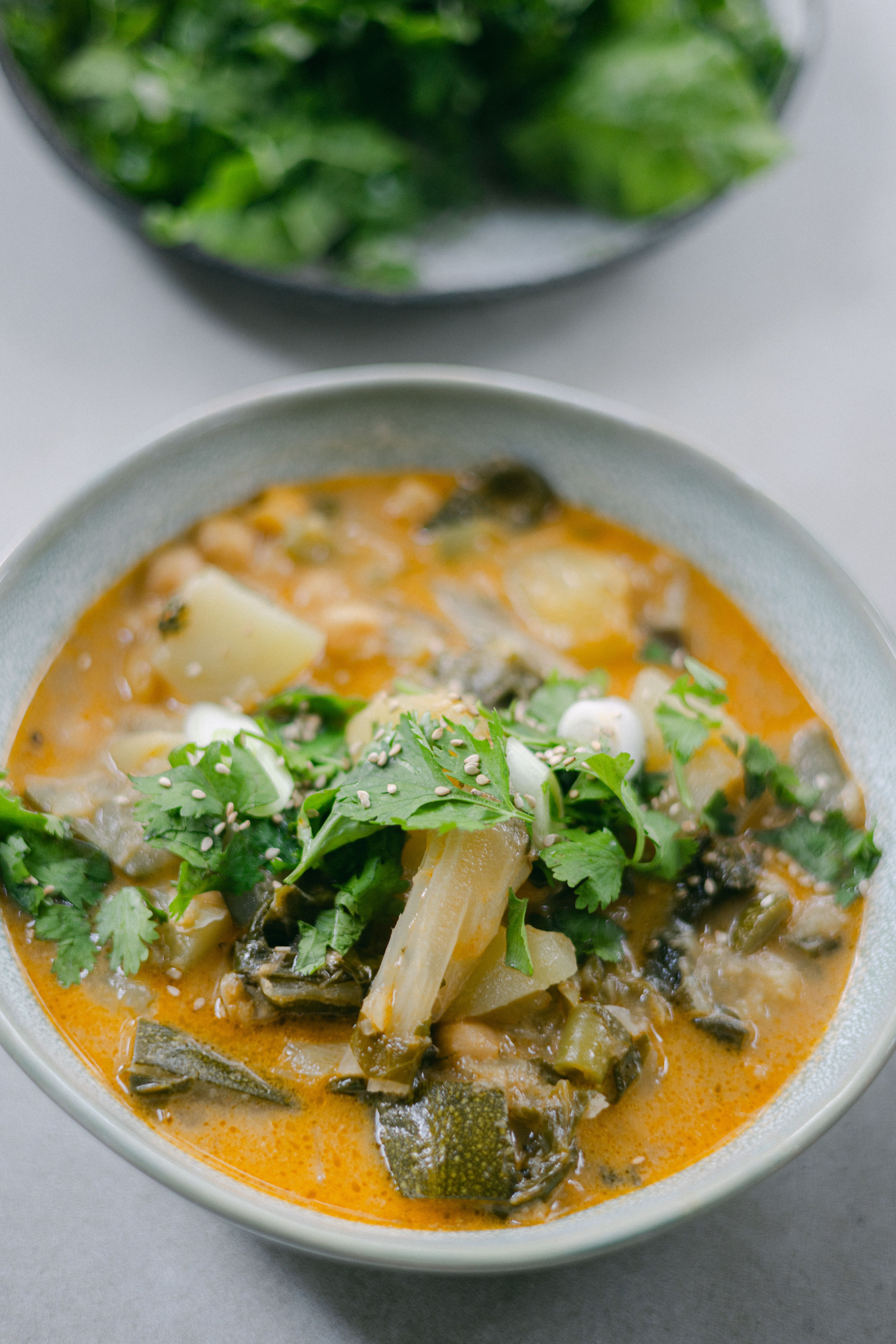
Sopa de Mani
The diets react (see scores below)
Common Ingredients
- peanuts
- beef
- potatoes
- carrot
- peas
- onion
- garlic
- rice
- parsley
Specific recipes may vary.
Incompatible with 7 of 11 diets
Diet Ratings
Sopa de Mani is fundamentally incompatible with a ketogenic diet. The dish contains multiple high-carbohydrate ingredients that together would far exceed the daily net carb limit in a single serving. Potatoes alone contribute roughly 15-20g net carbs per medium potato, rice adds another 20-30g net carbs per serving, peas contribute approximately 7-10g net carbs per half cup, and carrots add another 5-8g net carbs. Combined, a standard bowl of this soup could easily deliver 50-80g or more of net carbs, blowing the entire daily keto budget in one meal. While beef and peanuts are generally keto-compatible on their own, their presence cannot offset the massive carbohydrate load from the starchy and grain ingredients.
Sopa de Mani is a traditional Bolivian peanut soup that explicitly contains beef as its primary protein. Beef is an animal product and is categorically excluded from a vegan diet. While the majority of the other ingredients — peanuts, potatoes, carrot, peas, onion, garlic, rice, and parsley — are entirely plant-based, the presence of beef makes this dish incompatible with vegan dietary standards. There is no ambiguity here.
Sopa de Mani contains multiple hard paleo violations that make this dish clearly non-compliant. Peanuts are legumes, not nuts, and are explicitly excluded from the paleo diet. Rice is a grain and is likewise excluded. Peas are legumes and also excluded. These three ingredients alone are sufficient to disqualify the dish entirely. Additionally, potatoes are debated in the paleo community, and onion and garlic are fine, but the core violations from peanuts, rice, and peas are unambiguous. This is a heavily grain- and legume-dependent dish at its structural core — peanuts are even the star ingredient (mani = peanut).
Sopa de Mani is a hearty Bolivian peanut soup whose primary protein is beef, which conflicts directly with Mediterranean diet principles limiting red meat to a few times per month. The dish combines two problematic elements: beef (high saturated fat, limited consumption advised) and white rice (refined grain, minimal nutritional benefit), alongside an otherwise respectable roster of vegetables (carrot, peas, onion, garlic, parsley) and legume-adjacent peanuts. Peanuts are a positive element — nuts and legumes are Mediterranean staples — and the vegetable content adds some merit. However, the beef-forward protein source and refined rice together pull the score firmly into 'avoid' territory. The dish could be improved significantly by substituting legumes or fish for beef and using whole grain or omitting rice.
Some Mediterranean diet practitioners argue that a small serving of beef in a vegetable-rich, broth-based soup dilutes the red meat impact enough to reach 'caution' territory, particularly if portions are modest and frequency is limited — aligning with the once-weekly red meat allowance some interpretations permit. The peanut and vegetable density lends nutritional credibility that strict avoid ratings typically lack.
Sopa de Mani is a traditional Bolivian peanut soup that is fundamentally incompatible with the carnivore diet. While it does contain beef, the dish is overwhelmingly plant-based: peanuts (a legume) serve as the primary flavor base, and the recipe includes potatoes, carrots, peas, onion, garlic, rice, and parsley — all strictly excluded plant foods. The beef is essentially a minor component in a soup built entirely around plant ingredients. No modification short of a complete recipe overhaul could make this carnivore-compatible.
Sopa de Mani contains multiple Whole30-excluded ingredients. Peanuts are legumes and explicitly excluded from the Whole30 program. Rice is a grain and also explicitly excluded. These are two fundamental violations that make this dish incompatible with Whole30, regardless of the compliant ingredients present (beef, potatoes, carrot, onion, garlic, parsley). Peas, while technically a legume, are not in the same exception category as green beans, sugar snap peas, or snow peas — standard green peas are excluded. This dish cannot be made Whole30-compliant without fundamentally altering its core identity.
Sopa de Mani contains multiple high-FODMAP ingredients that make it unsuitable during the elimination phase. Onion and garlic are among the highest-fructan foods tested by Monash University and are high-FODMAP at any culinary quantity. Peas are high in GOS and are high-FODMAP at standard soup servings. These three ingredients alone disqualify the dish. Additionally, peanuts become high-FODMAP above a small serving (around 28g/small handful), and in a peanut-based soup they are likely used in large quantities as a primary ingredient. The remaining ingredients — beef, potatoes, carrot, rice, and parsley — are individually low-FODMAP and would not be problematic, but the combination of onion, garlic, peas, and high quantities of peanuts creates a dish with multiple significant FODMAP triggers.
Sopa de Mani is a Bolivian peanut soup with a mixed DASH profile. On the positive side, it contains numerous DASH-friendly ingredients: vegetables (carrot, onion, garlic, peas, parsley), potatoes (a good source of potassium), and peas and peanuts (legumes/nuts encouraged on DASH for fiber, magnesium, and plant protein). However, several factors temper its rating. Beef is a red meat, which DASH limits due to saturated fat and cholesterol concerns — the cut matters significantly (lean cuts like sirloin are more acceptable than fatty cuts). Peanuts are generally DASH-compatible as a nut/legume source but are calorie-dense, and traditional preparations may use full servings of peanut paste that push saturated fat intake upward. Rice adds refined carbohydrates, though the quantity in soup is typically modest. The main concern in typical restaurant or home preparation is sodium — soups are frequently high in sodium, and this dish as commonly prepared in Bolivia may be salted generously. With mindful preparation (lean beef, portion-controlled peanuts, low-sodium broth, and moderate salt), this soup could score higher, but as commonly consumed it warrants caution.
NIH DASH guidelines categorize red meat as a food to limit and emphasize lean poultry and fish as preferred animal proteins. However, updated clinical interpretations note that when lean beef cuts are used in modest portions within an otherwise vegetable-rich dish, the overall dietary pattern can still align with DASH principles — some DASH-oriented dietitians accept lean red meat 1-2 times per week rather than excluding it entirely.
Sopa de Mani presents a challenging Zone profile due to the stacking of multiple unfavorable carbohydrate sources. Potatoes and rice are both high-glycemic carbs that Dr. Sears classifies as 'unfavorable' in Zone terminology, and their combination in a single dish creates a carbohydrate load that is difficult to balance into a 40/30/30 ratio without severely restricting portion size. Peanuts, while contributing protein and fat, are high in omega-6 fatty acids — which Sears explicitly discourages due to their pro-inflammatory effects — and carry significant fat load that skews toward saturated and polyunsaturated rather than the preferred monounsaturated profile. On the positive side, the dish contains favorable Zone elements: beef provides protein (though not the leanest option), and carrots, peas, onion, garlic, and parsley contribute low-glycemic vegetable carbs and polyphenols. However, the overall macro balance of the dish as traditionally prepared skews heavily toward carbohydrates and fat, with insufficient lean protein relative to Zone targets. A Zone practitioner could adapt this dish by eliminating or drastically reducing the potatoes and rice, reducing peanut quantity, and increasing lean beef portions, but the traditional recipe as presented is difficult to fit into Zone ratios without significant modification.
Some Zone practitioners in later Sears frameworks (particularly post-'The OmegaRx Zone') might note that peanuts, while omega-6 heavy, still provide some monounsaturated fat and that small quantities of potatoes and rice are not categorically forbidden — they simply require tighter block accounting. A half-portion of this soup, paired with additional lean protein on the side, could theoretically approach Zone ratios. The vegetable diversity (carrot, peas, onion, garlic, parsley) and the anti-inflammatory polyphenols from garlic and parsley are genuine Zone positives that slightly offset the unfavorable carb sources.
Sopa de Maní is a traditional Bolivian peanut soup with a mixed anti-inflammatory profile. On the positive side, peanuts contain resveratrol, niacin, and monounsaturated fats that offer some anti-inflammatory benefit, though they are less potent than walnuts or fatty fish. Garlic and parsley are well-regarded anti-inflammatory ingredients with allicin and flavonoid content respectively. The vegetable base — carrots, peas, onion — contributes antioxidants and fiber. However, the dish includes beef as the primary protein, which is a moderate-to-avoid food in anti-inflammatory frameworks due to saturated fat and arachidonic acid content. The combination of potatoes and rice in one dish adds a significant refined and high-glycemic carbohydrate load, which can promote inflammatory signaling when consumed in excess. Overall, this is a nutritionally dense traditional dish with both beneficial and pro-inflammatory elements. It can be part of a cautiously anti-inflammatory diet if beef is lean (e.g., lean cuts or smaller portions) and portion sizes of starchy ingredients are managed. It lacks the omega-3-rich proteins and concentrated polyphenol sources that would push it into 'approve' territory.
Some anti-inflammatory practitioners (including those following AIP or stricter protocols) would rate this lower due to beef's arachidonic acid content and the high starch load from both potatoes and rice simultaneously. Conversely, whole-food-oriented approaches like Dr. Weil's framework would view the vegetable, legume (peanuts/peas), and aromatic herb components as meaningful anti-inflammatory contributors that partially offset the beef, making moderation rather than avoidance the appropriate stance.
Sopa de Maní is a traditional Bolivian peanut-based beef soup with a complex nutritional profile for GLP-1 patients. On the positive side, it contains meaningful protein from beef and peanuts combined, fiber-supporting vegetables (peas, carrot, onion, garlic, parsley), and the soup format itself aids hydration and easy digestibility. However, peanuts are calorie-dense and high in fat (even if mostly unsaturated), and traditional recipes often use fatty cuts of beef. The combination of peanuts plus starchy carbohydrates from both potatoes and rice in one dish creates a high calorie density per serving, which is a concern when patients are eating smaller portions and need every calorie to count nutritionally. The fat load from peanuts may also worsen GLP-1 side effects such as nausea, bloating, or delayed gastric emptying. A modified version using lean beef, reduced peanut quantity, and either potato or rice (not both) would improve the profile considerably.
Some GLP-1-focused dietitians may view this soup more favorably in small portions, noting that peanuts provide unsaturated fats and plant protein which contribute to satiety and nutrient density — both desirable goals. Others are more cautious about the combined fat load from peanuts and potentially fatty beef cuts, which can meaningfully worsen GI side effects; tolerance is highly individual and may shift week to week depending on medication dose.
*See how scores were generated at our methodology page.
Nutritional profile
Six traits that cut across every diet.
Fiber & Plants
How much whole-plant food and fiber it delivers.
Healthy Fats
The quality of its fats (unsaturated, omega-3).
Whole / Unprocessed
How close it is to its natural, unprocessed form.
Gut Gentle
How easy it is on digestion (low FODMAP, few irritants).
Low Glycemic
How little it spikes your blood sugar.
Protein Density
How much protein it packs per calorie.
Controversy Index
Higher controversy = more disagreement between diets.
Diet-Specific Tips
 DASH — 5/10
View tips
- Beef is a red meat — DASH recommends limiting red meat; leanness of cut is critical
- Peanuts are DASH-compatible as nuts/legumes but are calorie-dense; portion size matters
- Vegetables (carrot, peas, onion, garlic, parsley) and potatoes contribute potassium, fiber, and magnesium — DASH positives
- Soup preparations are typically high in sodium, a primary DASH concern
- Rice is a refined grain; switching to brown rice would improve DASH alignment
- Overall dish is vegetable-rich and legume-forward, partially offsetting red meat concerns
- Low-sodium broth and lean beef cuts would significantly improve DASH compatibility
 Zone — 4/10
View tips
- Potatoes are a high-glycemic 'unfavorable' carb — explicitly discouraged by Dr. Sears
- Rice is another high-glycemic unfavorable carb, compounding the glycemic load
- Double stacking of two unfavorable carb sources makes Zone ratio balancing very difficult
- Peanuts are high in omega-6 fatty acids, which Sears links to pro-inflammatory eicosanoids
- Beef protein is usable in Zone but less ideal than skinless chicken or fish
- Favorable Zone vegetables present (carrot, peas, onion, garlic, parsley) add polyphenols
- Traditional portion would significantly exceed Zone carbohydrate block targets
- Dish could be Zone-adapted by removing potatoes and rice and reducing peanut quantity
 Anti-Inflammatory — 5/10
View tips
- Beef (primary protein) is pro-inflammatory due to saturated fat and arachidonic acid — anti-inflammatory frameworks recommend limiting red meat
- Peanuts provide monounsaturated fats and resveratrol with mild anti-inflammatory properties, but are less beneficial than tree nuts or omega-3 sources
- Dual starch load from potatoes + rice creates a high-glycemic carbohydrate burden that can promote inflammatory markers
- Garlic is a well-supported anti-inflammatory ingredient with allicin and organosulfur compounds
- Carrots, peas, and onion contribute antioxidants, fiber, and quercetin
- Parsley offers flavonoids (apigenin) and vitamin C with anti-inflammatory activity
- No omega-3-rich ingredients, anti-inflammatory oils (e.g., EVOO), or polyphenol-dense foods to strongly counterbalance the pro-inflammatory components
 GLP-1 Friendly — 5/10
View tips
- Peanuts add significant fat per serving, potentially worsening nausea and bloating
- Beef cut used strongly determines saturated fat content — lean cuts preferred
- Double starch load (potato + rice) reduces nutrient density per calorie
- Soup format is GLP-1 friendly for hydration, easy digestion, and portion control
- Vegetables (peas, carrot, onion, parsley) contribute fiber and micronutrients
- Combined protein from beef and peanuts is a positive, but total protein per serving depends heavily on portion size
- Portion sensitivity is high — a small bowl is far more appropriate than a standard serving