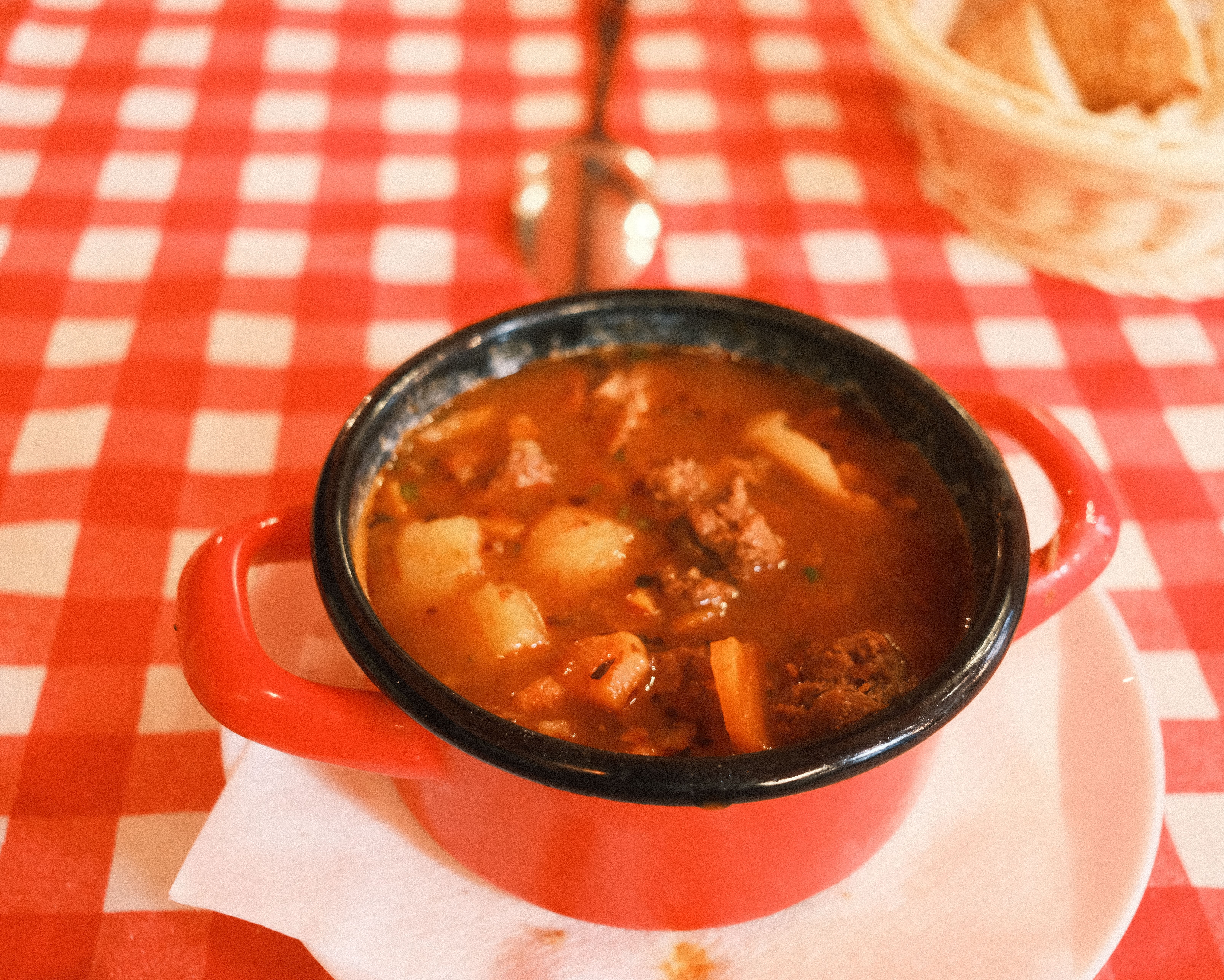
Photo: kirpiklipencere / Pexels
Bosnian
Bosanski Lonac
The diets react (see scores below)
Common Ingredients
- beef
- potatoes
- cabbage
- carrot
- onion
- tomato
- garlic
- bell pepper
Specific recipes may vary.
Incompatible with 4 of 11 diets
Diet Ratings
Bosanski Lonac is a traditional Bosnian slow-cooked stew that is fundamentally incompatible with ketogenic dieting. The primary offender is potatoes, which are high-starch vegetables containing roughly 15-17g net carbs per 100g. A standard serving of this stew would include a significant portion of potatoes alone, easily exceeding the entire daily carb allowance. Carrots add additional sugars (~7g net carbs/100g), and tomatoes and onions contribute further carbohydrates. Even if the beef component is keto-friendly, the cumulative carb load from the vegetable mix — dominated by potatoes — makes this dish incompatible with maintaining ketosis. The dish cannot be easily modified without fundamentally altering its character.
Bosanski Lonac is a traditional Bosnian slow-cooked stew whose primary protein is beef, a clear animal product. Despite the dish containing numerous wholesome plant-based vegetables — potatoes, cabbage, carrot, onion, tomato, garlic, and bell pepper — the inclusion of beef makes it entirely incompatible with a vegan diet. There is no ambiguity here: beef is animal flesh and is categorically excluded under every definition of veganism.
Bosanski Lonac is a traditional Bosnian slow-cooked stew featuring beef alongside vegetables including potatoes, cabbage, carrot, onion, tomato, garlic, and bell pepper. The majority of the dish is highly paleo-compatible: beef is a cornerstone paleo protein, and cabbage, carrot, onion, tomato, garlic, and bell pepper are all unprocessed vegetables fully aligned with paleo principles. The dish's slow-cooking method is also consistent with ancestral cooking practices. The main point of contention is the white potatoes, which are debated in the paleo community — Loren Cordain's original framework discouraged them due to glycemic load and antinutrient content (glycoalkaloids), while Mark Sisson, Whole30, and much of modern paleo now accept them as a whole-food tuber. Traditional preparation may also include added salt, which strict paleo excludes. The dish earns a caution rating primarily due to the white potato debate, keeping it from a full approval despite being otherwise very clean.
Mark Sisson (Primal Blueprint) and the Whole30 program both include white potatoes as acceptable whole foods, and if this dish is prepared without added salt or processed ingredients, many modern paleo practitioners would approve it outright. Conversely, strict Cordain-school followers would flag the white potatoes as problematic due to their glycemic index and saponin content.
Bosanski Lonac is a traditional Bosnian slow-cooked stew featuring beef as the primary protein alongside a rich array of vegetables (cabbage, carrot, onion, tomato, garlic, bell pepper, potatoes). The vegetable profile is strongly Mediterranean-compatible — diverse, whole, and nutrient-dense. However, beef is the primary protein, and the Mediterranean diet limits red meat to a few times per month or at most once weekly. The dish is minimally processed and contains no added sugars or refined grains, which is a positive. The overall assessment lands in 'caution' territory: the vegetable-forward preparation and whole-food ingredients align with Mediterranean principles, but the beef-centric protein source contradicts the diet's guidance to limit red meat. Occasional consumption is acceptable, but it should not be a regular staple.
Some Mediterranean diet researchers applying a broader 'traditional whole-food' lens might note that slow-cooked, vegetable-heavy meat stews — where meat is used more as a flavoring agent than a main feature — are practiced in parts of Southern Europe and the Balkans and can fit within moderate red meat allowances. If beef portions are small relative to the large volume of vegetables, the dish's overall nutritional profile moves closer to approval.
Bosanski Lonac is a traditional Bosnian slow-cooked stew that, while it does contain beef as the primary protein, is overwhelmingly dominated by plant-based ingredients. Potatoes, cabbage, carrot, onion, tomato, garlic, and bell pepper make up the bulk of the dish — all of which are strictly excluded on the carnivore diet. Plant foods, regardless of how they are prepared or combined with meat, are not compatible with the carnivore framework. The beef component alone would be approved, but the dish as a whole cannot be consumed on a carnivore diet in its traditional form.
Bosanski Lonac is a traditional Bosnian slow-cooked stew made entirely from whole, unprocessed foods: beef, potatoes, cabbage, carrot, onion, tomato, garlic, and bell pepper. Every ingredient listed is explicitly compliant with Whole30 rules. Meat and vegetables are the foundation of the Whole30 diet, and this dish contains no excluded ingredients — no grains, legumes, dairy, added sugars, or any other prohibited substances. It is a straightforward, whole-food meal that aligns perfectly with the program's spirit.
Bosanski Lonac contains multiple high-FODMAP ingredients that make it unsuitable during the elimination phase. Onion is one of the highest-FODMAP foods tested by Monash University, rich in fructans, and is problematic even in small amounts. Garlic is similarly extremely high in fructans and must be avoided entirely during elimination. These two ingredients alone are sufficient to classify this dish as avoid-level, and they are structural components of the recipe rather than garnishes. Cabbage adds further concern, as it is moderate-to-high in FODMAPs (GOS and fructans) at typical serving sizes. While beef, potatoes, carrot, tomato, and bell pepper are generally low-FODMAP at standard servings, the combination of onion, garlic, and cabbage makes this dish a clear avoid during elimination phase.
Bosanski Lonac is a traditional Bosnian slow-cooked stew featuring beef layered with an impressive array of DASH-friendly vegetables: cabbage, carrots, onion, tomato, bell pepper, garlic, and potatoes. The vegetable profile is excellent — rich in potassium, magnesium, fiber, and antioxidants, strongly aligned with DASH principles. The primary concern is the beef, which in this dish is traditionally made with fattier cuts (such as chuck or bone-in beef) to withstand long slow cooking, contributing saturated fat that DASH limits. If lean cuts are used (e.g., round or sirloin), the dish improves considerably. The dish is typically prepared without heavy added sodium (no cured meats or processed ingredients), which is a positive factor. Portion control of the beef component is key. The overall dish leans toward caution rather than approval due to the uncertainty around beef cut fattiness, but the vegetable density is a strong DASH asset.
NIH DASH guidelines categorically limit red meat and recommend lean poultry and fish as primary proteins, placing beef-based dishes in a cautious category. However, updated clinical interpretations note that when lean cuts of beef are used in modest portions within a vegetable-rich preparation like Bosanski Lonac, the overall dietary pattern — high in fiber, potassium, and micronutrients — may be consistent with DASH goals, particularly for non-hypertensive individuals following the standard (rather than strict low-sodium) DASH protocol.
Bosanski Lonac is a traditional Bosnian slow-cooked stew with a mixed Zone profile. On the positive side, it contains several Zone-favorable vegetables (cabbage, carrot, onion, tomato, garlic, bell pepper) that provide low-glycemic carbohydrates, polyphenols, and fiber. The beef provides protein, though its fat content depends heavily on the cut used — leaner cuts (round, sirloin) would be more Zone-compatible than fatty stews cuts. The critical Zone concern is the potatoes, which are explicitly classified as 'unfavorable' high-glycemic carbohydrates by Dr. Sears and should ideally be minimized or omitted. The stew format also makes macronutrient ratio control difficult without careful portioning. With the potatoes, the carbohydrate load skews high-glycemic and unbalanced relative to the protein block. A Zone-adapted version would reduce or eliminate potatoes, increase lean beef portion to ~25g protein, and possibly add a drizzle of olive oil to complete the fat block. As prepared traditionally, the dish requires significant modification to hit 40/30/30 targets.
Some Zone practitioners would argue that in a mixed stew, the glycemic impact of potatoes is blunted by the protein and fat content of the beef and the fiber from the other vegetables, making the overall meal more Zone-compatible than the potato ingredient alone would suggest. Sears' later anti-inflammatory writings also place greater emphasis on overall food quality and polyphenol content — areas where this vegetable-rich stew performs well.
Bosanski Lonac is a traditional Bosnian slow-cooked stew with a genuinely mixed anti-inflammatory profile. On the positive side, the dish is rich in anti-inflammatory vegetables: garlic (allicin), tomatoes (lycopene), bell peppers (vitamin C, carotenoids), cabbage (glucosinolates, vitamin C), carrots (beta-carotene), and onions (quercetin). These ingredients collectively provide meaningful antioxidant and polyphenol content. The slow-cooking method allows flavors and phytonutrients to meld without high-heat oxidation. However, the primary protein is beef — a red meat that anti-inflammatory frameworks recommend limiting due to saturated fat content and arachidonic acid, which can upregulate inflammatory prostaglandins. The stew's inflammatory impact depends significantly on the cut of beef used: leaner cuts (e.g., shank, chuck trimmed of fat) are notably less problematic than fatty cuts. Potatoes are nutritionally neutral to mildly beneficial (potassium, vitamin C) but are a nightshade, which some autoimmune protocols flag. Overall, the vegetable-heavy composition partially offsets the red meat concern, placing this dish in a moderate 'caution' zone — acceptable occasionally, especially if prepared with lean beef, but not an ideal staple for strict anti-inflammatory eating.
Some anti-inflammatory practitioners, particularly those following Dr. Weil's Mediterranean-leaning approach, may rate this more favorably given its abundance of colorful vegetables, garlic, tomatoes, and slow-cooking technique — arguing the phytonutrient load meaningfully offsets the moderate red meat. Conversely, stricter anti-inflammatory and autoimmune protocol (AIP) adherents would be more critical, flagging both the beef (arachidonic acid, saturated fat) and nightshade ingredients (tomatoes, bell peppers, potatoes) as potential inflammatory triggers.
Bosanski Lonac is a slow-cooked layered stew built almost entirely from whole, unprocessed ingredients — beef, root vegetables, cabbage, tomato, onion, garlic, and bell pepper. The cooking method (long braise, no frying, no added oils in the traditional recipe) is GLP-1 friendly: easy to digest, high water content from the broth and vegetables, and naturally rich in fiber from cabbage, carrot, potato, and bell pepper. Fiber content is a genuine strength. The primary concern is the beef cut: traditional Bosanski Lonac uses bone-in, fattier cuts of beef (chuck, shank, ribs) that render significant saturated fat into the broth. This raises the fat-per-serving load meaningfully and can worsen GLP-1 side effects like nausea, bloating, and reflux. Protein content is moderate but not as dense per calorie as leaner proteins. Potatoes add starchy carbohydrates with limited protein contribution. The dish is not disqualifying — it is a nutrient-dense, whole-food, slow-cooked stew — but the fatty cut of beef and the relatively modest protein-to-fat ratio compared to GLP-1 ideals keep it in the caution tier. Modifications (lean beef such as round or loin, skimming fat from the broth, smaller portions) would push it toward an approve.
Some GLP-1-focused dietitians would rate this more favorably, arguing that the slow-cooked format, high vegetable volume, and absence of processed ingredients make it one of the better traditional stew options available — particularly if fat is skimmed post-cooking. Others would flag the fatty beef cuts and starchy potato load as problematic for patients who are nausea-prone or managing blood sugar, and would advise swapping to leaner protein before recommending it.
*See how scores were generated at our methodology page.
Nutritional profile
Six traits that cut across every diet.
Fiber & Plants
How much whole-plant food and fiber it delivers.
Healthy Fats
The quality of its fats (unsaturated, omega-3).
Whole / Unprocessed
How close it is to its natural, unprocessed form.
Gut Gentle
How easy it is on digestion (low FODMAP, few irritants).
Low Glycemic
How little it spikes your blood sugar.
Protein Density
How much protein it packs per calorie.
Controversy Index
Higher controversy = more disagreement between diets.
Diet-Specific Tips
 Paleo — 5/10
View tips
- Beef is a paleo-approved primary protein
- Cabbage, carrot, onion, tomato, garlic, and bell pepper are all paleo-approved vegetables
- White potatoes are the central point of debate — excluded by Cordain, accepted by Sisson and Whole30
- No grains, legumes, dairy, or seed oils present
- Traditional preparation may include added salt, which strict paleo discourages
- Slow-cooked whole-food preparation aligns well with paleo philosophy
 Mediterranean — 4/10
View tips
- Beef is the primary protein — red meat should be limited to a few times per month on the Mediterranean diet
- Exceptionally rich and diverse vegetable content (cabbage, carrot, onion, tomato, garlic, bell pepper) strongly aligns with Mediterranean principles
- No processed ingredients, refined grains, or added sugars — whole-food preparation
- Slow-cooked stew format may dilute meat proportion relative to vegetables
- Absence of olive oil as cooking fat is a missed opportunity for a key Mediterranean staple
 Whole30 — 9/10
View tips
- Beef is a fully compliant Whole30 protein
- All vegetables (potatoes, cabbage, carrot, onion, tomato, garlic, bell pepper) are Whole30-approved
- No grains, legumes, dairy, or added sugars present
- Simple, whole-food preparation with no processed components
- Aligns with the spirit and letter of the Whole30 program
 DASH — 6/10
View tips
- Rich vegetable variety (cabbage, carrot, tomato, bell pepper, garlic, onion) provides excellent potassium, fiber, and magnesium — core DASH nutrients
- Beef is a red meat limited by DASH guidelines due to saturated fat content
- Traditional preparation often uses fatty beef cuts; lean cuts would significantly improve DASH compatibility
- No processed or cured ingredients means sodium content is naturally low — a major positive
- Potatoes add potassium and are acceptable in DASH when not prepared with excess fat or salt
- Portion size of beef relative to vegetables is critical for DASH compliance
- No added sugars, tropical oils, or trans fats
 Zone — 5/10
View tips
- Potatoes are explicitly 'unfavorable' high-glycemic carbs in Zone methodology
- Rich array of Zone-favorable low-GI vegetables (cabbage, bell pepper, tomato, carrot, garlic, onion)
- Beef protein quality depends on cut — fatty cuts increase saturated fat beyond Zone recommendations
- No added fat listed; fat block completion would require olive oil or similar monounsaturated source
- Stew format makes precise block portioning challenging
- High polyphenol content from diverse vegetables aligns with Sears' anti-inflammatory focus
 Anti-Inflammatory — 5/10
View tips
- Red meat (beef) is the primary protein — anti-inflammatory frameworks recommend limiting red meat due to saturated fat and arachidonic acid content
- Garlic provides potent anti-inflammatory allicin and organosulfur compounds
- Tomatoes and bell peppers contribute lycopene, vitamin C, and carotenoids with antioxidant activity
- Cabbage and onions offer glucosinolates and quercetin, both associated with reduced inflammatory markers
- Carrots provide beta-carotene, a notable anti-inflammatory carotenoid
- Potatoes are nightshades — generally acceptable for the general population but flagged in autoimmune protocols
- Lean beef cuts would significantly improve the dish's anti-inflammatory profile compared to fatty cuts
- No added refined sugars, trans fats, or processed additives — a meaningful positive
- Slow-cooking method preserves nutrients without high-heat oxidation
 GLP-1 Friendly — 5/10
View tips
- Traditional recipe uses fatty beef cuts (chuck, shank) — significant saturated fat load
- Excellent vegetable variety providing meaningful fiber (cabbage, carrot, bell pepper, tomato, onion)
- Slow-braised, no frying — easy to digest and GLP-1 friendly cooking method
- High water content from broth and vegetables supports hydration
- Potatoes add starchy carbs with limited protein density contribution
- Protein per serving is moderate but diluted by fat from beef cut
- Modifiable: lean beef cut and fat-skimming would significantly improve the profile
- Portion-sensitive: a small bowl is appropriate given slowed gastric emptying on GLP-1s