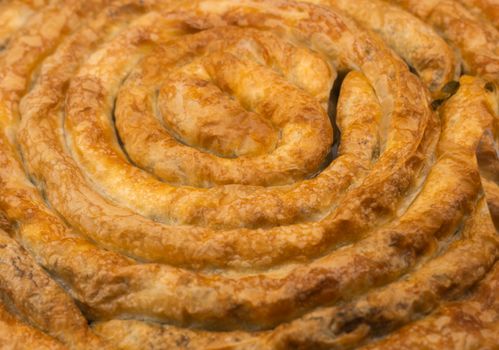
Photo: Doğan Alpaslan Demir / Pexels
The diets react (see scores below)
Common Ingredients
- phyllo dough
- ground beef
- onion
- salt
- black pepper
- oil
- paprika
Specific recipes may vary.
Incompatible with 10 of 11 diets
Diet Ratings
Burek is fundamentally built on phyllo dough, a grain-based pastry that is extremely high in carbohydrates. Phyllo dough is essentially flour and water, delivering roughly 30-40g of net carbs per serving. This single ingredient alone blows through the entire daily keto carb budget. While the ground beef filling is keto-compatible, the dough is the structural foundation of the dish and cannot be removed or reduced without the dish ceasing to be burek. There is no portion size small enough to make this compatible with ketosis.
Burek in this recipe contains ground beef as the primary protein, which is an animal product and therefore strictly incompatible with a vegan diet. There is no ambiguity here — meat is excluded by all vegan standards without exception.
Burek is fundamentally incompatible with the paleo diet. The primary structural ingredient is phyllo dough, a highly processed wheat-based product — grains being one of the clearest exclusions in all paleo frameworks. Additionally, salt is a listed ingredient, which is excluded under strict paleo guidelines. The ground beef and onion are paleo-friendly, and black pepper and paprika are acceptable spices, but the core of the dish — the phyllo dough — makes it impossible to approve or even rate as caution. The type of oil is unspecified and may be a seed oil, adding further concern. No meaningful paleo substitution can rescue a dish whose defining characteristic is grain-based pastry.
Burek is a poor fit for the Mediterranean diet on multiple fronts. The primary protein is ground beef, a red meat that Mediterranean guidelines restrict to only a few times per month. The pastry shell is made from phyllo dough, a refined grain product with little nutritional value, and the dish is typically deep-fried or heavily oiled with generic refined oil rather than extra virgin olive oil. There are no vegetables beyond onion, no legumes, no whole grains, and no plant-forward elements of substance. The combination of red meat, refined pastry, and frying makes this a snack that contradicts the core principles of the Mediterranean diet.
Burek is fundamentally incompatible with the carnivore diet. The dish is built around phyllo dough, a grain-based product (wheat flour) that is entirely plant-derived and represents exactly the kind of processed carbohydrate that carnivore eliminates. Additionally, onion, paprika, and black pepper are all plant foods, and the oil is almost certainly a plant-based oil (vegetable/sunflower). While ground beef is an approved carnivore protein source, it constitutes only one component of a dish whose structural foundation is disqualifying. The presence of multiple plant ingredients — grain dough, allium vegetable, plant spices, and plant oil — makes this a clear avoid with high confidence. There is no meaningful carnivore modification possible while retaining the identity of the dish.
Burek contains phyllo dough, which is made from wheat flour — a grain explicitly excluded on the Whole30 program. Beyond the excluded ingredient itself, burek is a pastry/baked good that falls squarely into the category of foods the Whole30 prohibits even when attempting to recreate with compliant ingredients. The remaining ingredients (ground beef, onion, salt, black pepper, oil, paprika) are all individually Whole30-compliant, but the phyllo dough disqualifies the dish entirely.
Burek contains two significant high-FODMAP ingredients that make it unsuitable during the elimination phase. Phyllo dough is made from wheat flour, which is high in fructans — a major FODMAP — at any standard serving size. Onion is one of the highest-FODMAP foods tested by Monash University, containing large amounts of fructans, and is problematic even in small quantities. These two ingredients together make Burek clearly high-FODMAP regardless of portion size. The remaining ingredients (ground beef, salt, black pepper, oil, paprika) are all low-FODMAP and pose no concern.
Burek is a phyllo pastry filled with seasoned ground beef, which presents multiple conflicts with DASH diet principles. Phyllo dough is a refined grain product typically made with significant added oil or butter and salt during preparation. Ground beef is a red meat that DASH explicitly limits due to saturated fat content. The dish is oil-heavy, contributing to high total and saturated fat intake. Sodium is added directly via salt, and the overall preparation results in a high-sodium, high-saturated-fat, refined-carbohydrate snack that aligns poorly with DASH priorities. It lacks meaningful fiber, potassium, calcium, or magnesium contributions. DASH guidelines explicitly limit red meat, saturated fat, refined grains in large quantities, and high sodium foods — Burek conflicts on all these dimensions.
Burek presents significant challenges for Zone Diet compliance. The primary carbohydrate source is phyllo dough — a refined, high-glycemic flour product with minimal fiber, making it an 'unfavorable' carb in Zone terminology. The ground beef provides protein but is likely a fattier cut than Zone recommends (lean ground beef at 90%+ is borderline acceptable, but traditional burek uses standard ground beef with higher saturated fat). The oil used in phyllo preparation is typically seed oil or vegetable oil, which is high in omega-6 fatty acids — specifically discouraged by Sears for its pro-inflammatory properties. The overall macronutrient ratio is heavily skewed: high refined carbs from multiple layers of phyllo dough, moderate-to-high saturated fat from beef and oil, and protein that is adequate but not lean. There are essentially no favorable Zone carbs (vegetables, low-GI sources) present. While the ground beef and onion are usable Zone components in isolation, the phyllo dough dominates and is nearly impossible to portion into a Zone-compliant ratio without eating a trivially small amount. As a snack specifically, this would represent a very poor Zone block structure — dense refined carbs with no protein-to-carb ratio balance achievable in normal serving sizes.
Burek is a Bosnian pastry made with phyllo dough layered with ground beef and onion, then baked or fried with oil. From an anti-inflammatory standpoint, this dish presents several concerns. Phyllo dough is a refined carbohydrate with minimal fiber and a high glycemic impact, which can trigger inflammatory pathways (elevated blood glucose, insulin spikes). Ground beef is a red meat high in saturated fat and arachidonic acid, both associated with elevated inflammatory markers like CRP and IL-6 when consumed regularly. The oil used in traditional preparation is often a refined seed oil or generic vegetable oil — not extra virgin olive oil — which may contribute omega-6 load and oxidation risk, especially at baking temperatures. On the positive side, onion provides quercetin (a flavonoid with anti-inflammatory properties), and black pepper and paprika offer modest antioxidant benefits, but these are insufficient to offset the core inflammatory profile. The dish lacks meaningful omega-3 content, fiber, antioxidant-rich vegetables, or other anti-inflammatory hallmarks. As a regular dietary component, burek aligns poorly with anti-inflammatory eating principles.
Burek is a poor fit for GLP-1 patients. The phyllo dough layers are typically brushed with generous amounts of oil or butter, making this a high-fat, calorie-dense food with minimal fiber and modest protein per serving. Ground beef, while a protein source, is often a fattier cut in traditional burek preparations, adding saturated fat. The combination of refined dough, fat-saturated pastry layers, and fatty meat creates a heavy, slow-digesting food that is likely to worsen the core GLP-1 side effects: nausea, bloating, reflux, and prolonged gastric discomfort due to already-slowed gastric emptying. Nutrient density per calorie is low — the majority of calories come from refined carbohydrates and fat rather than protein or fiber. As a snack, it is particularly problematic: the snack slot should prioritize high-protein, high-fiber, easily digestible options, and burek fails on all three counts.
*See how scores were generated at our methodology page.
Nutritional profile
Six traits that cut across every diet.
Fiber & Plants
How much whole-plant food and fiber it delivers.
Healthy Fats
The quality of its fats (unsaturated, omega-3).
Whole / Unprocessed
How close it is to its natural, unprocessed form.
Gut Gentle
How easy it is on digestion (low FODMAP, few irritants).
Low Glycemic
How little it spikes your blood sugar.
Protein Density
How much protein it packs per calorie.
Controversy Index
Higher controversy = more disagreement between diets.
Diet-Specific Tips
 Zone — 5/10
View tips
- Phyllo dough is a refined, high-glycemic carbohydrate — classified as 'unfavorable' in Zone methodology
- No low-glycemic vegetables or favorable carb sources present to balance the glycemic load
- Ground beef (standard fat content) exceeds Zone's lean protein guidelines and adds saturated fat
- Oil in phyllo preparation is likely omega-6-heavy seed oil, directly counter to Zone's anti-inflammatory principles
- Macronutrient ratio is carb- and fat-heavy, structurally misaligned with 40/30/30 target
- Onion is a favorable Zone carb but represents negligible quantity relative to phyllo
- As a snack category, portion control would need to be extreme to fit any Zone blocks — making practical use very difficult