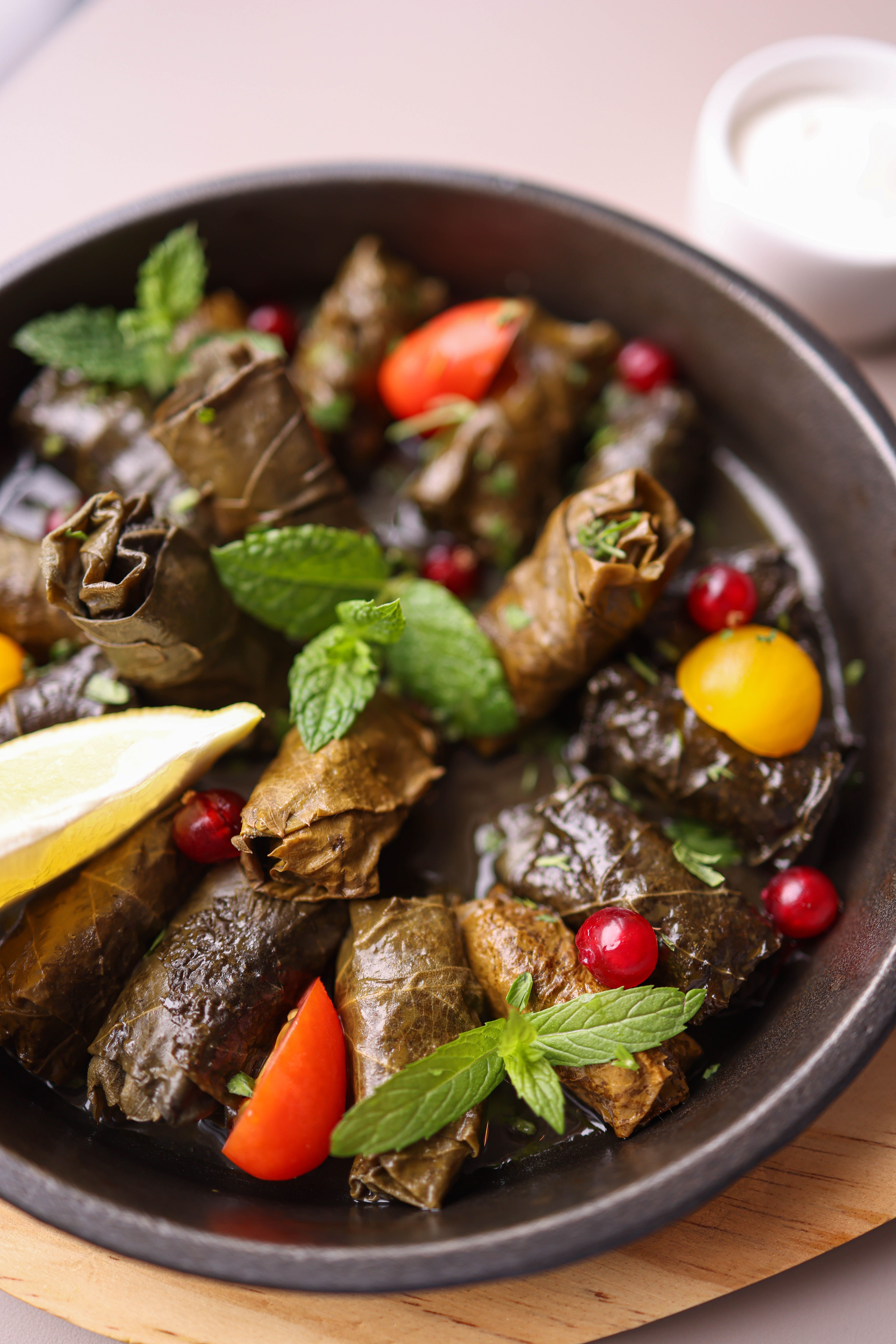
Photo: Valeria Boltneva / Pexels
The diets react (see scores below)
Common Ingredients
- bell peppers
- zucchini
- ground beef
- rice
- onion
- tomato
- parsley
- garlic
Specific recipes may vary.
Incompatible with 6 of 11 diets
Diet Ratings
Bosnian Dolma is fundamentally incompatible with a ketogenic diet due to the inclusion of rice as a core filling ingredient. Rice is a high-carb grain that alone can exceed the entire daily net carb allowance for keto (a half-cup of cooked rice contains ~20-25g net carbs). Combined with the natural sugars in bell peppers, tomato, and onion, a standard serving of dolma would easily push 40-60g net carbs or more, completely breaking ketosis. While ground beef is keto-friendly, the rice cannot be removed without fundamentally changing the dish. The vegetable wrappers (bell peppers, zucchini) add additional carbs on top of the filling.
Bosnian Dolma contains ground beef as its primary protein, which is a clear animal product. This makes the dish incompatible with a vegan diet. The remaining ingredients — bell peppers, zucchini, rice, onion, tomato, parsley, and garlic — are all plant-based, but the presence of ground beef is disqualifying. No ambiguity exists here.
Bosnian Dolma is a stuffed vegetable dish where bell peppers and zucchini are filled with a mixture of ground beef, rice, onion, tomato, parsley, and garlic. While the vegetables, ground beef, and aromatics are paleo-approved, rice is a grain and a clear paleo exclusion. Rice is the structural and caloric backbone of the filling in this dish — it cannot be considered incidental or trace. This makes the dish as traditionally prepared non-paleo. The verdict is avoid with high confidence because rice is unambiguously excluded under all mainstream paleo frameworks (Cordain, Sisson, Wolf). A paleo-adapted version could substitute cauliflower rice for the grain, which would flip the verdict entirely.
Bosnian dolma features stuffed vegetables (bell peppers, zucchini, tomato) with abundant herbs, onion, and garlic — all strongly Mediterranean-aligned. However, ground beef is the primary protein, which Mediterranean guidelines restrict to a few times per month. White rice adds refined starch. The vegetable-forward structure and aromatic ingredients partially redeem the dish, but the red meat centerpiece conflicts with core Mediterranean principles. If beef were replaced with lamb used sparingly or a legume-based filling, the score would rise considerably.
Dolma is a traditional dish across the broader Mediterranean and Middle Eastern region (Turkish, Greek, and Balkan cuisines all feature versions of it), and some Mediterranean diet interpretations acknowledge stuffed vegetables as a culturally authentic preparation. In that context, a small portion of ground beef used as flavoring within a largely vegetable dish may be viewed as acceptable occasional fare rather than a strict avoidance item.
Dolma is fundamentally incompatible with the carnivore diet. While ground beef is the primary protein and carnivore-approved, it is outnumbered by a substantial list of plant-based ingredients: bell peppers, zucchini, rice, onion, tomato, parsley, and garlic. The dish is essentially a vehicle for plant foods — the vegetables serve as the edible stuffing vessel, and rice acts as a grain-based filler and binder. Every non-meat ingredient violates carnivore principles. No amount of meat content redeems a dish that is structurally defined by grains and vegetables.
Bosnian dolma contains rice, which is a grain explicitly excluded on the Whole30 program. Rice is listed among the grains that must be eliminated for the full 30 days. All other ingredients in this dish — bell peppers, zucchini, ground beef, onion, tomato, parsley, and garlic — are fully Whole30-compliant on their own, but the inclusion of rice makes this dish non-compliant as traditionally prepared.
Bosnian Dolma contains multiple high-FODMAP ingredients that make it unsuitable during the elimination phase. Onion is one of the highest-FODMAP foods tested by Monash University, containing significant fructans at any cooking amount used in a standard dish. Garlic is similarly high in fructans and problematic at even small quantities. These two ingredients alone disqualify the dish. Additionally, tomato can contribute excess fructose at larger quantities (though a small amount may be tolerable). Bell peppers and zucchini are low-FODMAP, ground beef and rice are low-FODMAP, and parsley is fine. However, the combination of onion and garlic as core flavoring ingredients — both staples in Dolma recipes — means this dish cannot be made low-FODMAP without significant modification to the original recipe.
Bosnian dolma features bell peppers and zucchini as the vegetable base — both DASH-approved foods rich in potassium and fiber. The filling combines ground beef, rice, onion, tomato, parsley, and garlic, which are largely DASH-friendly ingredients. The primary concern is the ground beef: DASH guidelines limit red meat due to saturated fat content. Ground beef (typically 80/20 or 85/15) contributes meaningful saturated fat per serving, placing this dish in caution territory. However, the dish is not heavily processed, contains no added sodium from processed sources (sodium depends on home preparation and any added salt), and is rich in vegetables. If lean ground beef (93%+ lean) or a beef-turkey blend is used and salt is controlled, this dish moves closer to DASH-compliant. The rice is likely white rice in traditional Bosnian preparation, which is acceptable but whole grain rice would be preferred. Overall, this is a moderately DASH-compatible dish that requires attention to meat leanness and sodium added during cooking.
NIH DASH guidelines categorically limit red meat to small amounts (≤6 oz/day lean cuts) and favor poultry or fish as primary proteins; however, updated clinical interpretations note that lean ground beef in portion-controlled servings, especially when embedded in a vegetable-rich dish like dolma, may be acceptable within a DASH framework without significantly undermining cardiovascular outcomes.
Bosnian dolma is a stuffed vegetable dish where bell peppers and zucchini are filled with a mixture of ground beef, rice, onion, tomato, parsley, and garlic. From a Zone perspective, the dish has both favorable and unfavorable elements. On the positive side, bell peppers and zucchini are excellent low-glycemic Zone-favorable vegetables, providing polyphenols and fiber. Ground beef provides substantial protein, though it is less ideal than leaner proteins like skinless chicken or fish due to higher saturated fat content. Garlic, onion, tomato, and parsley are all Zone-friendly ingredients. The primary concern is white rice, which is a high-glycemic carbohydrate that Sears classifies as 'unfavorable' — it raises insulin rapidly and disrupts the Zone ratio target. The rice-to-vegetable ratio in traditional dolma tends to be significant, shifting the carbohydrate profile toward high-glycemic sources. Additionally, the fat profile from ground beef is predominantly saturated rather than monounsaturated. A Zone-modified version would reduce or replace rice with cauliflower rice, use leaner ground beef (93%+ lean) or substitute ground turkey or chicken, and ensure the vegetable stuffing dominates. As written with traditional proportions, the dish requires careful portioning and modification to fit Zone blocks, making it a 'caution' food rather than an outright avoid, since the vegetable wrappers and herb ingredients are genuinely Zone-friendly.
Some Zone practitioners and later Sears writings take a more lenient view of small amounts of rice within an otherwise balanced meal, particularly when the overall glycemic load is moderated by the fiber from vegetables. In this context, dolma's vegetable-forward preparation (stuffed peppers and zucchini) may partially offset the rice's glycemic impact, and a small serving could be workable within a 3-block Zone meal without major insulin disruption. The dish is certainly not in the same category as pasta-heavy or sugar-laden meals.
Bosnian dolma presents a mixed anti-inflammatory profile. On the positive side, bell peppers and zucchini are colorful vegetables rich in antioxidants (vitamin C, beta-carotene, quercetin), tomato provides lycopene, garlic and parsley are anti-inflammatory herbs, and onion contributes quercetin. These vegetables collectively provide meaningful polyphenol and antioxidant content. However, the primary protein is ground beef, which is a red meat the anti-inflammatory framework recommends limiting due to saturated fat content and arachidonic acid, which can promote inflammatory pathways. The white rice used in traditional dolma is a refined carbohydrate with limited fiber. If the beef is lean ground beef or a lower-fat variety, the dish becomes more acceptable, but it still relies on a protein source that anti-inflammatory guidelines caution against as a regular staple. The dish is not inherently harmful — the generous vegetable component and anti-inflammatory aromatics (garlic, parsley) provide real benefits — but the ground beef and refined rice prevent it from reaching 'approve' status. Enjoyed occasionally rather than as a dietary mainstay, it fits within the moderate zone.
Some anti-inflammatory practitioners following Mediterranean or traditional food frameworks would view this dish more favorably, noting that beef stuffed into whole vegetables with abundant aromatics and tomato is far less inflammatory than processed meat products, and that the vegetable-to-meat ratio and cooking method matter more than the protein source alone. Others following stricter anti-inflammatory protocols (such as those emphasizing omega-3:omega-6 balance) would push this closer to 'avoid' unless grass-fed beef with a more favorable fatty acid profile is used.
Bosnian dolma consists of bell peppers and zucchini stuffed with a ground beef, rice, onion, tomato, parsley, and garlic mixture. The vegetables provide fiber and water content, and the overall dish includes reasonable protein from ground beef. However, the inclusion of white rice dilutes protein density per calorie and adds refined carbohydrate, while ground beef (depending on fat percentage — typically 80/20 in traditional preparations) introduces a moderate-to-high saturated fat load per serving. The dish is not fried and the vegetables and herbs support digestibility and nutrient density. At a standard serving, protein yield is moderate but not optimal for GLP-1 patients who need 15–30g per meal from lean sources. Fat content is the primary concern, as higher-fat ground beef combined with slowed gastric emptying can worsen nausea and bloating. Using lean ground beef (93/7 or leaner) and reducing rice volume would meaningfully improve the profile.
Some GLP-1-focused dietitians consider stuffed vegetable dishes like dolma acceptable as a balanced meal given the vegetable fiber, moderate protein, and absence of frying — particularly when prepared with leaner beef. Others flag the rice-to-protein ratio and saturated fat from standard ground beef as problematic for patients already experiencing GI sensitivity, recommending a protein swap to ground turkey or chicken.
*See how scores were generated at our methodology page.
Nutritional profile
Six traits that cut across every diet.
Fiber & Plants
How much whole-plant food and fiber it delivers.
Healthy Fats
The quality of its fats (unsaturated, omega-3).
Whole / Unprocessed
How close it is to its natural, unprocessed form.
Gut Gentle
How easy it is on digestion (low FODMAP, few irritants).
Low Glycemic
How little it spikes your blood sugar.
Protein Density
How much protein it packs per calorie.
Controversy Index
Higher controversy = more disagreement between diets.
Diet-Specific Tips
 Mediterranean — 4/10
View tips
- Ground beef as primary protein contradicts Mediterranean red meat limits (a few times/month)
- Stuffed vegetables (bell peppers, zucchini) are strongly Mediterranean-aligned
- White rice is a refined grain; whole grain or legume substitution would be preferred
- Herbs, garlic, onion, tomato contribute positively
- Dish is vegetable-forward in structure despite the red meat filling
- Traditional dolma across the Mediterranean region often uses lamb or a meat-rice mix in small quantities
 DASH — 5/10
View tips
- Ground beef is a red meat — DASH limits red meat due to saturated fat
- Bell peppers and zucchini are DASH-approved vegetables rich in potassium and fiber
- No processed or high-sodium packaged ingredients listed
- Sodium outcome depends heavily on added salt during home preparation
- White rice (likely) is acceptable but whole grain rice would score higher
- Lean ground beef (93%+ lean) would significantly improve DASH compatibility
- Garlic, tomato, onion, and parsley are all DASH-positive ingredients
- Portion size is important — a single stuffed pepper/zucchini serving is manageable
 Zone — 5/10
View tips
- White rice is a high-glycemic 'unfavorable' Zone carbohydrate that disrupts the 40/30/30 ratio
- Bell peppers and zucchini are excellent low-glycemic Zone-favorable vegetables
- Ground beef provides protein but has higher saturated fat than Zone-preferred lean proteins
- Traditional dolma proportions may skew carbohydrate blocks toward high-glycemic sources
- Garlic, onion, tomato, and parsley are Zone-friendly polyphenol-rich ingredients
- Dish can be Zone-modified by substituting cauliflower rice and using leaner ground meat
- No Zone-favorable fat source (e.g., olive oil, avocado) is prominent in the ingredient list
 Anti-Inflammatory — 5/10
View tips
- Ground beef (red meat) — pro-inflammatory saturated fat and arachidonic acid; limit per anti-inflammatory guidelines
- Bell peppers and zucchini — rich in antioxidants, vitamin C, carotenoids; anti-inflammatory
- Tomato — lycopene and polyphenols; anti-inflammatory
- Garlic — allicin and organosulfur compounds; strongly anti-inflammatory
- Parsley — flavonoids, vitamin K, apigenin; anti-inflammatory herb
- White rice — refined carbohydrate with low fiber; mildly pro-inflammatory in excess
- Onion — quercetin; anti-inflammatory flavonoid
- No added seed oils, trans fats, or processed additives noted — a positive factor
 GLP-1 Friendly — 5/10
View tips
- Moderate protein from ground beef but diluted by rice — total per-serving protein may fall below the 15–30g GLP-1 meal target depending on portion
- Ground beef fat content is preparation-dependent; standard 80/20 grind introduces meaningful saturated fat that can worsen GLP-1 GI side effects
- White rice adds refined carbohydrate with low fiber contribution, reducing nutrient density per calorie
- Bell peppers and zucchini contribute fiber, water content, and micronutrients — positives for GLP-1 patients
- Not fried and uses aromatic vegetables and herbs — easy to digest compared to heavy or greasy preparations
- Portion sensitivity: a small serving limits fat exposure but may also fail to meet protein targets