Photo: Murat Bilgin / Pexels
The diets react (see scores below)
Common Ingredients
- flour
- eggs
- butter
- sugar
- semolina
- lemon
- baking powder
- water
Specific recipes may vary.
Incompatible with 11 of 11 diets
Diet Ratings
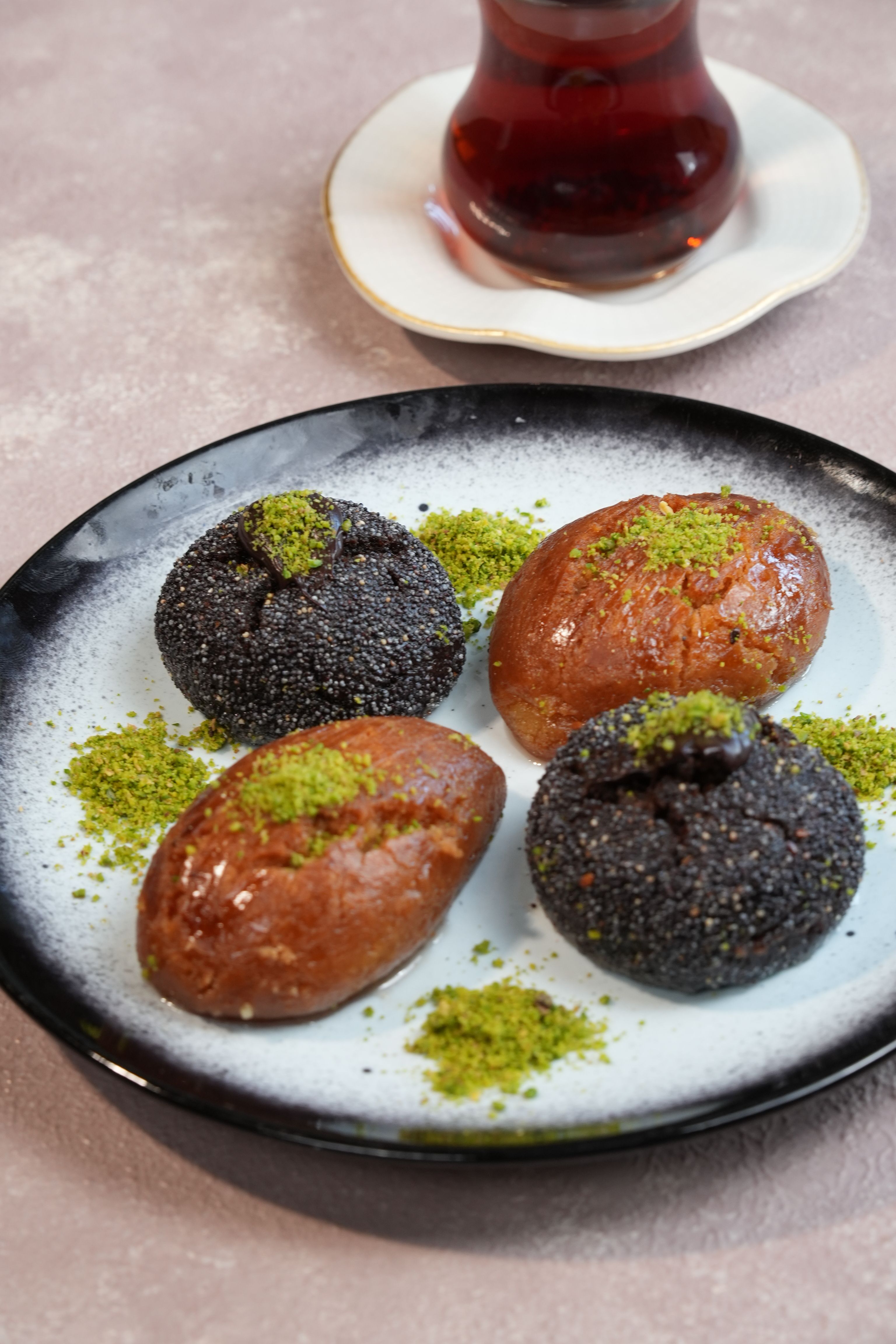
Hurmasice is a traditional Bosnian syrup-soaked pastry made from flour, semolina, sugar, and butter. It is essentially a cookie/cake that is extremely high in net carbs from multiple sources: refined wheat flour and semolina are dense carbohydrate grains, and sugar is a direct ketosis disruptor. A single piece would likely contain 20-30g of net carbs, which alone could exceed an entire day's keto carb allowance. There is no meaningful fat-to-carb ratio that would make this compatible with ketosis. This dish is fundamentally incompatible with a ketogenic diet in any reasonable serving size.
Hurmasice is a traditional Bosnian syrup-soaked cookie that contains both eggs and butter — two clear animal-derived ingredients that make it incompatible with a vegan diet. Eggs are animal products (from hens), and butter is a dairy product (made from cow's milk fat). Both are explicitly excluded under any mainstream definition of veganism. The remaining ingredients — flour, sugar, semolina, lemon, baking powder, and water — are all plant-based, but the presence of eggs and butter renders the dish non-vegan as traditionally prepared. Vegan adaptations could substitute flax eggs or aquafaba for eggs and plant-based butter (e.g., coconut oil or vegan margarine) for butter, but the traditional recipe as listed is not vegan-compliant.
Hurmasice is a traditional Bosnian syrup-soaked pastry that is fundamentally incompatible with the paleo diet. The recipe contains multiple non-paleo ingredients: flour (grain-based), semolina (a wheat derivative — also a grain), sugar (refined sugar), butter (dairy), and baking powder (a processed leavening agent). These are core excluded categories with clear paleo consensus against them. Eggs and lemon are the only paleo-compliant ingredients in this dish. With four or more hard-excluded ingredients forming the structural and flavor base of the recipe, this dish cannot be approved or even cautioned — it is a straightforward avoid.
Hurmasice are Bosnian syrup-soaked cookies made primarily from refined flour, sugar, butter, and semolina — a combination that directly contradicts core Mediterranean diet principles. The dish is high in added sugars (syrup-soaked), uses butter as the primary fat rather than olive oil, and is built on refined grains. There is no meaningful plant-forward nutrition, no healthy fats, and no fiber-rich ingredients. While eggs and semolina are not inherently problematic, they are overshadowed by the sugar load and saturated fat from butter. This is an occasional treat at best, not compatible with regular Mediterranean diet consumption.
Hurmasice is a Bosnian syrup-soaked pastry that is almost entirely plant-based and heavily processed. The primary ingredients are flour, semolina, sugar, lemon, and baking powder — all strictly excluded on the carnivore diet. While eggs and butter are present, they are minor components in an otherwise plant-heavy baked good loaded with refined carbohydrates and sugar. This dish has no place on any tier of the carnivore diet.
Hurmasice contains multiple excluded ingredients that make it entirely incompatible with the Whole30 program. Flour (wheat/grain) is excluded, sugar is excluded as an added sweetener, butter (regular, not ghee) is excluded as a dairy product, and semolina is a wheat-based grain product also excluded. Additionally, even if all ingredients were substituted to be compliant, Hurmasice is a sweet syrup-soaked pastry/cookie that falls squarely into the 'no recreating baked goods/junk food' rule. This dish fails on multiple fronts.
Hurmasice are Bosnian syrup-soaked cookies made primarily from wheat flour and semolina, both of which are high-FODMAP due to their fructan content. Wheat flour is one of the most significant fructan sources in the Western diet, and semolina is also derived from durum wheat, making it equally problematic. The remaining ingredients — eggs, butter, lemon, baking powder, and water — are low-FODMAP. Sugar is low-FODMAP at standard serving sizes. However, the foundational structure of this cookie is built on two high-fructan wheat-based ingredients, making it unsuitable during the FODMAP elimination phase regardless of portion size. A standard serving of 2-3 cookies would deliver a substantial fructan load from both the flour and semolina combined.
Hurmasice are Bosnian syrup-soaked cookies made with butter, sugar, refined flour, and semolina. They are a high-sugar, high-saturated-fat dessert/snack with very low nutritional density relative to caloric load. The combination of butter (saturated fat) and significant added sugar places this firmly outside DASH diet recommendations. DASH explicitly limits sweets and foods high in added sugars and saturated fat. There is no meaningful potassium, magnesium, calcium, or fiber contribution. While the ingredients individually are not all prohibited, the dish as prepared represents exactly the category of sweets DASH recommends limiting to 5 or fewer servings per week — and even then, in very small portions with low added sugar and fat.
Hurmasice is a traditional Bosnian syrup-soaked semolina cookie made primarily from flour, semolina, sugar, and butter — a combination that is deeply problematic for Zone Diet adherence. The macronutrient profile is dominated by high-glycemic carbohydrates (refined white flour, semolina, and sugar) with significant saturated fat from butter, and virtually no lean protein. This creates a wildly unbalanced ratio — roughly 70-80% calories from carbs and fat, skewed heavily toward unfavorable sources. Sugar and refined flour are among the clearest 'avoid' carbohydrates in Zone terminology, causing rapid insulin spikes. Butter contributes saturated fat rather than the preferred monounsaturated fats. There is no meaningful protein block present, making it impossible to construct a Zone-balanced meal or snack around this food without a radical deconstruction. Even in tiny portions, the glycemic load and macro imbalance make it exceptionally difficult to incorporate into any Zone framework.
Hurmasice are traditional Bosnian syrup-soaked cookies made from flour, semolina, eggs, butter, and sugar — a combination that is straightforwardly pro-inflammatory by anti-inflammatory diet standards. The base is refined white flour and semolina (refined carbohydrates with high glycemic load), combined with added sugar and butter (saturated fat). These are soaked in a sugar syrup, dramatically amplifying the refined sugar content. The lemon provides minimal antioxidant benefit in the quantities used. There are no omega-3s, no meaningful polyphenols, no fiber-rich whole grains, and no anti-inflammatory compounds present in significant amounts. Butter contributes saturated fat linked to increased inflammatory markers (CRP, IL-6) in epidemiological research. The refined carbohydrate + sugar + saturated fat combination is a textbook pro-inflammatory dietary pattern. Eggs provide modest nutritional value but do not offset the inflammatory profile here. This is an indulgent traditional pastry — enjoyable occasionally — but not aligned with anti-inflammatory principles.
Hurmasice are traditional Bosnian semolina-and-flour pastries soaked in sugar syrup, made primarily with refined flour, semolina, butter, sugar, and eggs. The ingredient profile is dominated by refined carbohydrates and added sugar with significant saturated fat from butter. Protein content is negligible per serving — eggs contribute marginally but are outweighed by the high ratio of flour, semolina, and sugar. Fiber is essentially absent given the refined grain base. The sugar syrup soak creates a high glycemic load that directly conflicts with blood sugar stabilization goals on GLP-1 therapy. Butter contributes saturated fat that can worsen nausea, bloating, and reflux — key GLP-1 side effects. This is a calorie-dense, nutrient-poor food that offers almost nothing of value during a period when every calorie must count nutritionally. It is a classic 'empty calorie' snack in the GLP-1 context and should be avoided.
*See how scores were generated at our methodology page.
Nutritional profile
Six traits that cut across every diet.
Fiber & Plants
How much whole-plant food and fiber it delivers.
Healthy Fats
The quality of its fats (unsaturated, omega-3).
Whole / Unprocessed
How close it is to its natural, unprocessed form.
Gut Gentle
How easy it is on digestion (low FODMAP, few irritants).
Low Glycemic
How little it spikes your blood sugar.
Protein Density
How much protein it packs per calorie.
Controversy Index
Higher controversy = more disagreement between diets.