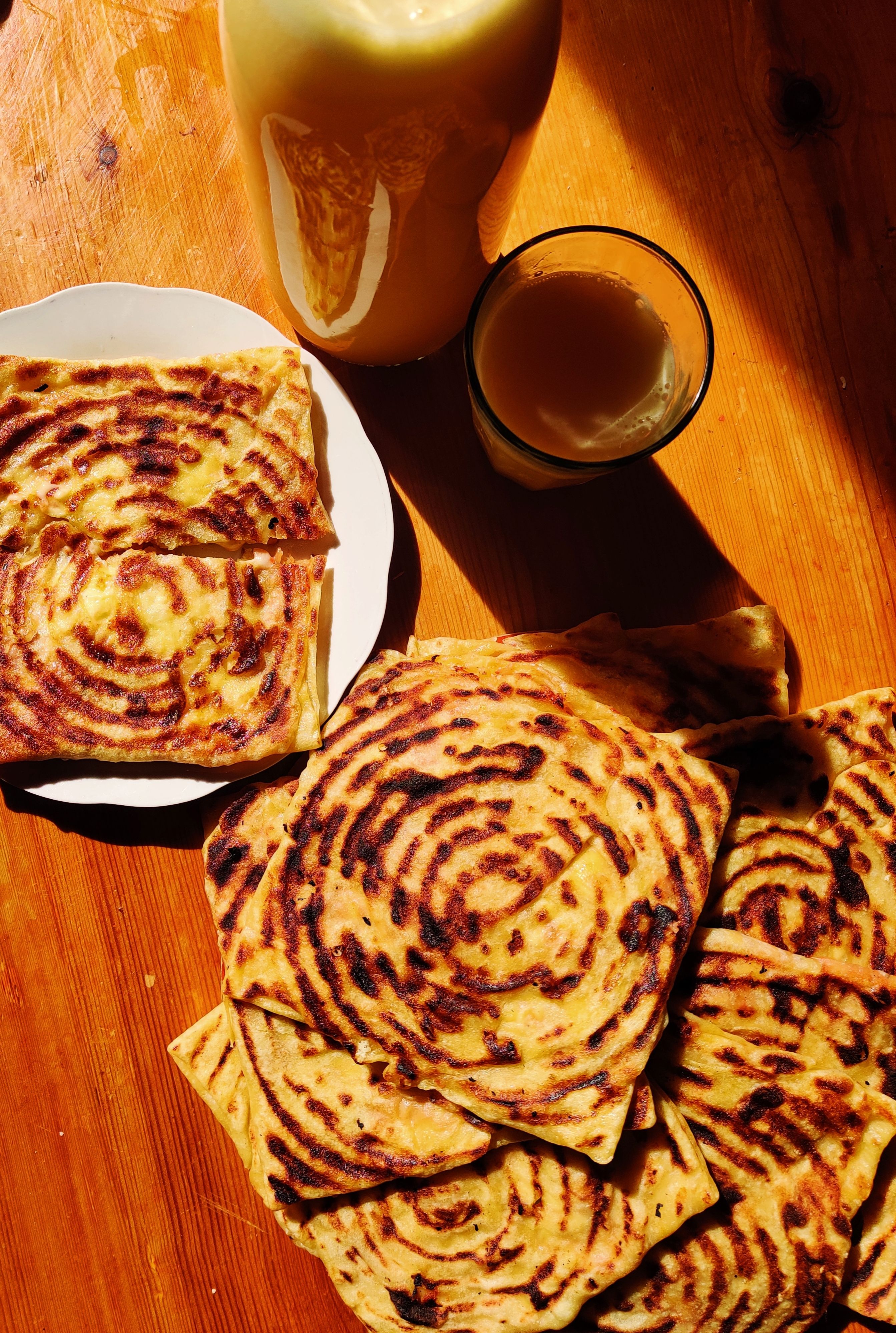
Photo: Nour Al Huda Zardan / Pexels
The diets react (see scores below)
Common Ingredients
- phyllo dough
- cottage cheese
- feta cheese
- eggs
- oil
- milk
- salt
Specific recipes may vary.
Incompatible with 6 of 11 diets
Diet Ratings
Sirnica is a traditional Bosnian cheese pie made with phyllo dough, which is the primary disqualifying ingredient. Phyllo (filo) dough is a refined wheat-based pastry with extremely high net carbs — a standard serving of sirnica containing several layers of phyllo can easily deliver 30-50g of net carbs per slice, far exceeding keto limits. While the filling ingredients (cottage cheese, feta, eggs, oil, milk) are largely keto-friendly and nutritious, the phyllo dough wrapper makes this dish fundamentally incompatible with ketogenic eating. There is no meaningful way to portion-control around the phyllo without reconstructing the dish entirely. The dish is essentially defined by its pastry structure, so it cannot be consumed in any standard form on keto.
Sirnica is a traditional Bosnian cheese pie (burek variant) that contains multiple animal-derived ingredients. Cottage cheese and feta cheese are dairy products, eggs are an animal product, and milk is dairy — all of which are strictly excluded from a vegan diet. There is no plant-based version of this dish by default; it is fundamentally built around animal ingredients.
Sirnica is a Bosnian cheese pie that is fundamentally incompatible with the paleo diet. The dish contains multiple hard-disqualifying ingredients: phyllo dough is made from refined wheat flour (a grain, strictly excluded from paleo), cottage cheese and feta cheese are dairy products (excluded from paleo), milk is dairy (excluded), and salt is an added ingredient discouraged in paleo. The only paleo-compliant ingredients in this dish are eggs and oil (depending on the type). With the majority of its core ingredients being non-paleo, this dish scores at the bottom of the scale.
Sirnica is a Bosnian cheese pie made with phyllo dough, cottage cheese, feta, eggs, milk, and oil. The dairy components (cottage cheese, feta, eggs) are acceptable in the Mediterranean diet but fall into the 'moderate' category — a few servings per week rather than daily staples. Feta cheese is notably common in traditional Mediterranean (particularly Greek) cuisine, lending some regional legitimacy. The phyllo dough is a refined grain product, which modern Mediterranean diet guidelines discourage, though it is used sparingly as a wrapper rather than a bulk ingredient. The use of oil is positive, though the type is unspecified — if olive oil, this aligns well. Overall, this is a moderately compatible dish: traditional Balkan/Eastern Mediterranean in character, dairy-forward, with a refined grain component that tempers enthusiasm.
Traditional Eastern Mediterranean and Levantine cuisines have long included phyllo-based savory pies (e.g., Greek spanakopita, Turkish börek) as acceptable occasional foods, and some Mediterranean diet practitioners from these regions would view Sirnica as a culturally authentic and reasonable moderate indulgence. Conversely, strict modern clinical interpretations (e.g., PREDIMED-based guidelines) would flag the refined phyllo and high dairy fat content as reasons to limit frequency.
Sirnica is a Bosnian cheese pie that is fundamentally incompatible with the carnivore diet. The dominant ingredient is phyllo dough, a wheat-based pastry that is entirely plant-derived and one of the most processed grain products available. While the filling contains carnivore-friendly components (eggs, cottage cheese, feta cheese), the phyllo dough alone disqualifies this dish entirely. Additionally, the oil used is almost certainly a plant-based oil (vegetable, sunflower, or olive), adding another plant-derived ingredient. Milk and dairy cheeses are debated within the carnivore community, but that debate is irrelevant here given the disqualifying presence of grain-based dough and plant oils.
Sirnica contains multiple Whole30-excluded ingredients. Phyllo dough is made from wheat flour, which is a grain and explicitly excluded from the Whole30 program. Cottage cheese, feta cheese, and milk are all dairy products, which are excluded (only ghee and clarified butter are allowed as dairy exceptions). Even setting aside the structural role of phyllo dough, the dairy alone would disqualify this dish. There is no compliant version of this traditional Bosnian cheese pastry possible within Whole30 rules.
Sirnica (Bosnian cheese pie) contains two significant high-FODMAP ingredients that make it problematic during the elimination phase. First, phyllo dough is made from wheat flour, which is high in fructans — a major FODMAP trigger. A standard serving of Sirnica involves multiple layers of phyllo, delivering a meaningful fructan load. Second, cottage cheese is high in lactose, as it is a fresh, soft cheese with significant residual whey. While feta cheese is lower in lactose (aged/brined cheeses generally have less lactose), and eggs and oil are FODMAP-free, the combination of wheat-based phyllo and cottage cheese creates a double FODMAP hit that is very unlikely to be safe during elimination at any realistic serving size. Milk adds additional lactose. The overall dish is high-FODMAP due to fructans (phyllo/wheat) and lactose (cottage cheese, milk).
Monash University has not specifically tested Sirnica as a dish, so the rating is based on component analysis. Some FODMAP practitioners note that the lactose contribution depends heavily on the quantity of cottage cheese and milk per serving, and a very small slice might theoretically reduce lactose below threshold — but the wheat-based phyllo dough remains an unavoidable fructan source at any realistic portion, making the dish unsuitable for elimination regardless.
Sirnica is a Bosnian phyllo pastry filled with cheese and eggs. While it contains some DASH-friendly components (eggs, cottage cheese as a lean protein source), the combination of feta cheese and added salt creates significant sodium concerns. Feta cheese is notably high in sodium (~316mg per oz), and when layered with salted cottage cheese preparations and added salt in a pastry format, the total dish sodium per serving can easily exceed 600-900mg. Phyllo dough is refined rather than whole grain, providing minimal fiber. The oil content adds fat, though the type matters — vegetable oils are acceptable on DASH. The dish is not inherently 'avoid' because cottage cheese provides some calcium and protein aligned with DASH dairy goals, eggs contribute protein, and the fat profile is not dominated by saturated fat (unlike a meat-heavy pastry). However, the sodium load from feta and added salt, refined phyllo, and difficulty with portion control make this a caution food. A modified version using low-sodium cottage cheese, reduced feta, no added salt, and smaller portions could be more DASH-compatible.
NIH DASH guidelines broadly limit high-sodium cheeses like feta and emphasize low-fat dairy, which would push this dish toward 'avoid'; however, updated clinical interpretations note that cottage cheese provides calcium and lean protein consistent with DASH dairy goals, and that the overall saturated fat load in this dish is moderate compared to meat-based pastries, leading some DASH practitioners to permit small portions with sodium-conscious modifications.
Sirnica is a Bosnian cheese pie made with phyllo dough, cottage cheese, feta, eggs, oil, and milk. From a Zone perspective, the dish has a mixed profile. The protein sources (cottage cheese, feta, eggs) are reasonable Zone proteins — cottage cheese and egg whites are explicitly 'favorable' proteins in Sears' framework, though feta carries more saturated fat. The primary problem is the phyllo dough, which is a refined, high-glycemic carbohydrate with minimal fiber, making it an 'unfavorable' Zone carb. The fat profile is also challenging: the combination of feta (saturated fat), oil (depends on type — if olive oil, favorable; if seed oil, problematic), and whole eggs tips the dish toward higher saturated fat than Zone recommends. The macro ratio skews heavily toward carbs (phyllo) and fat (cheese + oil), with the 40/30/30 balance achievable only with very careful portioning — a small slice alongside a large vegetable salad and perhaps additional lean protein. As traditionally prepared and portioned, this dish does not naturally align with Zone blocks, but small portions can be incorporated into a Zone meal plan as an 'unfavorable' carb/protein combination.
Some Zone practitioners note that cottage cheese and eggs are among the most efficient Zone protein blocks, and that the calcium-rich cheese filling provides nutritional density. If the phyllo layers are thin and the portion is small (1-2 blocks), sirnica could serve as a practical cultural food choice that approximates Zone ratios better than many Western breakfast options like pancakes or muffins. Dr. Sears' later writings also softened the strict anti-saturated-fat stance somewhat, which would make the feta less penalizing than in classic Zone methodology.
Sirnica is a traditional Bosnian cheese pie made with phyllo dough, cottage cheese, feta, eggs, oil, and milk. Its anti-inflammatory profile is mixed. On the positive side, eggs provide choline and selenium with some anti-inflammatory relevance, cottage cheese offers protein with moderate inflammatory impact, and if the oil used is extra virgin olive oil it would contribute oleocanthal and other anti-inflammatory polyphenols. Feta cheese is a relatively lower-fat dairy option compared to hard aged cheeses, and moderate low-fat dairy is considered acceptable on the anti-inflammatory framework. However, the dish has several concerns: phyllo dough is a refined carbohydrate with little fiber and a high glycemic load, which can promote inflammatory signaling. Feta and full-fat dairy components contribute saturated fat, which the anti-inflammatory framework recommends limiting. The type of oil used matters greatly — if it is a refined seed oil (common in traditional Bosnian cooking), the omega-6 burden increases meaningfully. Eggs are debated due to arachidonic acid content. Overall, Sirnica is a satisfying, culturally rich dish but leans toward a neutral-to-mild pro-inflammatory profile due to refined pastry, saturated fat from cheese, and potentially inflammatory oil. It is acceptable occasionally but not ideal as a regular anti-inflammatory breakfast.
Some anti-inflammatory practitioners (including those following AIP or stricter low-dairy protocols) would rate this lower due to the combined dairy load from both cottage cheese and feta, as dairy proteins can trigger inflammatory responses in sensitive individuals. Conversely, Mediterranean-leaning anti-inflammatory frameworks — including Dr. Weil's approach — are more permissive of moderate dairy, especially lower-fat forms like cottage cheese, and would view this dish more favorably if prepared with quality olive oil.
Sirnica is a traditional Bosnian cheese pie made with phyllo dough, cottage cheese, feta, eggs, oil, and milk. It has genuine protein merit — cottage cheese and eggs are GLP-1-friendly protein sources, and a typical serving can deliver 12–18g of protein. However, several factors place it firmly in the caution zone rather than approve. First, feta cheese and the added oil contribute meaningful saturated fat and total fat per serving, which can worsen GLP-1 side effects like nausea, bloating, and reflux. Second, phyllo dough is a refined grain with minimal fiber, adding starchy carbohydrate calories with little nutritional return. Third, the dish is calorie-dense for its volume — a concern when every calorie needs to count nutritionally. On the positive side, it is not fried, not sugary, not carbonated, and not ultra-processed, and the cottage cheese base is genuinely a GLP-1-recommended food. In small portions, with attention to how much oil is used in preparation, it is a tolerable occasional breakfast choice rather than an ideal one. A homemade version with reduced oil and a higher ratio of cottage cheese to feta would score meaningfully better.
Some GLP-1-focused dietitians would view sirnica more favorably, arguing that cottage cheese and eggs make it a culturally appropriate high-protein breakfast option worth retaining for adherence and satiety, and that fat concerns are overstated when portions are small. Others would rate it more harshly, pointing to the refined phyllo crust, the sodium load from feta, and the oil content as compounding GI side-effect risks that outweigh the protein benefit when better options exist.
*See how scores were generated at our methodology page.
Nutritional profile
Six traits that cut across every diet.
Fiber & Plants
How much whole-plant food and fiber it delivers.
Healthy Fats
The quality of its fats (unsaturated, omega-3).
Whole / Unprocessed
How close it is to its natural, unprocessed form.
Gut Gentle
How easy it is on digestion (low FODMAP, few irritants).
Low Glycemic
How little it spikes your blood sugar.
Protein Density
How much protein it packs per calorie.
Controversy Index
Higher controversy = more disagreement between diets.
Diet-Specific Tips
 Mediterranean — 5/10
View tips
- Feta cheese is a traditional Mediterranean dairy ingredient with regional legitimacy
- Cottage cheese and eggs are acceptable in moderation per Mediterranean diet guidelines
- Phyllo dough is a refined grain, not aligned with whole-grain emphasis
- Oil type unspecified — olive oil would improve alignment significantly
- High dairy content places this firmly in the 'moderate' category, not a daily staple
- Dish has cultural ties to Eastern Mediterranean phyllo-pie traditions
 DASH — 4/10
View tips
- Feta cheese is high in sodium (~316mg/oz), a significant DASH concern
- Added salt compounds the already high sodium burden
- Phyllo dough is refined grain, not whole grain — low in fiber
- Cottage cheese provides calcium and lean protein, partially DASH-aligned
- Eggs are an acceptable lean protein under current DASH interpretations
- Vegetable oil is acceptable on DASH; fat profile not dominated by saturated fat
- Portion size critical — this dish is difficult to limit to DASH-appropriate servings
- Low-sodium cottage cheese and reduced feta would substantially improve DASH compatibility
 Zone — 4/10
View tips
- Phyllo dough is a refined, high-glycemic carbohydrate — classified as 'unfavorable' in Zone terminology
- Cottage cheese and eggs are favorable Zone protein sources with good amino acid profiles
- Feta cheese adds saturated fat, pushing the fat profile away from Zone's monounsaturated preference
- Natural 40/30/30 ratio is hard to achieve as typically prepared — dish skews carb and fat heavy
- No vegetables present, missing Zone's emphasis on colorful, low-GI carbohydrate sources
- Oil type matters — olive oil would improve Zone compatibility; seed oils would worsen it
- Small portions alongside vegetable-heavy accompaniments could make it work within a Zone meal plan
 Anti-Inflammatory — 4/10
View tips
- Phyllo dough is a refined carbohydrate with minimal fiber, contributing to glycemic load
- Feta and cottage cheese provide moderate saturated fat — acceptable in limited amounts per anti-inflammatory guidelines
- Eggs are nutritionally mixed — beneficial choline and selenium but contain arachidonic acid
- Oil type is critical — olive oil would improve the profile significantly vs. refined seed oils
- No anti-inflammatory herbs, spices, vegetables, or omega-3 sources present
- Moderate dairy is permitted on most anti-inflammatory frameworks but should not dominate dietary intake
 GLP-1 Friendly — 5/10
View tips
- Moderate protein per serving from cottage cheese and eggs — a genuine positive
- Feta cheese adds saturated fat and high sodium, both concerns on GLP-1s
- Added oil increases total fat and caloric density, risking nausea and reflux
- Phyllo dough is a refined grain — low fiber, low nutrient density per calorie
- Not fried, not sugary, not carbonated — avoids the worst GLP-1 triggers
- Calorie-dense relative to portion size — poor fit for reduced-appetite eating pattern
- Portion-sensitive: a small slice is more acceptable than a standard serving
- Homemade preparation allows meaningful improvement by reducing oil and increasing cottage cheese ratio