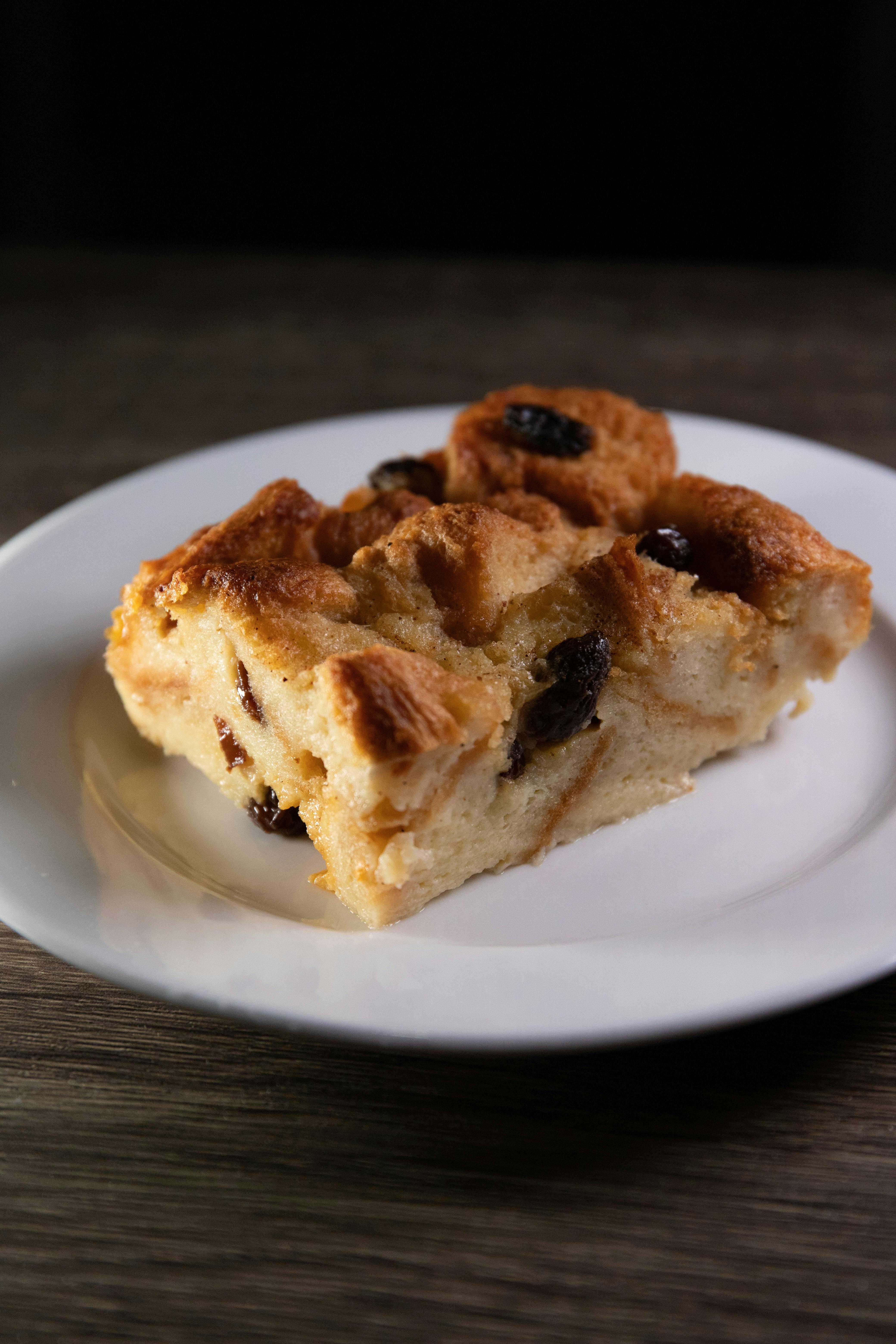
Photo: AMANDA LIM / Pexels
American
Bread Pudding
The diets react (see scores below)
Common Ingredients
- bread
- eggs
- milk
- sugar
- butter
- vanilla
- cinnamon
- raisins
Specific recipes may vary.
Incompatible with 11 of 11 diets
Diet Ratings
Bread pudding is fundamentally incompatible with a ketogenic diet. Its primary ingredient is bread (wheat-based, high in net carbs), combined with added sugar and raisins — all of which are explicitly excluded on keto. A single serving would easily contain 50-70g of net carbs, far exceeding the entire daily keto allowance. The eggs and butter are keto-friendly, but they are minor components that cannot offset the overwhelming carbohydrate load from bread, sugar, and raisins. This dish represents three simultaneous keto violations: grains, added sugar, and high-sugar dried fruit.
Bread Pudding as described contains multiple animal-derived ingredients that are unequivocally non-vegan: eggs, milk, and butter. All three are direct animal products excluded by every mainstream vegan organization. There is no ambiguity here — this dish is not compatible with a vegan diet in its traditional form. A vegan version could theoretically be made by substituting plant-based milk, flax eggs or aquafaba, and vegan butter, but the dish as listed cannot be considered vegan.
Bread pudding is fundamentally incompatible with the Paleo diet. The dish's base ingredient — bread — is a grain-based processed food, which is one of the most clearly excluded categories in Paleo. Beyond bread, refined sugar is explicitly forbidden, and milk (dairy) is excluded. Butter, while derived from an animal source, is a dairy product discouraged under strict Paleo guidelines. The combination of multiple core non-Paleo ingredients (grains, dairy, refined sugar) leaves no ambiguity: this dish is firmly off-limits. Eggs, vanilla, cinnamon, and raisins are the only Paleo-compatible ingredients in the recipe, but they cannot redeem a dish so structurally dependent on excluded foods.
Bread pudding is a dessert built on refined white bread, added sugar, and butter as the primary fat — three ingredients that directly contradict Mediterranean diet principles. Refined grains spike blood sugar and lack fiber; added sugar is minimized in the Mediterranean pattern; and butter is a saturated animal fat rather than the preferred extra virgin olive oil. While eggs, milk, cinnamon, and raisins are individually acceptable in moderation, the overall dish is a high-sugar, refined-grain, saturated-fat dessert with no redeeming plant-forward or whole-food qualities sufficient to offset those negatives. This is not a Mediterranean food in any traditional or modern interpretation of the diet.
Bread pudding is fundamentally incompatible with the carnivore diet. The dish is built almost entirely on plant-based and processed ingredients: bread (grain-based), sugar (processed carbohydrate), vanilla (plant extract), cinnamon (plant spice), and raisins (fruit). While eggs, milk, and butter are animal-derived, they are minor supporting ingredients in a dish that is defined by its grain and sugar base. No amount of the animal-derived components redeems this as a carnivore-compatible food. This is a high-carbohydrate, plant-dominant dessert with zero standing in any tier of the carnivore diet.
Bread Pudding contains multiple excluded ingredients and also falls squarely into the 'no recreating baked goods' rule. Bread is made from grains (wheat), which are excluded. Milk is dairy, which is excluded. Sugar is an added sweetener, which is excluded. Butter (regular, not ghee) is dairy, which is excluded. Even if these individual ingredients could somehow be swapped for compliant versions, bread pudding is explicitly the type of baked/junk food recreation that the Whole30 program prohibits by name — it is a dessert/baked good that the spirit of the program forbids regardless of ingredient substitutions.
Bread pudding contains multiple high-FODMAP ingredients that make it unsuitable during the elimination phase. The primary issue is wheat bread, which is high in fructans — a major FODMAP — at any standard serving size. Milk contributes lactose (a disaccharide), making it high-FODMAP unless a lactose-free substitute is used. Raisins are high in fructose and fructans and are explicitly listed as high-FODMAP by Monash University even at small quantities (>1 tablespoon is high-FODMAP). The combination of these three problematic ingredients (wheat bread, regular milk, raisins) stacks multiple FODMAP categories simultaneously, making a safe serving essentially impossible in this traditional preparation. Sugar, eggs, butter, vanilla, and cinnamon are low-FODMAP and not concerns.
Bread pudding is a high-sugar, high-saturated-fat dessert that conflicts with core DASH diet principles on multiple fronts. The dish combines refined white bread (low fiber, high glycemic), added sugar, and butter (saturated fat) — all of which DASH explicitly limits. While eggs and milk provide some protein and calcium, and cinnamon and raisins offer modest nutritional benefits, the overall profile is dominated by added sugar and saturated fat. This is a sweets/dessert category food that DASH limits to ≤5 servings per week at small portions, and even then recommends lower-sugar alternatives. As commonly consumed, a typical serving of bread pudding can contain 300-500 calories, 15-25g added sugar, and 8-15g saturated fat, making it incompatible with regular DASH eating.
Bread pudding is a dessert built almost entirely on Zone-unfavorable ingredients. White bread is a high-glycemic refined carbohydrate that spikes insulin rapidly. Raisins are explicitly called out in Zone methodology as an unfavorable, high-sugar fruit to avoid. Added sugar further compounds the glycemic load. Butter contributes saturated fat rather than the preferred monounsaturated fats. The dish has no meaningful lean protein source (eggs are present but in small quantity relative to the carbohydrate load), and the fat profile is dominated by saturated fat from butter and dairy. The macronutrient ratio is dramatically skewed toward high-glycemic carbohydrates, making it nearly impossible to incorporate into a Zone-balanced meal without completely restructuring the dish. Even small portions would deliver a disproportionate carbohydrate and glycemic hit with little offsetting protein or favorable fat. This is the kind of processed, high-glycemic, sugar-laden dessert that Zone was specifically designed to move away from.
Bread pudding is a dessert built almost entirely on pro-inflammatory ingredients. Refined white bread is a high-glycemic refined carbohydrate that spikes blood sugar and promotes inflammatory signaling. Added sugar compounds the glycemic load, directly linked to elevated CRP and IL-6 in research. Butter contributes saturated fat, which anti-inflammatory guidelines recommend limiting. Full-fat milk adds additional saturated fat. Together, these core ingredients create a heavily pro-inflammatory foundation. The small redemptive elements are cinnamon (a legitimate anti-inflammatory spice) and raisins (polyphenols, though concentrated sugar offsets this). Eggs are neutral-to-moderate. Vanilla adds negligible benefit. The overall dish is a classic example of a refined-carbohydrate, added-sugar, saturated-fat combination that anti-inflammatory nutrition consistently flags as problematic. Even as an occasional snack, this dish offers minimal anti-inflammatory benefit relative to its inflammatory load.
Bread pudding is a poor fit for GLP-1 patients across nearly every rating criterion. It is built on refined white bread and sugar, delivering high glycemic, low-fiber, nutrient-sparse calories. Butter adds saturated fat, which worsens nausea and bloating — two of the most common GLP-1 side effects. The eggs and milk contribute modest protein, but the overall protein density per calorie is very low given the sugar and fat load. Raisins add concentrated sugar rather than meaningful fiber. With reduced appetite being the mechanism of action of GLP-1 medications, every bite must deliver nutritional value; bread pudding is almost entirely empty calories by that standard. The dessert-level sugar content also conflicts with the blood sugar stabilization goals relevant to many GLP-1 patients (who are often managing prediabetes or type 2 diabetes). Even a small portion delivers a poor protein-to-calorie ratio and a significant fat and sugar hit, making it counterproductive as a snack on this medication.
*See how scores were generated at our methodology page.
Nutritional profile
Six traits that cut across every diet.
Fiber & Plants
How much whole-plant food and fiber it delivers.
Healthy Fats
The quality of its fats (unsaturated, omega-3).
Whole / Unprocessed
How close it is to its natural, unprocessed form.
Gut Gentle
How easy it is on digestion (low FODMAP, few irritants).
Low Glycemic
How little it spikes your blood sugar.
Protein Density
How much protein it packs per calorie.
Controversy Index
Higher controversy = more disagreement between diets.