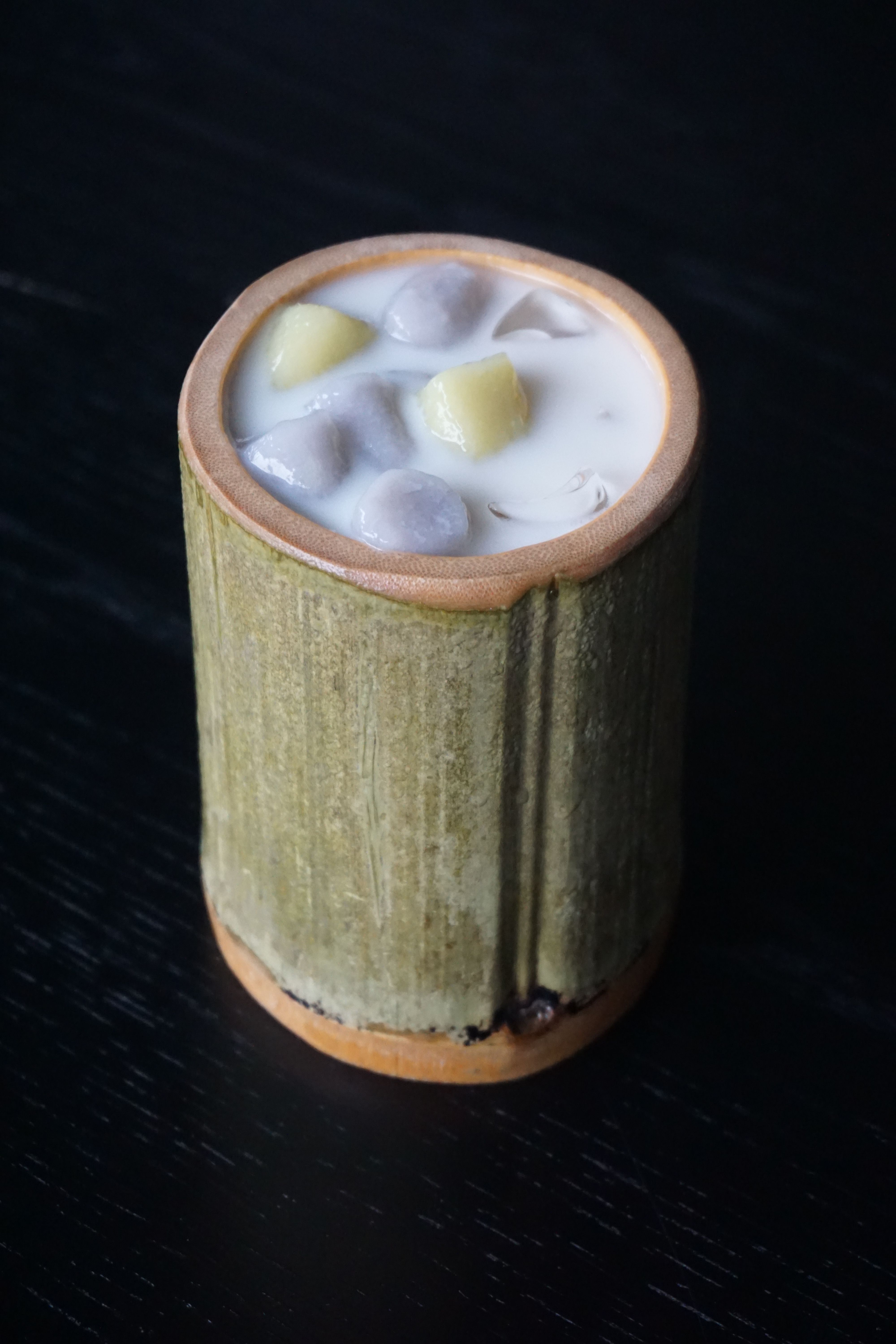
Photo: Thanh Truc Ho / Pexels
The diets react (see scores below)
Common Ingredients
- glutinous rice flour
- coconut milk
- sugar
- water
- salt
- pandan leaves
- sesame seeds
Specific recipes may vary.
Incompatible with 8 of 11 diets
Diet Ratings
Bua Loy is a traditional Thai dessert consisting of glutinous rice flour dumplings served in sweetened coconut milk. Glutinous rice flour is an extremely high-carb ingredient with virtually no fiber, producing massive net carbs per serving. Combined with added sugar in both the dough and the coconut milk broth, this dish is entirely incompatible with ketosis. A single serving could easily contain 40-60g or more of net carbs, which alone can exceed the entire daily keto carb allowance. The coconut milk base has some keto-friendly fat, but it is completely overwhelmed by the carbohydrate and sugar load from the other ingredients.
Bua Loy is a traditional Thai dessert consisting of glutinous rice flour dumplings served in a sweetened coconut milk broth. Every ingredient in this version is entirely plant-based: glutinous rice flour and pandan leaves provide the dough and natural coloring/flavoring, coconut milk replaces any dairy, and sugar, water, salt, and sesame seeds are all vegan staples. There are no animal products or animal-derived ingredients present. This is a whole-food-leaning dish with minimally processed components, earning a high score. Note that some Thai versions of Bua Loy are served with eggs or taro-egg custard — those variants would not be vegan — but the ingredient list provided here contains none of those additions.
Bua Loy is fundamentally incompatible with the Paleo diet. The dish's base ingredient is glutinous rice flour, a grain-derived product that is explicitly excluded from Paleo eating. Additionally, it contains refined sugar (a prohibited sweetener), salt (added salt is excluded), and dairy-free coconut milk, which while Paleo-friendly, cannot redeem the dish. The sesame seeds and pandan leaves are acceptable, but they are minor components in a dish dominated by non-Paleo ingredients. There is no meaningful way to classify this as Paleo-compliant in any form.
Bua Loy is a Thai dessert made primarily from glutinous rice flour (a refined, high-glycemic starch), coconut milk (high in saturated fat, not a Mediterranean staple fat), and added sugar. These three core ingredients each conflict with Mediterranean diet principles: refined/glutinous grains are discouraged in favor of whole grains, coconut milk is not a recognized healthy fat source in the Mediterranean framework (olive oil is canonical), and added sugar is explicitly minimized. Sesame seeds and pandan are minor positives but do not offset the primary concerns. This dish represents a concentrated source of refined carbohydrates and saturated fat with significant added sugar — essentially the opposite of what the Mediterranean diet emphasizes for snacks.
Bua Loy is entirely plant-based with zero animal-derived ingredients. It consists of glutinous rice flour (a grain), coconut milk (a plant fat), sugar (processed plant carbohydrate), pandan leaves (a plant herb), and sesame seeds (seeds) — all of which are explicitly excluded on the carnivore diet. There is no meat, fish, seafood, eggs, or any animal product present. This dish fundamentally contradicts every tier of the carnivore diet, from the strictest Lion Diet to the most lenient animal-based approach.
Bua Loy contains multiple Whole30-excluded ingredients. Glutinous rice flour is a grain product (rice is explicitly excluded on Whole30), and sugar is an excluded added sweetener. Either of these alone would disqualify the dish. Additionally, even if compliant substitutions were attempted, Bua Loy is a dumpling/dessert that falls into the 'no recreating baked goods or junk food' category — it is a treat/dessert analog that violates the spirit of the program.
Bua Loy is a Thai dessert consisting of glutinous rice flour balls served in a sweet coconut milk broth. Most individual ingredients are low-FODMAP at moderate servings: glutinous rice flour is low-FODMAP (rice-based), pandan leaves are low-FODMAP, sesame seeds are low-FODMAP in small amounts, salt and water are FODMAP-free, and sugar (sucrose) is low-FODMAP in typical quantities. The primary concern is coconut milk — Monash rates coconut milk as low-FODMAP at 1/2 cup (125ml) but high-FODMAP at larger serves due to polyols (sorbitol). A standard serving of Bua Loy involves a notable volume of coconut milk broth, which could easily push toward or exceed the safe threshold depending on portion. Additionally, the dessert is sweet and often consumed in generous quantities, meaning cumulative sugar load and coconut milk volume are practical concerns. At a carefully controlled small portion, the dish can be tolerated, but standard Thai restaurant or home servings may exceed safe coconut milk thresholds.
Monash University rates coconut milk as low-FODMAP only up to 125ml per serving, but many clinical FODMAP practitioners note that coconut-milk-based Thai desserts are typically served in portions exceeding this threshold, making elimination-phase compliance difficult. The glutinous rice flour balls themselves are generally considered safe, but the broth volume is the key variable that could shift this dish from 'caution' to 'avoid' in practice.
Bua Loy is a Thai glutinous rice ball dessert cooked in sweetened coconut milk. It presents multiple DASH concerns: (1) Coconut milk is high in saturated fat from a tropical oil source, which DASH explicitly limits. (2) Glutinous rice flour is a refined, high-glycemic carbohydrate with no meaningful fiber, potassium, calcium, or magnesium — lacking the nutritional profile DASH emphasizes. (3) Added sugar is a primary ingredient, and DASH recommends limiting sweets and added sugars to 5 or fewer servings per week. (4) The dish is low in lean protein, fiber, and DASH-recommended micronutrients. While sesame seeds offer small amounts of calcium and magnesium, their quantity is too small to offset the overall nutritional profile. The combination of high saturated fat (coconut milk), refined starch (glutinous rice flour), and added sugar makes this dish a poor fit for DASH, particularly for individuals targeting cardiovascular risk reduction.
NIH DASH guidelines explicitly limit saturated fat and added sugar, both prominent in this dish. However, some updated clinical interpretations note that small, infrequent portions of traditional desserts can be accommodated within an otherwise adherent DASH pattern — and emerging research on full-fat dairy and certain saturated fats has softened categorical restrictions, though coconut milk's saturated fat profile remains a concern even among more permissive DASH practitioners.
Bua Loy is a Thai dessert consisting of glutinous rice flour dumplings served in sweetened coconut milk. From a Zone Diet perspective, this dish is highly problematic on multiple fronts. Glutinous rice flour is extremely high-glycemic — it is one of the highest GI carbohydrate sources available, causing rapid blood glucose spikes that trigger the insulin surge the Zone Diet is specifically designed to prevent. Added sugar compounds the glycemic load further. The dish provides virtually no lean protein (categorized as 'none'), meaning the 40/30/30 block ratio is essentially impossible to achieve without adding entirely separate protein sources. The coconut milk contributes saturated fat rather than the preferred monounsaturated fats. The overall macro profile is heavily carbohydrate- and fat-skewed with almost no protein, making it structurally incompatible with Zone block construction. Unlike most foods that score in the 'caution' range due to Zone's ratio-based flexibility, this snack combines high-GI starches, added sugar, and zero protein — a triple-fail scenario. Small portions could marginally reduce glycemic impact, but the absence of any protein foundation means this cannot function as a Zone-compliant snack without radical modification that would no longer resemble the dish.
Bua Loy is a traditional Thai dessert consisting of glutinous rice flour dumplings served in sweetened coconut milk. The ingredient profile is mixed from an anti-inflammatory perspective. On the positive side, pandan leaves offer antioxidant and anti-inflammatory polyphenols, sesame seeds provide lignans, calcium, and modest omega-3 fatty acids, and coconut milk contains medium-chain triglycerides (MCTs) with some research suggesting anti-inflammatory or neutral effects. However, the dish is anchored in glutinous (sticky) rice flour — a refined, high-glycemic starch with minimal fiber that can spike blood glucose and promote inflammatory markers when consumed regularly. Added sugar compounds this concern, contributing to the pro-inflammatory load. Coconut milk is high in saturated fat, which anti-inflammatory frameworks generally limit. Overall, this is a treat-food that blends a few beneficial elements (pandan, sesame) with a core of refined carbohydrates and added sugar. Acceptable occasionally but not regularly compatible with an anti-inflammatory diet.
Some anti-inflammatory-adjacent whole-food advocates are more lenient about full-fat coconut products, arguing that lauric acid in coconut milk raises HDL and has anti-microbial and anti-inflammatory properties (supported by some Pacific Island dietary research). However, mainstream anti-inflammatory nutrition authorities like Dr. Weil treat full-fat coconut products as an occasional food and flag refined high-glycemic starches and added sugars as consistently pro-inflammatory, making the overall caution verdict broadly agreed upon.
Bua Loy is a traditional Thai dessert consisting of glutinous rice flour dumplings served in sweetened coconut milk. It scores very poorly across nearly every GLP-1 dietary priority. Protein content is negligible — no meaningful protein source is present, making this a near-zero contribution to the critical 100-120g daily protein target. Fiber is minimal — glutinous rice flour is a refined starch with essentially no fiber. Fat content is high from full-fat coconut milk, which is saturated fat and known to worsen GLP-1 side effects including nausea, bloating, and reflux. Sugar content is significant from added sugar in the broth. Glutinous rice flour is a high-glycemic refined carbohydrate that spikes blood sugar rapidly. The dish is calorie-dense relative to its nutritional value — a classic empty-calorie profile that is especially counterproductive when total caloric intake is already suppressed by medication. The only minor positives are that pandan is a natural flavoring with no harm, sesame seeds add a trace of healthy fat and micronutrients, and the dish is soft and easy to swallow. These do not offset the fundamental nutritional profile. This is not a dish that can be salvaged by portion control — even a small serving delivers high sugar, high saturated fat, and zero protein or fiber.
*See how scores were generated at our methodology page.
Nutritional profile
Six traits that cut across every diet.
Fiber & Plants
How much whole-plant food and fiber it delivers.
Healthy Fats
The quality of its fats (unsaturated, omega-3).
Whole / Unprocessed
How close it is to its natural, unprocessed form.
Gut Gentle
How easy it is on digestion (low FODMAP, few irritants).
Low Glycemic
How little it spikes your blood sugar.
Protein Density
How much protein it packs per calorie.
Controversy Index
Higher controversy = more disagreement between diets.
Diet-Specific Tips
 Vegan — 9/10
View tips
- Glutinous rice flour is fully plant-based
- Coconut milk is a vegan-friendly dairy alternative used as the base
- Pandan leaves provide natural plant-based coloring and flavor
- No eggs, dairy, gelatin, or other animal-derived ingredients present
- Sesame seeds add nutritional value and are entirely plant-based
- Version without egg additions is clearly vegan-compliant
 Low-FODMAP — 4/10
View tips
- Coconut milk is low-FODMAP at ≤125ml but becomes high-FODMAP (polyols/sorbitol) at larger volumes typical in Bua Loy servings
- Glutinous rice flour is rice-based and low-FODMAP
- Pandan leaves are low-FODMAP
- Sesame seeds are low-FODMAP in small amounts (1 tablespoon)
- Sugar (sucrose) is low-FODMAP at typical dessert quantities
- Portion size is the critical determinant — a small bowl may be tolerable, a standard serving may not be
 Anti-Inflammatory — 4/10
View tips
- Glutinous rice flour is a refined, high-glycemic carbohydrate with minimal fiber — associated with blood sugar spikes and pro-inflammatory responses
- Added sugar is a clear pro-inflammatory component per anti-inflammatory diet principles
- Coconut milk is high in saturated fat, which anti-inflammatory guidelines recommend limiting
- Pandan leaves contribute antioxidant polyphenols with anti-inflammatory properties
- Sesame seeds provide lignans, minerals, and modest beneficial fats
- No omega-3 sources, antioxidant-rich vegetables, or whole grains present
- Appropriate as an occasional treat, not a regular anti-inflammatory food