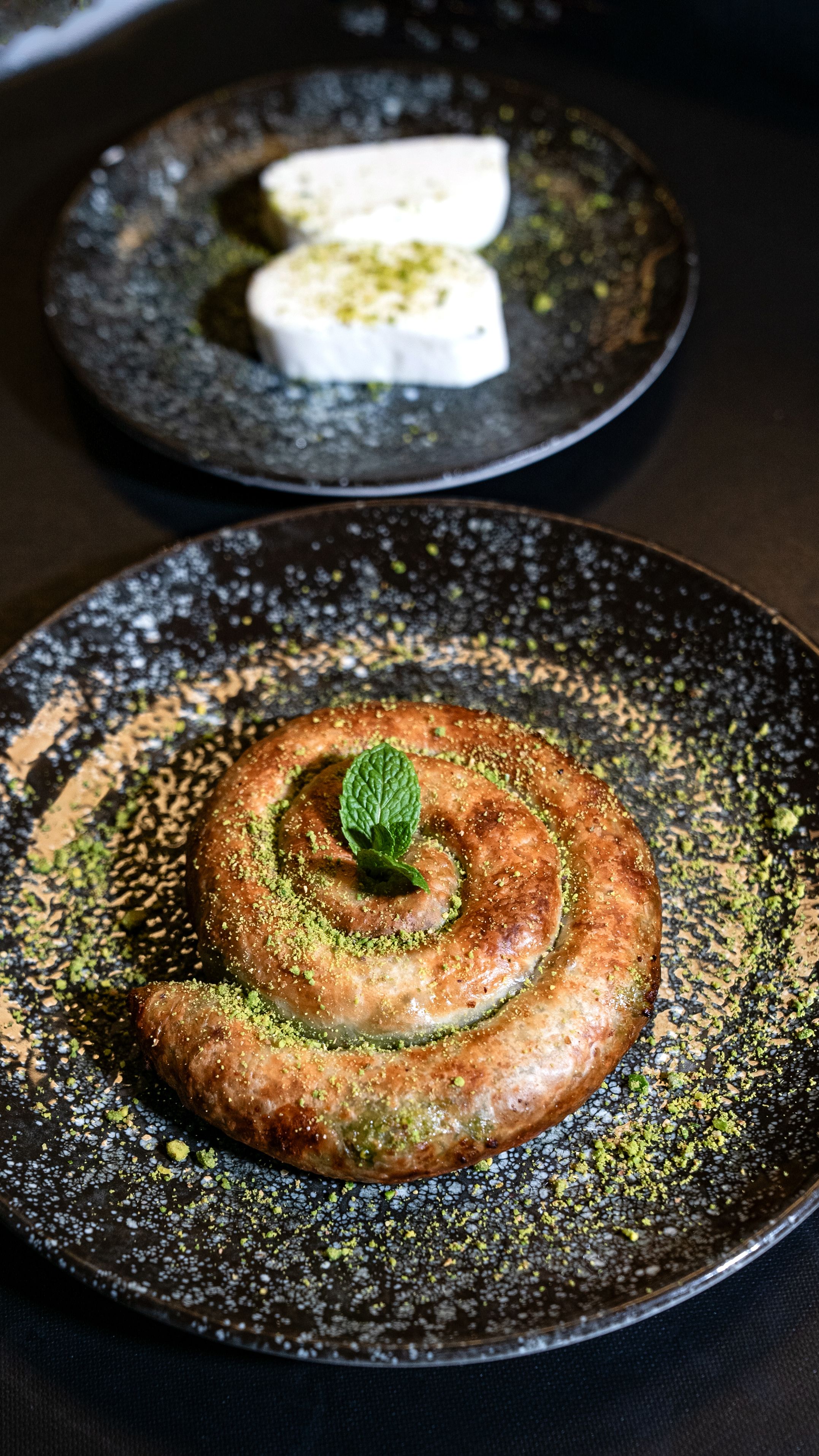
Photo: Mohamed Olwy / Pexels
The diets react (see scores below)
Common Ingredients
- phyllo dough
- white cheese
- eggs
- yogurt
- butter
- baking soda
- salt
Specific recipes may vary.
Incompatible with 7 of 11 diets
Diet Ratings
Banitsa is fundamentally incompatible with a ketogenic diet due to its primary structural ingredient: phyllo dough. Phyllo is a grain-based pastry made from refined wheat flour, which is extremely high in net carbs — a single sheet contains roughly 4-5g net carbs, and a typical banitsa uses many layers. A standard serving of banitsa can easily contain 30-50g of net carbs from the dough alone, which meets or exceeds the entire daily keto carb budget. While the filling ingredients (white cheese, eggs, yogurt, butter) are largely keto-friendly and high in fat and protein, they cannot redeem the dish because the phyllo dough is non-negotiable to the dish's identity. There is no realistic portion size that makes banitsa ketogenic.
Banitsa contains multiple animal-derived ingredients that are explicitly excluded from a vegan diet. Eggs and yogurt are animal products, white cheese (sirene) is a dairy product, and butter is an animal-derived fat. With four distinct non-vegan ingredients, this dish is fundamentally incompatible with veganism in its traditional form. There is no ambiguity here — this is a cheese-and-egg pastry by definition.
Banitsa is fundamentally incompatible with the paleo diet. The dish's core structure relies on phyllo dough, a refined wheat-based product, which is a grain and therefore strictly excluded from paleo. White cheese (sirene) and yogurt are dairy products, also excluded. Added salt is discouraged. Butter is debated in paleo circles. Eggs are the only clearly paleo-approved ingredient here. With multiple foundational non-paleo ingredients — grains, dairy, and salt — this dish earns the lowest possible score.
Banitsa is a traditional Bulgarian pastry that sits uneasily within Mediterranean diet principles. The dish relies on refined phyllo dough (a refined grain product), butter as the primary fat (rather than olive oil), and white cheese and eggs as the protein sources. Dairy and eggs are acceptable in moderation under Mediterranean guidelines, and white cheese (similar to feta-style brined cheese) is used in some traditional Mediterranean cuisines. However, the combination of refined phyllo, saturated fat from butter, and salty cheese makes this more of an occasional treat than a staple. It lacks vegetables, whole grains, or olive oil — the cornerstones of the Mediterranean pattern — and is relatively high in saturated fat and refined carbohydrates. As a breakfast item eaten regularly, it would push dietary patterns away from Mediterranean ideals.
Some Eastern Mediterranean and Balkan culinary traditions overlap with Mediterranean diet patterns, and similar cheese-and-egg pastries (e.g., Greek spanakopita with added greens, or Turkish börek) are occasionally referenced as regional foods that can fit when made with olive oil and consumed infrequently. A more permissive interpretation might score this slightly higher if butter were replaced with olive oil and the portion kept small.
Banitsa is fundamentally incompatible with the carnivore diet. The dish is built around phyllo dough, a grain-based (wheat flour) pastry that is entirely plant-derived and strictly excluded on any tier of carnivore eating. While some individual ingredients — eggs, white cheese (dairy), butter, and yogurt — are animal-derived and consumed by many carnivore practitioners, they are subordinate components in a dish whose defining structure is a plant-based grain product. Baking soda is a non-animal additive. No meaningful adaptation is possible while retaining the identity of this dish. Even the most permissive 'animal-based' carnivore frameworks (Saladino) would exclude phyllo dough as a processed grain product.
Banitsa contains multiple excluded ingredients that make it clearly non-compliant with Whole30. Phyllo dough is made from wheat flour, which is a grain and explicitly excluded from the program. White cheese (sirene) and yogurt are both dairy products, which are excluded categories on Whole30. Butter is also excluded dairy (only ghee/clarified butter is the allowed exception). With three to four separate excluded ingredient categories present — grains (phyllo), dairy (cheese, yogurt, butter) — this dish cannot be made compliant without fundamentally changing its nature. It is a traditional Bulgarian pastry that inherently relies on excluded foods.
Banitsa contains multiple high-FODMAP ingredients that make it unsuitable during the elimination phase. Phyllo dough is made from wheat flour, which is high in fructans — a major FODMAP trigger. Traditional Bulgarian white cheese (sirene) is a brined fresh cheese similar to feta, which contains moderate to high lactose levels. Yogurt also contains lactose, adding to the cumulative FODMAP load. Even in small portions, the combination of wheat-based phyllo and lactose-containing dairy makes this dish very difficult to consume without triggering symptoms. Eggs and butter are low-FODMAP, but they cannot offset the primary problem ingredients.
Monash University has tested feta cheese and found it low-FODMAP at 40g servings due to low residual lactose from the brining/aging process — Bulgarian white cheese (sirene) may behave similarly, so the dairy component might be less problematic than assumed. However, clinical FODMAP practitioners almost universally flag wheat-based phyllo dough as a clear fructan source that should be avoided during elimination regardless of portion size, making the overall dish a reliable avoid.
Banitsa is poorly aligned with DASH diet principles across multiple dimensions. The dish is built around white Bulgarian cheese (sirene), which is a high-sodium, full-fat brined cheese — a significant sodium load in a single serving, likely exceeding 600-900mg from cheese alone. Butter adds saturated fat, directly contradicting DASH's emphasis on limiting saturated fat and replacing it with vegetable oils. Phyllo dough, while not inherently harmful, contributes refined carbohydrates and additional sodium. The combination of full-fat dairy (cheese, yogurt, butter), high sodium, and saturated fat hits three of DASH's core 'limit' categories simultaneously. A typical serving of banitsa could easily deliver 800-1,200mg of sodium, representing 35-80% of the DASH daily sodium limit in one breakfast item. There are no meaningful compensating nutrients — no significant potassium, magnesium, or fiber contributions. This is not a food that can be eaten in moderation within a DASH framework without substantially compromising the diet's goals.
Banitsa is a traditional Bulgarian pastry that presents several Zone Diet challenges. The phyllo dough is a refined, high-glycemic carbohydrate that Sears classifies as an 'unfavorable' carb — it raises insulin quickly and lacks fiber to slow absorption. Butter adds saturated fat rather than the preferred monounsaturated fats (olive oil, avocado, almonds). On the positive side, white cheese (typically sirene, a brined feta-style cheese) and eggs provide meaningful lean-ish protein, and yogurt contributes additional protein with some probiotic benefit. However, the macronutrient ratio of banitsa skews heavily toward fat (butter, cheese) and refined carbs (phyllo), with the protein component secondary. The saturated fat load from butter and full-fat cheese is significant. A small portion could theoretically be incorporated into a Zone meal if paired with additional low-GI vegetables and lean protein to correct the ratios, but banitsa as a standalone breakfast item does not naturally align with 40/30/30 and requires deliberate portioning and pairing to fit.
Some Zone practitioners note that eggs and white cheese together can constitute a solid protein block foundation, and that full-fat dairy has been partially rehabilitated in Sears' later anti-inflammatory writings. If portion size is kept very small (one triangle) and paired with vegetables and an omega-3 source, the meal could approach Zone ratios. The yogurt also adds a favorable protein-to-carb profile element.
Banitsa is a traditional Bulgarian pastry with a mixed anti-inflammatory profile. On the positive side, eggs contribute choline and selenium with some anti-inflammatory potential, and yogurt provides probiotics that support gut health and may reduce systemic inflammation. White cheese (sirene) offers protein and some beneficial nutrients. However, the dish has several pro-inflammatory concerns: butter is a saturated fat source that anti-inflammatory guidelines recommend limiting; phyllo dough is a refined carbohydrate with minimal fiber or nutritional value; and full-fat white cheese contributes additional saturated fat. The dish is also notably absent of anti-inflammatory stars — no omega-3-rich ingredients, no colorful vegetables or fruits, no anti-inflammatory herbs or spices beyond salt. As an occasional breakfast in the context of an otherwise anti-inflammatory diet, banitsa is acceptable, but its butter-and-refined-dough base prevents a higher score. Portion size and frequency matter considerably here.
Some nutrition perspectives (including Mediterranean diet frameworks, which overlap with anti-inflammatory principles) take a more permissive view of traditional whole-food dairy preparations like white cheese and yogurt, arguing that the fermentation and nutrient density of these ingredients partially offset the saturated fat concerns. Others following stricter anti-inflammatory or AIP protocols would score this lower, citing both the refined-grain phyllo and full-fat dairy as meaningful inflammatory drivers.
Banitsa is a traditional Bulgarian pastry made with butter-layered phyllo dough filled with white cheese (sirene), eggs, and yogurt. It has a moderate protein contribution from eggs and cheese, and the yogurt adds some probiotic benefit. However, the butter-saturated phyllo dough makes this a high-fat, calorie-dense food with low fiber and low nutrient density per calorie. The saturated fat from butter is a concern for GLP-1 patients, as high-fat foods worsen nausea, bloating, and reflux by interacting with already-slowed gastric emptying. The refined phyllo dough offers minimal fiber. White cheese does provide protein, but the overall fat-to-protein ratio is unfavorable compared to leaner protein sources. A small portion (one piece) could be acceptable occasionally if the rest of the day's meals are high in lean protein and fiber, but it is not a recommended staple breakfast for GLP-1 patients.
Some GLP-1-focused dietitians note that the egg and cheese filling does provide meaningful protein and that small portions of culturally significant foods support dietary adherence — a critical factor in long-term weight management. Others emphasize that the high saturated fat and refined carbohydrate content make even small servings risky for patients prone to GI side effects, particularly in the early titration phase of GLP-1 therapy.
*See how scores were generated at our methodology page.
Nutritional profile
Six traits that cut across every diet.
Fiber & Plants
How much whole-plant food and fiber it delivers.
Healthy Fats
The quality of its fats (unsaturated, omega-3).
Whole / Unprocessed
How close it is to its natural, unprocessed form.
Gut Gentle
How easy it is on digestion (low FODMAP, few irritants).
Low Glycemic
How little it spikes your blood sugar.
Protein Density
How much protein it packs per calorie.
Controversy Index
Higher controversy = more disagreement between diets.
Diet-Specific Tips
 Mediterranean — 4/10
View tips
- Phyllo dough is a refined grain, contradicting whole-grain emphasis
- Butter is the primary fat rather than extra virgin olive oil
- White cheese and eggs are moderate-consumption dairy/protein sources — acceptable but not core
- No vegetables or legumes present
- High in saturated fat and sodium
- Not a whole, plant-forward dish
- Occasional consumption acceptable but not a Mediterranean staple
 Zone — 4/10
View tips
- Phyllo dough is a refined, high-glycemic 'unfavorable' carbohydrate in Zone terminology
- Butter contributes saturated fat rather than preferred monounsaturated fats
- White cheese and eggs provide protein blocks but come with significant saturated fat
- Macronutrient ratio skews toward fat and refined carbs, away from 40/30/30
- No vegetables or low-GI carbohydrates to balance the glycemic load
- Small portions could partially fit Zone blocks but require careful pairing
- Full-fat dairy is somewhat more accepted in Sears' later anti-inflammatory framework
 Anti-Inflammatory — 4/10
View tips
- Butter is a saturated fat — limited on anti-inflammatory diets
- Phyllo dough is refined carbohydrate with low fiber and nutrient density
- Full-fat white cheese adds additional saturated fat load
- Yogurt provides probiotics with potential anti-inflammatory gut benefits
- Eggs contribute beneficial choline and selenium
- No omega-3 sources, antioxidants, or anti-inflammatory herbs present
- Acceptable occasionally but not as a regular breakfast on an anti-inflammatory diet
 GLP-1 Friendly — 4/10
View tips
- High saturated fat from butter-layered phyllo worsens GLP-1 GI side effects
- Refined phyllo dough provides minimal fiber
- Moderate protein from eggs and white cheese, but fat-to-protein ratio is unfavorable
- Calorie-dense with low nutrient density per calorie — poor fit for reduced appetite window
- Small portion sensitivity: one small piece is less problematic than a standard serving
- Yogurt ingredient is a minor positive for digestibility and protein
- Not recommended as a regular breakfast staple for GLP-1 patients