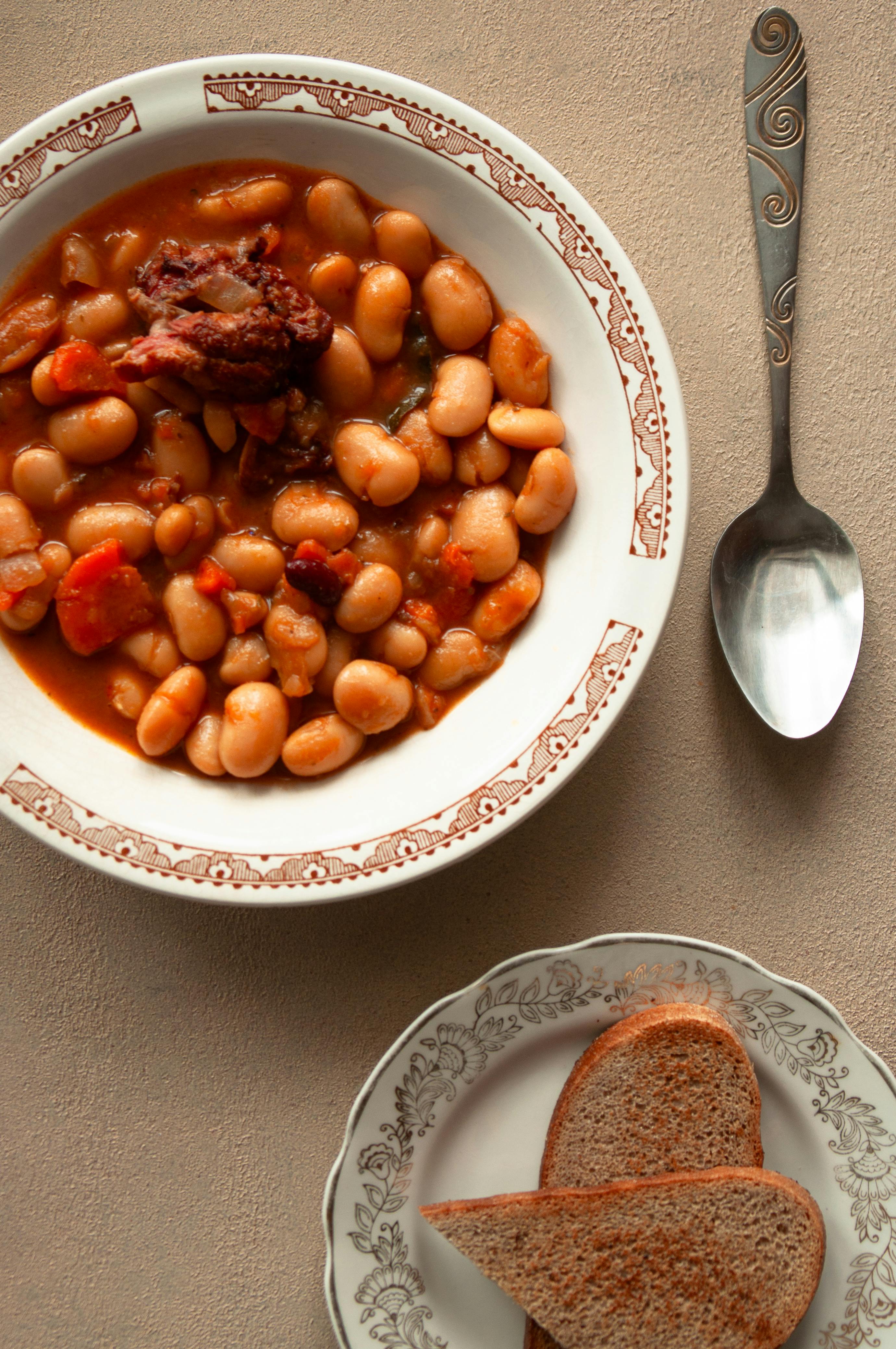
Photo: Boryslav Shoot / Pexels
Bulgarian
Bob Chorba
The diets react (see scores below)
Common Ingredients
- white beans
- onion
- carrot
- bell pepper
- tomato
- paprika
- mint
- savory
Specific recipes may vary.
Incompatible with 5 of 11 diets
Diet Ratings
Bob Chorba is a traditional Bulgarian bean soup where white beans are the primary protein and bulk ingredient. White beans are extremely high in net carbs — a single cup of cooked white beans contains approximately 40g of net carbs, easily exceeding the entire daily keto limit in one serving. The remaining vegetables (carrot, tomato, bell pepper, onion) add additional net carbs on top of the beans. There is no meaningful fat content in this dish, and the macronutrient profile is essentially the opposite of ketogenic requirements: high carb, very low fat, moderate protein. Even a small portion would likely push the diner out of ketosis. The herbs (mint, savory, paprika) are fine, but they cannot redeem a dish fundamentally built around legumes.
Bob Chorba is a traditional Bulgarian bean soup whose listed ingredients are entirely plant-based: white beans provide the protein base, while onion, carrot, bell pepper, and tomato form the vegetable foundation. Paprika, mint, and savory (chubritsa) are classic Bulgarian herbs and spices that are fully vegan. All components are whole, minimally processed plant foods with no animal-derived ingredients. The dish is naturally vegan as presented here — the only caveat is that some traditional home recipes may add a knob of butter or a drizzle of lard for richness, so anyone ordering this at a restaurant should confirm no animal fat has been added. As described with these exact ingredients, it scores very highly as a whole-food plant-based meal.
Bob Chorba is a traditional Bulgarian bean soup whose primary ingredient — white beans — is a legume, which is explicitly excluded from the Paleo diet. Legumes are avoided due to their high lectin and phytic acid content (antinutrients), which Paleo proponents argue impair nutrient absorption and gut health. All other ingredients (onion, carrot, bell pepper, tomato, paprika, mint, savory) are fully Paleo-compliant vegetables, herbs, and spices, but they cannot redeem a dish that is fundamentally built around a non-Paleo base ingredient. White beans are the defining, load-bearing component of this dish — removing them would mean the dish no longer exists.
Bob Chorba is a Bulgarian white bean soup that aligns exceptionally well with Mediterranean diet principles. The dish is entirely plant-based, featuring white beans as a high-protein, high-fiber legume — a cornerstone of the Mediterranean pattern. All other ingredients (onion, carrot, bell pepper, tomato, paprika, mint, savory) are vegetables and herbs that are strongly encouraged. There are no processed ingredients, added sugars, refined grains, or animal products of concern. The use of savory (chubritza) and mint reflects traditional herb-forward cooking consistent with Mediterranean flavor profiles. When prepared with extra virgin olive oil as the cooking fat (standard in this recipe), it becomes a near-ideal Mediterranean meal.
Bob Chorba is a traditional Bulgarian bean soup that contains zero animal-derived ingredients. Every single component — white beans, onion, carrot, bell pepper, tomato, paprika, mint, and savory — is plant-based. Legumes like white beans are among the most explicitly excluded foods on the carnivore diet due to their high carbohydrate content, anti-nutrients (lectins, phytates), and complete absence of animal origin. The vegetables, herbs, and spices compound the incompatibility. There is no animal protein, no animal fat, and no animal product of any kind in this dish. This is a textbook carnivore avoid.
Bob Chorba is a traditional Bulgarian bean soup whose primary protein is white beans. White beans are legumes, which are explicitly excluded from the Whole30 program. Unlike green beans, sugar snap peas, and snow peas — which are specifically excepted despite being legumes — white beans (and all other dried/mature legumes) remain firmly on the excluded list. All other ingredients in the dish (onion, carrot, bell pepper, tomato, paprika, mint, savory) are fully Whole30-compliant vegetables and herbs, but the white beans make the entire dish non-compliant.
Bob Chorba is a traditional Bulgarian bean soup whose primary protein is white beans — a high-FODMAP ingredient due to significant GOS (galacto-oligosaccharides) content. White beans (navy/cannellini) are rated high-FODMAP by Monash University at standard serving sizes used in soup (typically 100–200g cooked per bowl). Even canned and rinsed white beans remain high-FODMAP at these quantities. Onion is a second major FODMAP offender, high in fructans at any cooked quantity — it is one of the most problematic ingredients on the low-FODMAP diet and is a core aromatic in this dish. Together, white beans and onion make this soup unsuitable during the elimination phase. The remaining ingredients are generally low-FODMAP: carrot, bell pepper (in moderate amounts), tomato (small to moderate serve), paprika, mint, and savory are all low-FODMAP or FODMAP-friendly. However, the combination of two high-FODMAP staple ingredients (beans + onion) at the quantities typical of a bean soup makes this dish clearly unsuitable for the elimination phase.
Bob Chorba is a traditional Bulgarian bean soup built entirely from DASH-ideal ingredients. White beans are an excellent source of plant-based protein, fiber, potassium, and magnesium — nutrients explicitly emphasized in NIH/NHLBI DASH guidelines. The vegetable base of onion, carrot, bell pepper, and tomato contributes additional potassium, fiber, and antioxidants, directly aligning with the DASH directive to emphasize vegetables. Paprika, mint, and savory are low-sodium herbs and spices that add flavor without salt, which is a DASH-recommended strategy for reducing sodium intake. There is no red meat, saturated fat, full-fat dairy, added sugar, or high-sodium processed ingredients in the traditional preparation. The primary sodium concern would arise if significant salt is added during cooking, but as a home-prepared dish using whole ingredients, sodium is easily controlled. This soup fits squarely within DASH's beans/legumes category (4-5 servings per week) and vegetable servings simultaneously.
Bob Chorba is a traditional Bulgarian bean soup with a favorable vegetable base (onion, carrot, bell pepper, tomato) and anti-inflammatory herbs (paprika, mint, savory). The challenge from a Zone perspective lies primarily with white beans as the sole protein source. White beans are a dual macro food — they contribute both carbohydrates and protein, which complicates Zone block balancing. While beans provide meaningful protein (~7-8g per 1/2 cup), they deliver a much larger carbohydrate load (~20g net carbs per 1/2 cup), making the protein-to-carb ratio unfavorable for Zone math. A typical serving of this soup will be carbohydrate-heavy relative to protein. The vegetables (bell pepper, tomato, carrot, onion) are Zone-favorable, low-glycemic carb sources, and the herbs offer polyphenol benefits aligned with Sears' anti-inflammatory framework. However, the dish lacks lean animal protein to help balance the blocks, and the fat content appears minimal with no explicit monounsaturated fat source. To Zone-optimize, one could add a drizzle of olive oil and pair with a side of lean protein (e.g., grilled chicken or a hard-boiled egg white), or reduce bean portion significantly while boosting vegetables. As served, this is a nutritious, whole-food soup but carbohydrate-dominant and protein-light by Zone standards.
Some Zone practitioners and Sears himself in later writings acknowledge beans as a acceptable 'favorable' carbohydrate source in the Zone framework — particularly because they are low-glycemic relative to refined carbs, high in fiber (reducing net carbs), and provide dual protein value. A Zone-adapted vegetarian could treat white beans as a combined protein-carb block source and build the meal around them with added fat blocks (olive oil drizzle). In that context, this soup scores higher as a reasonable Zone-compatible vegetarian meal with portion control.
Bob Chorba is a traditional Bulgarian white bean soup that aligns exceptionally well with anti-inflammatory dietary principles. White beans are a plant-based protein powerhouse rich in fiber, resistant starch, and polyphenols that support a healthy gut microbiome and reduce inflammatory markers like CRP. The vegetable base — onion, carrot, bell pepper, and tomato — delivers a broad spectrum of antioxidants including quercetin, beta-carotene, vitamin C, and lycopene. Paprika concentrates capsaicin and carotenoids with well-documented anti-inflammatory effects. Savory (Satureja hortensis) is a traditional Bulgarian herb rich in rosmarinic acid and carvacrol, both of which have demonstrated anti-inflammatory and antimicrobial properties. Mint contributes rosmarinic acid and menthol, which have shown inhibitory effects on NF-κB inflammatory pathways. The dish is naturally low in saturated fat, free of refined carbohydrates, added sugars, seed oils, and processed ingredients. The combination of legumes, colorful vegetables, and anti-inflammatory herbs makes this one of the more ideal soup preparations from an anti-inflammatory perspective.
Bob Chorba is a traditional Bulgarian white bean soup that aligns well with GLP-1 dietary priorities. White beans are an excellent dual-purpose food, providing both meaningful plant-based protein (~15g per cup cooked) and substantial dietary fiber (~13g per cup), directly addressing the top two GLP-1 nutritional priorities. The vegetable base — onion, carrot, bell pepper, tomato — adds additional fiber, micronutrients, and water content, supporting hydration and digestion. The dish is naturally low in fat, easy to digest in soup form, and nutrient-dense per calorie. Paprika, mint, and savory are mild spices unlikely to trigger reflux or nausea. Soup format is particularly GLP-1-friendly: high water content supports hydration, small portions are satisfying, and the liquid medium aids gastric comfort. The main limitation is that beans alone are an incomplete protein source with moderate protein density per calorie compared to animal proteins, so this dish works best as part of a meal plan that includes higher-density protein sources at other meals.
*See how scores were generated at our methodology page.
Nutritional profile
Six traits that cut across every diet.
Fiber & Plants
How much whole-plant food and fiber it delivers.
Healthy Fats
The quality of its fats (unsaturated, omega-3).
Whole / Unprocessed
How close it is to its natural, unprocessed form.
Gut Gentle
How easy it is on digestion (low FODMAP, few irritants).
Low Glycemic
How little it spikes your blood sugar.
Protein Density
How much protein it packs per calorie.
Controversy Index
Higher controversy = more disagreement between diets.
Diet-Specific Tips
 Vegan — 9/10
View tips
- White beans: whole plant protein, fully vegan
- All vegetables (onion, carrot, bell pepper, tomato): unambiguously plant-based
- Paprika, mint, savory: plant-derived herbs and spices
- No animal products in the listed ingredient set
- Traditional versions may occasionally include butter or lard — confirm preparation if dining out
 Mediterranean — 9/10
View tips
- White beans are a core Mediterranean legume, providing plant protein and fiber
- All ingredients are whole, unprocessed vegetables and herbs
- No animal products, refined grains, or added sugars
- Herb-forward seasoning (mint, savory) aligns with Mediterranean cooking traditions
- Naturally low in saturated fat
- Pairs ideally with extra virgin olive oil as the cooking fat
 DASH — 9/10
View tips
- White beans provide high fiber, potassium, magnesium, and plant protein — core DASH nutrients
- All vegetables (onion, carrot, bell pepper, tomato) are DASH-approved and contribute potassium and fiber
- No saturated fat, red meat, full-fat dairy, or added sugars
- Herbs and spices (paprika, mint, savory) replace salt as flavor agents — a DASH best practice
- Sodium is low in home-prepared version; only concern is added table salt during cooking
- Legume-based soups are explicitly supported by NIH/NHLBI DASH guidelines
 Zone — 5/10
View tips
- White beans are a high-carb, moderate-protein food — difficult to balance Zone blocks without additional lean protein
- Vegetables (bell pepper, tomato, carrot, onion) are Zone-favorable low-glycemic carb sources
- No explicit monounsaturated fat source present — olive oil addition recommended
- Herbs (mint, savory, paprika) provide polyphenols consistent with Sears' anti-inflammatory focus
- Dish is carbohydrate-dominant as served, requiring portion control or protein supplementation to achieve 40/30/30
- Whole-food, minimally processed ingredients align with Zone's anti-inflammatory principles
- Beans have meaningful fiber content which reduces net carb load, partially mitigating glycemic concern
 Anti-Inflammatory — 9/10
View tips
- White beans: high-fiber legume that reduces CRP and supports gut microbiome diversity
- Bell pepper and tomato: rich in vitamin C, lycopene, and carotenoids
- Paprika: concentrated capsaicin and carotenoids with anti-inflammatory activity
- Savory (Satureja): high in rosmarinic acid and carvacrol, potent anti-inflammatory phytochemicals
- Mint: rosmarinic acid content inhibits pro-inflammatory signaling pathways
- Onion and carrot: quercetin and beta-carotene provide antioxidant support
- No saturated fat, seed oils, refined carbohydrates, or additives
- Entirely whole-food, plant-based composition
 GLP-1 Friendly — 8/10
View tips
- White beans provide ~15g plant protein and ~13g fiber per cup — addresses top two GLP-1 priorities simultaneously
- Soup format supports hydration, which is critical as GLP-1 medications reduce thirst sensation
- Very low fat content minimizes risk of nausea, bloating, and reflux
- Mild spice profile (paprika, mint, savory) is well-tolerated by GLP-1 patients
- High water content and vegetable base increase nutrient density per calorie
- Beans may cause gas/bloating in some individuals — a minor GI consideration
- Plant protein is incomplete; pairs well with other protein sources across the day
- Small servings of this soup can be satisfying due to fiber and liquid volume