Photo: Mohamed Olwy / Pexels
Bulgarian
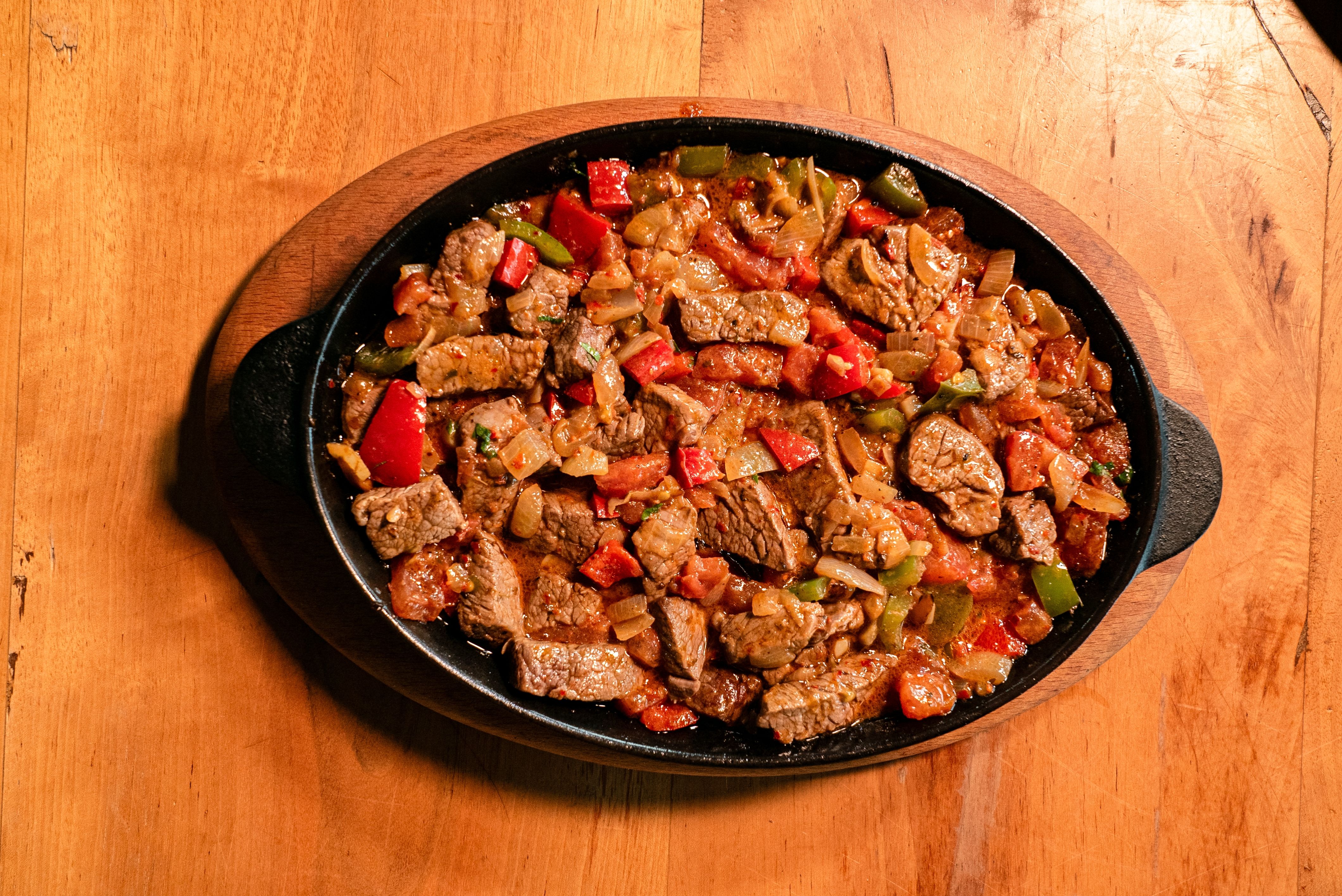
Kavarma
The diets react (see scores below)
Common Ingredients
- pork
- onion
- bell peppers
- tomato
- mushrooms
- paprika
- white wine
- savory
Specific recipes may vary.
Incompatible with 4 of 11 diets
Diet Ratings
Kavarma is a Bulgarian slow-cooked stew featuring pork as the primary protein, which is inherently keto-friendly. However, the dish includes several moderate-carb vegetables — bell peppers, tomatoes, and onions — that collectively add meaningful net carbs per serving. Bell peppers and tomatoes each contribute 4-5g net carbs per 100g, and onions add further. White wine introduces additional carbs (roughly 1-2g per 50ml). Mushrooms and herbs (paprika, savory) are fine in typical amounts. In a standard restaurant portion, the combined vegetable and wine carbs could push a single serving to 15-25g net carbs, which is manageable for those on a lenient keto threshold (50g/day) but risky for strict keto followers targeting under 20g. The pork fat content is favorable, and the dish is grain-free and sugar-free, which is positive. With careful portion control and reduced onion/pepper quantities, this can fit into a keto day.
Strict keto practitioners would argue the combination of tomatoes, bell peppers, onions, and white wine makes this dish too carb-heavy for a single meal, leaving insufficient carb budget for the rest of the day and potentially disrupting ketosis, particularly for metabolically sensitive individuals.
Kavarma is a traditional Bulgarian stew with pork as its primary protein. Pork is an animal product and is strictly excluded from a vegan diet. There is no ambiguity here — meat consumption is the clearest possible violation of vegan principles, regardless of the otherwise plant-based supporting ingredients (onion, bell peppers, tomato, mushrooms, paprika, white wine, savory).
Kavarma is a Bulgarian slow-cooked stew with a largely paleo-friendly ingredient list. Pork, onion, bell peppers, tomato, mushrooms, paprika, and savory are all whole, unprocessed foods fully compatible with paleo principles. The main point of contention is white wine: alcohol occupies a gray area in the paleo community — it is not a hunter-gatherer staple and is technically a processed/fermented product with sugar, yet dry wine (particularly red) is widely tolerated in moderation by many paleo practitioners. Strict interpretations would exclude it entirely. The dish contains no grains, legumes, dairy, seed oils, or refined sugar, which keeps it from being flagged as avoid. The overall profile is close to approved, pulled into caution territory solely by the white wine.
Strict paleo authorities such as Loren Cordain exclude alcohol entirely on the grounds that it is a processed product foreign to Paleolithic nutrition and that ethanol itself is a metabolic toxin. Under a Cordain-school reading, the wine would make this dish non-compliant. A paleo cook could easily substitute bone broth or water to bring it fully into the approve category.
Kavarma is a Bulgarian slow-cooked stew whose primary protein is pork, a red meat that the Mediterranean diet restricts to a few times per month. While the dish includes several Mediterranean-friendly components — onion, bell peppers, tomato, mushrooms, paprika, and white wine — the foundation is pork, which is high in saturated fat and explicitly limited in Mediterranean dietary guidelines. The vegetable content and wine are positive elements, but they cannot offset the fact that red/processed meat is the dominant ingredient and caloric driver of the dish. This is not a dish that fits regular consumption under Mediterranean principles.
Kavarma is a Bulgarian pork stew that is fundamentally incompatible with the carnivore diet. While pork itself is an approved animal protein, the dish is built around a base of multiple plant-derived ingredients: onion, bell peppers, tomato, and mushrooms form the bulk of the stew alongside the meat. Additionally, paprika and savory are plant-based spices, white wine is a fermented plant product, and all of these are strictly excluded on carnivore. The ratio of plant matter to animal product is high, and there is no version of this dish that could be considered carnivore-compliant without a complete reconstruction. This is not a borderline case — the dish is structurally a vegetable stew with pork added, not a meat dish with minor seasoning.
Kavarma is a Bulgarian slow-cooked stew with largely Whole30-compliant ingredients: pork, onion, bell peppers, tomato, mushrooms, paprika, and savory (a herb) are all approved whole foods. White wine is the key concern — alcohol is excluded on Whole30, and white wine is commonly used as a cooking liquid in this dish. When used purely as a cooking ingredient where alcohol cooks off substantially, some practitioners consider it borderline, but the official Whole30 program excludes alcohol in all forms including cooking wine. If the white wine is omitted or substituted (e.g., with compliant broth or coconut aminos), the dish becomes fully compliant. As written with white wine, it technically contains an excluded ingredient, but the dish's overall spirit is very much aligned with Whole30 whole-food cooking.
The official Whole30 program explicitly excludes alcohol in all forms, including cooking wine, so white wine as an ingredient would make this dish non-compliant. However, some community members and practitioners argue that wine used in long-cooked dishes where alcohol evaporates serves a purely culinary (flavor/acid) function and is not consumed as alcohol — though Melissa Urban and the official guidelines do not make this exception.
Kavarma contains multiple high-FODMAP ingredients that make it unsuitable during the elimination phase. Onion is one of the highest fructan-containing foods and is a primary flavoring in this dish — there is no safe serving size. Mushrooms (most common varieties like button or cremini) are high in polyols (mannitol) and must be avoided during elimination. White wine, while low-FODMAP in small amounts (~150ml), is often used in larger quantities in cooking and the residual FODMAPs are a concern. The remaining ingredients — pork, bell peppers, tomato (in moderate amounts), paprika, and savory herb — are generally low-FODMAP. However, onion alone is sufficient to classify this dish as high-FODMAP, and the addition of mushrooms compounds the problem significantly.
Kavarma is a Bulgarian slow-cooked stew featuring pork as the primary protein alongside a strong lineup of DASH-friendly vegetables (onion, bell peppers, tomato, mushrooms) and herbs (paprika, savory). The vegetable base is genuinely excellent for DASH — rich in potassium, fiber, and antioxidants. However, pork is classified as red meat under DASH guidelines, which recommends limiting red meat to no more than a few servings per week. The fat content depends heavily on the cut: fatty cuts (shoulder, belly) introduce significant saturated fat, while leaner cuts (loin, tenderloin) are far more acceptable. White wine adds minimal concern in cooking quantities. Traditional preparations may also include added salt, and Bulgarian cooking sometimes incorporates rendered lard or fatty pork, which would increase saturated fat load. The dish scores reasonably well due to its vegetable density but falls short of 'approve' because of the red meat base and preparation variability.
NIH DASH guidelines categorize all red meat (including pork) as a food to limit, recommending lean poultry and fish instead. However, updated clinical interpretations note that lean pork cuts (loin, tenderloin) have a saturated fat profile comparable to chicken breast, and some DASH-oriented dietitians allow lean pork in moderate portions — meaning a lean-cut Kavarma with controlled sodium could approach approval territory.
Kavarma is a Bulgarian slow-cooked stew featuring pork, onions, bell peppers, tomatoes, mushrooms, paprika, white wine, and savory. The vegetable base is genuinely Zone-friendly — bell peppers, tomatoes, mushrooms, and onions are all low-glycemic, polyphenol-rich carbohydrate sources that align well with Dr. Sears' favorable carb list. Paprika and savory add anti-inflammatory polyphenols with negligible macro impact. White wine adds a small amount of carbohydrates and is generally considered acceptable in the Zone in modest quantities. The primary protein concern is the pork itself: lean cuts (pork tenderloin, pork loin) are Zone-acceptable proteins comparable to chicken, but traditional Kavarma may use fattier cuts (shoulder, belly) which raise saturated fat content and push the fat ratio in the wrong direction — toward saturated rather than monounsaturated fat. The dish also lacks an explicit monounsaturated fat source (no olive oil or avocado noted), though preparation often involves olive oil. There is no significant high-glycemic carbohydrate concern. With lean pork and olive oil as the cooking fat, this dish can be portioned into a reasonable Zone meal, but the fat profile of conventional preparations keeps it in caution territory rather than approve.
Zone practitioners using lean pork tenderloin and olive oil as the cooking fat could reasonably argue this dish approaches 'approve' territory. The vegetable diversity is excellent, the carbs are all low-glycemic, and the protein source — when lean — fits Zone block calculations well. Sears' later anti-inflammatory writings also acknowledge that the polyphenol load from paprika, tomatoes, and bell peppers adds meaningful benefit beyond macronutrient ratios alone.
Kavarma is a Bulgarian braised pork dish with a notably mixed anti-inflammatory profile. On the positive side, it contains several genuinely anti-inflammatory ingredients: bell peppers and tomatoes are rich in antioxidants (vitamin C, lycopene, carotenoids); onions provide quercetin and other flavonoids; mushrooms offer beta-glucans and other anti-inflammatory compounds; paprika and savory (a herb related to thyme) both carry polyphenols and antioxidants with demonstrated anti-inflammatory properties; and white wine in cooking amounts contributes minimal alcohol with some polyphenols. The tomato-based braising environment is a plus. However, the primary protein is pork, which anti-inflammatory guidelines classify as red/processed meat to be limited — it contains arachidonic acid and saturated fat that can promote inflammatory signaling. The dish's overall inflammatory burden depends heavily on the cut of pork used (lean loin vs. fattier shoulder), cooking method (slow-braised is preferable to high-heat charring), and portion size. As a whole-food, vegetable-forward preparation with meaningful herb and spice content, it sits comfortably in the 'moderate' zone — acceptable occasionally but not a dietary staple from an anti-inflammatory standpoint.
Some anti-inflammatory practitioners, including those following Mediterranean-adjacent frameworks, would view this dish more favorably given its abundance of colorful vegetables, tomatoes, mushrooms, and anti-inflammatory herbs — arguing the plant-forward braising context meaningfully offsets the pork. Conversely, stricter anti-inflammatory protocols (e.g., those aligned with autoimmune-focused approaches) would push this toward 'avoid' given pork's arachidonic acid content and omega-6 to omega-3 imbalance.
Kavarma is a Bulgarian braised pork stew with vegetables, white wine, and paprika. The vegetable base — onions, bell peppers, tomatoes, mushrooms — adds meaningful fiber, micronutrients, and water content, all beneficial for GLP-1 patients. The dish is slow-cooked and soft, making it easy to digest. However, the primary protein is pork, which is a concern: traditional kavarma uses fatty cuts (pork shoulder, pork neck) with significant saturated fat that can worsen GLP-1 side effects like nausea and bloating. White wine introduces a small amount of alcohol (though much cooks off), and the overall fat content is highly cut-dependent. If made with lean pork loin and trimmed of visible fat, it becomes a much more favorable dish. As prepared in a traditional Bulgarian context, the fat level is the primary concern.
Some GLP-1-focused dietitians consider braised pork dishes acceptable because slow cooking does not add fat the way frying does, and the protein content is substantial — particularly if portion size is kept small. Others flag all fatty pork cuts as a consistent trigger for GLP-1 GI side effects regardless of cooking method, given slowed gastric emptying and fat's stimulatory effect on nausea pathways.
*See how scores were generated at our methodology page.
Nutritional profile
Six traits that cut across every diet.
Fiber & Plants
How much whole-plant food and fiber it delivers.
Healthy Fats
The quality of its fats (unsaturated, omega-3).
Whole / Unprocessed
How close it is to its natural, unprocessed form.
Gut Gentle
How easy it is on digestion (low FODMAP, few irritants).
Low Glycemic
How little it spikes your blood sugar.
Protein Density
How much protein it packs per calorie.
Controversy Index
Higher controversy = more disagreement between diets.
Diet-Specific Tips
 Keto — 5/10
View tips
- Pork is an excellent high-fat, zero-carb protein source
- Bell peppers and tomatoes contribute moderate net carbs (~4-5g per 100g each)
- Onions add additional net carbs and should be minimized
- White wine contributes approximately 1-2g net carbs per 50ml used
- No grains, added sugars, or starchy vegetables
- Cumulative carb load from multiple vegetables may approach or exceed strict daily limits
- Portion size is critical — smaller servings keep this keto-compatible
- Savory and paprika are negligible in carb contribution
 Paleo — 6/10
View tips
- Pork is a fully approved paleo protein
- Onion, bell peppers, tomato, and mushrooms are whole paleo vegetables
- Paprika and savory are approved paleo spices/herbs
- White wine is the sole gray-area ingredient — alcohol is debated within the paleo community
- No grains, legumes, dairy, refined sugar, or seed oils present
- Dish can be made fully paleo-compliant by substituting bone broth for wine
 Whole30 — 6/10
View tips
- White wine contains alcohol, which is excluded on Whole30
- All other ingredients (pork, vegetables, paprika, savory) are fully compliant
- Savory is a compliant herb
- Easy to make compliant by substituting wine with broth or omitting it
- No grains, dairy, legumes, or sweeteners present
- Dish spirit aligns well with Whole30 whole-food philosophy
 DASH — 5/10
View tips
- Pork is a red meat limited under DASH guidelines — cut selection is critical (lean loin vs. fatty shoulder/belly)
- Abundant DASH-positive vegetables: bell peppers, tomatoes, mushrooms, and onions provide potassium, fiber, and antioxidants
- Saturated fat content varies widely depending on pork cut and whether lard is used in cooking
- White wine used in cooking is not a significant DASH concern at typical culinary quantities
- Sodium content depends on preparation — traditional recipes with added salt should be reduced
- Paprika and savory are sodium-free flavor enhancers, positively supporting a low-sodium preparation
- Portion control of pork is essential — DASH recommends ≤6 oz lean meat/day total
 Zone — 6/10
View tips
- Pork is acceptable in Zone but fat content varies significantly by cut — lean cuts (tenderloin) are favorable, fatty cuts (shoulder, belly) are not
- Bell peppers, tomatoes, mushrooms, and onions are all Zone-favorable low-glycemic carbohydrates with high polyphenol content
- White wine adds minimal carbohydrates and is Zone-permissible in small amounts
- No explicit monounsaturated fat source in ingredient list — preparation method determines fat quality
- Dish lacks starchy high-glycemic carbohydrates, which is a positive
- Traditional preparation may use fatty pork and animal fats rather than olive oil, elevating saturated fat beyond Zone guidelines
- Savory and paprika contribute anti-inflammatory polyphenols consistent with Sears' later Zone writings
 Anti-Inflammatory — 5/10
View tips
- Pork is a red meat to be limited on anti-inflammatory diets due to saturated fat and arachidonic acid content
- Bell peppers and tomatoes are rich in vitamin C, lycopene, and carotenoids with anti-inflammatory effects
- Onions provide quercetin, a well-researched anti-inflammatory flavonoid
- Mushrooms contribute beta-glucans and anti-inflammatory polysaccharides
- Paprika and savory are anti-inflammatory herbs/spices with antioxidant polyphenols
- White wine in cooking adds minimal alcohol; some polyphenol benefit
- Slow braising is a preferable cooking method (avoids high-heat oxidation and AGE formation)
- Overall inflammatory score is highly dependent on pork cut and portion size
 GLP-1 Friendly — 5/10
View tips
- Pork is a moderate-to-high fat protein depending on cut — fatty cuts (shoulder, neck) are common in traditional kavarma and should be avoided or replaced with lean loin
- Vegetable-heavy base (peppers, tomatoes, mushrooms, onion) provides fiber, water content, and micronutrients — a significant positive
- Braised/stewed preparation is easy to digest and avoids the GI risks of fried or greasy cooking
- White wine adds minimal alcohol after cooking but warrants note for patients advised to avoid alcohol entirely
- Paprika and savory are generally well-tolerated spices
- Portion sensitivity is high — a small serving of lean kavarma is quite different nutritionally from a large traditional portion with fatty pork