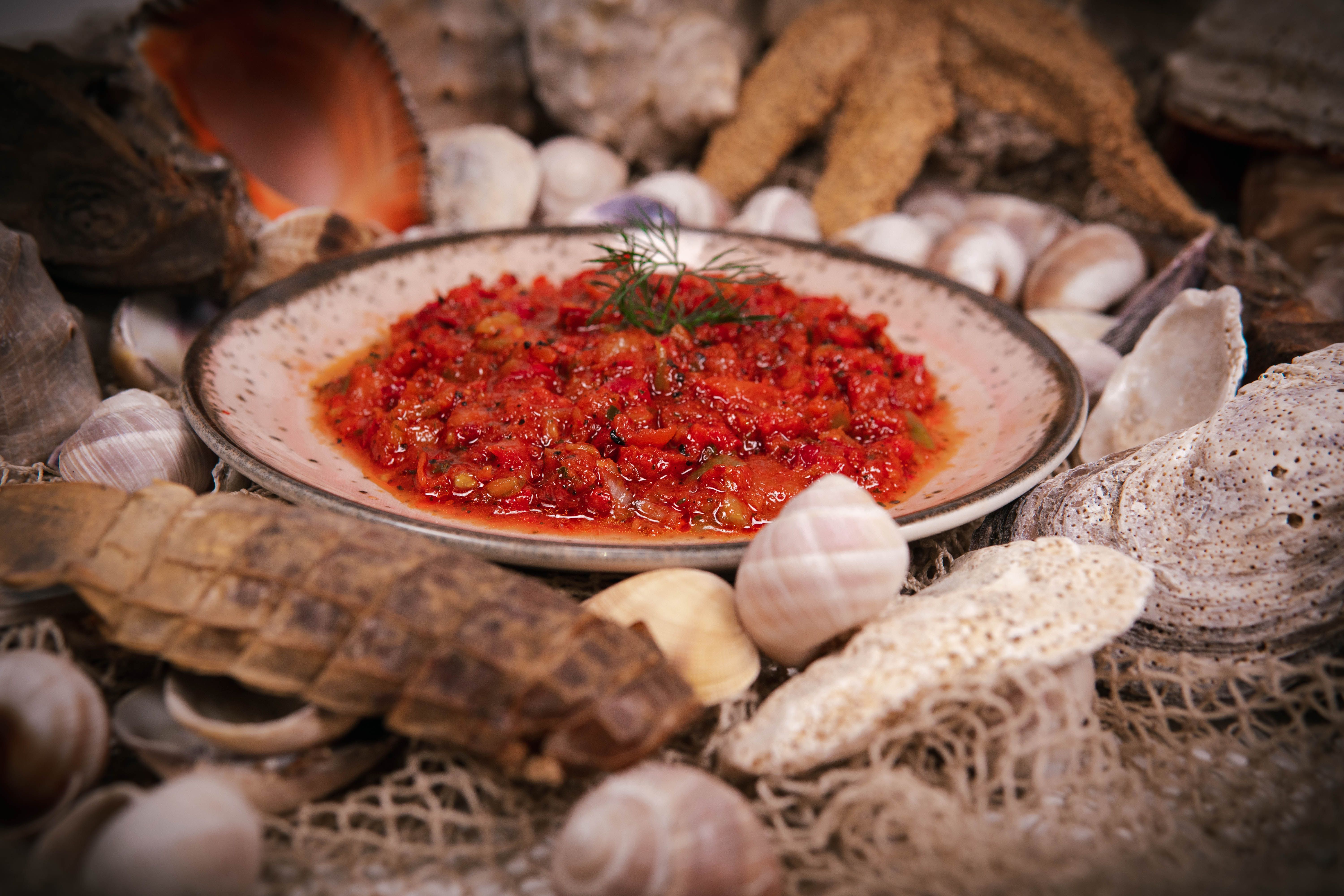
Photo: Ömer Kayan / Pexels
Bulgarian
Lyutenitsa
The diets react (see scores below)
Common Ingredients
- red peppers
- tomatoes
- eggplant
- garlic
- sunflower oil
- sugar
- salt
Specific recipes may vary.
Incompatible with 5 of 11 diets
Diet Ratings
Lyutenitsa is a Bulgarian pepper-tomato-eggplant relish that is problematic for keto on multiple fronts. Red peppers and tomatoes are relatively high in natural sugars and carbs, and the recipe explicitly includes added sugar, which is a zero-tolerance ingredient on keto. A typical 2-3 tablespoon serving of lyutenitsa can contain 5-8g net carbs, and as a condiment it is easy to overconsume. The combination of natural fruit/vegetable sugars plus added sugar makes this difficult to fit within the 20-50g daily net carb limit. While eggplant and garlic are lower-carb, they do not offset the carb load from the peppers, tomatoes, and sugar. Sunflower oil is also a poor fat choice for keto (high in omega-6 PUFAs), though this is secondary to the carb concern.
Some lazy keto practitioners argue that a very small serving (1 tablespoon) could be squeezed into a daily carb budget, and that homemade versions with sugar omitted and portion-controlled servings are technically manageable on a flexible keto approach.
Lyutenitsa is a traditional Bulgarian roasted vegetable relish made entirely from plant-based ingredients. All components — red peppers, tomatoes, eggplant, garlic, sunflower oil, sugar, and salt — are fully vegan with no animal-derived ingredients whatsoever. It is a minimally processed, whole-food condiment that aligns strongly with vegan dietary principles. Sunflower oil is the only refined ingredient, which is standard and uncontroversial in vegan cooking.
Lyutenitsa is a Bulgarian roasted pepper and tomato relish that contains several non-paleo ingredients. While the base vegetables — red peppers, tomatoes, eggplant, and garlic — are all paleo-approved, three ingredients disqualify it: sunflower oil is a seed oil explicitly excluded from paleo due to its high omega-6 polyunsaturated fat content and industrial processing; refined sugar is a non-paleo sweetener; and added salt is discouraged under strict paleo guidelines. The combination of these three violations makes this a clear avoid, despite its otherwise vegetable-forward profile. A paleo-compliant version could be made by substituting olive oil or avocado oil, omitting added sugar, and omitting added salt.
Lyutenitsa is primarily composed of Mediterranean-friendly vegetables (red peppers, tomatoes, eggplant, garlic), which are staples of the Mediterranean diet. However, two factors temper a full approval: the use of sunflower oil instead of extra virgin olive oil (the canonical fat of the Mediterranean diet), and the addition of sugar. The vegetable base is excellent and aligns perfectly with Mediterranean principles, but the oil substitution and added sugar move it away from the ideal. As a condiment used in small quantities, the sugar content is unlikely to be clinically significant, but sunflower oil is an omega-6-rich refined oil not traditional to Mediterranean eating.
Some Balkan and Eastern Mediterranean traditions use sunflower oil regularly, and certain modern Mediterranean diet interpretations allow neutral vegetable oils in moderation. In this framing, Lyutenitsa's rich vegetable content could earn a higher approval rating, especially when used as a condiment rather than a primary dish component.
Lyutenitsa is a Bulgarian roasted vegetable condiment made entirely from plant-based ingredients: red peppers, tomatoes, eggplant, garlic, sunflower oil, and sugar. It contains zero animal products. Every single ingredient violates carnivore diet principles — vegetables, plant-derived oil, and added sugar are all explicitly excluded. This is one of the clearest possible 'avoid' cases on a carnivore diet.
Lyutenitsa is a traditional Bulgarian roasted pepper and vegetable condiment. Most of the ingredients are Whole30-compliant — red peppers, tomatoes, eggplant, garlic, sunflower oil, and salt are all allowed. However, this recipe includes sugar, which is an explicitly excluded ingredient on Whole30. Added sugar of any kind (real or artificial) is prohibited for the full 30 days. Because sugar appears as a listed ingredient, the dish as described cannot be approved.
Lyutenitsa contains garlic as a listed ingredient, which is a high-FODMAP food due to fructans. Even small amounts of garlic cloves (not infused oil) render a dish high-FODMAP during the elimination phase. The other ingredients are more manageable: red peppers are low-FODMAP at standard servings (up to ~52g per Monash), tomatoes are low-FODMAP at around 65g (though canned/cooked concentrations can raise fructose concerns at larger amounts), and eggplant is low-FODMAP only at a very small serve of 75g, becoming high-FODMAP at larger portions due to fructans. Sunflower oil, sugar, and salt are FODMAP-free. As a condiment, the serving size may be small enough to limit garlic dose, but since garlic is cooked directly into the sauce rather than used as an infused oil, the fructans leach into the dish and cannot be removed. The combination of garlic plus eggplant at any realistic serving size makes this dish high-FODMAP during elimination.
Lyutenitsa is a Bulgarian roasted vegetable condiment made primarily from DASH-friendly ingredients: red peppers, tomatoes, eggplant, and garlic are all excellent DASH vegetables rich in potassium, fiber, and antioxidants. Sunflower oil is an acceptable vegetable oil under DASH guidelines. However, as a commercially prepared or traditionally jarred condiment, lyutenitsa typically contains added salt and sugar, which raise sodium and added-sugar concerns. Sodium content can vary significantly — homemade versions with minimal salt are far more DASH-compatible, while commercial jarred versions can contribute meaningfully to daily sodium limits. The small portion size typical of a condiment mitigates these concerns somewhat, but the added salt and sugar prevent a full 'approve' rating for the standard preparation.
NIH DASH guidelines would flag the added salt and sugar as limiting factors even in a vegetable-based condiment. However, updated clinical interpretations note that when consumed in typical condiment-sized portions (1-2 tablespoons), the sodium and sugar contributions are modest, and the underlying vegetables make this a far better condiment choice than most — some DASH-oriented dietitians would approve homemade low-sodium versions without reservation.
Lyutenitsa is a Bulgarian roasted vegetable relish made primarily from red peppers, tomatoes, and eggplant — all Zone-favorable low-glycemic vegetables rich in polyphenols and antioxidants. These ingredients align well with the Zone's emphasis on colorful vegetables and anti-inflammatory foods. However, two ingredients introduce caution: sunflower oil and added sugar. Sunflower oil is high in omega-6 fatty acids, which Sears specifically discourages due to its pro-inflammatory profile — he strongly prefers monounsaturated fats like olive oil. The added sugar, even if small in a condiment serving, nudges the glycemic load upward. As a condiment used in small amounts, the carbohydrate contribution from the vegetables and sugar is modest and manageable within Zone blocks. The omega-6 oil is the primary concern from a Zone perspective. If used sparingly as a condiment (1-2 tablespoons), the macro impact is minimal and it can fit into a Zone meal, but it falls short of ideal due to the oil choice and sugar addition.
Some Zone practitioners may rate this more favorably, noting that as a condiment the total fat and sugar quantities per serving are negligible and that the dominant ingredients — peppers, tomatoes, eggplant — are genuinely Zone-favorable polyphenol-rich vegetables. A homemade version substituting olive oil and omitting sugar would score 7-8 as an approve. Others may rate it lower, pointing out that seed oils are specifically called out by later Sears writings (The OmegaRx Zone) as pro-inflammatory and incompatible with Zone principles regardless of quantity.
Lyutenitsa is a Bulgarian roasted vegetable relish with a genuinely mixed anti-inflammatory profile. On the positive side, its base ingredients — red peppers, tomatoes, eggplant, and garlic — are antioxidant-rich vegetables featuring lycopene (tomatoes), capsanthin and vitamin C (red peppers), nasunin (eggplant skin), and allicin (garlic), all of which have documented anti-inflammatory properties. Garlic in particular is strongly supported as anti-inflammatory. The cooking process (roasting) may concentrate carotenoids in peppers and tomatoes. The primary concern is the use of sunflower oil, which is high in omega-6 linoleic acid and, when refined and used for cooking at high heat, raises legitimate concerns about lipid oxidation and omega-6 overload within an anti-inflammatory framework. Added sugar, while present, is typically modest in lyutenitsa as a condiment and unlikely to be consumed in large enough quantities to cause significant inflammatory impact. Nightshade vegetables (tomatoes, peppers, eggplant) are mainstream anti-inflammatory staples but contested in autoimmune-focused protocols. Used as a condiment in reasonable amounts, lyutenitsa leans positive due to its vegetable density, but the sunflower oil prevents a full approval.
The sunflower oil is the central point of disagreement: mainstream nutrition science (including the AHA) considers high-linoleic sunflower oil neutral to beneficial for cardiovascular health and would likely rate this dish more favorably. In contrast, most dedicated anti-inflammatory protocols (Dr. Weil's pyramid, functional medicine practitioners) recommend avoiding regular sunflower oil due to high omega-6 content and oxidation potential. Additionally, AIP-aligned practitioners would flag the nightshade ingredients (peppers, tomatoes, eggplant) as potentially pro-inflammatory for autoimmune-sensitive individuals, whereas Dr. Weil and mainstream anti-inflammatory nutrition actively encourage these vegetables for their antioxidant content.
Lyutenitsa is a roasted red pepper, tomato, and eggplant condiment that is broadly vegetable-based and nutrient-dense relative to many condiments. Its primary ingredients — red peppers, tomatoes, and eggplant — are low-calorie, high-water-content vegetables that provide fiber, vitamins (especially vitamin C and lycopene), and support hydration, all positives for GLP-1 patients. Garlic adds modest anti-inflammatory benefit. However, as a condiment it contains essentially no protein, which is the #1 priority for GLP-1 patients. Sunflower oil adds fat (though it is an unsaturated fat, which is preferred), and added sugar is a mild concern — typical recipes use only a small amount, but it contributes empty calories in a context where every calorie must count. Portion size matters here: a 2–3 tablespoon serving spread on a high-protein base (grilled chicken, eggs, whole grain toast) is a sensible, flavorful way to add vegetable nutrients without meaningful caloric load. Larger portions increase fat and sugar intake without proportional nutritional return. It is easy to digest, not fried, not spicy, and not carbonated, so it does not worsen GLP-1 side effects. Overall it earns a cautious approval as a condiment used in small amounts to enhance nutrient-dense meals, not as a standalone food.
Some GLP-1-focused dietitians would approve this more enthusiastically as a whole-food vegetable condiment replacing higher-fat, higher-sugar spreads like mayonnaise or ketchup; others would flag the added sugar and oil as unnecessary given that GLP-1 patients have very limited caloric bandwidth and should prioritize protein and fiber at every eating occasion rather than calorie-neutral condiments.
*See how scores were generated at our methodology page.
Nutritional profile
Six traits that cut across every diet.
Fiber & Plants
How much whole-plant food and fiber it delivers.
Healthy Fats
The quality of its fats (unsaturated, omega-3).
Whole / Unprocessed
How close it is to its natural, unprocessed form.
Gut Gentle
How easy it is on digestion (low FODMAP, few irritants).
Low Glycemic
How little it spikes your blood sugar.
Protein Density
How much protein it packs per calorie.
Controversy Index
Higher controversy = more disagreement between diets.
Diet-Specific Tips
 Vegan — 9/10
View tips
- All ingredients are 100% plant-based
- Primarily whole vegetables with no animal derivatives
- Sunflower oil is vegan and widely accepted
- No hidden animal-derived additives (no gelatin, no dairy, no eggs)
- Traditional preparation involves roasting and slow-cooking vegetables — no animal inputs at any stage
 Mediterranean — 6/10
View tips
- Excellent vegetable base: red peppers, tomatoes, eggplant, and garlic are Mediterranean staples
- Sunflower oil used instead of extra virgin olive oil, deviating from the Mediterranean fat standard
- Small amount of added sugar is a mild negative but less concerning in a condiment context
- No animal products or refined grains
- Bulgarian tradition, not strictly Mediterranean but shares many compatible ingredients
- Condiment usage means portion size limits overall impact of less-ideal ingredients
 DASH — 5/10
View tips
- Core ingredients (red peppers, tomatoes, eggplant, garlic) are excellent DASH vegetables
- Sunflower oil is an approved vegetable oil under DASH guidelines
- Added salt raises sodium content — commercial versions may be high-sodium
- Added sugar contributes to daily discretionary sugar intake
- Portion size as a condiment limits overall sodium/sugar impact
- Homemade low-sodium versions would score significantly higher (7-8)
- Rich in potassium, fiber, and antioxidants from base vegetables
 Zone — 5/10
View tips
- Red peppers, tomatoes, and eggplant are Zone-favorable low-glycemic, polyphenol-rich vegetables
- Sunflower oil is high in omega-6 fatty acids, which Sears discourages as pro-inflammatory
- Added sugar is a Zone-unfavorable ingredient, though amounts in a condiment serving are small
- As a condiment, portion sizes are small, limiting total macro impact on a Zone meal
- Olive oil substitution would significantly improve Zone compatibility
- No protein component — functions purely as a carb/fat condiment requiring pairing with lean protein
 Anti-Inflammatory — 5/10
View tips
- Red peppers and tomatoes are rich in carotenoids (lycopene, capsanthin) and vitamin C with strong antioxidant activity
- Eggplant contributes nasunin and polyphenols with anti-inflammatory properties
- Garlic provides allicin and sulfur compounds with well-documented anti-inflammatory effects
- Sunflower oil is high in omega-6 linoleic acid and not recommended for regular use in anti-inflammatory frameworks
- Added sugar is present but minimal at condiment serving sizes
- Nightshade ingredients are beneficial for general population but contested in autoimmune protocols
- Condiment use limits overall exposure to the more problematic ingredients (sunflower oil, sugar)
 GLP-1 Friendly — 6/10
View tips
- Zero protein — does not contribute to the 100–120g daily protein target
- Vegetable-forward ingredients provide fiber and micronutrients
- Sunflower oil is an unsaturated fat, acceptable in moderate amounts
- Added sugar is a minor negative given limited caloric budget on GLP-1s
- High water content from peppers and tomatoes supports hydration
- Easy to digest, not fried, not spicy — does not worsen GLP-1 GI side effects
- Best used in small portions as a complement to high-protein foods