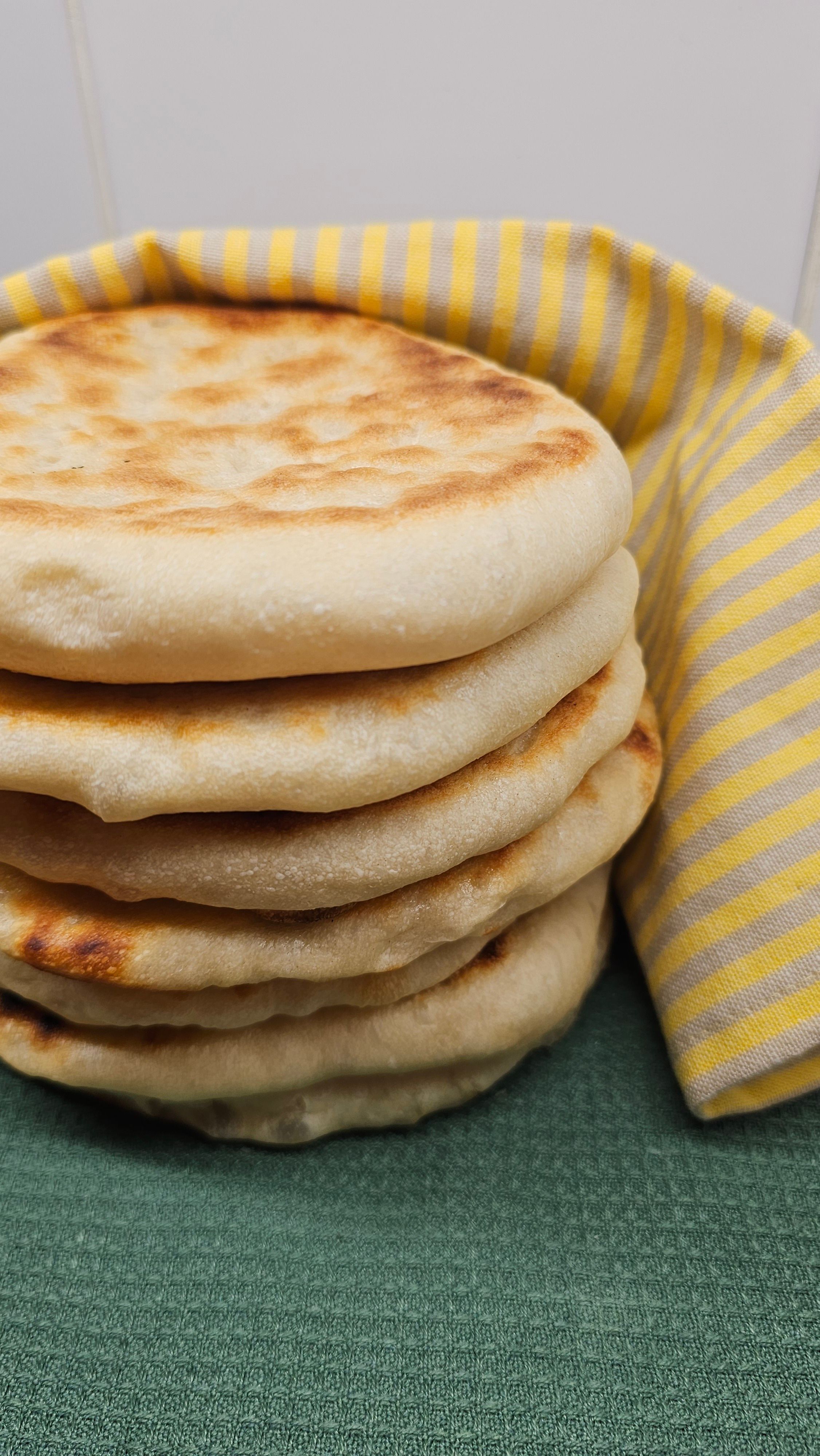
Photo: Ana Palade / Pexels
The diets react (see scores below)
Common Ingredients
- flour
- yogurt
- eggs
- yeast
- baking soda
- salt
- oil
Specific recipes may vary.
Incompatible with 8 of 11 diets
Diet Ratings
Mekitsa is a Bulgarian fried dough pastry made primarily from wheat flour, which is a high-carbohydrate grain. A standard serving contains an estimated 30-50g of net carbs, almost entirely from refined flour. This single serving can easily exceed the entire daily net carb budget for ketosis. Despite being fried in oil, the overwhelming carbohydrate load from the flour base makes this completely incompatible with a ketogenic diet. The yogurt and eggs are keto-friendly ingredients, but they are minor components that cannot offset the dominant flour content.
Mekitsa is a traditional Bulgarian fried dough that contains both yogurt and eggs — two clear animal-derived ingredients that disqualify it from a vegan diet. Yogurt is a dairy product (excluded under Rule 1), and eggs are explicitly excluded as an animal product. There is no meaningful debate within the vegan community about either of these ingredients. While vegan adaptations of mekitsa exist using plant-based yogurt (e.g., soy or coconut) and egg replacers (e.g., flaxseed or aquafaba), the traditional recipe as described is not vegan-compatible.
Mekitsa is a Bulgarian fried dough pastry that is fundamentally incompatible with the Paleo diet. The primary ingredient is wheat flour, a grain explicitly excluded from Paleo. Yogurt is a dairy product, also excluded. Yeast, baking soda, and added salt are processed/non-Paleo additives. The frying oil is unspecified but typically a seed or vegetable oil, which is excluded. While eggs are Paleo-approved, they are a minor component here. Nearly every core ingredient violates Paleo principles, making this one of the clearest possible avoid verdicts.
Mekitsa is a Bulgarian deep-fried dough fritter made primarily from refined white flour and fried in oil (traditionally in vegetable oil or lard). The combination of refined flour and deep-frying places it firmly outside Mediterranean diet principles: refined grains lack the fiber and nutrients of whole grains, and deep-frying in non-olive oil adds unhealthy fats in large quantities. While yogurt and eggs are acceptable Mediterranean ingredients, they are minor components here. The dish is essentially a fried refined-carbohydrate pastry, analogous to doughnuts or churros, which are explicitly discouraged. Deep-fried foods are considered processed and calorie-dense in ways that contradict the Mediterranean dietary pattern regardless of their cultural origin.
Some Mediterranean diet interpreters note that Eastern Mediterranean and Balkan cuisines have traditions of occasional fried doughs, and if prepared with extra virgin olive oil and consumed very rarely, such items might be tolerated as a cultural indulgence. Additionally, the yogurt component aligns with the dairy-inclusive Eastern Mediterranean tradition (e.g., Greek and Turkish breakfast cultures), giving the dish some redeeming nutritional context.
Mekitsa is a Bulgarian fried dough pastry made almost entirely from plant-based ingredients. Flour (grain), yeast, baking soda, and oil are all strictly excluded on the carnivore diet. While eggs and yogurt are animal-derived, they are minor components in a dish that is fundamentally a grain-based bread product. The primary macronutrient and structural base is wheat flour, making this entirely incompatible with carnivore principles regardless of the small animal-derived inclusions.
Mekitsa is a Bulgarian fried dough pastry that contains multiple Whole30-excluded ingredients. Flour (wheat grain) is explicitly excluded on Whole30, and yogurt (dairy) is also excluded. Beyond the ingredient violations, mekitsa is exactly the type of fried dough/bread item that Whole30 Rule 4 prohibits — it is a baked good/fried dough analog akin to donuts or fry bread, which the program explicitly forbids even if made with compliant ingredients. This dish fails on multiple counts: excluded ingredients AND spirit-of-the-program violations.
Mekitsa is a Bulgarian fried dough made primarily with wheat flour, which is the central FODMAP concern. Wheat flour is high in fructans, a key FODMAP, and forms the bulk of this dish. Even a single mekitsa contains enough wheat flour to exceed the low-FODMAP threshold for fructans. The yogurt also contributes lactose (a disaccharide FODMAP), though in relatively small amounts per serving. The yeast, eggs, baking soda, salt, and oil are all low-FODMAP ingredients and pose no concern. However, the wheat flour alone makes this dish unsuitable during the elimination phase of the low-FODMAP diet at any standard serving size.
Some FODMAP practitioners note that yeast-leavened doughs may have marginally reduced fructan content due to partial fermentation during proofing, similar to the principle behind sourdough. However, Monash University does not endorse standard wheat-flour yeast breads as low-FODMAP, and the fermentation time in mekitsa dough is typically too short to produce meaningful fructan reduction. The lactose from yogurt adds a secondary concern that most clinicians would not dismiss during elimination.
Mekitsa is a Bulgarian fried dough breakfast made from flour, yogurt, eggs, yeast, baking soda, salt, and oil. From a DASH perspective, this dish presents several concerns. It is deep-fried, which significantly increases its fat content and caloric density — DASH limits total and saturated fat. The refined white flour provides little fiber or micronutrient value compared to whole grains emphasized by DASH. The salt and baking soda contribute sodium. On the positive side, yogurt and eggs provide some calcium and protein, and home preparation allows some control over sodium and oil quantity. However, the frying method, refined flour base, and sodium from salt and baking soda make this a food to consume only occasionally and in small portions on a DASH plan. It is not categorically avoided (like bacon or processed meats) but is far from a DASH-friendly staple.
NIH DASH guidelines emphasize whole grains and limit fried foods and refined carbohydrates; however, some DASH-oriented clinicians note that eggs and yogurt provide valuable calcium and protein, and that occasional inclusion of culturally significant foods like mekitsa in small portions — especially if baked rather than fried and made with part whole-wheat flour — can be compatible with an overall DASH-adherent dietary pattern.
Mekitsa is a Bulgarian deep-fried dough fritter made primarily from white flour, making it a high-glycemic, refined carbohydrate food with significant added fat from frying. From a Zone perspective, white flour is categorized as an 'unfavorable' carbohydrate — it causes rapid blood sugar spikes and triggers the eicosanoid imbalance Sears warns against. The eggs and yogurt contribute some protein and are positive Zone elements, but they are minor components relative to the dominant flour base. The frying oil adds substantial fat, typically from seed oils (omega-6 heavy), which directly conflicts with Zone's anti-inflammatory fat guidance favoring monounsaturated sources. As a breakfast item, mekitsa is essentially the Zone equivalent of eating a doughnut — high glycemic load, poor protein-to-carb ratio, and inflammatory fat profile. Technically one could eat a very small portion alongside lean protein and vegetables to approximate Zone blocks, but the dish as normally served makes this extremely difficult. The score reflects that it sits at the boundary of caution and avoid — it has some redeeming Zone-compatible ingredients (eggs, yogurt) but is fundamentally a high-GI fried dough product.
Some Zone practitioners note that the yogurt and egg content, while small, do provide protein blocks that partially offset the carbohydrate load. If a small portion (one small fritter) were served alongside additional lean protein and a large vegetable salad, the overall meal could be nudged toward Zone ratios. Additionally, Sears' later writings emphasize polyphenol and omega-3 supplementation as the primary levers, suggesting occasional high-GI foods are less catastrophic if the broader dietary pattern is Zone-compliant.
Mekitsa is a traditional Bulgarian fried dough made from refined white flour, yogurt, eggs, yeast, baking soda, salt, and oil. The anti-inflammatory profile is mixed but leans neutral-to-negative. Refined white flour is a refined carbohydrate with a high glycemic index, which can promote inflammatory markers like CRP and IL-6 when consumed regularly — this is the primary concern. The dish is deep-fried, typically in refined vegetable oils (sunflower oil being common in Bulgaria), which adds omega-6 fatty acids and potential oxidation products from high-heat frying. Yogurt contributes some probiotics and protein, which are mildly beneficial, and eggs provide choline and selenium with a mixed but not strongly pro-inflammatory profile. The lack of any anti-inflammatory ingredients (no omega-3s, antioxidants, polyphenols, or beneficial spices) means there is nothing to offset the refined carbohydrate and frying concerns. Mekitsa is essentially a fried bread — a category that anti-inflammatory frameworks consistently treat as an occasional indulgence rather than a dietary staple. Occasional consumption is unlikely to be harmful, but regular consumption as part of a daily breakfast pattern would be discouraged under anti-inflammatory principles.
Mekitsa is a Bulgarian fried dough pastry made primarily from refined flour and deep-fried in oil. It is essentially empty carbohydrates with very low protein density, negligible fiber, and high fat content from frying. Although the recipe includes eggs and yogurt — which offer some protein — the quantities are small relative to the dominant flour base, and the frying process adds substantial fat per serving. This profile is poorly suited for GLP-1 patients on multiple counts: fried foods worsen nausea, bloating, and reflux due to slowed gastric emptying; refined grains provide no fiber and spike blood sugar; and the caloric load is nutritionally sparse. The dish fails on protein priority (#1), fiber priority (#2), low-fat priority (#3), easy digestibility (#5), and nutrient density per calorie (#6). It is typically served with jam, powdered sugar, or honey, which would further worsen the sugar and empty-calorie profile. Even without toppings, this is a poor choice for GLP-1 patients.
*See how scores were generated at our methodology page.
Nutritional profile
Six traits that cut across every diet.
Fiber & Plants
How much whole-plant food and fiber it delivers.
Healthy Fats
The quality of its fats (unsaturated, omega-3).
Whole / Unprocessed
How close it is to its natural, unprocessed form.
Gut Gentle
How easy it is on digestion (low FODMAP, few irritants).
Low Glycemic
How little it spikes your blood sugar.
Protein Density
How much protein it packs per calorie.
Controversy Index
Higher controversy = more disagreement between diets.
Diet-Specific Tips
 DASH — 4/10
View tips
- Deep-fried preparation significantly increases fat and calorie content, not aligned with DASH principles
- Refined white flour lacks the fiber and micronutrients of whole grains emphasized by DASH
- Salt and baking soda contribute to sodium load, a key DASH concern
- Yogurt provides calcium, a key DASH nutrient, but full-fat yogurt adds saturated fat
- Eggs contribute protein and micronutrients but add cholesterol
- No vegetables, fruits, or legumes — missing core DASH food groups
- Baking instead of frying and using whole-wheat flour would improve DASH compatibility
 Zone — 5/10
View tips
- White flour is a high-glycemic 'unfavorable' carbohydrate in Zone terminology
- Deep-frying adds significant omega-6-heavy fat, conflicting with Zone's anti-inflammatory fat guidance
- Eggs and yogurt provide minor protein blocks but are overwhelmed by the flour base
- Poor macronutrient ratio — carb-and-fat heavy with minimal protein relative to total calories
- As a standalone breakfast, very difficult to balance into 40/30/30 without major supplementation
- Essentially equivalent to a doughnut in Zone terms — high glycemic load, inflammatory fat profile
 Anti-Inflammatory — 4/10
View tips
- Refined white flour — high glycemic index, promotes inflammatory markers with regular consumption
- Deep-fried preparation — adds oxidized fats and likely high omega-6 from sunflower or other refined cooking oils
- Yogurt — minor positive contribution via probiotics and protein
- Eggs — nutritionally mixed but not strongly pro-inflammatory
- No anti-inflammatory ingredients present (no omega-3s, antioxidants, beneficial spices, or whole grains)
- Acceptable as an occasional treat; problematic as a regular dietary pattern