Photo: Polina Tankilevitch / Pexels
The diets react (see scores below)
Common Ingredients
- yogurt
- cucumber
- garlic
- dill
- walnuts
- sunflower oil
- water
- salt
Specific recipes may vary.
Incompatible with 5 of 11 diets
Diet Ratings
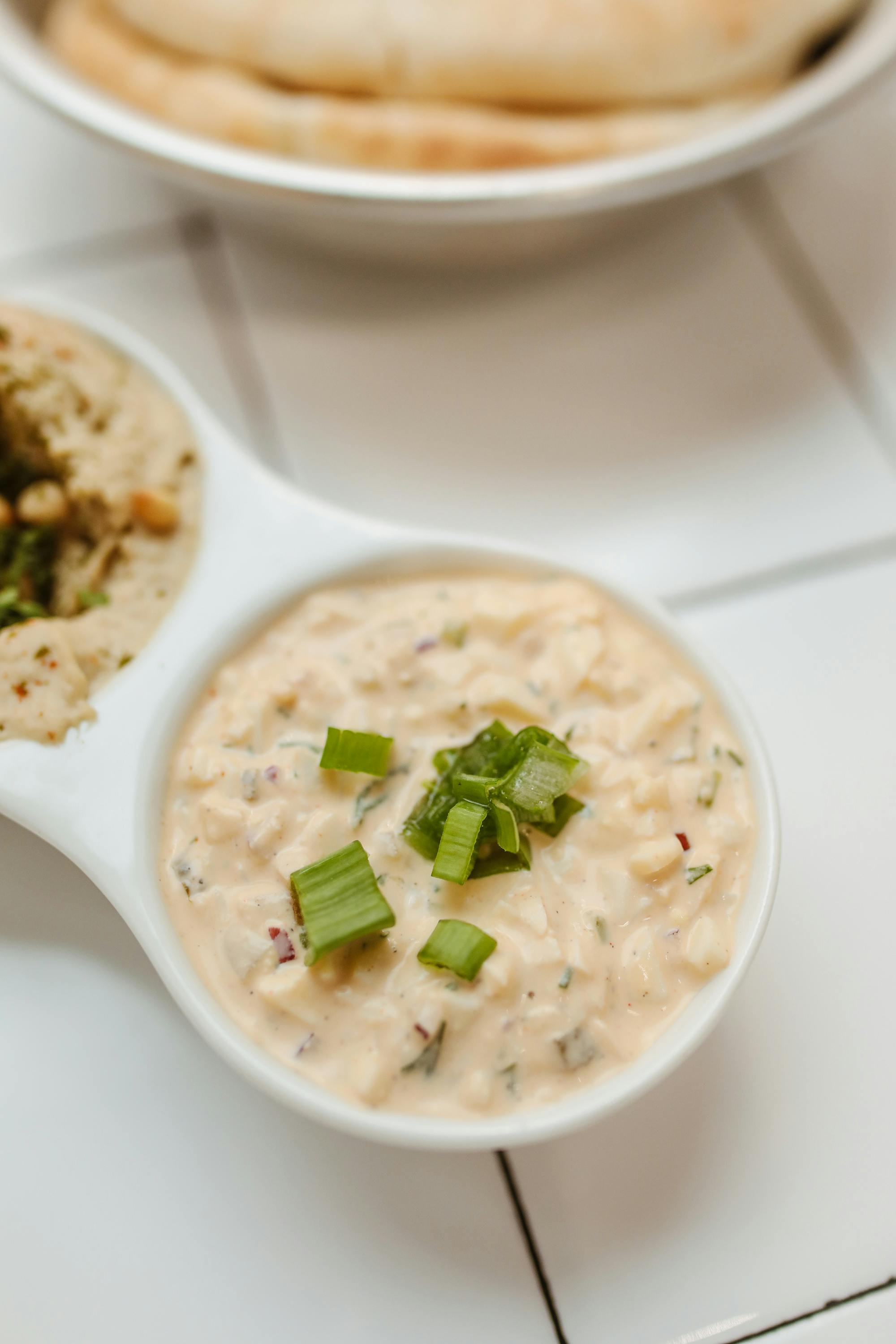
Tarator is a cold Bulgarian yogurt soup. The primary concern is the yogurt base, which contains natural lactose-derived carbs (typically 4-6g net carbs per 100g for full-fat plain yogurt). A standard serving of tarator may use 150-200g of yogurt, contributing 6-12g net carbs before accounting for other ingredients. Cucumber adds minimal net carbs (~2g per 100g), garlic adds a small amount, and dill, salt, and water are negligible. Walnuts and sunflower oil contribute healthy fats, which is a positive factor. Overall, a moderate portion of tarator could fit within a daily keto budget, but the yogurt-heavy base requires careful portion control and tracking. Full-fat yogurt is preferable; low-fat versions would worsen the carb-to-fat ratio significantly.
Strict keto and carnivore-adjacent practitioners often exclude yogurt entirely due to its lactose content and potential insulin response, arguing that even full-fat plain yogurt disrupts ketosis in metabolically sensitive individuals. These camps recommend replacing yogurt with sour cream or crème fraîche for a lower-carb alternative.
Tarator is a traditional Bulgarian cold soup whose base ingredient is yogurt, which is a dairy product derived from animal milk. Dairy is unambiguously excluded from a vegan diet. All other ingredients — cucumber, garlic, dill, walnuts, sunflower oil, water, and salt — are fully plant-based, but the presence of yogurt makes the dish non-vegan in its traditional form. A vegan version could be made by substituting the dairy yogurt with a plant-based alternative such as soy, coconut, or almond yogurt.
Tarator contains multiple non-paleo ingredients that disqualify it outright. Yogurt is dairy and excluded from paleo. Sunflower oil is a seed oil explicitly avoided in paleo in favor of animal fats, olive oil, or coconut oil. Salt (added) is also excluded under strict paleo rules. The remaining ingredients — cucumber, garlic, dill, and walnuts — are paleo-approved, but the foundational components of this dish are incompatible with the diet.
Tarator is a light, plant-forward cold soup with several Mediterranean-friendly ingredients: cucumber, garlic, dill, and walnuts are all excellent. Yogurt is acceptable in moderation (dairy falls in the 'moderate' category). The main concern is the use of sunflower oil rather than extra virgin olive oil, which is the canonical fat in Mediterranean diet principles. Sunflower oil is a refined seed oil not emphasized in the Mediterranean dietary pattern. The dish is otherwise wholesome, low in saturated fat, and vegetable-based, keeping it in the acceptable range but short of full approval.
Some Eastern Mediterranean and Balkan culinary traditions use sunflower or other vegetable oils interchangeably with olive oil, and a practitioner taking a broad traditional Mediterranean lens might approve this dish given its overall plant-based, whole-food character. However, modern Mediterranean diet clinical guidelines (e.g., PREDIMED protocol) specifically emphasize extra virgin olive oil as the fat source.
Tarator is a Bulgarian cold soup that is almost entirely plant-based in composition. While it contains yogurt (a dairy product that some carnivore practitioners accept), the dish is dominated by plant-derived ingredients: cucumber, garlic, dill, walnuts, and sunflower oil are all strictly excluded on the carnivore diet. Sunflower oil is a seed oil — one of the most condemned foods even outside the carnivore community. Walnuts are plant seeds. Cucumber, garlic, and dill are all plant foods. The yogurt is the only animal-derived ingredient, but it is a minor component in a dish that is fundamentally incompatible with carnivore principles. There is no meaningful animal protein here and the dish cannot be modified into a carnivore-compatible form without ceasing to be Tarator entirely.
Tarator contains yogurt, which is dairy and explicitly excluded on the Whole30 program. Dairy (including yogurt, milk, cheese, and sour cream) is one of the core eliminated food groups for the full 30 days. The remaining ingredients — cucumber, garlic, dill, walnuts, sunflower oil, water, and salt — are all Whole30-compliant, but the yogurt alone disqualifies the dish entirely.
Tarator contains two significant high-FODMAP ingredients that make it unsuitable during the elimination phase. First, yogurt (standard dairy yogurt) is high in lactose and is clearly high-FODMAP at a typical soup serving — lactose-free yogurt would be required as a substitute. Second, garlic is one of the highest-FODMAP foods tested by Monash University, containing significant fructans even in very small amounts; it is firmly in the 'avoid' category during elimination. The remaining ingredients — cucumber, dill, walnuts (in moderate amounts), sunflower oil, water, and salt — are all low-FODMAP. However, the combination of lactose-heavy yogurt as the soup base and garlic as a core flavoring makes this dish high-FODMAP as traditionally prepared. It cannot be made low-FODMAP without substituting lactose-free yogurt and replacing garlic with garlic-infused oil.
Tarator is a Bulgarian cold soup made primarily from yogurt, cucumber, garlic, dill, walnuts, sunflower oil, water, and salt. Several ingredients align well with DASH principles: cucumber is a low-sodium vegetable, dill is a DASH-friendly herb, walnuts provide heart-healthy unsaturated fats and magnesium, and sunflower oil is an acceptable vegetable oil. However, the yogurt is likely full-fat in traditional preparation, which DASH guidelines specify should be low-fat or fat-free dairy. The added salt is a concern, as DASH strictly limits sodium intake, and the amount added during home preparation can vary significantly. If made with low-fat or non-fat yogurt and minimal salt, this dish would score considerably higher (7-8), as it would then be rich in calcium, potassium, and beneficial nutrients. As traditionally prepared with full-fat yogurt and moderate salting, it lands in the caution range — acceptable in moderation but not optimized for DASH.
NIH DASH guidelines specify low-fat or fat-free dairy and sodium limitation, placing traditional full-fat yogurt-based tarator in a cautionary zone. However, updated clinical interpretations note that emerging research does not consistently show full-fat dairy worsens cardiovascular outcomes, and some DASH-oriented practitioners now allow full-fat fermented dairy like yogurt in moderation, which would push this dish closer to approval if salt is controlled.
Tarator is a cold Bulgarian yogurt soup with a macro profile that is close to Zone-friendly but has a few notable issues. Yogurt provides protein and some carbohydrates (primarily lactose, moderate glycemic index); cucumber is an excellent low-glycemic, high-water vegetable; garlic and dill are Zone-favorable polyphenol-rich aromatics; and walnuts offer healthy fats with beneficial omega-3s. The two main concerns are: (1) Sunflower oil is high in omega-6 polyunsaturated fats, which Dr. Sears explicitly discourages due to their pro-inflammatory profile — olive oil or avocado oil would be the Zone-preferred substitution. (2) The dish has no meaningful lean protein source beyond the yogurt, meaning it likely falls short of the 25g protein target for a full Zone meal, functioning better as a snack or side. If yogurt is full-fat, saturated fat content increases, though Zone's later frameworks are more tolerant of this. The carb-to-protein ratio needs attention — plain low-fat yogurt helps, but the meal as a standalone dish would need a lean protein addition to fully balance Zone blocks. The polyphenol content (garlic, dill, walnuts) aligns well with Sears' anti-inflammatory emphasis.
Some Zone practitioners, particularly those following Sears' later anti-inflammatory writings (The OmegaRx Zone, The Zone Diet), may be more lenient about full-fat yogurt's saturated fat content and consider this dish quite Zone-compatible as a snack or light side, especially given the walnuts' omega-3 contribution. However, the sunflower oil remains a consistent concern across all of Sears' published work, as he explicitly recommends against omega-6-heavy seed oils.
Tarator is a traditional Bulgarian cold soup with a genuinely mixed anti-inflammatory profile. On the positive side, it contains several strongly anti-inflammatory ingredients: garlic (allicin, organosulfur compounds that suppress NF-κB), dill (flavonoids, monoterpenes with antioxidant activity), walnuts (ALA omega-3s, polyphenols — one of the most anti-inflammatory nuts), and cucumber (cucurbitacins, hydration, low glycemic). Yogurt is neutral-to-positive — low-fat dairy is in the 'moderate' category, and fermented dairy specifically may support gut health and reduce inflammatory markers. The problematic ingredient is sunflower oil, which is high in omega-6 linoleic acid and associated with pro-inflammatory potential when used regularly, particularly in its refined form. Anti-inflammatory protocols generally recommend avoiding or limiting sunflower oil in favor of extra virgin olive oil. However, sunflower oil in Tarator is typically used in small quantities (a drizzle), which mitigates concern somewhat. The overall dish is light, vegetable-forward, fermented, and contains genuinely anti-inflammatory aromatics and nuts — but the sunflower oil and full-fat dairy (depending on yogurt type) prevent a full approval. Substituting EVOO would significantly improve the profile.
Mainstream nutrition science (AHA guidelines) considers sunflower oil a heart-healthy unsaturated fat and would likely rate this dish more favorably overall. By contrast, stricter anti-inflammatory protocols (e.g., those following Dr. Weil's pyramid closely or functional medicine frameworks) would flag sunflower oil as a regular omega-6 source to avoid, potentially downgrading this dish further. The verdict here reflects the middle ground.
Tarator is a cold Bulgarian yogurt-based soup that has several GLP-1-friendly qualities but also notable limitations. On the positive side, yogurt provides moderate protein and probiotics, cucumber contributes high water content and easy digestibility, and the dish is served cold in small portions — all compatible with slowed gastric emptying. Garlic and dill are digestively neutral in typical amounts. However, the protein content per serving is modest and there is no primary protein source, making it insufficient as a standalone meal for hitting the 15–30g per-meal protein target. Walnuts and sunflower oil add unsaturated fats (a preferred fat type), but do increase total fat per serving, which may worsen nausea or reflux in sensitive patients. Fiber content is low. The dish is best treated as a light starter or snack rather than a protein anchor, and ideally consumed alongside a lean protein source. It is not harmful, but it falls short of the nutrient density and protein density expected of a high-scoring GLP-1-compatible food.
Some GLP-1 dietitians view yogurt-based dishes favorably as a gentle, easily tolerated option on high-nausea days, particularly when solid food is difficult — the hydration and probiotic content may also indirectly support GI side effect management. Others caution that the fat from walnuts and oil, even if unsaturated, can still slow gastric emptying further and trigger reflux when GI sensitivity is high, and would recommend omitting the oil and walnuts on difficult days.
*See how scores were generated at our methodology page.
Nutritional profile
Six traits that cut across every diet.
Fiber & Plants
How much whole-plant food and fiber it delivers.
Healthy Fats
The quality of its fats (unsaturated, omega-3).
Whole / Unprocessed
How close it is to its natural, unprocessed form.
Gut Gentle
How easy it is on digestion (low FODMAP, few irritants).
Low Glycemic
How little it spikes your blood sugar.
Protein Density
How much protein it packs per calorie.
Controversy Index
Higher controversy = more disagreement between diets.
Diet-Specific Tips
 Keto — 5/10
View tips
- Yogurt contains lactose (natural sugar), contributing moderate net carbs — the main limiting factor
- Full-fat plain yogurt is preferred over low-fat for better fat-to-carb ratio
- Cucumber is low in net carbs and keto-friendly
- Walnuts and sunflower oil add healthy fats, supporting keto macros
- Portion size is critical — a small serving (~150-200ml) can fit within daily carb limits
- Garlic adds minimal but non-zero carbs; large quantities should be avoided
- No added sugars, grains, or starchy ingredients present
 Mediterranean — 6/10
View tips
- Sunflower oil used instead of extra virgin olive oil, deviating from core Mediterranean fat principles
- Yogurt is dairy and appropriate in moderate amounts
- Cucumber, garlic, dill, and walnuts are all Mediterranean-friendly whole foods
- No red meat, refined grains, or added sugars
- Light, plant-dominant dish overall
- Simple preparation with minimal processing
 DASH — 5/10
View tips
- Full-fat yogurt likely used in traditional preparation — DASH specifies low-fat/fat-free dairy
- Added salt is a sodium concern for DASH adherence
- Cucumber is a DASH-friendly low-sodium vegetable
- Walnuts provide magnesium and heart-healthy unsaturated fats
- Sunflower oil is an acceptable vegetable oil under DASH
- Garlic and dill are DASH-compatible flavor enhancers
- Easily modified to be more DASH-compliant by using low-fat yogurt and minimizing salt
 Zone — 6/10
View tips
- Sunflower oil is omega-6-heavy and pro-inflammatory — a Zone red flag; olive oil is strongly preferred
- Yogurt provides moderate protein and some carbohydrates (lactose); use low-fat plain yogurt for best Zone fit
- Cucumber is an excellent low-glycemic, high-water Zone-favorable vegetable
- Walnuts add beneficial omega-3 fatty acids and monounsaturated fat, aligning with Zone's anti-inflammatory focus
- No primary lean protein source — dish is protein-light and best used as a snack (1 block) or paired with lean protein
- Garlic and dill contribute polyphenols consistent with Sears' anti-inflammatory dietary philosophy
- Overall macro balance skews toward carb/fat without sufficient protein for a standalone Zone meal
 Anti-Inflammatory — 5/10
View tips
- Walnuts: strong anti-inflammatory — ALA omega-3s and polyphenols
- Garlic: well-supported anti-inflammatory via allicin and organosulfur compounds
- Dill: antioxidant flavonoids and monoterpenes
- Cucumber: antioxidants, low glycemic, anti-inflammatory cucurbitacins
- Yogurt: fermented dairy, generally moderate — may support gut-mediated inflammation reduction
- Sunflower oil: high omega-6, not recommended for regular use in anti-inflammatory protocols — key limiting factor
- Small overall portion of oil in the dish partially mitigates sunflower oil concern
- No refined sugars, processed ingredients, or trans fats
 GLP-1 Friendly — 5/10
View tips
- Low protein density — no primary protein source; yogurt alone is insufficient to meet 15–30g per meal target
- High water content from yogurt and cucumber supports hydration, a GLP-1 priority
- Easy to digest and cold-served — well tolerated when GI side effects are present
- Walnuts and sunflower oil provide unsaturated fats, which are preferred, but add fat load that may worsen nausea or reflux
- Low fiber content — minimal contribution to the 25–30g daily fiber target
- Best suited as a starter or snack, not a standalone meal on a GLP-1 protocol
- Moderate nutrient density per calorie — not empty calories, but not optimized