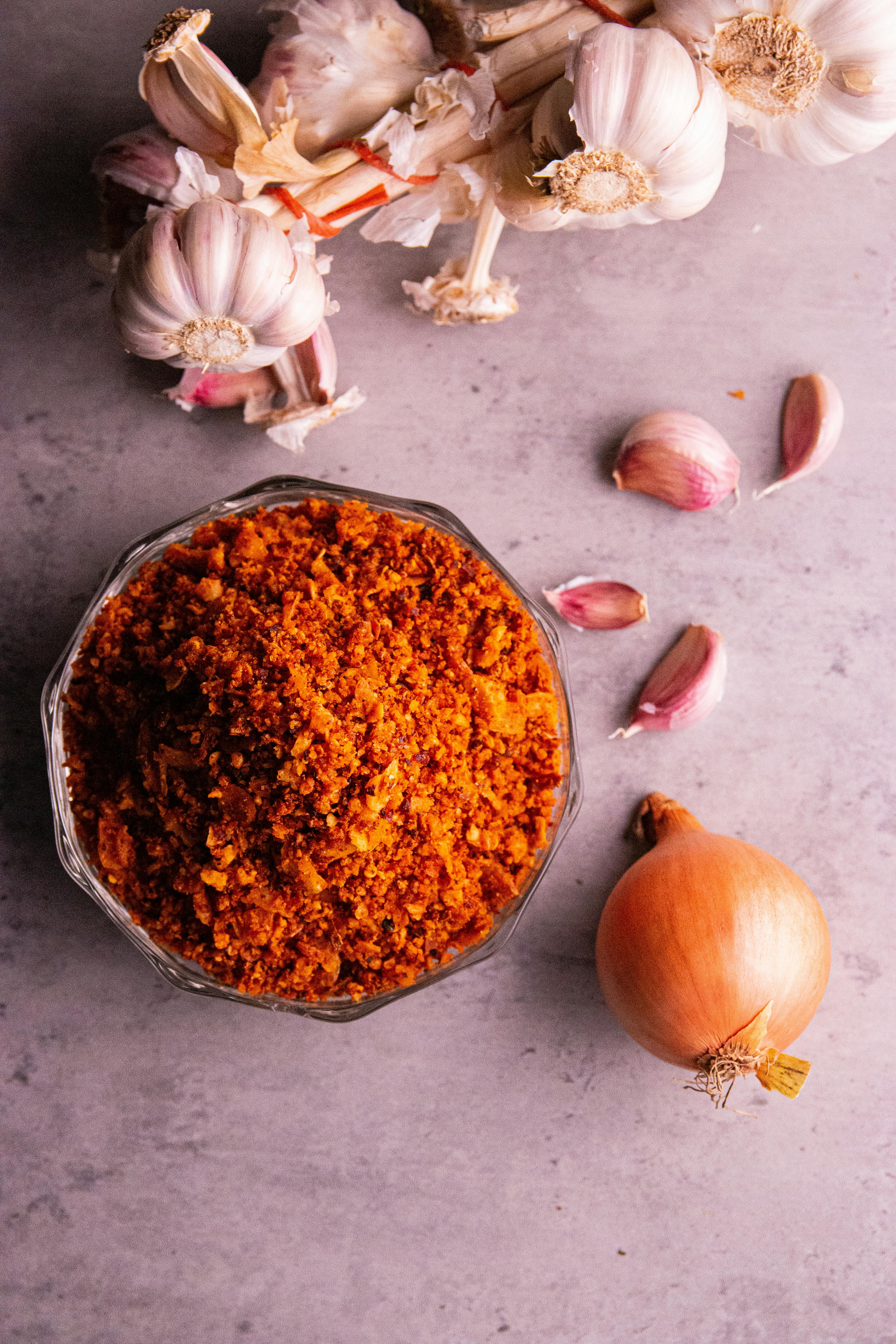
The diets react (see scores below)
Common Ingredients
- dried shrimp
- garlic
- shallots
- chili flakes
- shrimp paste
- tamarind
- peanut oil
Specific recipes may vary.
Incompatible with 6 of 11 diets
Diet Ratings
Balachaung is a Burmese fried shrimp condiment that is largely keto-compatible but requires portion awareness. Dried shrimp and shrimp paste are excellent high-protein, low-carb ingredients. Peanut oil provides a solid fat base. The main concerns are shallots and tamarind: shallots are moderate in carbs (~6g net carbs per 100g), and tamarind is relatively high in sugar/carbs (~57g net carbs per 100g in paste form). However, both are used as flavor components in small quantities, not bulk ingredients, so the net carb impact per serving as a condiment is likely manageable — estimated 3-6g net carbs per typical 2-3 tbsp serving. Chili flakes and garlic add negligible carbs at these quantities. Used as a small condiment rather than a main component, it can fit within daily keto limits, but liberal use or larger portions could push carb counts uncomfortably high due to tamarind's sugar content.
Strict keto practitioners may flag tamarind as a red line ingredient due to its inherently high sugar content, arguing that even small amounts of high-sugar condiments can disrupt ketosis in sensitive individuals and that the ingredient should exclude it entirely to be considered keto-safe.
Balachaung contains multiple animal-derived ingredients that clearly disqualify it from vegan compliance. Dried shrimp and shrimp paste are both seafood-derived products, making this dish unambiguously non-vegan. There is no plant-based version of this traditional Burmese condiment in its standard form.
Balachaung fails paleo compliance primarily due to peanut oil, a seed/legume-derived oil explicitly excluded from the paleo diet. Shrimp paste is also typically a processed, salt-laden fermented product with additives that fall outside paleo guidelines. While several ingredients are paleo-friendly — dried shrimp (natural protein), garlic, shallots, chili flakes, and tamarind are all whole, hunter-gatherer-available foods — the peanut oil alone is a disqualifying ingredient. Peanuts are legumes, and peanut oil carries the same exclusion. The dish cannot be considered paleo-compliant in its traditional form.
Balachaung contains several Mediterranean-compatible elements alongside some concerns. Dried shrimp aligns with the diet's emphasis on seafood as a primary protein. Garlic, shallots, chili flakes, and tamarind are all plant-based ingredients consistent with the diet's flavor profile. However, shrimp paste is a highly processed, very high-sodium condiment not typical of Mediterranean eating patterns. Peanut oil, while a plant-based fat, is not the preferred fat — extra virgin olive oil is canonical. The dish is not inherently unhealthy, but the heavy reliance on fermented shrimp paste (processed, high sodium) and non-EVOO fat, plus its role as a concentrated condiment rather than a whole-food serving, push it into the caution zone. Consumed in small amounts as a condiment, it is acceptable.
Some Mediterranean diet interpreters who focus on seafood diversity and plant aromatics might view this more favorably, noting that fermented seafood products have historical parallels in Mediterranean traditions (e.g., Greek tarama, Italian colatura di alici). The high-sodium concern is real but manageable when used sparingly as a condiment rather than a main dish.
Balachaung is fundamentally incompatible with the carnivore diet despite containing animal-derived shrimp and shrimp paste. The dish includes multiple plant-based ingredients that are entirely excluded on carnivore: shallots and garlic (allium vegetables), chili flakes (plant spice/pepper), tamarind (a legume-family fruit used as a souring agent), and peanut oil (a plant-derived seed oil — one of the worst offenders). The shrimp paste itself, while animal-derived, is a fermented condiment that may contain additives. Even the most lenient carnivore practitioners who allow spices and dairy would reject tamarind and peanut oil outright. This dish is essentially a plant-heavy condiment that uses dried shrimp as a flavoring agent rather than a protein-forward animal food.
Balachaung is a Burmese fried shrimp condiment made from dried shrimp, garlic, shallots, chili flakes, shrimp paste, tamarind, and peanut oil. Most individual ingredients are Whole30-compliant: dried shrimp, garlic, shallots, chili flakes, tamarind, and peanut oil are all allowed. The critical concern is shrimp paste (ngapi), which is a fermented condiment that commonly contains added salt and sometimes sugar or other additives. Label-reading is essential — many commercial shrimp pastes are clean (just fermented shrimp and salt), but some versions include added sugars or preservatives. Additionally, peanut oil deserves a note: peanuts are a legume and excluded on Whole30, and while refined peanut oil is debated, the official Whole30 program excludes peanut products, and peanut oil is generally considered non-compliant. A compliant oil substitute (coconut oil, avocado oil) would be needed. These two concerns — shrimp paste additives and peanut oil — make this dish a 'caution' requiring careful sourcing and possible substitution rather than an outright avoid.
Some Whole30 practitioners argue that highly refined peanut oil, which contains no peanut protein, may be acceptable in the same spirit as other refined oils, but official Whole30 guidelines exclude all peanut and peanut-derived products without exception. Similarly, a clean shrimp paste with only fermented shrimp and salt is technically compliant, though some community members flag fermented pastes as processed foods that warrant scrutiny.
Balachaung contains multiple high-FODMAP ingredients that make it unsuitable during the elimination phase. Garlic is one of the highest-FODMAP foods tested by Monash, containing significant fructans even in small amounts. Shallots are also high in fructans and are essentially interchangeable with onion in FODMAP terms — both are strongly avoided during elimination. These two ingredients alone would disqualify the dish. Additionally, shrimp paste (ngapi) typically contains fermented ingredients and may harbor fructans or other FODMAPs. Tamarind at larger servings is rated high-FODMAP by Monash due to excess fructose (safe only at very small amounts like 1 tablespoon). Chili flakes are generally low-FODMAP. Dried shrimp and peanut oil are low-FODMAP. However, garlic and shallots are structural, non-optional ingredients present in meaningful quantities in Balachaung — this condiment cannot be made FODMAP-safe without fundamentally altering its character.
Balachaung is a heavily processed Burmese condiment with multiple high-sodium ingredients that are fundamentally incompatible with DASH diet principles. Dried shrimp and shrimp paste are extremely high in sodium — dried shrimp alone can contain 800–1,500mg of sodium per small serving, and shrimp paste typically adds another 400–700mg per tablespoon. Combined, this dish can easily exceed the entire daily sodium limit (1,500–2,300mg) in a single small portion. Additionally, it is fried in peanut oil (adding significant fat), and while peanut oil is a vegetable oil and not inherently excluded, the frying method and overall nutritional profile make this dish problematic. The dish offers no meaningful calcium, fiber, or magnesium. Chili flakes, garlic, shallots, and tamarind provide some phytonutrients but do not redeem the dish's extreme sodium load. This is precisely the type of high-sodium condiment DASH guidelines explicitly warn against.
Balachaung is a Burmese condiment/side dish featuring dried shrimp as the primary protein, with garlic and shallots as low-glycemic carbohydrate contributors, and peanut oil as the fat source. The protein component (dried shrimp, shrimp paste) is lean and Zone-friendly, providing a good source of protein blocks. Garlic and shallots are favorable Zone carbohydrates — low-glycemic and polyphenol-rich, which aligns with Sears' anti-inflammatory emphasis. Tamarind contributes a modest glycemic load and some net carbs but in small quantities typical of a condiment, it's manageable. The primary concern is peanut oil: while it has a moderate monounsaturated fat profile, it is notably high in omega-6 polyunsaturated fats (linoleic acid), which Sears specifically discourages due to its pro-inflammatory potential — he strongly prefers olive oil or macadamia oil. The dish is also quite high in sodium from the dried shrimp and shrimp paste, which is not a Zone disqualifier per se but worth noting. Used as a small condiment portion over vegetables or a lean protein base, balachaung can fit Zone ratios, but the peanut oil and overall condiment-style format (high flavor density, used in small amounts atop other foods) make precise block accounting tricky. It functions best as a flavor enhancer rather than a primary Zone block component.
Some Zone practitioners may rate this more favorably, noting that dried shrimp offers excellent lean protein density and the aromatics (garlic, shallots) are highly favorable Zone carbs with strong polyphenol content consistent with Sears' later anti-inflammatory writing. In small condiment portions, the omega-6 load from peanut oil may be negligible. Others would flag peanut oil more severely — Sears' anti-inflammatory framework in 'The Zone' and subsequent works explicitly identifies high omega-6 seed oils as a driver of silent inflammation, potentially warranting a lower score.
Balachaung is a Burmese fried shrimp condiment with a mixed anti-inflammatory profile. On the positive side, dried shrimp provides some omega-3s and protein; garlic and shallots are rich in quercetin, allicin, and organosulfur compounds with documented anti-inflammatory and immune-modulating effects; chili flakes contain capsaicin, a recognized anti-inflammatory compound; and tamarind offers polyphenols and antioxidants. These are genuinely valuable anti-inflammatory ingredients. However, the dish is defined by being fried in peanut oil, which introduces a meaningful omega-6 load — peanut oil has an omega-6 to omega-3 ratio of roughly 32:1, far from ideal. The shrimp paste (ngapi) is heavily fermented and very high in sodium, which, while not directly pro-inflammatory in the arachidonic acid sense, is a concern for overall inflammatory burden at high intake. The dish is also a condiment typically consumed in small quantities, which mitigates oil and sodium concerns. The overall picture is a flavorfull condiment with real anti-inflammatory ingredients undermined by a high-omega-6 frying oil and high sodium — placing it squarely in caution territory. Occasional use in small amounts as a condiment is acceptable; regular heavy use is not advised.
Some anti-inflammatory practitioners following stricter omega-6 avoidance protocols (e.g., Paul Jaminet's Perfect Health Diet, carnivore-adjacent frameworks) would likely flag peanut oil more severely and rate this closer to 'avoid' due to the oxidized, high-omega-6 frying medium. Conversely, proponents of traditional whole-food diets may argue that the garlic, shallot, chili, and tamarind base is strongly anti-inflammatory and that the small condiment serving size makes the oil concern minimal.
Balachaung is a Burmese fried shrimp condiment that presents multiple red flags for GLP-1 patients. It is deep-fried in significant amounts of peanut oil, making it high in fat and heavy to digest — directly worsening the nausea, bloating, and reflux that GLP-1 medications already promote. Chili flakes and shrimp paste add significant spice and pungency, which can aggravate GLP-1-related GI irritation and reflux. While dried shrimp does contribute some protein, balachaung is served as a small-portion condiment, not a protein-forward dish, so the protein contribution per realistic serving is minimal. The sodium content from shrimp paste and dried shrimp is also very high, which can worsen dehydration in patients already experiencing reduced thirst. Tamarind adds a modest fiber and antioxidant benefit but does not offset the core concerns. As a fried, high-fat, high-spice, high-sodium condiment with negligible practical protein contribution, it scores poorly across nearly all GLP-1 dietary priorities.
Some GLP-1-focused dietitians may note that balachaung is used in very small quantities as a condiment, and that dried shrimp is genuinely protein-dense — a case could be made for a trace use as a flavor enhancer rather than a food. However, the frying method and spice load remain consistent concerns even at small doses, and most GI-conscious GLP-1 guidance would still recommend avoiding it, particularly in early treatment phases when side effects are most pronounced.
*See how scores were generated at our methodology page.
Nutritional profile
Six traits that cut across every diet.
Fiber & Plants
How much whole-plant food and fiber it delivers.
Healthy Fats
The quality of its fats (unsaturated, omega-3).
Whole / Unprocessed
How close it is to its natural, unprocessed form.
Gut Gentle
How easy it is on digestion (low FODMAP, few irritants).
Low Glycemic
How little it spikes your blood sugar.
Protein Density
How much protein it packs per calorie.
Controversy Index
Higher controversy = more disagreement between diets.
Diet-Specific Tips
 Keto — 5/10
View tips
- Tamarind is high in natural sugars (~57g net carbs/100g) — a key risk ingredient even in small amounts
- Shallots add moderate carbs; quantity used matters significantly
- Dried shrimp and shrimp paste are very low-carb, high-protein keto staples
- Peanut oil provides healthy fat content consistent with keto macros
- Dish is consumed as a condiment, so typical serving size limits total carb exposure
- Chili flakes and garlic contribute negligible net carbs at condiment-level quantities
 Mediterranean — 5/10
View tips
- Dried shrimp is a Mediterranean-compatible seafood protein
- Garlic, shallots, chili, and tamarind are whole plant-based ingredients
- Shrimp paste is highly processed and extremely high in sodium, not aligned with Mediterranean principles
- Peanut oil is a plant fat but not the preferred extra virgin olive oil
- Dish functions as a concentrated condiment — small portions mitigate concerns
- No red meat, refined grains, or added sugars present
 Whole30 — 5/10
View tips
- Peanut oil is derived from peanuts (a legume) and is excluded on Whole30 — substitute with coconut or avocado oil
- Shrimp paste (ngapi) must be label-checked for added sugar, MSG (now allowed), or other non-compliant additives
- Dried shrimp, garlic, shallots, chili flakes, and tamarind are all Whole30-compliant
- Dish can be made compliant with oil substitution and a clean shrimp paste
- Fermented/processed condiments require extra label scrutiny on Whole30
 Zone — 5/10
View tips
- Dried shrimp and shrimp paste are lean protein sources — Zone-favorable
- Garlic and shallots are low-glycemic, polyphenol-rich Zone-favorable carbs
- Peanut oil is high in omega-6 fatty acids, which Sears' anti-inflammatory framework discourages
- Tamarind adds modest net carbs and glycemic load — manageable in small portions
- Very high sodium content from dried shrimp and shrimp paste
- Used as a condiment, precise Zone block portioning is difficult
- No significant saturated fat concerns
- Anti-inflammatory polyphenol contribution from garlic and shallots is a positive
 Anti-Inflammatory — 5/10
View tips
- Garlic and shallots: rich in quercetin, allicin, and organosulfur compounds with anti-inflammatory activity
- Chili flakes: capsaicin is a well-documented anti-inflammatory compound
- Tamarind: provides polyphenols and antioxidants
- Dried shrimp: modest omega-3 source, lean protein
- Peanut oil (frying medium): high omega-6 to omega-3 ratio (~32:1), pro-inflammatory potential especially when heated
- Shrimp paste: very high sodium, fermented — not directly pro-inflammatory but a dietary concern at high intake
- Small condiment serving size moderates the overall inflammatory impact