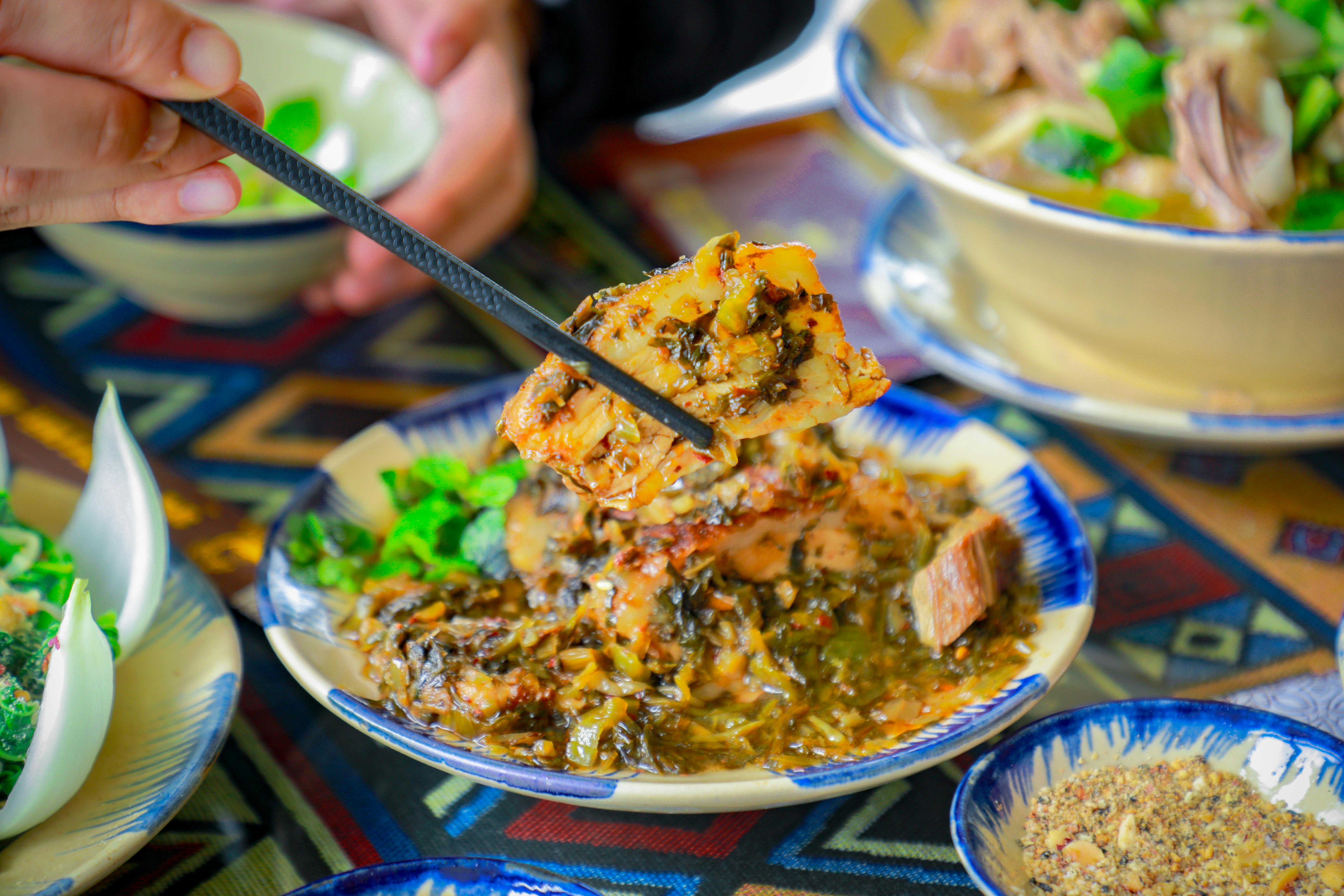
The diets react (see scores below)
Common Ingredients
- chicken
- basmati rice
- onion
- garlic
- ginger
- yogurt
- raisins
- cashews
- bay leaf
- garam masala
Specific recipes may vary.
Incompatible with 6 of 11 diets
Diet Ratings
Danbauk is a Burmese biryani-style dish built around basmati rice as its primary component, making it fundamentally incompatible with a ketogenic diet. A standard serving contains well over 40-50g of net carbs from rice alone, instantly exceeding the daily keto carb limit. Additional carb contributors include raisins (high-sugar dried fruit), cashews (among the highest-carb nuts), and onion. The yogurt adds minor carbs as well. While the chicken, spices, and some aromatics are keto-friendly, the dish's entire structure depends on rice and cannot be meaningfully modified without ceasing to be Danbauk.
Danbauk is a Burmese biryani-style dish that contains multiple animal products. Chicken is the primary protein and a direct animal product. Yogurt is a dairy derivative. Both ingredients are strictly excluded under vegan dietary rules. There is no meaningful debate within the vegan community about the status of either chicken or yogurt — both are unambiguously animal-derived.
Danbauk is a Burmese biryani-style dish that is fundamentally incompatible with the paleo diet. The dish is built around basmati rice, a grain that is strictly excluded from paleo eating. Yogurt is a dairy product, also excluded. These two ingredients are core to the dish's identity and cannot simply be removed — without them, it is no longer Danbauk. The remaining ingredients (chicken, onion, garlic, ginger, raisins, cashews, bay leaf, garam masala) are individually paleo-compatible, but the non-negotiable grain and dairy base disqualify the dish entirely.
Danbauk is a Burmese biryani-style dish featuring chicken (poultry, acceptable in moderation), basmati rice (refined/white grain, not whole grain), yogurt (moderate dairy), and aromatics like onion, garlic, and ginger (beneficial). Cashews and raisins add nuts and fruit. The overall profile is moderately compatible: chicken and dairy fit within 'a few times per week' allowances, but white basmati rice rather than whole grains is a concern. The absence of olive oil (likely butter or ghee is used in traditional preparation) and the lack of vegetables reduce its Mediterranean alignment. The dish has no red meat, minimal processing, and beneficial spices, landing it firmly in the caution zone.
Some Mediterranean diet practitioners argue that basmati rice, with its lower glycemic index compared to other white rices, is acceptable in moderate portions, and that dishes rich in aromatics and lean protein fit the spirit of the diet even if the grain base isn't ideal. Traditional Mediterranean cuisines in Greece and Turkey also include rice-based pilaf dishes, suggesting white rice is not categorically excluded.
Danbauk is a Burmese biryani-style dish that is fundamentally incompatible with the carnivore diet. While it contains chicken (an acceptable animal protein for most carnivore practitioners), the dish is built around basmati rice — a grain that is strictly excluded on carnivore. Beyond rice, the ingredient list includes multiple plant-derived foods: onion, garlic, ginger, raisins, cashews, bay leaf, and garam masala (a blend of plant spices). Raisins are fruit-derived sugar, cashews are nuts, and the remaining aromatics and spices are all plant matter. Even the yogurt, while dairy-derived, is a minor component drowned out by the overwhelming plant base of the dish. This is essentially a grain-and-plant dish with chicken as a secondary ingredient — it cannot be modified into a carnivore meal without being rebuilt from scratch.
Danbauk contains two clearly excluded ingredients: basmati rice (a grain, explicitly excluded on Whole30) and yogurt (a dairy product, explicitly excluded on Whole30). Either of these alone would disqualify the dish. Chicken, onion, garlic, ginger, raisins, cashews, bay leaf, and garam masala are all compliant, but the foundational components of this Burmese biryani-style dish — rice and yogurt — are non-negotiable exclusions under the program.
Danbauk contains multiple high-FODMAP ingredients that make it unsuitable during the elimination phase. Onion and garlic are among the highest-FODMAP foods tested by Monash University, both rich in fructans, and are structural ingredients in this dish — not incidental additions that could be easily removed. Yogurt contributes lactose (high-FODMAP unless lactose-free). Raisins are high-FODMAP due to excess fructose and fructans even at small servings (Monash rates >1 tablespoon as high). Cashews are high-FODMAP above 10 nuts per serve, and they are typically used in meaningful quantities in this dish. While chicken, basmati rice, ginger, bay leaf, and garam masala are all low-FODMAP, the cumulative load from onion, garlic, yogurt, raisins, and cashews makes this dish a clear avoid during elimination phase.
Danbauk is a Burmese spiced chicken rice dish with several DASH-friendly elements: lean chicken protein, aromatic vegetables (onion, garlic, ginger), yogurt (likely full-fat in traditional preparation), and spices without added sodium. Basmati rice is a refined grain rather than a whole grain, which DASH de-emphasizes. Cashews are calorie-dense and contain some saturated fat, though they also provide magnesium and healthy unsaturated fats — DASH allows nuts in small portions (4-5 servings/week). Raisins add natural sugars but also potassium and fiber. The main concerns are: (1) traditional preparation often uses full-fat yogurt rather than low-fat, which DASH specifies; (2) cooking fat (ghee or oil) used in biryani-style dishes can add saturated fat; (3) sodium content depends heavily on preparation — if salt is added liberally, this could push toward caution or avoid territory. With mindful preparation (low-fat yogurt, minimal salt, moderate cashews, whole-grain basmati or brown rice substitution), this dish could score higher. As traditionally prepared, it sits in the caution range.
NIH DASH guidelines specify low-fat dairy and whole grains, placing traditional Danbauk with full-fat yogurt and white basmati rice in the caution category. However, updated clinical interpretations note that emerging evidence on full-fat dairy does not clearly worsen cardiovascular outcomes, and that the Mediterranean-adjacent spice profile and lean chicken base make this dish relatively heart-healthy compared to other mixed rice dishes — some DASH-oriented dietitians would approve a modified version without major concern.
Danbauk is a Burmese spiced chicken and rice dish that presents a mixed Zone Diet profile. The chicken is a lean, Zone-favorable protein source, and spices like garlic, ginger, and garam masala are anti-inflammatory and polyphenol-rich — positives in Sears' framework. However, the dish is built around basmati rice as its dominant carbohydrate base, which is a moderate-to-high glycemic grain. While basmati has a lower GI than white rice (GI ~58-60 vs. ~72), it is still considered an 'unfavorable' carbohydrate in classic Zone terminology and would need strict portion control to maintain the 40/30/30 ratio. Raisins add additional concentrated sugar and are explicitly listed by Sears as an unfavorable carb (high glycemic density). Cashews provide some monounsaturated fat but are higher in carbohydrates than ideal Zone fat sources like almonds or macadamia nuts. Yogurt is acceptable in moderate portions. The core problem is that a standard serving of Danbauk is rice-dominant, making the carbohydrate load high-glycemic and disproportionate to protein and fat — a classic Zone imbalance. It is technically possible to construct a Zone-modified version with reduced rice, extra chicken, and removed raisins, but as traditionally served, it skews heavily toward unfavorable carbs.
Some Zone practitioners and Sears' later writings (The Anti-Inflammation Zone) place greater emphasis on the overall glycemic load and anti-inflammatory context rather than rigid favorable/unfavorable carb labels. Basmati rice, especially when eaten alongside protein, fat, and fiber, produces a more moderate glycemic response than its GI alone suggests. A practitioner following updated Zone principles might rate this dish more leniently if portion sizes are controlled — using a half-cup of basmati rather than a full serving, and relying on the chicken, yogurt, and cashews to balance the blocks. The spice profile (ginger, garlic, garam masala) also earns anti-inflammatory credit in Sears' later framework.
Danbauk is a Burmese spiced rice dish (similar to biryani) with a moderately favorable anti-inflammatory profile. Chicken is a lean protein, classified as acceptable in moderation under anti-inflammatory guidelines. The spice blend — garlic, ginger, garam masala (which typically includes turmeric, cumin, coriander, cinnamon, cardamom, cloves), and bay leaf — contributes meaningful anti-inflammatory polyphenols, with ginger and the turmeric/cinnamon components of garam masala being particularly well-supported. Onion provides quercetin. Yogurt in moderate amounts is acceptable as low-fat dairy and may offer probiotic benefits. Raisins add some antioxidants but also concentrated sugar, which is mildly pro-inflammatory in quantity. Cashews provide some healthy fats and minerals, though they are higher in omega-6 than omega-3 and lower in anti-inflammatory impact than walnuts or almonds. The main neutral-to-limiting factor is white basmati rice — a refined carbohydrate with a moderate glycemic index (lower than standard white rice due to its long-grain structure and resistant starch), but still not a whole grain. It lacks the fiber and micronutrient density that would qualify it as anti-inflammatory. Overall, the dish is a reasonably balanced main course — the spice profile is a real strength — but the white rice base and cashew/raisin additions temper the score.
Some anti-inflammatory practitioners, particularly those following stricter protocols like AIP or low-glycemic anti-inflammatory frameworks, would rate this lower due to the white rice (refined carb, glycemic load) and yogurt (dairy). Conversely, Dr. Weil's broader anti-inflammatory pyramid accommodates low-fat dairy and spiced rice dishes, and basmati rice's lower glycemic index compared to other white rices gives it a partial pass in many mainstream anti-inflammatory contexts.
Danbauk is a Burmese biryani-style dish featuring chicken cooked with basmati rice, yogurt, aromatics, and warm spices. It offers a reasonable protein base from chicken and some gut-friendly probiotics from yogurt, but several factors reduce its GLP-1 friendliness. Basmati rice is a refined carbohydrate with moderate glycemic impact and minimal fiber, making it nutritionally less dense per calorie than whole grain alternatives. Cashews add healthy unsaturated fat but also significant calories and fat in even modest portions — easy to overeat in a rice dish where they're mixed throughout. Raisins contribute natural sugars with little fiber benefit and minimal nutritional payoff per calorie. The dish is typically rich and aromatic rather than heavy or greasy, so GI tolerability is generally acceptable, but the calorie density of the combined rice-cashew-raisin base means portion control is critical. The yogurt and ginger are positives — yogurt adds protein and the ginger may ease nausea. Garam masala is generally well-tolerated. Overall, this is a borderline dish: the chicken and yogurt provide value, but the refined rice base, calorie-dense cashews, and added raisins reduce its ranking compared to lean protein-forward meals with fiber-rich vegetables.
Some GLP-1-focused dietitians would view this more favorably if portioned with extra chicken and reduced rice, arguing that basmati has a lower glycemic index than many refined grains and that the yogurt marinade meaningfully boosts protein. Others would flag the cashew and raisin content as adding unnecessary caloric density for patients with already suppressed appetite.
*See how scores were generated at our methodology page.
Nutritional profile
Six traits that cut across every diet.
Fiber & Plants
How much whole-plant food and fiber it delivers.
Healthy Fats
The quality of its fats (unsaturated, omega-3).
Whole / Unprocessed
How close it is to its natural, unprocessed form.
Gut Gentle
How easy it is on digestion (low FODMAP, few irritants).
Low Glycemic
How little it spikes your blood sugar.
Protein Density
How much protein it packs per calorie.
Controversy Index
Higher controversy = more disagreement between diets.
Diet-Specific Tips
 Mediterranean — 5/10
View tips
- Chicken is acceptable poultry — fits 'a few times per week' guideline
- Basmati rice is a refined/white grain, not a whole grain — mild concern
- Yogurt is moderate dairy, acceptable in small amounts
- Cashews provide plant-based healthy fats — positive
- No olive oil — traditional preparation likely uses ghee or butter, not Mediterranean-canonical fat
- Aromatics (garlic, onion, ginger, spices) are beneficial
- No vegetables present — reduces plant-forward profile
- No red meat, minimal processed ingredients — positive baseline
 DASH — 5/10
View tips
- Lean chicken protein aligns well with DASH lean meat recommendations
- White basmati rice is a refined grain; DASH emphasizes whole grains — reduces score
- Yogurt is likely full-fat in traditional preparation; DASH specifies low-fat dairy
- Cashews are DASH-acceptable nuts but must be portion-controlled (high calorie density)
- No inherently high-sodium processed ingredients; sodium level depends on added salt during cooking
- Aromatic vegetables (onion, garlic, ginger) contribute potassium and beneficial compounds
- Raisins add natural sugars and calories but also potassium and fiber
- Garam masala and spices add flavor without sodium, supporting DASH sodium-reduction goals
- Cooking fat (ghee traditionally used) would add saturated fat — a DASH concern if significant
 Zone — 4/10
View tips
- Basmati rice is the primary carb source — moderate GI but 'unfavorable' in classic Zone classification and typically over-portioned in this dish
- Chicken is a lean, Zone-approved protein source
- Raisins are explicitly unfavorable in Zone — high glycemic density and concentrated sugar
- Cashews provide fat but carry more carbohydrates than ideal Zone fat sources
- Ginger, garlic, and spices are anti-inflammatory and polyphenol-rich — Zone positives
- Yogurt is a usable Zone protein/fat component in moderation
- As traditionally served, the rice-to-protein ratio skews far outside Zone's 40/30/30 target
 Anti-Inflammatory — 6/10
View tips
- Lean chicken protein — acceptable under anti-inflammatory guidelines
- Strong anti-inflammatory spice profile: garlic, ginger, garam masala (includes turmeric and cinnamon), bay leaf
- Onion contributes quercetin, a well-researched anti-inflammatory flavonoid
- White basmati rice is a refined carbohydrate — not a whole grain, though glycemic impact is moderate
- Yogurt is acceptable as low-fat dairy in moderation; provides probiotics
- Raisins add antioxidants but also concentrated natural sugars
- Cashews are nutritionally modest — less anti-inflammatory than walnuts or other nuts higher in omega-3s
- No trans fats, processed additives, or high-fructose corn syrup
 GLP-1 Friendly — 5/10
View tips
- Moderate protein from chicken — positive, but protein density per serving depends heavily on chicken-to-rice ratio
- Basmati rice is a refined carbohydrate with low fiber and moderate glycemic impact — a notable drawback
- Yogurt adds protein and is generally well-tolerated; ginger may help with GLP-1-related nausea
- Cashews contribute healthy fats but are calorie-dense and easy to overconsume in a mixed rice dish
- Raisins add natural sugar and calories with minimal fiber or nutrient benefit
- No significant vegetable or fiber content — falls short of the 25-30g daily fiber target
- Dish is generally not greasy or fried, so GI tolerability is relatively acceptable
- Portion sensitivity is high — a small serving is more GLP-1 appropriate than a standard restaurant portion