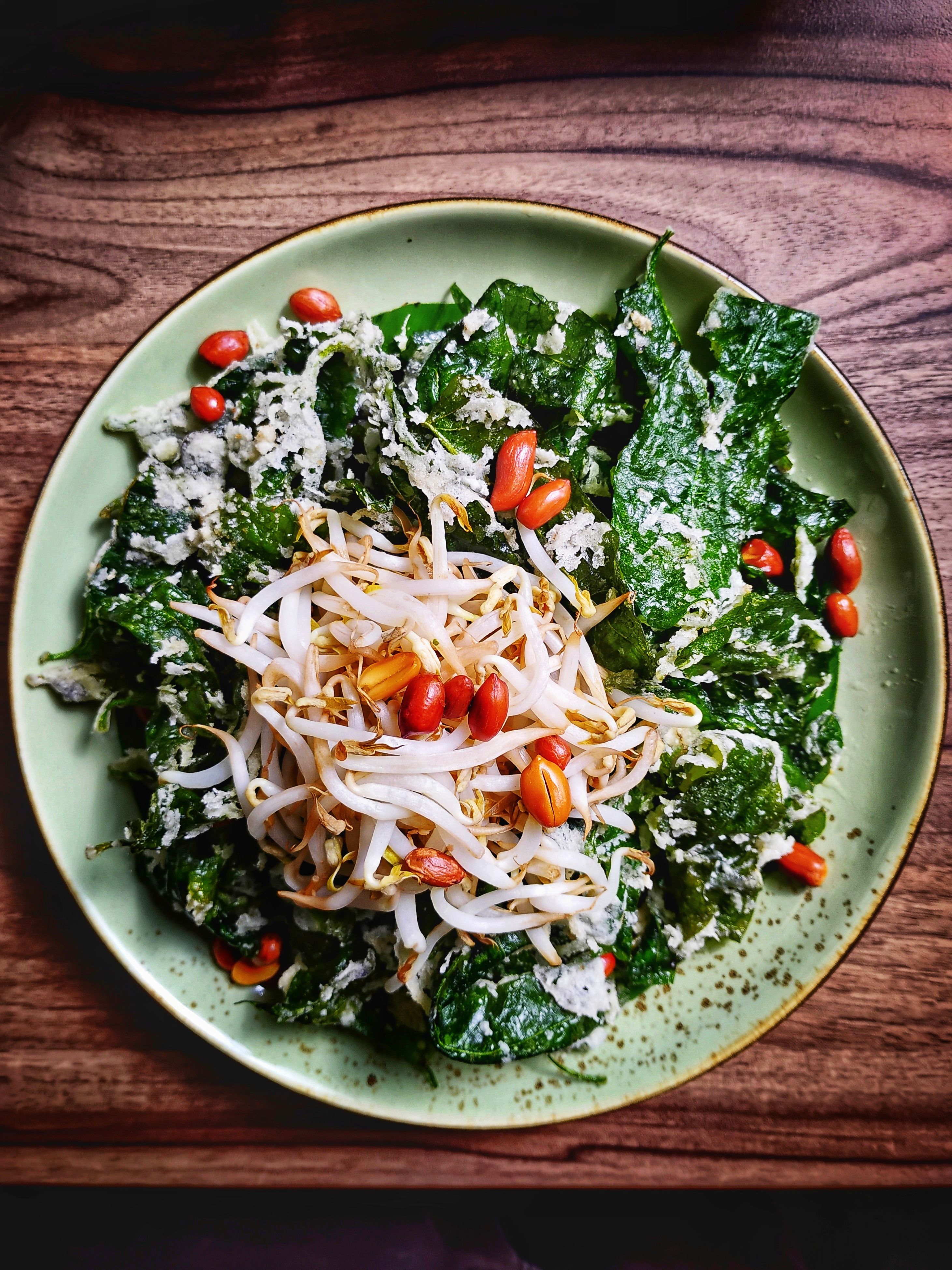
Photo: kandhi bharata / Pexels
Burmese
Lahpet Thoke
The diets react (see scores below)
Common Ingredients
- fermented tea leaves
- fried broad beans
- peanuts
- sesame seeds
- cabbage
- tomato
- garlic
- dried shrimp
- lime
- peanut oil
Specific recipes may vary.
Incompatible with 5 of 11 diets
Diet Ratings
Lahpet Thoke contains several keto-friendly elements—fermented tea leaves, peanut oil, sesame seeds, dried shrimp, garlic, cabbage, and tomato are all low-carb or healthy-fat contributors. However, fried broad beans (fava beans) are the primary concern: broad beans are relatively high in net carbs (~10–12g per 100g cooked), and fried versions are often used generously in this dish. Peanuts add additional carbs (~4g net per ounce) that accumulate quickly. The combination of broad beans and peanuts can push this dish into a moderate-to-high carb range depending on serving size. With strict portion control—reducing or eliminating the broad beans—this dish could fit into a keto day, but as traditionally served it sits in caution territory. Lime juice and tomato add minimal carbs. Fermented tea leaves are virtually carb-free and keto-neutral.
Strict keto practitioners would argue to avoid this dish entirely due to the fried broad beans, which are legumes with a significant starch content not acceptable on clinical or very low-carb keto protocols regardless of portion size. Lazy keto adherents might approve a small portion, counting carbs carefully and substituting macadamia nuts or reducing beans.
Lahpet Thoke contains dried shrimp, which is a seafood/animal product and directly violates vegan dietary rules. Despite the dish being otherwise largely plant-based — featuring fermented tea leaves, legumes, seeds, vegetables, and plant oils — the inclusion of dried shrimp as a listed ingredient makes it clearly non-vegan. There is no ambiguity here; dried shrimp is an animal-derived ingredient with no meaningful debate within the vegan community.
Lahpet Thoke contains multiple non-paleo ingredients that make it clearly incompatible with the paleo diet. Fried broad beans are legumes, explicitly excluded from paleo. Peanuts are also legumes, not nuts, and are excluded. Peanut oil is a seed/legume-derived oil, also on the avoid list. These three ingredients alone are disqualifying. Additionally, fermented tea leaves are a heavily processed, fermented food product not aligned with paleo principles. The remaining ingredients — sesame seeds (debated as seed oil adjacent but seeds themselves are generally okay), cabbage, tomato, garlic, dried shrimp, and lime — are paleo-compatible, but the dish as a whole cannot be approved or even cautioned given the number of clear violations.
Lahpet Thoke contains several Mediterranean-diet-compatible ingredients: legumes (broad beans, peanuts), sesame seeds, cabbage, tomato, garlic, and lime are all plant-forward and encouraged. However, the dish diverges from Mediterranean principles in key ways. Peanut oil, while a plant-based fat, is not the preferred fat — extra virgin olive oil is canonical. Dried shrimp adds a small amount of seafood protein, which is generally favorable, but in a very processed, high-sodium form rather than fresh fish. Fermented tea leaves are a highly culturally specific fermented food with no direct Mediterranean analogue; while fermented foods are not excluded, their Mediterranean credentials are ambiguous. The combination of fried broad beans (fried preparation) and the overall high sodium load from dried shrimp and fermented leaves adds further caution. On balance, the dish is predominantly plant-based with legumes, vegetables, and seeds — which aligns well — but the fat source, processing level of some ingredients, and sodium profile keep it from a full approval.
Some Mediterranean diet interpreters emphasize overall dietary pattern and plant-food density over strict ingredient sourcing; by that view, this salad's heavy legume, nut, vegetable, and seed base could qualify it closer to an 'approve,' especially since dried shrimp parallels the use of preserved seafood found in some Southern Mediterranean and Greek coastal traditions.
Lahpet Thoke is almost entirely plant-derived and completely incompatible with the carnivore diet. The dish is built around fermented tea leaves (plant), fried broad beans (legume), peanuts (legume), sesame seeds (seed), cabbage (vegetable), tomato (fruit/vegetable), garlic (vegetable), and lime (fruit), with peanut oil (plant oil) as the fat base. The only animal-derived component is dried shrimp, which is a minor garnish rather than a primary ingredient. Every pillar of the carnivore diet is violated here: plant foods, legumes, seeds, vegetables, fruits, and plant-based oils are all excluded. There is no ambiguity — this dish is overwhelmingly plant-based with virtually no meaningful animal content.
Lahpet Thoke contains two clearly excluded ingredients under Whole30 rules: peanuts (a legume, explicitly excluded) and fried broad beans (also a legume, excluded). These are not among the specific legume exceptions (green beans, sugar snap peas, snow peas). The remaining ingredients — fermented tea leaves, sesame seeds, cabbage, tomato, garlic, dried shrimp, lime, and peanut oil — are generally Whole30-compatible, though dried shrimp should be checked for added sulfites or sugar (now less of a concern given the 2024 rule changes on sulfites and MSG). However, the presence of peanuts and broad beans makes this dish non-compliant as traditionally prepared.
Lahpet Thoke contains multiple high-FODMAP ingredients that make it unsuitable during the elimination phase. Garlic is a major fructan source and is high-FODMAP at any amount. Fried broad beans (fava beans) are high in GOS and fructans. Fermented tea leaves (lahpet) have not been tested by Monash University, and fermentation may or may not reduce FODMAP content — their FODMAP status is uncertain. Peanuts are low-FODMAP at a small serving (32g) but portions in this dish may exceed that threshold. Dried shrimp is likely low-FODMAP but untested. Tomato, sesame seeds, lime, peanut oil, and cabbage (in modest amounts) are generally low-FODMAP. However, the combination of garlic and fried broad beans alone is sufficient to classify this dish as high-FODMAP and unsuitable during elimination.
Monash University has not tested fermented tea leaves (lahpet), so their FODMAP contribution is unknown — some clinical FODMAP practitioners note that fermentation can degrade FODMAPs, but this cannot be assumed for lahpet without testing. Additionally, if garlic were replaced with garlic-infused oil and broad beans omitted or substituted, a modified version of this dish could potentially be made low-FODMAP.
Lahpet Thoke (Burmese tea leaf salad) contains several DASH-friendly components — cabbage, tomato, sesame seeds, peanuts, and lime — but is significantly undermined by dried shrimp and fermented tea leaves, both of which are notably high in sodium. Dried shrimp is one of the most sodium-dense ingredients commonly used in Southeast Asian cuisines, and fermented/pickled tea leaves (lahpet) also carry moderate to high sodium from the fermentation process. Together, these two ingredients alone could approach or exceed the DASH sodium threshold for a single serving. Peanut oil adds fat but is an acceptable vegetable oil under DASH. Fried broad beans and peanuts contribute healthy plant-based protein and magnesium but also add calories and some saturated fat depending on preparation. The dish does provide potassium, fiber, and magnesium from its vegetable and legume components. Overall, the sodium burden from dried shrimp and fermented tea leaves makes this dish problematic for DASH compliance, particularly for the low-sodium DASH variant (<1,500mg/day), though it is not entirely devoid of DASH-compatible ingredients.
NIH DASH guidelines do not specifically address fermented tea leaves or traditional Burmese dishes. Some updated clinical interpretations suggest that the vegetable, nut, and seed components of this salad align well with DASH principles, and a DASH-adapted version using reduced dried shrimp and rinsed/low-sodium fermented tea leaves could be made compliant — a small number of DASH-oriented dietitians advocate for cultural food adaptation rather than categorical avoidance.
Lahpet Thoke is a nutritionally complex dish that partially aligns with Zone principles but requires attention to fat sources and protein balance. The fermented tea leaves (lahpet) are the star ingredient — they are low-glycemic, rich in polyphenols, and anti-inflammatory, which aligns perfectly with Sears' emphasis on polyphenol-rich foods. Cabbage and tomato are favorable Zone carbohydrates. However, the fat profile is a concern: peanut oil is high in omega-6 fatty acids, which Sears specifically discourages due to its pro-inflammatory potential. Peanuts and sesame seeds add further omega-6 load, though sesame also contributes some beneficial compounds. Fried broad beans add starchy carbohydrates that push the glycemic load upward compared to raw legumes. Dried shrimp provides a small but legitimate lean protein contribution, though insufficient on its own to meet Zone protein block requirements for a meal. The dish lacks adequate lean protein for a standalone Zone meal (no primary protein listed), meaning it would need supplementation. The overall macro ratio skews toward fat and carbs with insufficient protein. As a side dish component paired with a lean protein source, this could work within Zone framework — but the omega-6-heavy fat profile and fried elements prevent a higher score.
Some Zone practitioners in later Sears frameworks emphasize total anti-inflammatory load rather than strict omega-6 avoidance when polyphenol content is very high. The fermented tea leaves contain exceptional levels of polyphenols that may offset some omega-6 inflammatory signaling, potentially making this dish more Zone-compatible than a strict early-Zone reading would suggest. Additionally, the legume-based carbs (broad beans, peanuts) are lower glycemic than grain-based carbs, which some practitioners treat as moderately favorable.
Lahpet Thoke is a nutrient-dense fermented tea leaf salad with a strong anti-inflammatory foundation. Fermented tea leaves (lahpet) are extraordinarily rich in polyphenols, catechins, and EGCG — the same compounds that make green tea a flagship anti-inflammatory food — and fermentation adds probiotic benefit that can modulate inflammatory pathways in the gut. Sesame seeds contribute sesamin and sesamolin, lignans with documented anti-inflammatory properties, plus calcium and zinc. Peanuts provide resveratrol and monounsaturated fats. Garlic is a well-established anti-inflammatory spice containing allicin and organosulfur compounds that suppress NF-kB. Lime adds vitamin C and flavonoids. Cabbage and tomato contribute antioxidants including lycopene and glucosinolates. Fried broad beans are whole legumes, consistent with the anti-inflammatory emphasis on beans and legumes. The main concern is peanut oil: it is relatively high in omega-6 (arachidonic acid precursor) compared to extra virgin olive oil or avocado oil, and is typically refined, which increases oxidation potential. Dried shrimp adds sodium and a modest amount of omega-3s but in small quantities. The fried broad beans add some concern around the frying oil used, though they remain a legume source. Overall, the dish's exceptional polyphenol payload from fermented tea leaves outweighs the mild concerns about peanut oil, but the oil choice prevents a higher score.
The peanut oil used in this dish is a point of contention: most anti-inflammatory protocols (including Dr. Weil's guidelines) caution against regular use of high-omega-6 refined oils, and mainstream anti-inflammatory researchers like Dr. Artemis Simopoulos emphasize that peanut oil's omega-6 content can shift the omega-6:omega-3 ratio unfavorably. However, AHA guidelines and many mainstream nutrition researchers consider peanut oil acceptable in moderate amounts, and the small quantity used as a dressing in this salad is unlikely to be clinically significant. The fermented tea leaf component is also less well-studied in Western nutrition research despite its strong theoretical anti-inflammatory profile based on polyphenol content.
Lahpet Thoke is a nutritionally complex dish that has meaningful strengths and notable drawbacks for GLP-1 patients. On the positive side, fermented tea leaves offer probiotics and antioxidants, cabbage and tomato provide fiber and hydration, and the combination of fried broad beans, peanuts, sesame seeds, and dried shrimp contributes moderate protein across several small sources. Lime juice supports digestion and palatability. However, the dish has no single dominant high-quality protein source and the overall protein yield per serving is likely insufficient to meet the 15-30g per meal target without augmentation. Fried broad beans introduce added fat from frying, and peanut oil adds further fat load — both of which can worsen GLP-1 side effects like nausea, bloating, and slowed gastric emptying. Peanuts and sesame seeds are calorie-dense and fat-heavy relative to their protein contribution. Dried shrimp adds some protein and flavor but also significant sodium. Garlic is generally well-tolerated in small amounts. The fermented component may benefit gut health but could also cause mild GI sensitivity in some GLP-1 patients. Overall, this is a nutrient-interesting dish that falls short on protein density, carries a moderate fat burden from fried and oily components, and may challenge GI tolerance — making it a cautious choice best consumed in a small portion as a side rather than a protein-anchored main.
Some GLP-1-focused dietitians may view this dish more favorably given its whole-food ingredients, probiotic fermented base, and vegetable content, particularly for patients who tolerate fat well and are using the dish as a small-portion accompaniment. Others may rate it lower than caution, citing that fried ingredients and peanut oil make it a poor fit for patients in early GLP-1 titration phases when GI side effects are most severe.
*See how scores were generated at our methodology page.
Nutritional profile
Six traits that cut across every diet.
Fiber & Plants
How much whole-plant food and fiber it delivers.
Healthy Fats
The quality of its fats (unsaturated, omega-3).
Whole / Unprocessed
How close it is to its natural, unprocessed form.
Gut Gentle
How easy it is on digestion (low FODMAP, few irritants).
Low Glycemic
How little it spikes your blood sugar.
Protein Density
How much protein it packs per calorie.
Controversy Index
Higher controversy = more disagreement between diets.
Diet-Specific Tips
 Keto — 5/10
View tips
- Fried broad beans are high-net-carb legumes and the main keto concern
- Peanuts add cumulative carbs and are technically legumes, debated on keto
- Fermented tea leaves are virtually carb-free and keto-compatible
- Peanut oil and sesame seeds support the high-fat keto macronutrient profile
- Cabbage and tomato are low-carb vegetables acceptable in moderation
- Portion control of beans and peanuts is essential to stay under carb limits
 Mediterranean — 5/10
View tips
- Strong plant-food base: legumes, nuts, seeds, vegetables align with Mediterranean principles
- Peanut oil used instead of extra virgin olive oil — not the canonical Mediterranean fat
- Dried shrimp provides seafood protein but in a highly processed, high-sodium form
- Fermented tea leaves are non-traditional with no clear Mediterranean diet classification
- Fried broad beans introduce an unfavorable preparation method
- High overall sodium content from fermented and dried ingredients
- No red meat, added sugar, or refined grains — positives for the diet
 DASH — 4/10
View tips
- Dried shrimp is very high in sodium — a major DASH concern
- Fermented tea leaves (lahpet) carry moderate-to-high sodium from fermentation/pickling
- Cabbage and tomato are DASH-approved vegetables providing potassium and fiber
- Peanuts and sesame seeds provide magnesium and healthy unsaturated fats consistent with DASH
- Peanut oil is an acceptable vegetable oil under DASH guidelines
- Fried broad beans add plant protein and fiber but may carry added sodium depending on preparation
- Lime adds flavor without sodium, supporting sodium reduction strategies
- Dish is not inherently DASH-incompatible but requires significant sodium reduction to qualify
 Zone — 6/10
View tips
- Fermented tea leaves are exceptionally polyphenol-rich and anti-inflammatory — a Zone positive
- Peanut oil is high in omega-6 fatty acids, directly contrary to Sears' anti-inflammatory fat recommendations
- Fried broad beans add starchy, higher-glycemic carbohydrates compared to raw or steamed legumes
- Cabbage and tomato are favorable Zone carbohydrates
- Dried shrimp provides minimal lean protein — insufficient for a Zone protein block without supplementation
- Dish is protein-deficient as a standalone meal — would require pairing with a lean protein source
- Peanuts and sesame seeds further increase omega-6 load but also contribute some protein and beneficial micronutrients
- Lime juice adds flavor with negligible glycemic impact — Zone neutral
 Anti-Inflammatory — 7/10
View tips
- Fermented tea leaves: exceptionally high in polyphenols, catechins, and EGCG with added probiotic benefit from fermentation — major anti-inflammatory asset
- Garlic: allicin and organosulfur compounds suppress pro-inflammatory NF-kB signaling
- Sesame seeds: lignans (sesamin, sesamolin) with documented anti-inflammatory activity
- Peanuts: source of resveratrol and monounsaturated fats, but also omega-6
- Tomato and cabbage: lycopene, glucosinolates, vitamin C — antioxidant contributors
- Peanut oil: high-omega-6 refined oil is a moderate concern; not ideal compared to EVOO
- Dried shrimp: adds sodium; small omega-3 contribution; neutral-to-mild concern
- Fried broad beans: whole legume base consistent with anti-inflammatory principles despite frying
 GLP-1 Friendly — 5/10
View tips
- No dominant high-protein ingredient; total protein per serving likely below 15g target
- Fried broad beans add saturated and absorbed frying fat, worsening GLP-1 GI side effects
- Peanut oil increases overall fat load per serving
- Peanuts and sesame seeds are calorie-dense relative to protein contribution
- Fermented tea leaves may support gut health but could irritate sensitive GI systems on GLP-1
- Cabbage and tomato provide fiber and hydration — positives for GLP-1 patients
- Dried shrimp adds small protein boost but high sodium is a concern
- Works better as a small side dish than a protein-anchored main meal
- Portion sensitivity is high — small servings reduce fat and calorie burden meaningfully