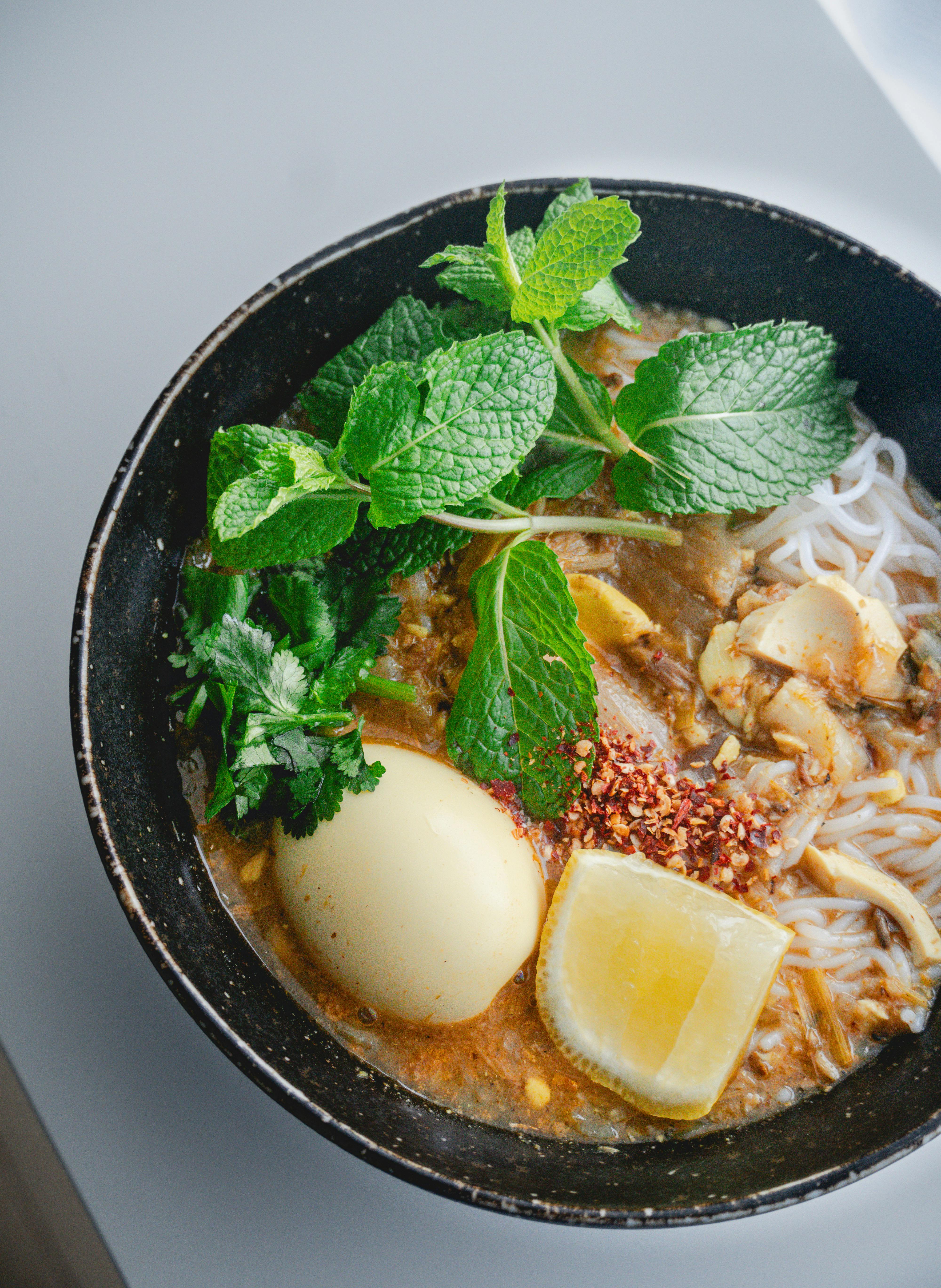
Photo: Su La Pyae / Pexels
The diets react (see scores below)
Common Ingredients
- catfish
- rice noodles
- chickpea flour
- lemongrass
- banana stem
- ginger
- garlic
- shallots
- fish sauce
- turmeric
Specific recipes may vary.
Incompatible with 6 of 11 diets
Diet Ratings
Mohinga is fundamentally incompatible with a ketogenic diet due to its primary carbohydrate sources. Rice noodles are a high-glycemic grain product that can contain 40-50g of net carbs per serving alone, instantly exceeding most keto daily limits. Chickpea flour adds additional significant net carbs (roughly 10g+ per tablespoon used as a thickener). Banana stem, while fibrous, also contributes carbohydrates. The catfish, fish sauce, lemongrass, ginger, garlic, shallots, and turmeric are all keto-friendly components, but the foundational structure of this dish — built around rice noodles and chickpea flour — makes it impossible to consume in any meaningful portion without breaking ketosis. There is no practical way to adapt a standard serving of Mohinga to keto without fundamentally deconstructing the dish.
Mohinga contains multiple animal-derived ingredients that are explicitly excluded from a vegan diet. Catfish is a fish (an animal product), and fish sauce is derived from fermented fish. Both are direct animal ingredients, making this dish entirely incompatible with vegan dietary standards. There is no ambiguity here — fish and fish-derived condiments are universally excluded by all major vegan organizations and definitions.
Mohinga contains multiple non-paleo ingredients that disqualify it clearly. Rice noodles are a grain product (rice), which is excluded from paleo. Chickpea flour is derived from chickpeas, a legume, also strictly excluded. Fish sauce typically contains added salt and sometimes preservatives, making it a processed condiment. The base protein — catfish — is paleo-approved, as are the aromatics (lemongrass, ginger, garlic, shallots, turmeric) and banana stem. However, the structural components of the dish — the noodles and the chickpea flour thickener — are foundational to Mohinga and cannot be omitted without fundamentally changing the dish. With at least two core non-paleo ingredients, the dish as traditionally prepared earns an avoid rating.
Mohinga aligns well with several Mediterranean diet principles: catfish is a lean fish providing the encouraged 2-3 weekly servings of seafood, and the dish is rich in plant-based aromatics and vegetables including lemongrass, banana stem, ginger, garlic, shallots, and turmeric. Chickpea flour adds legume-based protein and fiber, both strongly encouraged. However, the base uses rice noodles (refined grain, not whole grain), and fish sauce adds significant sodium — a processed condiment not typical of Mediterranean cooking. The dish contains no olive oil, relying instead on other cooking fats typical of Burmese cuisine. The overall profile is wholesome and fish-forward, but the refined noodles and absence of Mediterranean-canonical fats keep it from a full approval.
Some Mediterranean diet interpreters focusing on the traditional diet's fish-forward, vegetable-rich, legume-inclusive principles might approve this dish more generously, noting that rice noodles are used in some Mediterranean-adjacent cuisines and the overall ingredient quality is high. Modern clinical Mediterranean diet frameworks, however, consistently prioritize whole grains and olive oil as non-negotiable pillars.
Mohinga is fundamentally incompatible with the carnivore diet. While catfish and fish sauce are acceptable animal-derived ingredients, the dish is overwhelmingly composed of plant-based components. Rice noodles are a grain product, chickpea flour is a legume, and banana stem is a plant vegetable — all strictly excluded. The aromatics (lemongrass, ginger, garlic, shallots) and turmeric are all plant-derived spices and alliums. The base of the dish is essentially a carbohydrate-heavy, plant-dominant soup that happens to contain fish. There is no version of this dish that could be considered carnivore-compatible without a complete reconstruction that would no longer resemble Mohinga.
Mohinga contains rice noodles, which are a grain-based product (rice is explicitly excluded on Whole30). Additionally, chickpea flour is made from chickpeas, which are legumes — also explicitly excluded. These two ingredients alone make this dish non-compliant. The remaining ingredients (catfish, lemongrass, banana stem, ginger, garlic, shallots, fish sauce, turmeric) are generally Whole30-compatible, but the grain and legume components are disqualifying.
Mohinga contains multiple high-FODMAP ingredients that make it unsuitable during the elimination phase. Garlic is one of the highest-FODMAP foods tested by Monash University, containing significant fructans even in small amounts. Shallots are also high in fructans and effectively equivalent to onion in FODMAP content. Chickpea flour is high in GOS (galacto-oligosaccharides) and fructans, making it problematic at any standard culinary quantity used as a thickener. Banana stem (banana blossom/pith) has limited Monash testing but is generally considered high-FODMAP due to its fructan and GOS content. These four ingredients collectively make the dish a clear avoid. The remaining ingredients — catfish, rice noodles, lemongrass, ginger, fish sauce, and turmeric — are individually low-FODMAP and would otherwise be compatible with the elimination diet. However, the combination of garlic, shallots, chickpea flour, and banana stem creates an insurmountable FODMAP load that cannot be mitigated by portion control alone.
Mohinga is a nutrient-rich Burmese fish noodle soup with several DASH-friendly components: catfish is a lean protein, chickpea flour adds fiber and plant-based protein, banana stem is high in fiber and potassium, and aromatics like lemongrass, ginger, garlic, and turmeric offer anti-inflammatory benefits with no sodium penalty. Rice noodles are refined carbohydrates but not inherently prohibited by DASH. The critical concern is fish sauce, which is extremely high in sodium — a single tablespoon contains approximately 1,400–1,500mg of sodium, potentially pushing the dish well above DASH sodium limits in a single serving. Traditional Mohinga recipes use fish sauce liberally, making sodium the primary barrier to a higher rating. If fish sauce is minimized or substituted with low-sodium alternatives, the dish aligns much better with DASH principles.
NIH DASH guidelines would flag fish sauce as a high-sodium ingredient incompatible with the <2,300mg/day (or <1,500mg/day) sodium targets. However, updated clinical interpretations acknowledge that dishes with otherwise excellent nutritional profiles — lean fish, legume-based flour, fibrous vegetables — can be adapted for DASH compliance by reducing or substituting fish sauce with low-sodium soy sauce or a small amount of anchovy paste, which some DASH-oriented dietitians actively encourage rather than categorically avoiding culturally significant dishes.
Mohinga is Burma's national dish and a fish-based soup with a mixed Zone profile. On the positive side, catfish is a lean protein source that fits well into Zone protein blocks, and the aromatic base (lemongrass, ginger, garlic, shallots, turmeric) contributes polyphenols and anti-inflammatory compounds that Sears would applaud. Banana stem is a low-calorie, high-fiber vegetable component that is Zone-friendly. However, the dish's primary carbohydrate source is rice noodles, which are high-glycemic and an 'unfavorable' Zone carb — they spike insulin and make macro balancing difficult. Chickpea flour adds moderate-glycemic carbohydrates that are more favorable than rice noodles but still require portion control. Fish sauce adds negligible calories and is largely benign in Zone terms. The overall dish skews carbohydrate-heavy relative to protein and fat, disrupting the 40/30/30 target ratio, especially given the high-GI noodle base. A Zone practitioner could make this work by significantly reducing the rice noodle portion, adding more catfish, and including a source of monounsaturated fat (e.g., a small amount of olive oil or avocado on the side), but as traditionally prepared it does not naturally hit Zone ratios.
Some Zone practitioners following Sears' later writings on polyphenols and anti-inflammatory eating might view Mohinga more favorably than a strict block analysis suggests. The turmeric, ginger, lemongrass, and garlic provide a rich polyphenol load that Sears' post-2010 work emphasizes as central to Zone living. Additionally, chickpea flour has a lower glycemic index than wheat flour and provides some protein, partially offsetting the rice noodle concern. If rice noodles are reduced to a garnish portion, the dish could function as a reasonable Zone meal built around catfish.
Mohinga is Burma's national dish and presents a genuinely strong anti-inflammatory profile overall. Catfish is a lean freshwater fish providing protein and modest omega-3 fatty acids — not as rich as fatty fish like salmon, but meaningfully better than red meat. Turmeric is among the most researched anti-inflammatory spices, with curcumin demonstrating consistent reductions in CRP and IL-6. Lemongrass, ginger, and garlic are all well-supported anti-inflammatory aromatics. Shallots contribute quercetin and other flavonoids. Banana stem (the inner core of the banana trunk) is a fiber-rich ingredient used in Southeast Asian cooking with emerging evidence of antioxidant and anti-inflammatory activity. Chickpea flour adds plant-based protein and fiber, aligning well with the legume emphasis in anti-inflammatory frameworks. Fish sauce contains sodium in significant amounts and is highly processed, which is a mild concern, but small quantities as a seasoning are generally accepted in anti-inflammatory eating. Rice noodles are refined and low in fiber, which is the main nutritional weak point — they contribute empty carbohydrates and could modestly raise glycemic load. However, in the context of a broth-heavy soup with abundant aromatics and lean protein, the overall dish profile is clearly net anti-inflammatory. The confidence is medium rather than high primarily because catfish is a somewhat debated protein in anti-inflammatory contexts — some practitioners rank it lower than oily fish due to its modest omega-3 content and higher omega-6 ratio compared to salmon or mackerel.
Most anti-inflammatory frameworks would approve catfish as a lean fish protein, but some stricter anti-inflammatory practitioners (including those aligned with Dr. Barry Sears' Zone approach) note that farmed catfish has a less favorable omega-6 to omega-3 ratio than fatty wild fish and does not confer the same anti-inflammatory benefit. The rice noodles also draw mild criticism from low-glycemic anti-inflammatory advocates who prefer whole grain or legume-based noodles.
Mohinga is a nutrient-dense Burmese fish soup with a strong GLP-1 profile overall. Catfish provides lean, easily digestible protein that supports the primary goal of muscle preservation during weight loss. Chickpea flour adds meaningful fiber and some additional protein, while banana stem is notably high in fiber and water content — both valuable for GLP-1 patients combating constipation and reduced thirst sensation. Lemongrass, ginger, turmeric, garlic, and shallots are anti-inflammatory, easy to digest in typical soup quantities, and add nutritional value without significant calories or fat. The broth base is hydrating and easy on a slowed digestive system. The main limiting factor is the rice noodles: they are refined carbohydrates with low protein and fiber density, contributing empty starch calories relative to a patient's reduced appetite budget. Fish sauce contributes high sodium, which can be a concern for some patients. Overall the dish is broth-based, low in fat, protein-forward via catfish and chickpea flour, and easy to digest — making it a generally sound choice, with portion size of noodles being the key variable.
Some GLP-1-focused dietitians would flag the rice noodles as a meaningful drawback, particularly for patients with limited appetite capacity, recommending they reduce the noodle portion or substitute with a higher-fiber noodle to improve nutrient density per calorie. The high sodium from fish sauce may also draw concern from clinicians managing patients with comorbid hypertension, which is common in the GLP-1 patient population.
*See how scores were generated at our methodology page.
Nutritional profile
Six traits that cut across every diet.
Fiber & Plants
How much whole-plant food and fiber it delivers.
Healthy Fats
The quality of its fats (unsaturated, omega-3).
Whole / Unprocessed
How close it is to its natural, unprocessed form.
Gut Gentle
How easy it is on digestion (low FODMAP, few irritants).
Low Glycemic
How little it spikes your blood sugar.
Protein Density
How much protein it packs per calorie.
Controversy Index
Higher controversy = more disagreement between diets.
Diet-Specific Tips
 Mediterranean — 6/10
View tips
- Catfish is a lean fish, supporting the Mediterranean goal of 2-3 fish servings per week
- Chickpea flour adds legume-based nutrition, a Mediterranean staple
- Rich in plant-based aromatics and vegetables (lemongrass, banana stem, ginger, garlic, shallots, turmeric)
- Rice noodles are a refined grain, not preferred over whole grains in Mediterranean guidelines
- Fish sauce is a high-sodium processed condiment, not aligned with Mediterranean principles
- No olive oil used; Burmese cooking fats are not Mediterranean-canonical
 DASH — 5/10
View tips
- Fish sauce is very high in sodium (~1,400–1,500mg per tablespoon), the primary DASH concern
- Catfish is a lean, DASH-approved protein source
- Chickpea flour provides plant-based protein and fiber, consistent with DASH
- Banana stem is rich in fiber and potassium, supporting DASH nutrient goals
- Rice noodles are refined grains; whole-grain noodles would better align with DASH
- Aromatics (ginger, garlic, lemongrass, turmeric) add flavor without sodium, supporting sodium reduction strategies
- Low-sodium adaptation (reducing or replacing fish sauce) could elevate score to 7–8
 Zone — 5/10
View tips
- Catfish is a lean, Zone-favorable protein source
- Rice noodles are high-glycemic 'unfavorable' Zone carbohydrates that dominate the carb block
- Chickpea flour is moderate-glycemic and adds some protein but still skews carb-heavy
- Banana stem is a fiber-rich, low-glycemic vegetable — Zone-positive
- Aromatic base (turmeric, ginger, lemongrass, garlic) provides strong anti-inflammatory polyphenol content
- Dish as traditionally prepared is carbohydrate-heavy, disrupting the 40/30/30 ratio
- Little to no monounsaturated fat present — Zone fat block would need supplementation
- Fish sauce is a low-calorie condiment with minimal macro impact
 Anti-Inflammatory — 8/10
View tips
- Turmeric: potent anti-inflammatory spice with strong curcumin evidence
- Ginger and garlic: well-documented anti-inflammatory aromatics
- Catfish: lean fish protein with modest omega-3s, less optimal than fatty fish
- Chickpea flour: legume-based, adds fiber and plant protein
- Banana stem: fiber-rich, antioxidant activity
- Lemongrass and shallots: flavonoid and polyphenol contributors
- Rice noodles: refined carbohydrate, low fiber — main nutritional weakness
- Fish sauce: high sodium, processed — minor concern in typical serving quantities
 GLP-1 Friendly — 7/10
View tips
- Catfish is a lean, low-fat protein source that supports muscle preservation and is easy to digest
- Chickpea flour adds fiber and plant protein, strengthening the dish's nutritional profile
- Banana stem is high in fiber and water content, directly supporting GLP-1 side effect management (constipation, hydration)
- Broth-based format is hydrating and gentle on a slowed digestive system
- Rice noodles are refined carbohydrates with low protein and fiber density — the primary nutritional weakness
- Fish sauce contributes high sodium; relevant for patients with hypertension comorbidity
- Anti-inflammatory aromatics (turmeric, ginger, lemongrass) add micronutrient value with minimal caloric cost
- Low fat content aligns well with GLP-1 tolerability guidance
- Portion size of noodles is the key variable — a smaller noodle portion improves the overall score meaningfully