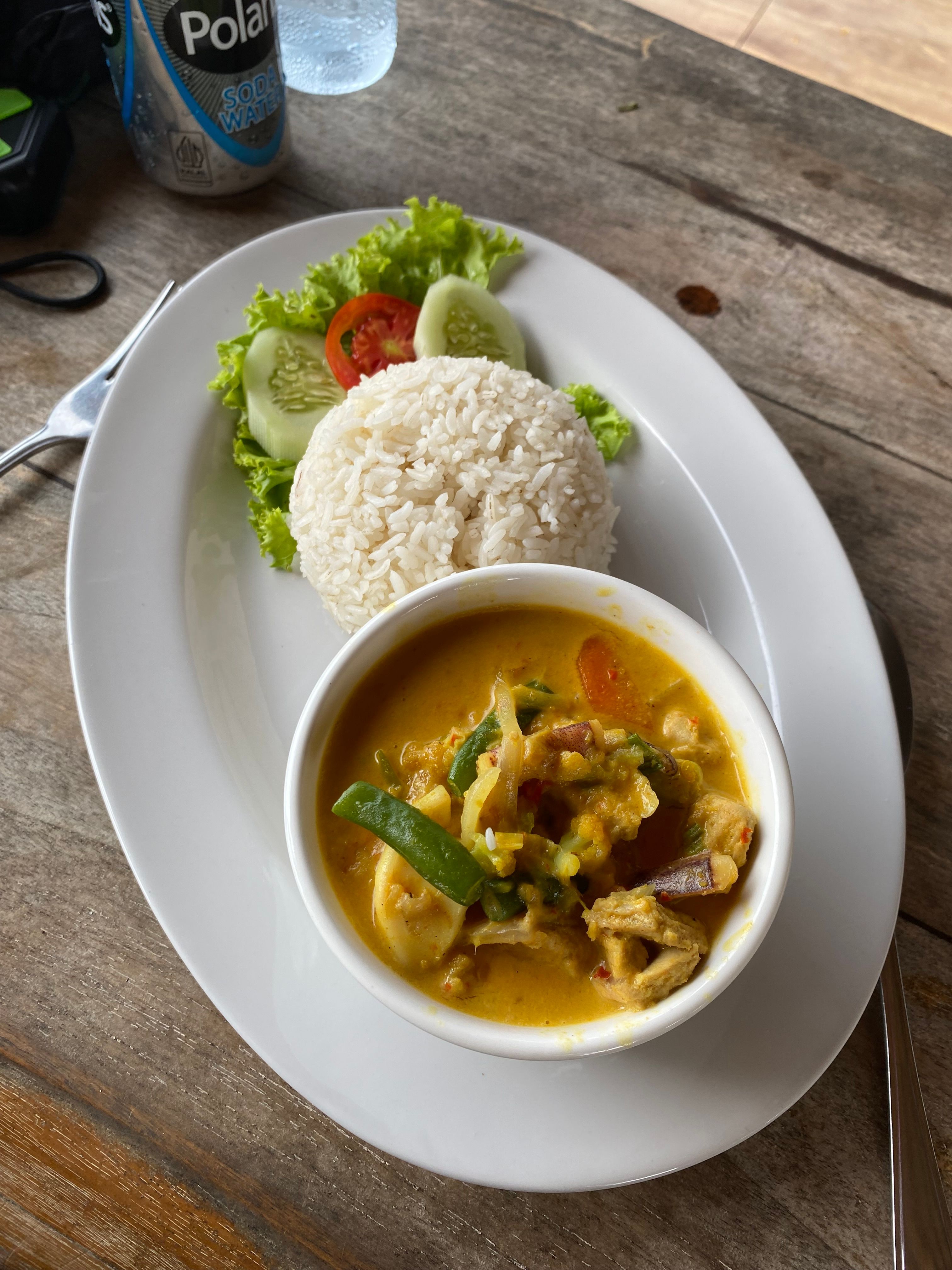
Photo: Jessica Van Ord / Pexels
Burmese
Mont Hin Gar
The diets react (see scores below)
Common Ingredients
- catfish
- rice noodles
- lemongrass
- banana stem
- chickpea flour
- onion
- garlic
- ginger
- turmeric
- fish sauce
Specific recipes may vary.
Incompatible with 6 of 11 diets
Diet Ratings
Mont Hin Gar (Mohinga) is Myanmar's national dish and a carbohydrate-heavy soup. The two primary offenders are rice noodles and chickpea flour, both of which are high-carb ingredients that make this dish fundamentally incompatible with ketogenic eating. Rice noodles are a grain-based product contributing roughly 40-50g of net carbs per standard serving, instantly exceeding or maxing out the entire daily keto carb budget. Chickpea flour adds another significant carb load (approximately 10-13g net carbs per 2 tablespoons used as a thickener). While the catfish, fish sauce, lemongrass, garlic, ginger, turmeric, and onion are either keto-friendly or low-carb in typical amounts, they cannot offset the structural carbohydrate load of the noodles and chickpea flour. Banana stem also contributes modest carbs. This dish cannot be meaningfully portion-controlled into keto compliance without fundamentally altering its character — removing the rice noodles and chickpea flour would make it a different dish entirely.
Mont Hin Gar (Mohinga) is Burma's national dish and contains multiple animal-derived ingredients that make it entirely incompatible with a vegan diet. Catfish is a fish — a clear animal product excluded under all vegan definitions. Fish sauce, a fermented condiment made from fish and salt, is a second animal-derived ingredient. Both are foundational to the dish's flavor profile, not incidental additives. The remaining ingredients (rice noodles, lemongrass, banana stem, chickpea flour, onion, garlic, ginger, turmeric) are plant-based, but the presence of catfish and fish sauce alone is sufficient to render this dish a firm 'avoid' with no ambiguity.
Mont Hin Gar contains multiple non-paleo ingredients that disqualify it under any interpretation of the diet. Rice noodles are a grain-based product — grains are universally excluded from paleo. Chickpea flour is derived from chickpeas, a legume, which is also universally excluded. Fish sauce typically contains added salt and sometimes sugar or preservatives, making it a processed condiment that falls outside paleo guidelines. The base protein (catfish) and aromatics (lemongrass, banana stem, onion, garlic, ginger, turmeric) are paleo-approved, but the disqualifying ingredients are structural to the dish — not optional garnishes — making the dish as a whole firmly non-paleo.
Mohinga aligns well with Mediterranean diet principles: catfish is a lean fish providing healthy omega-3 fatty acids (fulfilling the 2-3x weekly fish recommendation), aromatics like lemongrass, onion, garlic, ginger, and turmeric are whole plant foods with anti-inflammatory properties, banana stem adds fiber and plant bulk, and chickpea flour contributes legume-based protein and fiber. Fish sauce adds sodium but is used sparingly as a flavoring. The main concern is rice noodles, which are refined carbohydrates rather than whole grains — a mild departure from Mediterranean ideals. Overall, this is a whole-food, plant-forward fish soup with minimal processing.
Some Mediterranean diet interpretations would flag the refined rice noodles more strongly, preferring whole grain alternatives like whole wheat pasta or farro. Traditional Mediterranean dietary patterns do not include rice noodles, and modern clinical guidelines (e.g., PREDIMED-based recommendations) emphasize whole grains exclusively; moderate consumption or substitution with whole grain noodles would align more closely.
Mont Hin Gar is a traditional Burmese fish noodle soup that is overwhelmingly plant-based in composition despite containing catfish as its protein. The dish includes rice noodles (grain-based carbohydrate), banana stem (plant fiber), chickpea flour (legume), onion, garlic, ginger, turmeric, and lemongrass — all of which are explicitly excluded on the carnivore diet. The only carnivore-compatible ingredients are the catfish and fish sauce. The dish cannot be modified in any meaningful way and remain recognizable; it is fundamentally a plant-heavy preparation. Even the most lenient carnivore practitioners who permit fish and spices would reject this due to the rice noodles, chickpea flour, and banana stem, which represent major plant-food categories (grains, legumes, and fibrous plant matter) that are universally excluded across all carnivore tiers.
Mont Hin Gar contains two excluded ingredients: rice noodles (a grain product derived from rice, which is explicitly excluded on Whole30) and chickpea flour (a legume-based flour, as chickpeas are legumes and are excluded). The remaining ingredients — catfish, lemongrass, banana stem, onion, garlic, ginger, turmeric, and fish sauce — are all generally Whole30-compatible (fish sauce should be checked for added sugar or other additives, but is commonly accepted). However, the presence of both rice noodles and chickpea flour makes this dish non-compliant as traditionally prepared.
Mont Hin Gar contains multiple high-FODMAP ingredients that make it unsuitable during the elimination phase. Onion and garlic are among the highest-FODMAP foods tested by Monash University, both rich in fructans, and they are core aromatics in this dish used in meaningful quantities. Chickpea flour (besan) is high in GOS (galacto-oligosaccharides) and is problematic even in small amounts used as a thickener. Banana stem (banana blossom/inner pith) has not been well-tested by Monash, but banana stem is structurally different from ripe banana and its FODMAP profile is uncertain. The remaining ingredients are largely low-FODMAP: catfish (plain fish protein, no FODMAPs), rice noodles (low-FODMAP), lemongrass (low-FODMAP at standard amounts), ginger (low-FODMAP at ≤1 tsp), turmeric (low-FODMAP), and fish sauce (low-FODMAP at small servings of 2 tbsp or less). However, the combination of onion, garlic, and chickpea flour creates a high-FODMAP baseline that cannot be avoided in a standard preparation of this dish. There is no practical way to order or prepare authentic Mont Hin Gar without these foundational ingredients.
Mont Hin Gar (Mohinga) features several DASH-friendly ingredients — catfish is a lean fish high in protein and omega-3s, banana stem is a fiber-rich vegetable, chickpea flour provides plant-based protein and magnesium, and aromatics like turmeric, ginger, lemongrass, onion, and garlic are all DASH-compatible. However, fish sauce is the critical limiting factor: it is extremely high in sodium (approximately 1,400–1,500mg per tablespoon), and Mohinga typically uses it generously. A single serving could easily contribute 800–1,200mg of sodium, making portion control essential. Rice noodles are refined carbohydrates with limited fiber, which is less ideal than whole grain alternatives. The dish's overall nutritional profile is solid except for its sodium burden, placing it firmly in the 'caution' zone rather than 'avoid,' since the underlying food components are largely DASH-aligned. Reducing fish sauce or substituting low-sodium alternatives would significantly improve the score.
NIH DASH guidelines flag high-sodium condiments like fish sauce categorically, which would push this dish toward 'avoid' for low-sodium DASH (<1,500mg/day) adherents. However, updated clinical interpretations note that the lean fish base, anti-inflammatory spices, and fiber from banana stem and chickpea flour make this nutritionally superior to most high-sodium dishes, and some DASH-oriented dietitians would allow it occasionally in a standard DASH plan (<2,300mg/day) with mindful portioning.
Mont Hin Gar is a nutritionally rich Burmese fish soup with several Zone-favorable components but requires significant modification to achieve the 40/30/30 macro balance. Catfish is a lean, favorable Zone protein source with good omega-3 content. The aromatics (lemongrass, onion, garlic, ginger, turmeric) are excellent — low-glycemic, anti-inflammatory, and polyphenol-rich, aligning well with Sears' later anti-inflammatory framework. Banana stem (banana blossom/pith) is a low-calorie, fiber-rich vegetable that is Zone-friendly. Fish sauce adds sodium but negligible calories. The two problematic elements are rice noodles and chickpea flour. Rice noodles are a higher-glycemic refined carbohydrate — an 'unfavorable' Zone carb that will spike blood sugar and challenge the 40% carb target without creating the right hormonal response. Chickpea flour is a moderate-GI carb but also contributes meaningful protein, making block calculation more complex. A traditional serving likely skews carb-heavy (50-60% calories from carbs) due to the noodle base. To bring this into Zone compliance, portion size of noodles must be strictly controlled (perhaps 1/2 cup cooked per serving) and supplemented with more vegetables. The dish's anti-inflammatory ingredients (turmeric, ginger, fish) earn credit under Sears' omega-3/polyphenol emphasis.
Some Zone practitioners, especially those following Sears' later 'anti-inflammatory Zone' framework, might rate this slightly higher because the soup's dominant anti-inflammatory profile (turmeric, omega-3-rich catfish, ginger) partially offsets the unfavorable carb sources. Additionally, if rice noodles are replaced with zucchini noodles or the portion is kept to one small block of noodles, Zone adherents could upgrade this to a solid 6-7. The chickpea flour thickener, while adding glycemic load, also contributes protein blocks, partially self-correcting the carb imbalance.
Mohinga (Mont Hin Gar) is a Burmese fish noodle soup with a remarkably strong anti-inflammatory ingredient profile. Catfish provides lean protein and meaningful omega-3 fatty acids, though at lower levels than fatty fish like salmon or sardines. The spice base — turmeric, ginger, garlic, and lemongrass — is an anti-inflammatory powerhouse: turmeric's curcumin inhibits NF-κB and reduces CRP/IL-6; ginger contains gingerols with COX-2 inhibitory activity; garlic's allicin compounds have well-documented anti-inflammatory effects; lemongrass contains citral and flavonoids with antioxidant properties. Banana stem (banana blossom/trunk pith) is a high-fiber, low-calorie plant food with prebiotic potential that supports gut health — a critical axis of systemic inflammation. Chickpea flour adds soluble fiber and plant protein with a favorable glycemic profile compared to refined starches. Onion contributes quercetin, a potent flavonoid. Rice noodles are the main neutral-to-cautionary element: they are refined carbohydrates with little fiber or nutritive value, and in large quantities could blunt the otherwise excellent profile of this dish. Fish sauce adds sodium and should be moderated, but in typical culinary doses does not meaningfully affect inflammatory status. Overall, the dish is predominantly anti-inflammatory with a thoughtful spice base, lean fish, and functional plant foods, with rice noodles as the primary limiting factor.
Fish sauce is fermented and high in sodium, and some anti-inflammatory practitioners (particularly those focused on hypertension-inflammation links) flag high sodium intake as potentially pro-inflammatory through endothelial stress pathways. Additionally, catfish raised in some aquaculture systems may have a less favorable omega-6 to omega-3 ratio than wild-caught fish; Dr. Weil's framework emphasizes fatty, wild-caught fish, and farmed catfish's omega-3 profile is more modest, which could slightly reduce the dish's rating depending on sourcing.
Mohinga is a well-suited dish for GLP-1 patients. Catfish provides a lean, easily digestible protein source with favorable omega-3 content. Chickpea flour adds meaningful fiber and additional plant-based protein. Banana stem is a high-fiber, low-calorie vegetable that supports digestion and helps counter GLP-1-related constipation. Lemongrass, turmeric, ginger, garlic, and onion are anti-inflammatory, gentle on the stomach in typical culinary amounts, and nutritionally dense per calorie. Fish sauce adds sodium but in small quantities typical of seasoning. Rice noodles are refined carbohydrates with modest fiber, but in a soup context they are portion-controllable and easy to digest — important given slowed gastric emptying. The broth base supports hydration. Fat content is naturally low given the cooking method (no frying, no heavy oils). Overall this is a nutrient-dense, protein-forward, fiber-rich, low-fat soup that works well in small portions.
Some GLP-1-focused dietitians may flag the rice noodles as refined carbohydrates that add glycemic load without meaningful fiber or protein contribution, and would recommend substituting with a smaller portion or a higher-fiber noodle alternative. Fish sauce sodium content may also concern clinicians managing patients with hypertension or fluid retention alongside GLP-1 therapy.
*See how scores were generated at our methodology page.
Nutritional profile
Six traits that cut across every diet.
Fiber & Plants
How much whole-plant food and fiber it delivers.
Healthy Fats
The quality of its fats (unsaturated, omega-3).
Whole / Unprocessed
How close it is to its natural, unprocessed form.
Gut Gentle
How easy it is on digestion (low FODMAP, few irritants).
Low Glycemic
How little it spikes your blood sugar.
Protein Density
How much protein it packs per calorie.
Controversy Index
Higher controversy = more disagreement between diets.
Diet-Specific Tips
 Mediterranean — 8/10
View tips
- Catfish as lean fish satisfies Mediterranean fish consumption guidelines
- Chickpea flour adds valuable legume-based nutrition
- Aromatics (garlic, onion, ginger, turmeric, lemongrass) are whole anti-inflammatory plant foods
- Banana stem provides plant-based fiber bulk
- Rice noodles are refined grains, not whole grain — mild negative factor
- Fish sauce is high in sodium but used as a condiment in small amounts
- No red meat, added sugars, or highly processed ingredients
 DASH — 5/10
View tips
- Fish sauce is very high in sodium (~1,400mg/tbsp), significantly raising the dish's sodium load
- Catfish is a lean protein and DASH-approved fish source
- Banana stem is a high-fiber, potassium-rich vegetable aligned with DASH principles
- Chickpea flour adds plant-based protein, fiber, and magnesium
- Turmeric, ginger, lemongrass, garlic, and onion are all DASH-compatible aromatics
- Rice noodles are refined carbohydrates with low fiber — whole grain noodles would be preferable
- Overall sodium content per serving likely exceeds DASH targets depending on fish sauce quantity
- Low-sodium fish sauce or reduced-quantity preparation would improve DASH compatibility significantly
 Zone — 5/10
View tips
- Catfish is a lean, Zone-favorable protein with beneficial omega-3 fatty acids
- Rice noodles are an 'unfavorable' higher-glycemic carbohydrate that can disrupt insulin balance
- Chickpea flour adds carbohydrate load but also contributes protein, complicating block calculations
- Banana stem is a low-glycemic, fiber-rich vegetable — Zone favorable
- Turmeric, ginger, garlic, and lemongrass are anti-inflammatory polyphenol sources strongly endorsed by Sears
- Traditional serving likely skews 50-60% calories from carbs, requiring portion control to Zone-balance
- No added oils mean fat blocks must come from elsewhere in the meal
- Overall dish can be Zone-adapted with reduced noodle portion and added monounsaturated fat source
 Anti-Inflammatory — 8/10
View tips
- Turmeric (curcumin) — potent anti-inflammatory, inhibits NF-κB and reduces CRP/IL-6
- Ginger — gingerols with COX-2 inhibitory and antioxidant activity
- Garlic — allicin compounds, well-documented anti-inflammatory and immune-modulating effects
- Catfish — lean protein with moderate omega-3s; lower than fatty fish but still beneficial
- Lemongrass — citral and flavonoids with antioxidant and mild anti-inflammatory properties
- Chickpea flour — soluble fiber, plant protein, low glycemic index, supports gut microbiome
- Banana stem — high fiber, prebiotic potential, supports gut-inflammation axis
- Onion — quercetin (flavonoid), antioxidant activity
- Rice noodles — refined carbohydrate, low fiber; primary pro-inflammatory limiting factor in this dish
- Fish sauce — high sodium; acceptable in culinary quantities but warrants moderation
 GLP-1 Friendly — 8/10
View tips
- Catfish is a lean, easily digestible fish protein — supports muscle preservation
- Chickpea flour adds plant protein and soluble fiber — directly addresses GLP-1 fiber priority
- Banana stem is a high-fiber vegetable rarely found in Western diets — strong digestive benefit
- Broth base supports hydration — important given reduced thirst on GLP-1 medications
- Rice noodles are refined carbs with low fiber — modest drawback, portion-controllable in soup
- Anti-inflammatory spice profile (turmeric, ginger, lemongrass) is well-tolerated and nutrient-dense
- Low fat cooking method — no frying, no heavy added oils
- Fish sauce adds sodium — relevant for patients with comorbid hypertension