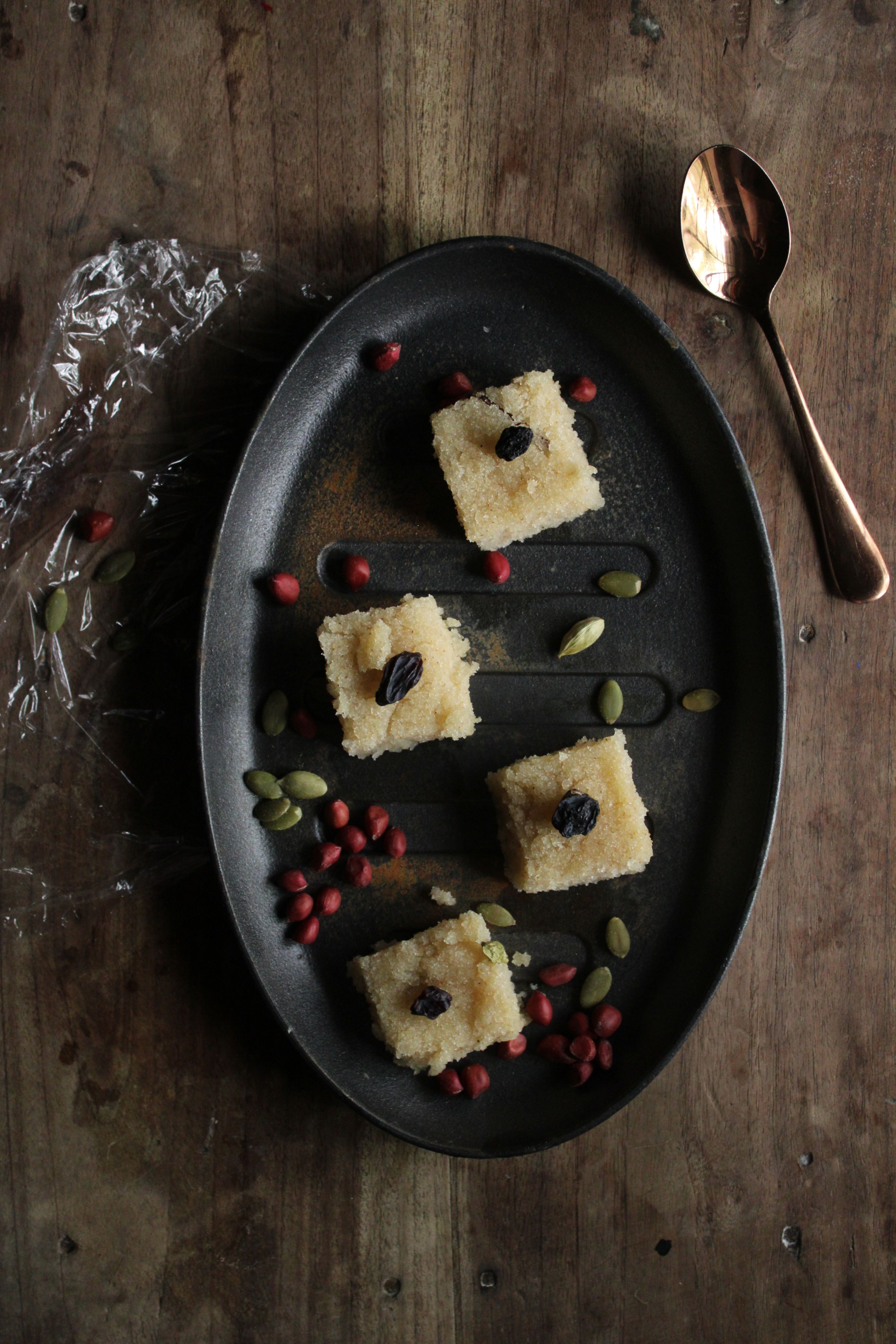
Photo: Jahra Tasfia Reza / Pexels
Burmese
Sanwin Makin
The diets react (see scores below)
Common Ingredients
- semolina
- coconut milk
- butter
- sugar
- eggs
- poppy seeds
- raisins
Specific recipes may vary.
Incompatible with 11 of 11 diets
Diet Ratings
Sanwin Makin is a Burmese semolina cake that is fundamentally incompatible with ketogenic dietary principles. Semolina is a high-carb grain flour (approximately 72g net carbs per 100g), and the dish is further loaded with added sugar and raisins (which are concentrated sugar). These three ingredients alone make this dish an extreme carbohydrate bomb. There is no realistic portion size that would allow this snack to fit within the 20-50g daily net carb limit of a ketogenic diet. While coconut milk, butter, and eggs are keto-friendly components, they are vastly outweighed by the incompatible ingredients.
Sanwin Makin (Burmese semolina cake) contains multiple animal-derived ingredients that disqualify it from a vegan diet. Butter is a dairy product, and eggs are a direct animal product — both are clearly excluded under all vegan standards. While semolina, coconut milk, sugar, poppy seeds, and raisins are all plant-based, the presence of butter and eggs makes this dish non-vegan. A vegan version could theoretically be made by substituting vegan butter (e.g., coconut oil) and a flax or chia egg replacer, but the traditional recipe as listed is not vegan-compatible.
Sanwin Makin is a Burmese semolina cake that is fundamentally incompatible with the paleo diet. Semolina is a wheat-derived grain product — one of the clearest violations of paleo principles — and sugar is refined and excluded. Butter is a dairy product discouraged in strict paleo. While eggs, coconut milk, poppy seeds, and raisins are individually paleo-compatible, the foundation of this dish (semolina and sugar) makes it firmly off-limits. There is no meaningful paleo substitution possible without completely reconstructing the dish.
Sanwin Makin is a Burmese semolina cake that conflicts with Mediterranean diet principles on multiple fronts. The primary ingredient is semolina used as a refined/sweetened base rather than a whole grain, combined with coconut milk (a saturated fat not traditional to Mediterranean cuisine), butter (another saturated fat displacing olive oil), and significant added sugar. Together, these ingredients create a high-sugar, high-saturated-fat dessert snack that runs counter to the Mediterranean emphasis on whole grains, olive oil as the primary fat, and minimal added sugars. While eggs and poppy seeds have some Mediterranean compatibility, they are minor components in a dish dominated by problematic ingredients.
Sanwin Makin is a Burmese semolina cake that is fundamentally incompatible with the carnivore diet. The primary ingredient is semolina, a wheat-derived grain, which is strictly excluded. Coconut milk is a plant-based liquid, sugar is a processed plant-derived sweetener, poppy seeds are plant seeds, and raisins are dried fruit — all categorically off-limits. While the dish does contain eggs and butter (animal-derived ingredients), these are minor components in a dish that is overwhelmingly plant-based and grain-based. No amount of eggs or butter can redeem a food whose foundation is wheat grain and sugar. This is essentially a dessert cake with zero carnivore applicability.
Sanwin Makin (Burmese semolina cake) contains multiple excluded ingredients. Semolina is a wheat-derived grain product, which is explicitly excluded on Whole30. Sugar is an added sweetener, also explicitly excluded. Butter (regular, not ghee or clarified butter) is a dairy product and excluded. Additionally, this dish is a cake/baked good, which falls squarely under the 'no recreating baked goods/junk food' rule even if ingredients were otherwise compliant. Three separate exclusion violations make this a clear avoid.
Sanwin Makin is a Burmese semolina cake with several high-FODMAP concerns. The primary issue is semolina, which is made from durum wheat and is therefore high in fructans — a key FODMAP to avoid during elimination. While the amount per serving may vary, semolina is the dominant ingredient in this dish and cannot be consumed at any reasonable serving without exceeding fructan thresholds. Raisins are another significant concern: dried fruit is concentrated in fructose and polyols (sorbitol), and even small amounts (about 1 tablespoon/13g) can be high-FODMAP. Coconut milk is low-FODMAP at modest servings (up to 1/2 cup), butter is low-FODMAP, eggs are low-FODMAP, sugar is low-FODMAP, and poppy seeds are generally considered low-FODMAP. However, the combination of semolina (wheat-based, high fructans) as the base ingredient and raisins makes this dish high-FODMAP at any standard serving during the elimination phase.
Some FODMAP practitioners note that cooking and processing can slightly alter FODMAP content, but Monash University has not specifically tested Sanwin Makin; the fructan load from semolina as a primary ingredient is well-established as high-FODMAP at standard cake-serving quantities, leaving little practical room for debate on the wheat component.
Sanwin Makin is a Burmese semolina cake that is fundamentally incompatible with DASH diet principles. The dish is built around coconut milk and butter as primary fat sources — both high in saturated fat, which DASH explicitly limits. Coconut milk is derived from a tropical oil source (coconut), which NIH/NHLBI DASH guidelines categorically discourage. Added sugar is a central ingredient, placing this in the 'sweets' category that DASH limits to ≤5 servings per week, and a dessert/snack portion likely constitutes a significant portion of that allowance. The semolina is a refined grain rather than a whole grain. Raisins and poppy seeds offer minor nutritional positives (potassium, fiber, minerals), and eggs provide some lean protein, but these do not offset the substantial saturated fat and sugar load. This dish is essentially a dessert cake and does not align with DASH's emphasis on whole grains, low-fat dairy, and limited sweets.
NIH DASH guidelines are clear on limiting saturated fat and added sugars, which dominate this dish. However, some updated clinical interpretations note that recent meta-analyses have questioned whether saturated fat from whole food sources like coconut universally raises cardiovascular risk — a minority of DASH-aligned practitioners may view occasional small portions less harshly, though no mainstream DASH guideline supports this position.
Sanwin Makin is a Burmese semolina cake that is essentially a dessert snack built almost entirely from Zone-unfavorable ingredients. Semolina is a refined, high-glycemic grain carbohydrate with very little fiber, making it an 'unfavorable' carb that spikes blood sugar rapidly. Coconut milk is high in saturated fat. Butter adds more saturated fat. Sugar is a pure high-glycemic carbohydrate with no nutritional value in Zone terms. Raisins are explicitly flagged as 'unfavorable' in Zone literature due to their extremely high sugar density. There is no lean protein source to anchor a Zone block structure — eggs provide some protein but are overwhelmed by the fat and carbohydrate load. The macronutrient ratio is heavily skewed toward carbohydrates (high-glycemic) and saturated fats, with minimal lean protein, making it essentially impossible to incorporate into a Zone-balanced meal without fundamentally changing the dish. This is the type of processed, sugary, high-GI snack that Zone directly discourages.
Sanwin Makin is a Burmese semolina cake with a strongly pro-inflammatory nutritional profile. Semolina (refined wheat) is a high-glycemic refined carbohydrate that spikes blood sugar and promotes inflammatory markers. Sugar is added in significant quantity, compounding the glycemic load. Butter contributes saturated fat, which anti-inflammatory guidelines consistently flag as pro-inflammatory at regular consumption levels. Coconut milk, while containing some medium-chain triglycerides, is high in saturated fat and provides no meaningful anti-inflammatory offset at the quantities used here. Eggs offer modest neutral-to-moderate properties but cannot counterbalance the overall profile. Poppy seeds and raisins provide minor antioxidants and minerals, but raisins add concentrated simple sugars. This dish is essentially a refined-carbohydrate, high-sugar, high-saturated-fat dessert/snack with no meaningful anti-inflammatory components — a combination that research consistently links to elevated CRP and IL-6 levels.
Sanwin Makin is a Burmese semolina cake made with coconut milk, butter, and sugar as its primary ingredients. This combination creates a high-fat, high-sugar, low-protein dessert-style snack that conflicts with nearly every GLP-1 dietary priority. Semolina is a refined grain offering minimal fiber. Coconut milk and butter together deliver significant saturated fat, which worsens GLP-1 side effects including nausea, bloating, and reflux. Sugar provides empty calories with no protein or fiber payoff. Eggs contribute some protein but in quantities too small relative to the overall caloric load to meaningfully offset the dish's drawbacks. Raisins add concentrated sugar. Poppy seeds contribute negligible nutritional benefit at typical quantities. For a patient eating significantly reduced calorie volumes, this snack offers poor nutrient density per calorie and actively works against the goals of muscle preservation, GI comfort, and blood sugar stability.
*See how scores were generated at our methodology page.
Nutritional profile
Six traits that cut across every diet.
Fiber & Plants
How much whole-plant food and fiber it delivers.
Healthy Fats
The quality of its fats (unsaturated, omega-3).
Whole / Unprocessed
How close it is to its natural, unprocessed form.
Gut Gentle
How easy it is on digestion (low FODMAP, few irritants).
Low Glycemic
How little it spikes your blood sugar.
Protein Density
How much protein it packs per calorie.
Controversy Index
Higher controversy = more disagreement between diets.