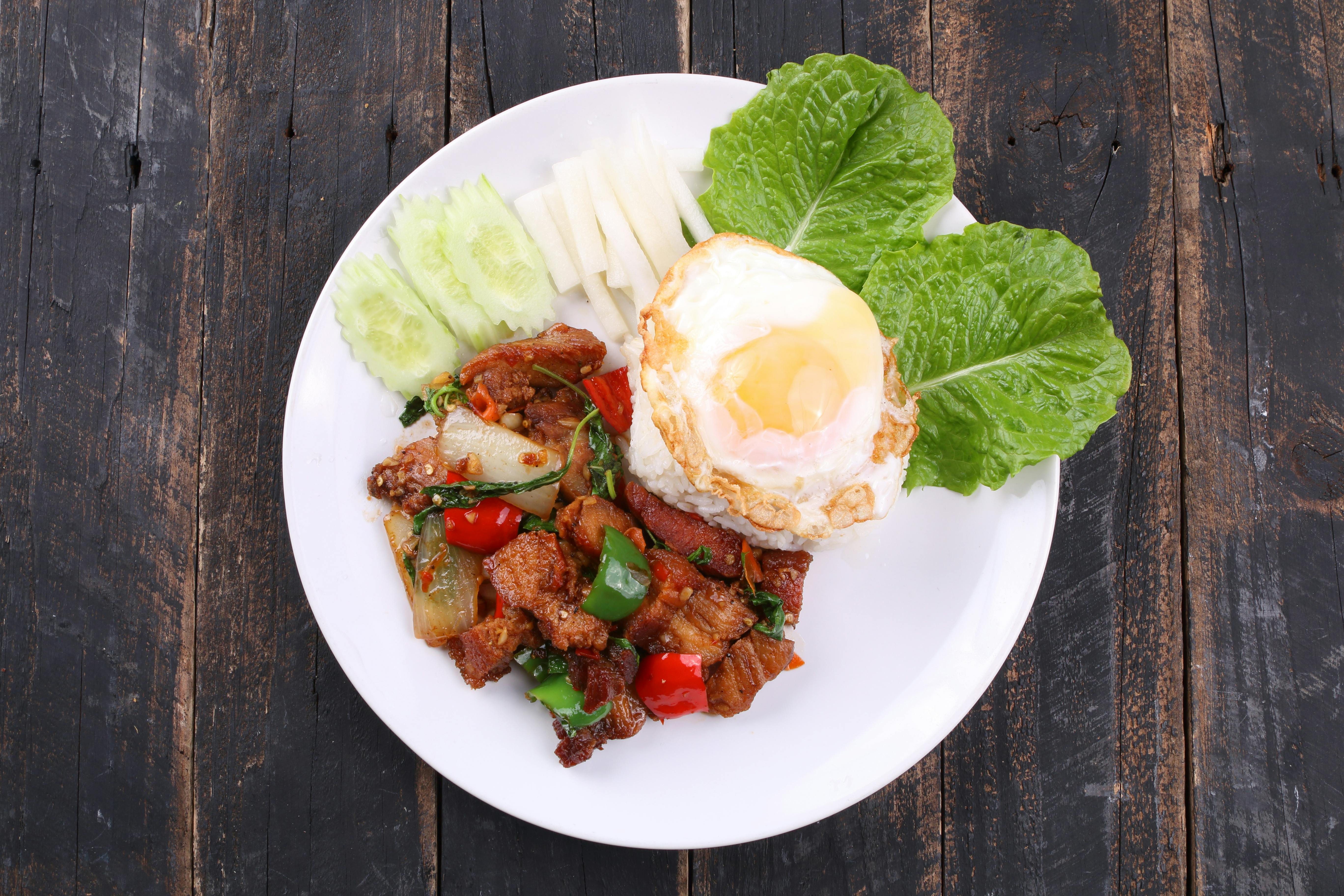
The diets react (see scores below)
Common Ingredients
- beef
- lettuce
- tomato
- onion
- garlic
- oyster sauce
- soy sauce
- black pepper
- lime
- sugar
Specific recipes may vary.
Incompatible with 6 of 11 diets
Diet Ratings
Lok Lak features beef as its primary protein, which is keto-friendly, alongside lettuce and tomato (low net carb vegetables). However, the dish is problematic due to its sauce profile: oyster sauce contains significant sugar and starch (roughly 7-8g carbs per 2 tbsp), soy sauce adds minor carbs, and added sugar is a direct keto violation. The standard preparation of Lok Lak typically involves marinating and cooking the beef in a notably sweet-savory sauce, which can push carbs well above keto thresholds for a single dish. A strict keto version would require omitting sugar entirely and replacing oyster sauce with a low-carb alternative (e.g., coconut aminos in small amounts), making the dish heavily modified. As typically prepared in restaurants or homes, this dish is borderline — the base ingredients are fine but the sauce as standardly made conflicts with ketosis.
Some lazy keto practitioners argue that the portion of sauce per serving is small enough that net carbs remain within daily limits, particularly if sugar is reduced or substituted, making it an acceptable occasional meal with portion control. Strict keto adherents counter that added sugar in any amount is a non-starter and oyster sauce is categorically incompatible.
Lok Lak contains beef as its primary protein, which is a direct animal product and fundamentally incompatible with a vegan diet. Additionally, oyster sauce is derived from oysters (shellfish), adding a second animal-derived ingredient. Both violations are clear and unambiguous under vegan principles. The remaining ingredients — lettuce, tomato, onion, garlic, soy sauce, black pepper, lime, and sugar — are plant-based, but the presence of beef and oyster sauce makes this dish firmly non-vegan.
Lok Lak contains multiple non-paleo ingredients that disqualify it. Oyster sauce is a processed condiment typically containing sugar, modified starch, and additives. Soy sauce is a fermented soy product — soy is a legume and explicitly excluded from paleo. Sugar (refined) is also a direct violation. While the base ingredients — beef, lettuce, tomato, onion, garlic, black pepper, and lime — are all paleo-approved, the sauce components fundamentally compromise the dish. This is not a borderline case; soy sauce and refined sugar are clear avoids with high consensus across all paleo authorities.
Lok Lak is a Cambodian stir-fried beef dish where beef is the central, dominant ingredient. Red meat is explicitly limited to a few times per month in the Mediterranean diet. Beyond the beef itself, the dish relies on oyster sauce and soy sauce — both highly processed, high-sodium condiments that are not part of Mediterranean culinary tradition. Added sugar is also present in the marinade/sauce. While the accompanying vegetables (lettuce, tomato, onion, garlic) and lime are Mediterranean-friendly, they are garnish-level components that do not offset the core issues: red meat as the primary protein, processed sauces, and added sugar. There is no olive oil, whole grains, or legumes present.
Lok Lak is fundamentally incompatible with the carnivore diet. While the primary protein is beef, the dish is loaded with plant-based ingredients and highly processed condiments. Lettuce, tomato, onion, garlic, and lime are all plant foods explicitly excluded from carnivore. Oyster sauce and soy sauce are processed condiments containing plant-derived ingredients, additives, and often sugar. Sugar itself is directly excluded. Black pepper, while used by some lenient carnivore practitioners, is a plant-based spice. This dish is a classic stir-fry with a heavy plant-based component and cannot be adapted to carnivore without removing virtually every ingredient except the beef itself.
Lok Lak contains multiple Whole30-excluded ingredients. Soy sauce contains soy (a legume) and typically wheat (a grain), both of which are excluded. Oyster sauce commonly contains added sugar and often wheat/starch fillers. Sugar itself is an explicitly excluded added sweetener. These are not minor or debatable issues — they are core exclusions under the Whole30 program. The base components (beef, lettuce, tomato, onion, garlic, black pepper, lime) are all compliant, but the sauce profile of this dish as traditionally prepared is fundamentally incompatible with Whole30.
Lok Lak contains two high-FODMAP ingredients that are core to the dish and cannot be considered incidental: garlic and onion. Both are high in fructans and are rated 'avoid' by Monash University at any meaningful serving size. Garlic is among the highest-FODMAP foods tested, and onion (including all varieties) is similarly problematic. These are not trace seasonings — they are structural flavor components of the marinade and sauce. Oyster sauce also typically contains garlic and onion extracts, adding further fructan load. The remaining ingredients (beef, lettuce, tomato at standard portions, lime, black pepper, sugar) are individually low-FODMAP, but the garlic and onion alone disqualify this dish during the elimination phase.
Lok Lak contains several DASH-positive elements — lean beef (in moderation), lettuce, tomato, onion, garlic, and lime — but is significantly compromised by its reliance on oyster sauce and soy sauce, both of which are very high in sodium. A typical serving can easily contain 800–1,200mg of sodium from these condiments alone, approaching or exceeding half the daily DASH sodium limit. Beef is also a red meat, which DASH recommends limiting (≤6 oz/day of lean meat total, with preference for poultry and fish). The added sugar is a minor concern. The vegetables and lime juice are DASH-positive, but the overall sodium load from the sauce base makes this dish problematic for regular DASH diet adherence. Low-sodium soy sauce and reduced-sodium oyster sauce alternatives would meaningfully improve the profile.
NIH DASH guidelines explicitly limit sodium and red meat, which would flag this dish as problematic. However, some updated clinical interpretations note that if lean cuts of beef are used in modest portions and low-sodium soy/oyster sauce substitutes are employed, the dish's vegetable base and lime-forward profile can fit within a flexible DASH framework — particularly for non-hypertensive individuals on the standard 2,300mg sodium target.
Lok Lak is a Cambodian stir-fried beef dish served over lettuce and tomato, which gives it a reasonable Zone-compatible structure. The lettuce and tomato provide favorable low-glycemic carbohydrates, and beef serves as the primary protein block. However, several factors push this into 'caution' territory. First, beef is not the leanest Zone protein — Dr. Sears prefers skinless chicken, fish, or tofu over red meat due to saturated fat content. Second, the sauce components (oyster sauce, soy sauce, and notably sugar) add hidden high-glycemic carbohydrates and sodium, disrupting the clean 40/30/30 ratio. The sugar is a direct Zone concern, as it is a high-glycemic carbohydrate with no nutritional benefit. Third, the vegetable base (lettuce, tomato, onion) is Zone-favorable but quite limited in quantity and variety compared to the ideal 8 servings of colorful vegetables per day. With careful portioning — lean cuts of beef like sirloin or tenderloin, reducing or eliminating added sugar in the sauce, and adding more colorful vegetables — this dish can be adapted into a reasonable Zone meal. As traditionally prepared, the sugar and oyster sauce additions and the saturated fat profile of beef require caution.
Some Zone practitioners and later Sears writings (particularly 'The Mediterranean Zone') take a more relaxed view on moderate red meat consumption within an anti-inflammatory context, especially if the beef is grass-fed (higher omega-3 profile). Additionally, the small amounts of sugar in the sauce, when distributed across a serving, may represent only a fraction of a carbohydrate block — a Zone purist might argue this is manageable within strict block counting rather than a disqualifying concern.
Lok Lak is a Cambodian stir-fried beef dish with a mixed anti-inflammatory profile. On the positive side, it includes several anti-inflammatory ingredients: garlic (allicin, anti-inflammatory compounds), tomato (lycopene, antioxidants), lettuce (modest antioxidants), black pepper (piperine, which enhances curcumin absorption and has its own anti-inflammatory properties), and lime (vitamin C, flavonoids). These are genuinely beneficial components. However, the primary protein is beef, which falls in the 'limit' category due to saturated fat content and arachidonic acid, both of which can promote inflammatory signaling. The condiment base relies heavily on oyster sauce and soy sauce, both of which are high in sodium and often contain added sugar, preservatives, and in the case of oyster sauce, MSG or other additives depending on the brand. Added sugar is explicitly a concern in anti-inflammatory frameworks. The dish is not a catastrophic inflammatory offender — it's not deep-fried or made with trans fats — but the combination of red meat, added sugar, and high-sodium processed condiments places it firmly in the caution zone. Portion size and frequency of consumption are key: occasional consumption as part of an otherwise anti-inflammatory diet is reasonable, but it should not be a dietary staple.
Some anti-inflammatory practitioners, including those following Mediterranean-adjacent frameworks, would note that beef consumed occasionally and in modest portions is acceptable, especially if grass-fed (higher CLA and omega-3 content). The garlic, tomato, and black pepper in this dish carry meaningful anti-inflammatory benefit that could partially offset the beef and condiment concerns. Conversely, stricter anti-inflammatory protocols (such as those targeting autoimmune conditions) would flag red meat more severely and also raise concerns about soy sauce for individuals with soy sensitivities or gut permeability issues.
Lok Lak is a Cambodian stir-fried beef dish served over lettuce with tomato and a lime-pepper dipping sauce. The primary protein is beef, which provides a meaningful protein contribution (roughly 25-30g per standard serving depending on cut), but the fat content and type of beef are the central concern. Traditional Lok Lak typically uses cuts like sirloin or tenderloin, which are leaner than short rib or ribeye but still carry moderate saturated fat compared to chicken breast or fish. The oyster sauce and soy sauce add sodium and small amounts of sugar, which are not disqualifying in typical serving quantities but worth noting. The sugar in the marinade is a minor concern — small amounts used in cooking are generally acceptable. The lettuce, tomato, and onion base adds fiber, hydration, and micronutrients, which is a genuine positive. Black pepper and garlic are GLP-1 friendly. The lime dipping sauce is excellent — low calorie, supports digestion, and adds flavor without fat. The main liabilities are: (1) beef as a protein source carries saturated fat and is a split opinion in GLP-1 nutrition guidance; (2) stir-frying typically involves oil, adding fat per serving; (3) if the beef cut is fatty or the portion is large, GI side effects including nausea and reflux are more likely given slowed gastric emptying. If prepared with a lean cut (sirloin, eye of round), moderate oil, and a controlled portion (~3-4 oz beef), this dish is an acceptable occasional choice. It is not a top-tier GLP-1 meal but is meaningfully better than fried or heavily processed alternatives.
Some GLP-1-focused dietitians accept lean beef as a quality complete protein source and would rate this dish more favorably if prepared with a lean cut, citing its satiety value and micronutrient profile (iron, B12, zinc) that matter during calorie restriction. Others restrict red meat broadly for GLP-1 patients due to its saturated fat content worsening nausea and its slower digestibility relative to poultry or fish, and would rate this lower regardless of cut.
*See how scores were generated at our methodology page.
Nutritional profile
Six traits that cut across every diet.
Fiber & Plants
How much whole-plant food and fiber it delivers.
Healthy Fats
The quality of its fats (unsaturated, omega-3).
Whole / Unprocessed
How close it is to its natural, unprocessed form.
Gut Gentle
How easy it is on digestion (low FODMAP, few irritants).
Low Glycemic
How little it spikes your blood sugar.
Protein Density
How much protein it packs per calorie.
Controversy Index
Higher controversy = more disagreement between diets.
Diet-Specific Tips
 Keto — 4/10
View tips
- Beef is keto-approved protein
- Oyster sauce contains sugar and starch — a significant carb source
- Added sugar is explicitly incompatible with ketogenic diet
- Lettuce and tomato are low net-carb and acceptable
- Soy sauce adds minor carbs but is manageable
- As traditionally prepared, total carbs from sauce likely exceed single-meal keto targets
- Heavy modification required to make keto-compliant
 DASH — 4/10
View tips
- High sodium from oyster sauce and soy sauce (major concern)
- Red meat (beef) limited on DASH diet
- Lettuce, tomato, onion, garlic are DASH-positive vegetables
- Added sugar is a minor negative
- Lime juice adds potassium with negligible sodium
- Low-sodium sauce substitutes would significantly improve DASH compatibility
- Portion control of beef critical for DASH adherence
 Zone — 5/10
View tips
- Beef is a higher saturated fat protein compared to Zone-preferred lean proteins like chicken or fish
- Added sugar in the sauce is a high-glycemic ingredient that disrupts Zone ratios
- Oyster sauce contributes additional sugar and sodium not easily tracked in blocks
- Lettuce and tomato base provides favorable low-glycemic carbohydrates
- Lime juice adds polyphenols consistent with Zone anti-inflammatory principles
- Garlic and onion are Zone-acceptable aromatic vegetables
- Dish lacks sufficient vegetable variety and volume for optimal Zone carbohydrate sourcing
- Can be Zone-adapted with lean beef cuts, sugar reduction, and added colorful vegetables
 Anti-Inflammatory — 4/10
View tips
- Beef (red meat) is in the 'limit' category due to saturated fat and arachidonic acid content
- Oyster sauce and soy sauce contribute high sodium and added sugar, plus potential artificial additives
- Added sugar in the seasoning base is a direct anti-inflammatory concern
- Garlic provides allicin and anti-inflammatory organosulfur compounds
- Black pepper contains piperine with documented anti-inflammatory properties
- Tomato and lime contribute antioxidants (lycopene, vitamin C, flavonoids)
- No omega-3 rich ingredients, no beneficial oils, no whole grains or legumes
- Not fried or made with trans fats, which limits its pro-inflammatory ceiling
 GLP-1 Friendly — 5/10
View tips
- Beef provides complete protein (~25-30g per serving) but saturated fat content depends heavily on cut — lean cuts like sirloin are acceptable, fatty cuts are not
- Stir-frying adds oil and fat, which can worsen GLP-1 GI side effects including nausea and reflux
- Lettuce, tomato, and onion base adds fiber, water content, and micronutrients — a genuine positive
- Oyster sauce and soy sauce contribute sodium and trace sugar — not disqualifying in typical amounts but relevant for overall dietary pattern
- Lime-pepper dipping sauce is GLP-1 friendly — low calorie, digestive support, high flavor payoff
- Portion sensitivity is high — a small serving of lean beef with ample vegetables is acceptable; a large portion of fatty beef is not
- No fried components, no carbonation, no alcohol
- Black pepper in the dipping sauce is moderate and generally well tolerated, though heavy black pepper could irritate sensitive GI tracts on GLP-1 medications