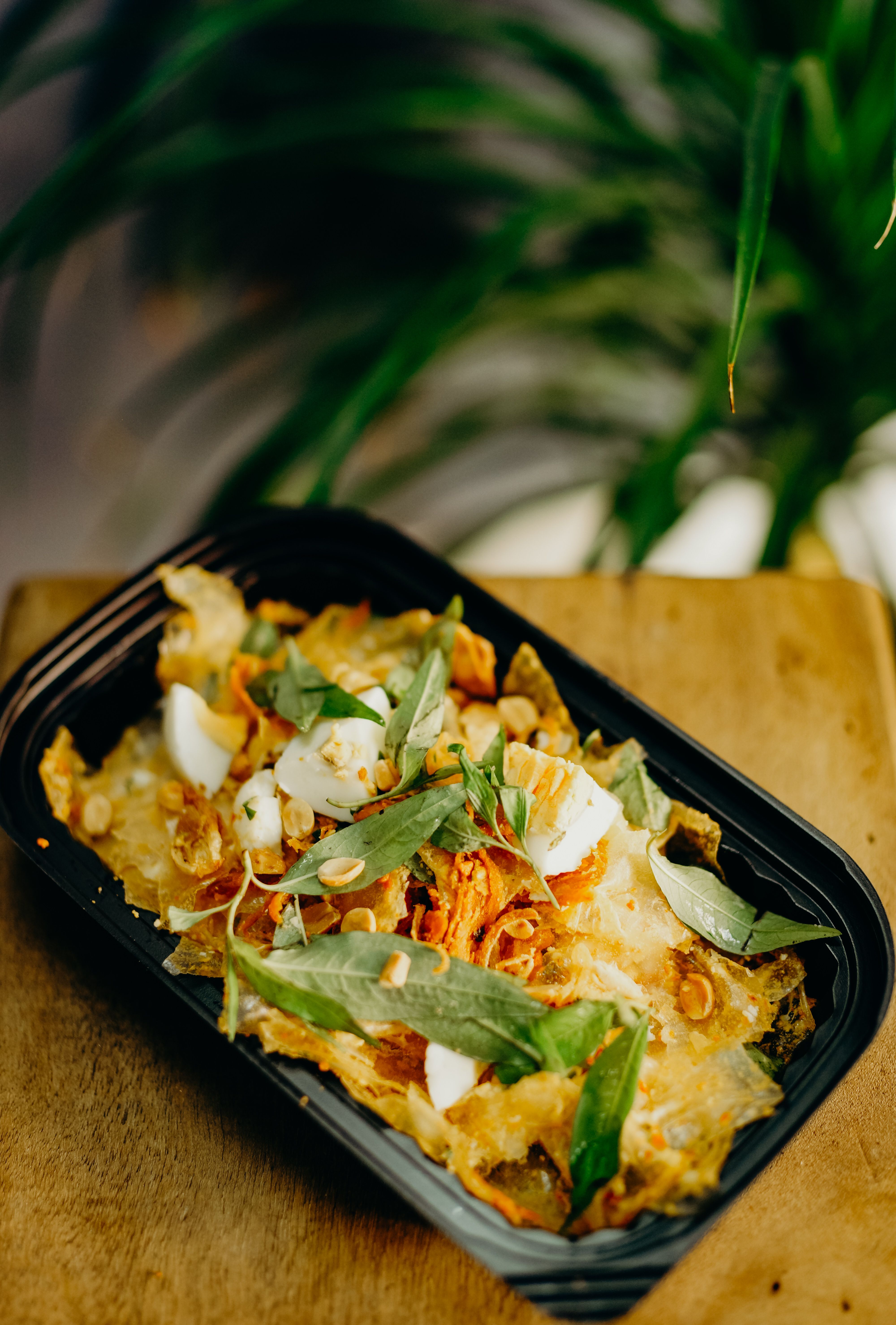
Photo: Van Nguyen Hoang / Pexels
Cambodian
Nom Banh Chok
The diets react (see scores below)
Common Ingredients
- rice noodles
- fish
- lemongrass
- turmeric
- kaffir lime
- galangal
- banana blossom
- cucumber
- bean sprouts
- fish sauce
Specific recipes may vary.
Incompatible with 6 of 11 diets
Diet Ratings
Nom Banh Chok is built on a foundation of rice noodles, which are a high-carb grain-based ingredient and the primary disqualifier for keto. A standard serving of rice noodles alone can deliver 40-50g of net carbs, instantly exceeding or maxing out the daily keto limit before any other food is consumed. While many of the supporting ingredients are keto-friendly — fish provides quality protein, lemongrass, turmeric, kaffir lime, and galangal are low-carb aromatics, fish sauce is low-carb, and vegetables like cucumber and bean sprouts are relatively low in net carbs — the rice noodle base makes this dish fundamentally incompatible with ketosis. Banana blossom also adds a modest carb load. There is no practical way to portion-control rice noodles in this dish to a keto-safe level while still consuming it in a recognizable form.
Nom Banh Chok contains multiple animal-derived ingredients that make it entirely incompatible with a vegan diet. Fish is a direct animal product, and fish sauce is a concentrated animal-derived condiment made from fermented fish. Both are explicitly excluded under vegan dietary rules. The plant-based components — rice noodles, lemongrass, turmeric, kaffir lime, galangal, banana blossom, cucumber, and bean sprouts — are all vegan-friendly, but the presence of fish and fish sauce disqualifies the dish entirely. There is no ambiguity here within vegan discourse.
Nom Banh Chok is built on a foundation of rice noodles, which are a grain-based product and explicitly excluded from the paleo diet. While several ingredients are paleo-approved — fish is an excellent paleo protein, and lemongrass, turmeric, kaffir lime, galangal, and cucumber are all whole, unprocessed plant foods — the dish has two additional non-paleo components. Bean sprouts come from mung beans, which are legumes and therefore excluded. Fish sauce, while derived from fish, typically contains added salt and sometimes sugar, making it a processed condiment that falls outside strict paleo guidelines. The rice noodles alone are disqualifying; as a grain product they represent a core exclusion, not a gray area. The overall dish cannot be adapted to paleo without fundamentally reconstructing it around a different base.
Nom Banh Chok aligns well with Mediterranean diet principles in most respects. Fish is the primary protein, which is strongly encouraged 2-3 times weekly. The dish is built around whole, plant-forward ingredients — fresh vegetables like cucumber, bean sprouts, and banana blossom — plus aromatic herbs and spices with no added sugars or saturated fats. Fish sauce is a sodium-dense condiment but used in small quantities as a seasoning. The main concern is the rice noodles: these are refined grain noodles rather than whole grain, which Mediterranean guidelines would prefer to minimize or replace with whole grain alternatives. However, the overall nutritional profile — lean fish, abundant fresh vegetables, minimal processed ingredients — is strongly compatible with Mediterranean diet values.
Some Mediterranean diet authorities would rate this more cautiously due to the refined rice noodles as the starch base; modern clinical Mediterranean diet guidelines (e.g., from the PREDIMED study framework) emphasize whole grains, and refined noodles lack the fiber and nutrient density of whole grain pasta or legumes preferred in traditional Mediterranean eating.
Nom Banh Chok is almost entirely incompatible with the carnivore diet. The dish is built on a foundation of rice noodles (grain-based carbohydrate), which alone disqualifies it. The fresh herb and spice paste includes lemongrass, turmeric, kaffir lime leaves, and galangal — all plant-derived. The garnishes of banana blossom, cucumber, and bean sprouts are plant foods explicitly excluded from carnivore. Fish and fish sauce are the only carnivore-compatible components, but they are incidental to an overwhelmingly plant-based dish. Even the most lenient carnivore practitioners who tolerate spices and fish sauce would reject this dish outright due to the rice noodles and plant-heavy garnishes.
Nom Banh Chok is built on rice noodles, which are made from rice — a grain explicitly excluded on the Whole30. All other ingredients (fish, lemongrass, turmeric, kaffir lime, galangal, banana blossom, cucumber, bean sprouts, fish sauce) are either clearly compliant or commonly compliant with label-checking. However, the rice noodle base is a disqualifying ingredient with no ambiguity. Additionally, even if rice noodles were somehow substituted, the dish in its traditional form would also need to be evaluated against the 'no recreating noodle dishes' spirit, but the grain exclusion alone is sufficient to rate this as avoid.
Nom Banh Chok is a Cambodian rice noodle dish with several low-FODMAP-friendly components, but a few ingredients require scrutiny. Rice noodles are low-FODMAP and safe. Fish and fish sauce are low-FODMAP (fish sauce is fermented but FODMAPs are not a concern at typical use amounts). Lemongrass, turmeric, kaffir lime leaves, and galangal are all low-FODMAP aromatics used in small culinary quantities. Cucumber and bean sprouts are low-FODMAP at standard servings. The primary concern is banana blossom, which has limited Monash testing data — it contains some oligosaccharides and GOS-like compounds, and its FODMAP status at typical serving sizes is not well-established. Additionally, if the dish includes any onion or garlic (common in Cambodian curry pastes used as the base, even if not explicitly listed), that would make it high-FODMAP. The dish as described with only listed ingredients is borderline cautious, largely due to banana blossom uncertainty and the real-world likelihood of garlic/shallot in the curry paste base.
Monash University has not specifically tested banana blossom, making its FODMAP status uncertain — some FODMAP practitioners advise avoiding it during elimination due to its fibrous, complex carbohydrate structure. Additionally, traditional Nom Banh Chok curry paste almost universally contains garlic and shallots not always listed explicitly, which would elevate this dish to 'avoid' in a strict elimination context.
Nom Banh Chok is a Cambodian rice noodle dish with a fish-based curry broth, served with fresh vegetables like cucumber, bean sprouts, and banana blossom — many of which are strongly aligned with DASH principles. The lean fish protein, anti-inflammatory aromatics (lemongrass, turmeric, galangal, kaffir lime), and generous fresh vegetable accompaniments are all DASH-friendly. Rice noodles are refined (not whole grain), which is a minor concern but acceptable in moderation. The primary DASH concern is fish sauce, which is extremely high in sodium — a single tablespoon can contain 1,000–1,500mg of sodium, and traditional Nom Banh Chok broth relies on it significantly. Depending on the quantity used in preparation, a single serving could approach or exceed the standard DASH sodium target (2,300mg/day) or easily surpass the low-sodium DASH limit (1,500mg/day). This makes the dish conditionally acceptable — DASH-compatible in structure and ingredients but problematic in sodium load from fish sauce.
NIH DASH guidelines do not specifically address Southeast Asian fermented fish condiments, but the high sodium content of fish sauce clearly conflicts with DASH sodium limits. Some DASH-oriented clinicians familiar with Asian cuisines note that if fish sauce is used sparingly or reduced-sodium alternatives are substituted, the dish's overall nutritional profile (lean fish, abundant fresh vegetables, anti-inflammatory herbs) could warrant a higher approval rating.
Nom Banh Chok is a traditional Cambodian rice noodle dish with a fish-based curry broth, served with fresh vegetables. The protein component (fish) is excellent for the Zone — lean, low-fat, and rich in omega-3s. The fresh vegetable accompaniments (cucumber, bean sprouts, banana blossom) are low-glycemic, colorful, and Zone-favorable. The aromatic herbs and spices (lemongrass, turmeric, kaffir lime, galangal) are anti-inflammatory and nutritionally beneficial, aligning well with Sears' polyphenol emphasis. Fish sauce adds sodium but minimal macronutrient disruption. The primary Zone concern is the rice noodles: as a refined, high-glycemic carbohydrate, they are an 'unfavorable' carb in Zone terminology and can spike insulin. However, the dish's overall macro balance depends heavily on the noodle-to-protein-to-vegetable ratio. A traditional serving is typically noodle-heavy, which skews the 40/30/30 ratio toward excess carbohydrates with inadequate protein to balance. With portion control — reducing noodles and increasing fish and vegetables — this dish can be brought closer to Zone balance. It is not categorically avoidable, but requires meaningful modification for Zone compliance.
Some Zone practitioners applying Sears' later writing on anti-inflammatory eating might rate this more favorably, noting that the turmeric, lemongrass, galangal, and omega-3-rich fish create a strongly anti-inflammatory profile. The fresh vegetable garnishes add polyphenols and fiber. If rice noodles are treated as a measured carb block rather than a free component, the dish can approximate Zone ratios, and some practitioners would approve it as a Zone-adaptable meal with modest portioning adjustments rather than a caution.
Nom Banh Chok is a traditional Cambodian breakfast dish centered on rice noodles served with a fish-based curry broth and fresh vegetable toppings. Its ingredient profile aligns well with anti-inflammatory principles. The fish provides lean protein and some omega-3 fatty acids (particularly if a fatty freshwater or coastal fish is used). The broth is built on a powerhouse trio of anti-inflammatory spices and aromatics: turmeric (curcumin is one of the most studied anti-inflammatory compounds), lemongrass (contains quercetin and luteolin), and galangal (a close relative of ginger with similar anti-inflammatory phytochemicals). Kaffir lime adds antioxidant flavonoids. Banana blossom is rich in fiber, antioxidants, and phenolic compounds. The fresh toppings — cucumber, bean sprouts — add hydration, fiber, and micronutrients without adding inflammatory load. Fish sauce, while high in sodium, is used in small amounts as a condiment and does not meaningfully shift the dish's inflammatory profile. Rice noodles are refined carbohydrates and represent a mild neutral element — they dilute the overall score slightly compared to a whole-grain base, but are not inherently pro-inflammatory in moderate portions and are a staple of traditional Asian diets associated with low inflammatory disease burden. There are no processed ingredients, seed oils, trans fats, or added sugars. Overall, this dish is dominated by anti-inflammatory spices, lean protein, and fresh vegetables, making it a strong approval within this dietary framework.
Nom Banh Chok is a traditional Cambodian fish noodle dish with a genuinely favorable nutritional profile for GLP-1 patients in several respects. The fish-based broth and fish protein provide lean, easily digestible protein with beneficial omega-3 fats. The aromatic base — lemongrass, turmeric, galangal, kaffir lime — is low-calorie, anti-inflammatory, and generally well-tolerated. Fresh toppings like cucumber, bean sprouts, and banana blossom add fiber, water content, and micronutrients, supporting hydration and digestion. However, the primary carbohydrate source is white rice noodles, which are refined, low in fiber, and low in protein — a meaningful drawback given that GLP-1 patients need every calorie to be nutrient-dense. The dish's protein content per serving is moderate but may fall short of the 15–30g per meal target depending on portion size of fish. Fish sauce contributes significant sodium, which can be a concern for some patients. The overall fat content is low, digestibility is good, and the fresh vegetable components partially offset the refined carbohydrate concern. This dish lands in caution territory: it has real strengths but the rice noodle base limits its protein and fiber density per calorie. It can work well for GLP-1 patients if fish portions are generous and paired with extra vegetables.
Some GLP-1-focused dietitians would rate this more favorably, noting that white rice noodles are actually easier to digest than whole grain alternatives during periods of GI sensitivity — a real concern on higher medication doses. Others would flag that the protein-to-carbohydrate ratio is insufficient for muscle preservation goals and recommend substituting shirataki or edamame noodles to improve the nutritional profile.
*See how scores were generated at our methodology page.
Nutritional profile
Six traits that cut across every diet.
Fiber & Plants
How much whole-plant food and fiber it delivers.
Healthy Fats
The quality of its fats (unsaturated, omega-3).
Whole / Unprocessed
How close it is to its natural, unprocessed form.
Gut Gentle
How easy it is on digestion (low FODMAP, few irritants).
Low Glycemic
How little it spikes your blood sugar.
Protein Density
How much protein it packs per calorie.
Controversy Index
Higher controversy = more disagreement between diets.
Diet-Specific Tips
 Mediterranean — 8/10
View tips
- Fish as primary protein strongly aligns with Mediterranean recommendations of 2-3 servings weekly
- Abundant fresh vegetables (cucumber, bean sprouts, banana blossom) are core Mediterranean staples
- No red meat, processed foods, or added sugars
- Rice noodles are refined grains, not the preferred whole grain carbohydrate source
- Fish sauce adds sodium but is used in small amounts as a seasoning, not a primary ingredient
- Aromatic herbs and spices (lemongrass, turmeric, galangal, kaffir lime) offer anti-inflammatory benefits consistent with Mediterranean principles
 DASH — 5/10
View tips
- Fish sauce is extremely high in sodium and is the primary DASH concern — a key limiting factor
- Lean fish protein is an approved DASH protein source
- Fresh vegetables (cucumber, bean sprouts, banana blossom) are strongly DASH-aligned
- Anti-inflammatory aromatics (turmeric, lemongrass, galangal) add nutritional benefit without DASH concerns
- Rice noodles are refined carbohydrates, not whole grain — a minor negative
- Dish structure (lean protein + vegetables + broth) aligns with DASH patterns if sodium is controlled
- Low-sodium fish sauce or reduced quantities would significantly improve the DASH score
 Zone — 5/10
View tips
- Rice noodles are a refined, high-glycemic 'unfavorable' carb in Zone terminology and are typically the dominant ingredient by volume
- Fish is an ideal Zone protein — lean, omega-3-rich, and easily portioned to ~25g per meal
- Fresh vegetables (cucumber, bean sprouts, banana blossom) are Zone-favorable low-glycemic carbs that help offset the noodles
- Turmeric, galangal, and lemongrass provide strong anti-inflammatory polyphenols consistent with Sears' broader protocol
- Typical restaurant or traditional servings are noodle-heavy, making 40/30/30 ratio difficult to achieve without deliberate portioning
- Fish sauce is high-sodium but macronutrient-neutral and does not meaningfully affect Zone block calculations
- No added oils or saturated fats identified, so fat profile is naturally lean — may need supplemental monounsaturated fat (e.g., a few almonds) to meet Zone fat targets
 Anti-Inflammatory — 8/10
View tips
- Turmeric in broth provides curcumin, a well-researched anti-inflammatory compound
- Galangal and lemongrass contribute additional anti-inflammatory phytochemicals
- Fish provides lean protein and modest omega-3 fatty acids
- Fresh vegetable toppings (bean sprouts, cucumber) add fiber and antioxidants
- Banana blossom is rich in phenolic antioxidants and fiber
- Kaffir lime adds flavonoids
- Rice noodles are refined carbohydrates — neutral but slightly dilute the overall score
- Fish sauce adds sodium but is used in small quantities and does not carry trans fats or additives
- No seed oils, processed ingredients, or added sugars identified
 GLP-1 Friendly — 6/10
View tips
- Lean fish protein supports muscle preservation but portion size determines whether the 15–30g per meal target is met
- White rice noodles are refined carbohydrates with low fiber and low protein — reduce nutrient density per calorie
- Fresh vegetables (cucumber, bean sprouts, banana blossom) contribute fiber, water content, and support GLP-1 hydration needs
- Low fat content and aromatic herb base are well-suited to GLP-1 digestive sensitivity
- Fish sauce adds significant sodium — relevant for patients with blood pressure concerns
- Anti-inflammatory spices (turmeric, galangal, lemongrass) are generally beneficial and well-tolerated
- Portion-sensitive: a small serving may be insufficient in protein; a larger serving increases refined carbohydrate load