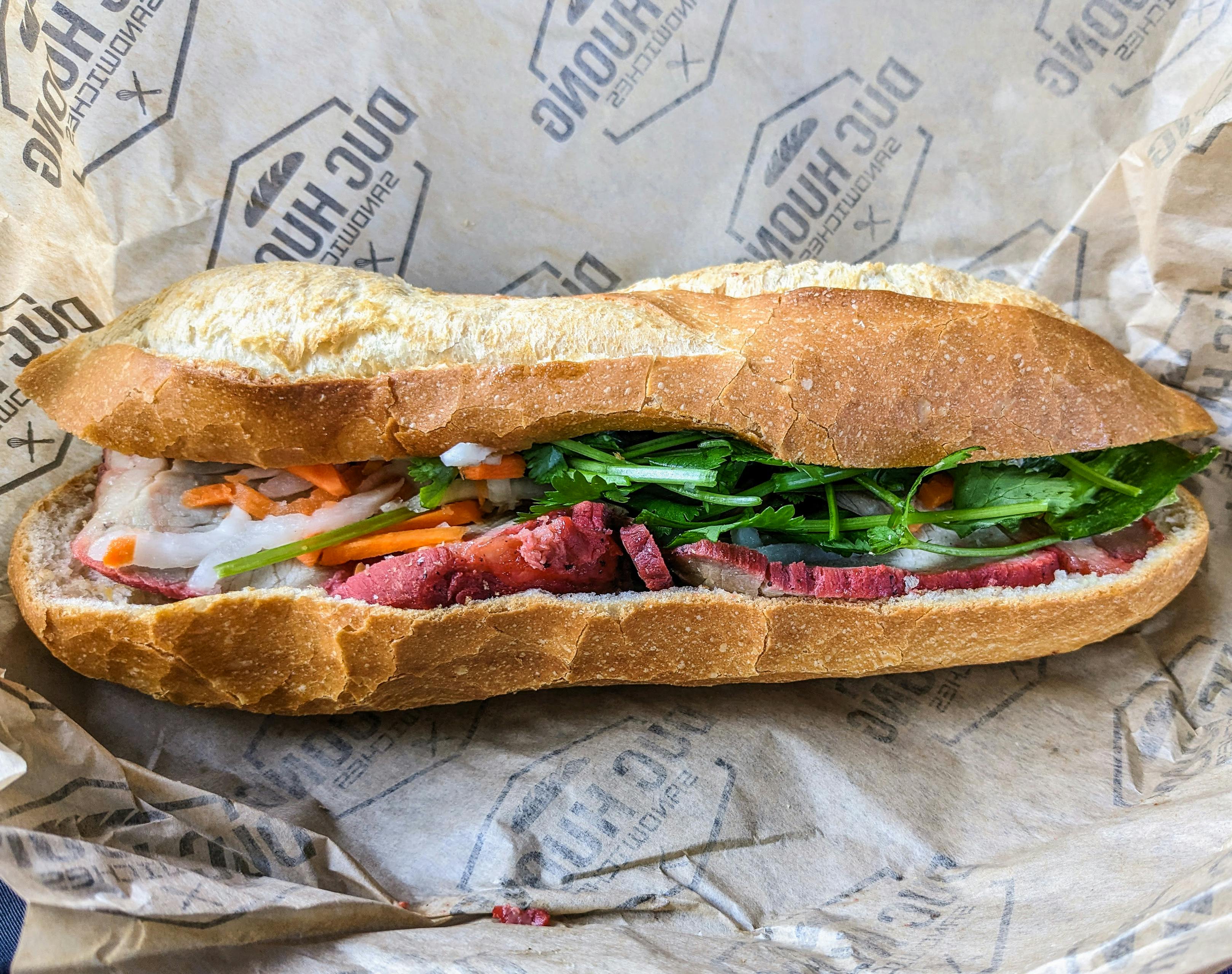
Photo: Robby McCullough / Pexels
The diets react (see scores below)
Common Ingredients
- baguette
- pork
- pate
- pickled carrots
- daikon
- cucumber
- cilantro
- chili
- mayonnaise
Specific recipes may vary.
Incompatible with 9 of 11 diets
Diet Ratings
Num Pang is a Cambodian sandwich built on a baguette, which is a refined wheat flour bread and an immediate disqualifier for ketogenic eating. A single baguette portion easily contributes 40-60g of net carbs on its own, far exceeding the entire daily keto limit. The filling components — pork, pâté, mayonnaise, cucumber, cilantro, and chili — are individually keto-friendly or low-carb, but the bread is the structural and dominant ingredient of this dish. Pickled carrots and daikon add modest additional carbs. There is no practical way to consume a traditional Num Pang and maintain ketosis; this is not a portion-control situation but a fundamental incompatibility due to the grain-based bread base.
Num Pang contains multiple animal-derived ingredients that disqualify it from a vegan diet. Pork is a direct animal product (meat). Pâté is typically made from liver and/or other animal offal, often pork-based. Mayonnaise in its standard form contains eggs. These three ingredients alone make this dish clearly non-vegan. The plant-based components — baguette, pickled carrots, daikon, cucumber, cilantro, and chili — are all vegan-friendly, but they do not offset the presence of animal products elsewhere in the dish.
Num Pang is a Cambodian sandwich built on a baguette — a wheat-flour bread that is one of the clearest non-paleo foods possible. Beyond the baguette, pâté is typically a processed product containing additives, and mayonnaise is made with seed oils (usually soybean or canola oil), both of which are explicitly excluded from paleo. While pork, pickled vegetables, cucumber, cilantro, and chili are individually paleo-compatible, the foundational grain-based bread and the processed condiments make this dish incompatible with paleo principles. There is no meaningful way to adapt this dish without fundamentally changing its identity.
Num Pang is a Cambodian sandwich that conflicts with several core Mediterranean diet principles. The base is a refined white flour baguette, which falls squarely in the 'refined grains' category that the Mediterranean diet discourages. The primary proteins are pork and pâté — both processed/cured meat products high in saturated fat and sodium, which the Mediterranean diet limits to a few times per month at most. Mayonnaise adds further saturated fat and is not a Mediterranean-approved fat source (olive oil is). While there are some positive elements — pickled vegetables (carrots, daikon, cucumber), fresh cilantro, and chili — these do not offset the fundamentally incompatible core components. The overall profile is refined grains + processed red/cured meat + non-olive-oil fat, making this a poor fit.
Num Pang is a Cambodian sandwich that is fundamentally incompatible with the carnivore diet. The base is a baguette (wheat flour — a grain and one of the most excluded foods on carnivore). The bulk of the sandwich consists of plant foods: pickled carrots, daikon, cucumber, cilantro, and chili. While pork and pâté are animal-derived and carnivore-approved ingredients, they are completely buried within a structure of plant foods and a grain-based bread. Mayonnaise may contain plant oils (soybean oil) and is also debated. There is no version of this dish that could be considered carnivore-compatible without fundamentally deconstructing and rebuilding it — at which point it is no longer a Num Pang.
Num Pang is a Cambodian sandwich served on a baguette, which is a wheat-based bread — a grain product explicitly excluded on Whole30. Beyond the baguette, this dish contains multiple other non-compliant ingredients: mayonnaise typically contains soy or canola oil and often sugar or other additives (standard commercial mayo is non-compliant), and pâté frequently contains dairy, alcohol, or other additives. Even if those secondary ingredients could be sourced in compliant versions, the baguette alone disqualifies this dish. Furthermore, even if a grain-free bread substitute were used, recreating a sandwich/wrap structure would violate Whole30's Rule 4 against recreating bread-based comfort foods. There is no compliant version of this dish as traditionally prepared.
Num Pang (Cambodian baguette sandwich) is essentially a wheat-based baguette sandwich, making it high-FODMAP due to the fructans in wheat. The baguette alone disqualifies this dish during the elimination phase — wheat bread is one of the most reliably high-FODMAP foods. Additionally, pâté frequently contains onion, garlic, or other high-FODMAP ingredients as seasonings, adding further fructan load. Mayonnaise is generally low-FODMAP in small amounts. Pickled carrots and daikon are low-FODMAP. Cucumber and cilantro are low-FODMAP. Chili (fresh) is low-FODMAP in small amounts. Despite several low-FODMAP components, the wheat baguette is a fundamental, unavoidable high-FODMAP element of this dish, and pâté adds additional FODMAP risk. There is no realistic way to make a standard Num Pang low-FODMAP without replacing the baguette entirely.
Num Pang (Cambodian sandwich, similar to Vietnamese bánh mì) is highly problematic for the DASH diet across multiple dimensions. The white baguette is a refined grain, not the whole grain DASH emphasizes. Pork and pâté are high in saturated fat and cholesterol, with pâté being particularly high in sodium. Mayonnaise adds saturated fat. The pickled carrots and daikon contribute significant sodium from the pickling brine. Collectively, this sandwich likely exceeds 1,000–1,500mg of sodium in a single serving and is high in saturated fat — problematic even against the standard DASH sodium ceiling of 2,300mg/day, and far exceeding the low-sodium DASH limit of 1,500mg/day for just one snack. The vegetables (cucumber, cilantro, chili) are DASH-friendly ingredients, but they are insufficient to offset the high sodium, refined carbohydrates, and saturated fat from the other components.
Num Pang (Cambodian sandwich similar to Vietnamese Bánh Mì) presents significant Zone challenges primarily due to its baguette base. The white flour baguette is a high-glycemic, unfavorable carbohydrate in Zone terminology — it spikes insulin and is difficult to portion into Zone blocks without overwhelming the carb allocation for a meal. Beyond the baguette, the protein sources (pork, pâté) are not ideal lean Zone proteins — pork can be acceptable if lean, but pâté is high in saturated fat. Mayonnaise adds fat that is omega-6 heavy (unless made with olive oil or avocado oil), conflicting with Zone's monounsaturated fat preference. On the positive side, the pickled carrots, daikon, cucumber, cilantro, and chili are excellent low-glycemic, high-polyphenol Zone-favorable carbohydrates. If the sandwich were deconstructed — removing or drastically reducing the baguette, using leaner pork, and swapping mayonnaise for avocado — it could be restructured into a Zone-compatible meal. As served traditionally, however, the carb ratio is skewed heavily toward high-glycemic refined grains, fat quality is poor, and the overall macro balance is far from 40/30/30. It scores in caution territory because the vegetable components and protein presence give it some redeemable structure, but modifications are substantial.
Some Zone practitioners argue that a small portion of the baguette (half or less of a standard serving) could be counted as a single carb block, with the vegetable fillings providing the remaining carb blocks from favorable sources. In this interpretation, Num Pang is a manageable 'unfavorable carb' vehicle that can be portion-controlled into a Zone meal — similar to how Sears treats other grain-based foods as 'use sparingly' rather than 'never.' Sears' later writings also soften the strict prohibition on saturated fats, which could rehabilitate the pâté somewhat.
Num Pang (Cambodia's version of bánh mì) presents a mixed inflammatory profile. On the positive side, it contains several anti-inflammatory elements: cilantro and chili pepper are beneficial herbs/spices, pickled vegetables (carrots, daikon, cucumber) provide some antioxidants and probiotic benefit from fermentation, and the vegetables overall contribute fiber and micronutrients. However, multiple ingredients raise concern. The white baguette is a refined carbohydrate with a high glycemic index, contributing to post-meal inflammatory response. Pork and especially pâté (typically high in saturated fat and often made with organ meat blended with butter or cream) contribute to saturated fat load. Mayonnaise adds refined seed oils (typically soybean or canola), contributing excess omega-6 fatty acids. The combination of refined white bread, processed pâté, and mayo-based condiment makes this a moderately pro-inflammatory meal overall. It is not in the 'avoid' category because the fresh vegetable components, herbs, and chili provide meaningful anti-inflammatory offset, and the dish is not heavily processed or fried. Occasional consumption is acceptable, but it should not be a dietary staple for someone pursuing anti-inflammatory eating.
Num Pang is a Cambodian sandwich built on a white baguette — a refined grain with low fiber and high glycemic impact that offers minimal nutritional value per calorie. The primary protein sources (pork and pâté) are high in saturated fat, and the addition of mayonnaise adds further fat with negligible protein or fiber benefit. While the pickled vegetables, cucumber, and cilantro are GLP-1-friendly garnishes, they appear in small quantities and do not offset the core nutritional issues. The refined bread base slows gastric emptying further on top of GLP-1's existing effect, increasing bloating and reflux risk. Fat content from pork, pâté, and mayo together is likely to worsen nausea. Protein contribution is moderate but comes bundled with high saturated fat. Chili may aggravate reflux. As a snack-category item, the calorie-to-nutrient ratio is poor — most of the calories come from the baguette and fat, not from protein or fiber. This dish does not meet GLP-1 dietary priorities in any meaningful way in its standard form.
Some GLP-1 clinicians may note that if pork quantity is generous, protein delivery could be reasonable (15–20g), and pickled vegetables provide mild probiotic benefit for gut motility. A small open-faced version with reduced mayo and pâté could theoretically be modified into a caution-tier item, but the standard preparation as described warrants an avoid rating.
*See how scores were generated at our methodology page.
Nutritional profile
Six traits that cut across every diet.
Fiber & Plants
How much whole-plant food and fiber it delivers.
Healthy Fats
The quality of its fats (unsaturated, omega-3).
Whole / Unprocessed
How close it is to its natural, unprocessed form.
Gut Gentle
How easy it is on digestion (low FODMAP, few irritants).
Low Glycemic
How little it spikes your blood sugar.
Protein Density
How much protein it packs per calorie.
Controversy Index
Higher controversy = more disagreement between diets.
Diet-Specific Tips
 Zone — 4/10
View tips
- White flour baguette is a high-glycemic unfavorable carbohydrate that dominates the carb allocation
- Pâté is high in saturated fat, conflicting with Zone's lean protein emphasis
- Mayonnaise contributes omega-6 heavy fat unless made with olive oil or avocado oil
- Pickled carrots, daikon, cucumber, cilantro, and chili are Zone-favorable low-glycemic polyphenol-rich vegetables
- Pork can be acceptable in Zone if lean cuts are used
- As served, macro ratio is heavily skewed toward refined carbs and unfavorable fats
- Significant modifications (reduce/remove bread, swap mayo, lean pork) needed to approach 40/30/30 balance
 Anti-Inflammatory — 4/10
View tips
- Refined white baguette raises glycemic load — pro-inflammatory
- Pâté is high in saturated fat and often contains butter/cream — pro-inflammatory
- Mayonnaise contributes omega-6-rich seed oils — pro-inflammatory
- Pork is a red/processed meat category — limit per anti-inflammatory guidelines
- Chili and cilantro are beneficial anti-inflammatory herbs/spices
- Pickled vegetables provide probiotic benefit and antioxidants
- Cucumber and daikon add fiber and micronutrients with no inflammatory concern
- Overall dish is high in refined carbs and saturated fat relative to anti-inflammatory principles