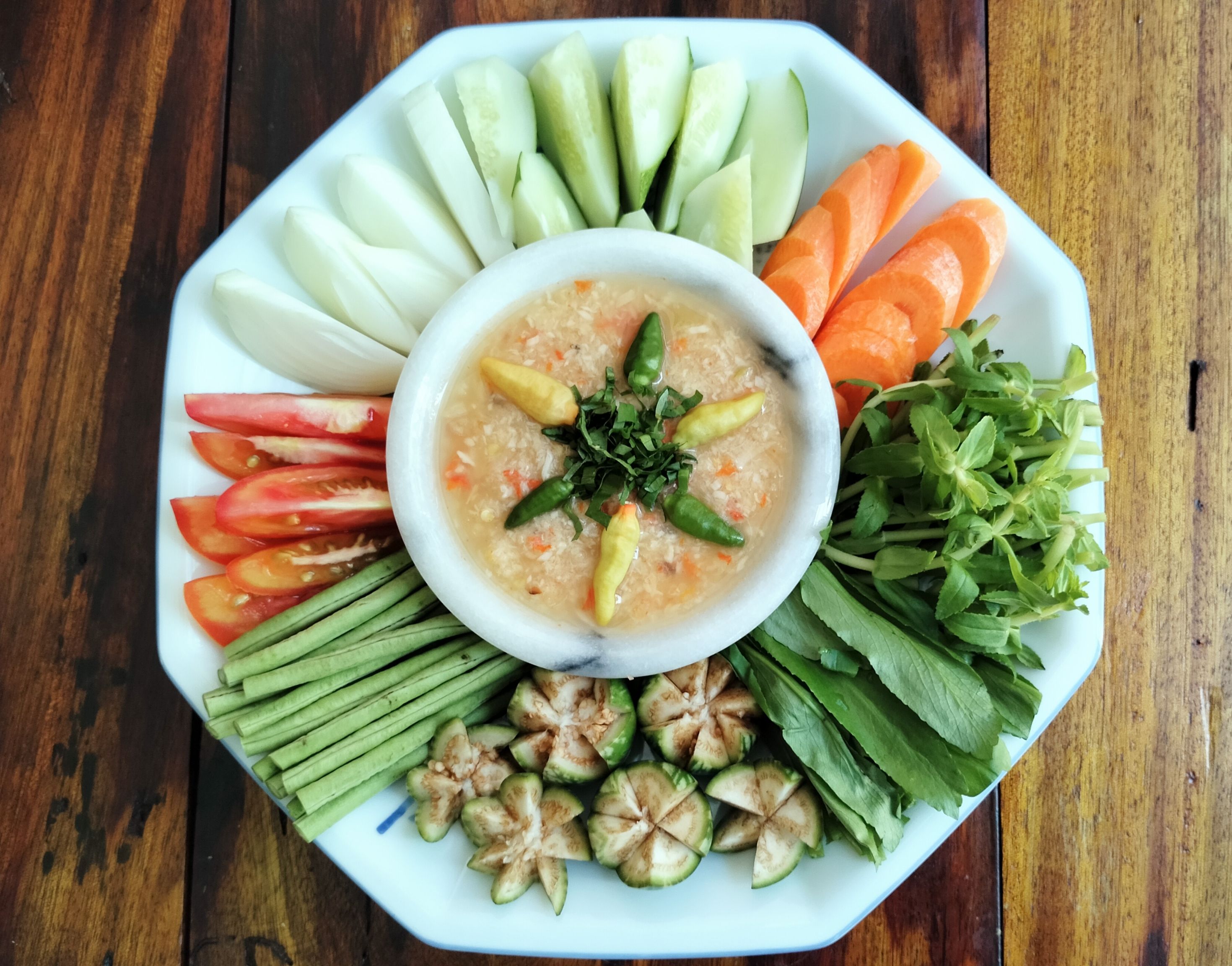
Cambodian
Prahok Ktis
The diets react (see scores below)
Common Ingredients
- fermented fish
- pork
- coconut milk
- lemongrass
- galangal
- kaffir lime leaves
- palm sugar
- chili
- peanuts
Specific recipes may vary.
Incompatible with 8 of 11 diets
Diet Ratings
Prahok Ktis contains several keto-friendly elements (fermented fish, pork, coconut milk, lemongrass, galangal, kaffir lime leaves, chili) but is problematic due to palm sugar and peanuts. Palm sugar is a significant source of sucrose and is a direct disqualifier under strict keto rules. Peanuts add moderate carbs and are legumes, which many keto practitioners limit. As a condiment, portion sizes are typically small, which may keep net carbs manageable if the palm sugar quantity is minimal. However, the traditional recipe does use a meaningful amount of palm sugar for flavor balance, making this a cautious inclusion at best. Coconut milk and pork fat provide good ketogenic fat content, and fermented fish adds negligible carbs with beneficial fermentation benefits.
Strict keto practitioners would classify this as 'avoid' due to the deliberate addition of palm sugar — a pure sugar source — arguing that no amount of added sugar is acceptable in a true ketogenic protocol, regardless of portion size. Some would also flag peanuts as a legume with anti-nutrients and sufficient carb load to disrupt ketosis when used in condiment-level quantities.
Prahok Ktis contains multiple animal-derived ingredients that are explicitly excluded from a vegan diet. Fermented fish (prahok) is a fish-based paste, and pork is a direct animal product. Both are core, non-optional components of this dish — not incidental additives. There is no version of authentic Prahok Ktis that omits these ingredients while remaining true to the dish. This is unambiguously non-vegan with no meaningful debate within the vegan community.
Prahok Ktis contains multiple non-paleo ingredients that disqualify it under standard paleo guidelines. Peanuts are legumes and are explicitly excluded from the paleo diet. Palm sugar is a refined/concentrated sugar that falls outside paleo boundaries. Fermented fish (prahok) is a heavily processed, salt-cured product that would be excluded as a processed food with added salt. While several ingredients are paleo-friendly — pork, coconut milk, lemongrass, galangal, kaffir lime leaves, and chili are all acceptable — the combination of legumes (peanuts), refined sugar (palm sugar), and processed fermented fish makes this dish incompatible with paleo principles. At least three distinct non-paleo ingredients are present, placing this firmly in the avoid category.
Prahok Ktis contains multiple ingredients that conflict with Mediterranean diet principles. Pork is a red meat, which should be limited to only a few times per month. The dish is built around fermented fish paste (prahok), which is a highly processed, extremely high-sodium condiment far removed from the fresh or lightly preserved seafood encouraged in the Mediterranean pattern. Coconut milk is high in saturated fat and is not a traditional Mediterranean fat source — olive oil is the canonical primary fat. Palm sugar adds significant refined/added sugar. While some individual ingredients like lemongrass, kaffir lime leaves, chili, and peanuts have Mediterranean-compatible qualities, the overall profile — processed fermented protein base, red meat, coconut milk fat, and added sugar — fundamentally contradicts Mediterranean dietary principles across multiple categories simultaneously.
Prahok Ktis is heavily incompatible with the carnivore diet. While it does contain animal-derived ingredients (fermented fish and pork), the dish is dominated by multiple plant-based components that are strictly excluded from carnivore: coconut milk (plant fat), lemongrass, galangal, kaffir lime leaves (plant spices/aromatics), palm sugar (plant-derived sweetener), chili (plant), and peanuts (legume). The palm sugar adds carbohydrates and the peanuts are legumes — both firmly in the avoid category. Even the most lenient carnivore practitioners who permit occasional spices would draw the line at coconut milk, palm sugar, and peanuts. This dish is fundamentally a plant-forward condiment that uses animal products as secondary flavoring agents rather than as its foundation.
Prahok Ktis contains two clearly excluded ingredients: peanuts (a legume, explicitly banned on Whole30) and palm sugar (an added sugar, explicitly banned). These alone make the dish non-compliant regardless of the other ingredients. Fermented fish (prahok) may also contain additives worth scrutinizing, but the peanuts and palm sugar are definitive disqualifiers.
Prahok Ktis contains multiple high-FODMAP ingredients that make it problematic during the elimination phase. Peanuts are high in GOS (a FODMAP) and are only low-FODMAP at very small servings (28g/10 peanuts per Monash). Palm sugar contains excess fructose and is high-FODMAP. Fermented fish (prahok) is a concern due to its complex fermentation process and potential FODMAP content, though plain fish is low-FODMAP. Coconut milk is low-FODMAP only at small portions (60ml) and high-FODMAP at larger amounts commonly used in dishes like this. Lemongrass, galangal, kaffir lime leaves, chili, and pork are generally low-FODMAP. However, the combination of peanuts (GOS), palm sugar (excess fructose), likely generous coconut milk quantities, and the uncertain FODMAP profile of fermented prahok paste make this dish high-FODMAP overall. As a condiment it may be consumed in smaller quantities, which could reduce risk slightly, but the core ingredients remain problematic.
Some clinical FODMAP practitioners might argue that if consumed in very small condiment portions (1-2 tablespoons), the per-serving FODMAP load from peanuts and palm sugar could fall below threshold levels. However, Monash University's elimination phase guidance advises avoiding GOS-containing foods like peanuts and high-fructose sweeteners like palm sugar, and the fermented fish paste lacks specific Monash testing data, making it difficult to confirm safety.
Prahok Ktis is a Cambodian condiment that combines multiple ingredients that are problematic for the DASH diet. Fermented fish (prahok) is extremely high in sodium — a hallmark concern for DASH, which targets <2,300mg/day (or <1,500mg/day for the stricter version). Coconut milk is high in saturated fat from a tropical oil source, which DASH explicitly limits. Palm sugar adds significant amounts of added sugar. Pork, while not categorically excluded from DASH, contributes additional saturated fat depending on the cut used. The cumulative effect of very high sodium from fermented fish, saturated fat from coconut milk, and added sugar from palm sugar places this dish firmly in the 'avoid' category. Even as a condiment used in small portions, the sodium density alone from prahok is extremely difficult to reconcile with DASH targets.
Prahok Ktis is a rich Cambodian condiment/dip that presents a mixed Zone Diet profile. On the positive side, it contains lean protein sources (fermented fish, pork) and beneficial aromatics (lemongrass, galangal, kaffir lime leaves) with anti-inflammatory polyphenols. However, several ingredients complicate Zone compatibility: coconut milk is high in saturated fat, which Sears traditionally discourages; palm sugar is a high-glycemic sweetener that spikes insulin; and peanuts, while containing some monounsaturated fat, are also high in omega-6 fatty acids and are technically a legume with a moderate glycemic load. As a condiment used in small portions alongside vegetables (often served with raw vegetables for dipping), the portion-controlled nature of its use helps mitigate some concerns. The fermented fish (prahok) adds sodium and umami but also brings beneficial fermented food properties. The coconut milk-palm sugar combination is the primary Zone concern, pushing insulin load higher than ideal. Used sparingly as a condiment with Zone-favorable accompaniments (raw vegetables), it can fit within a Zone meal, but it is not a clean Zone food.
Dr. Sears' later works (particularly 'The Zone Diet' updates focusing on anti-inflammatory eating) acknowledge that coconut milk's saturated fat (lauric acid) has a more nuanced metabolic profile than originally characterized. Some Zone practitioners accept coconut milk in moderation within the anti-inflammatory framework, which would push this dish slightly more favorable. Conversely, stricter early Zone adherents would flag both the coconut milk and palm sugar as 'unfavorable' carb and fat sources that make this dish difficult to balance.
Prahok Ktis is a complex Cambodian condiment with a mixed anti-inflammatory profile. On the positive side, it contains several strongly anti-inflammatory ingredients: lemongrass and galangal (close relatives of ginger, with known anti-inflammatory compounds), kaffir lime leaves (rich in antioxidants and flavonoids), chili (capsaicin is anti-inflammatory), and peanuts (contain resveratrol and anti-inflammatory polyphenols, though high in omega-6). Fermented fish (prahok) contributes some omega-3 fatty acids and probiotic-adjacent fermentation benefits that may support gut health and reduce systemic inflammation. However, the dish carries notable anti-inflammatory concerns: pork is a red meat and is consumed in significant quantity here, placing it in the 'limit' category. Coconut milk is high in saturated fat, which is flagged in anti-inflammatory guidelines. Palm sugar is an added sugar — less refined than white sugar but still a concentrated sugar source that should be limited. Peanuts, while not the worst offender, have a relatively high omega-6 content. As a condiment, portion sizes are typically small, which mitigates some of the concerns around pork and coconut milk. The aromatic herb profile is genuinely impressive from an anti-inflammatory standpoint, and fermented ingredients add complexity. However, the combination of red meat, high saturated fat from coconut milk, and added sugar prevents this from achieving approval under standard anti-inflammatory frameworks.
Some anti-inflammatory practitioners with a focus on traditional and fermented foods (such as those aligned with Dr. Natasha Campbell-McBride's GAPS protocol or Weston A. Price Foundation) would view the fermented fish and whole-food ingredients more favorably, arguing that fermentation reduces antinutrients, supports gut microbiome diversity, and that saturated fat from whole food sources like coconut is not inherently inflammatory. Mainstream anti-inflammatory guidelines (Dr. Weil's framework) consistently flag saturated fat and red meat as foods to limit, supporting the 'caution' rating.
Prahok Ktis is a rich Cambodian condiment made from fermented fish and pork cooked in coconut milk with aromatics, chili, and peanuts. While it contains some protein from pork, fermented fish, and peanuts, the overall nutritional profile is poorly suited for GLP-1 patients. Coconut milk contributes significant saturated fat per serving, pork (likely fatty cuts in this preparation) adds additional saturated fat, and peanuts layer on more fat. The chili content may worsen GLP-1-related nausea and reflux. Fermented fish (prahok) is extremely high in sodium, which can exacerbate water retention and is generally discouraged. As a condiment, it is typically consumed alongside rice or vegetables, but even in small amounts the fat load from coconut milk and the spice level are problematic. Palm sugar adds refined sugar content. The combination of high saturated fat, high sodium, significant spice, and low fiber makes this a poor fit for patients on GLP-1 medications who have slowed gastric emptying and heightened GI sensitivity.
Some GLP-1-focused dietitians may note that fermented foods can support gut microbiome health, and that prahok is used in small condiment quantities rather than as a main dish — meaning total fat intake per use may be lower than the ingredient list implies. However, most clinicians would still flag the coconut milk base and chili content as meaningful GI risk factors for this patient population.
*See how scores were generated at our methodology page.
Nutritional profile
Six traits that cut across every diet.
Fiber & Plants
How much whole-plant food and fiber it delivers.
Healthy Fats
The quality of its fats (unsaturated, omega-3).
Whole / Unprocessed
How close it is to its natural, unprocessed form.
Gut Gentle
How easy it is on digestion (low FODMAP, few irritants).
Low Glycemic
How little it spikes your blood sugar.
Protein Density
How much protein it packs per calorie.
Controversy Index
Higher controversy = more disagreement between diets.
Diet-Specific Tips
 Keto — 4/10
View tips
- Palm sugar is added sugar and a direct keto concern
- Peanuts are legumes with moderate net carbs (~4g per 28g serving)
- Coconut milk and pork provide strong ketogenic fat content
- Fermented fish is keto-friendly and low-carb
- Small condiment portions may keep total net carbs below threshold
- Lemongrass and galangal add negligible carbs in culinary amounts
- Traditional recipe sugar quantity is variable and recipe-dependent
 Zone — 4/10
View tips
- Palm sugar is a high-glycemic sweetener that promotes insulin release — a core Zone concern
- Coconut milk is high in saturated fat, traditionally discouraged in Zone but reassessed in Sears' later anti-inflammatory writings
- Peanuts are omega-6 heavy, conflicting with Zone's anti-inflammatory fat priorities
- Fermented fish (prahok) provides lean protein and beneficial fermented food compounds
- As a condiment, small portion sizes help contain the glycemic and fat load
- Aromatics (lemongrass, galangal, kaffir lime leaves, chili) contribute polyphenols consistent with Zone anti-inflammatory goals
- Pork is an acceptable Zone protein but less ideal than skinless poultry or fish as a primary protein
 Anti-Inflammatory — 4/10
View tips
- Fermented fish provides omega-3 fatty acids and fermentation benefits, supporting gut health
- Lemongrass, galangal, kaffir lime leaves, and chili are strongly anti-inflammatory aromatics
- Pork (red meat) falls in the 'limit' category under anti-inflammatory guidelines
- Coconut milk is high in saturated fat, flagged as pro-inflammatory in standard anti-inflammatory frameworks
- Palm sugar is an added sugar and should be minimized
- Peanuts are moderately high in omega-6 fatty acids
- Condiment use means small portion sizes, reducing impact of concerning ingredients
- Overall profile is mixed: strong herb/spice positives offset by fat and protein concerns