Cambodian
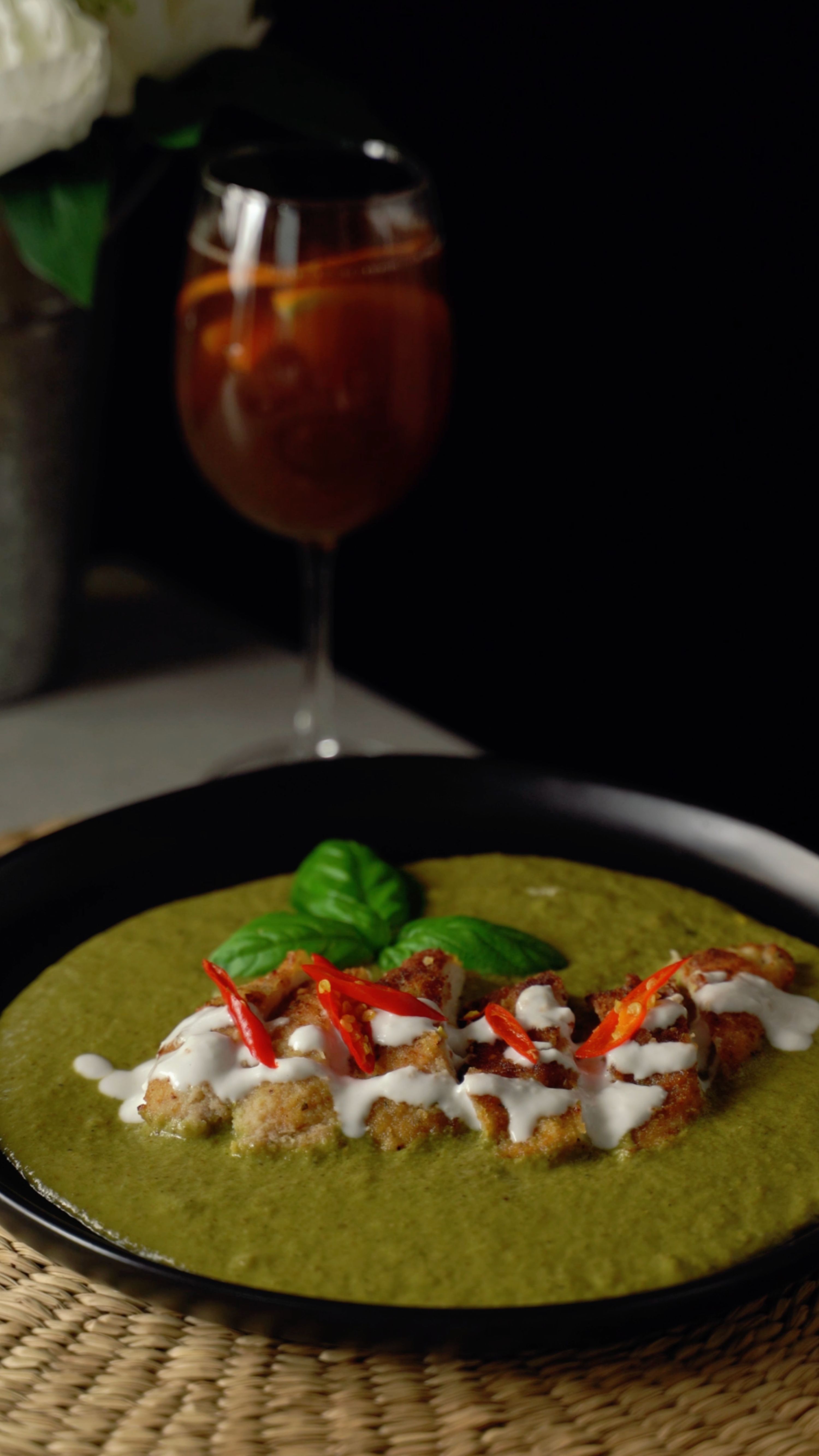
Samlor Korko
The diets react (see scores below)
Common Ingredients
- pork
- green papaya
- pumpkin
- eggplant
- long beans
- toasted rice
- prahok
- lemongrass
- turmeric
- kaffir lime leaves
Specific recipes may vary.
Incompatible with 4 of 11 diets
Diet Ratings
Samlor Korko contains multiple carb-contributing ingredients that collectively make strict keto compliance difficult. Pumpkin (~7g net carbs per 100g), green papaya (~5-6g net carbs per 100g), toasted rice (used as a thickener, adds significant starch), and long beans all add up. The toasted rice (angkam) is a traditional thickener and the most problematic ingredient — even a small amount meaningfully raises net carbs. Pork provides quality fat and protein in line with keto goals, and the aromatics (lemongrass, turmeric, kaffir lime leaves) and prahok are negligible carb contributors. In a standard restaurant serving, the combined vegetable and rice carb load likely pushes net carbs to 15-25g per bowl, making it borderline to incompatible depending on portion size and the rest of the day's intake. With careful portion control — smaller servings, requesting less rice thickener, and limiting pumpkin and papaya quantities — it could fit within a daily carb budget for some practitioners.
Strict keto practitioners would categorize this as 'avoid' due to the toasted rice thickener being an outright grain inclusion and the cumulative starch load from pumpkin and green papaya, arguing no amount of portion control makes grain-thickened dishes keto-appropriate. More flexible 'lazy keto' adherents might approve a small portion if the rest of the day's meals are very low carb.
Samlor Korko contains two clear animal-derived ingredients that disqualify it from a vegan diet. First, pork is a direct animal meat product. Second, prahok is a fermented fish paste that is a cornerstone of Cambodian cuisine — it is unambiguously an animal product. Both ingredients are non-negotiable exclusions under any definition of veganism. The dish's vegetables, aromatics, and toasted rice are all plant-based, but the presence of pork and prahok makes this dish entirely incompatible with a vegan diet.
Samlor Korko contains three significant non-paleo ingredients that disqualify it. First, toasted rice is a grain and is explicitly excluded from the paleo diet regardless of preparation method. Second, prahok (fermented fish paste) is a heavily processed, fermented condiment that typically contains added salt and undergoes industrial-style fermentation — it falls squarely into the 'processed foods' category. Third, long beans are legumes, which are excluded from the paleo diet. The remaining ingredients — pork, green papaya, pumpkin, eggplant, lemongrass, turmeric, and kaffir lime leaves — are all paleo-approved, but the three problematic ingredients are structural to the dish and cannot be considered incidental.
Samlor Korko contains a rich array of Mediterranean-friendly vegetables (green papaya, pumpkin, eggplant, long beans) and anti-inflammatory spices (turmeric, lemongrass, kaffir lime leaves), which are positively aligned with Mediterranean principles. Toasted rice adds some whole-grain character. However, pork is a red meat, which the Mediterranean diet limits to a few times per month. Prahok (fermented fish paste) is a highly processed, very high-sodium condiment that falls into the 'minimal processed foods' caution zone, though fermented foods have some traditional Mediterranean parallels. The dish lacks olive oil as the primary fat. On balance, the vegetable density partially offsets the red meat and processed ingredient concerns, but pork as the primary protein prevents a higher rating.
Some Mediterranean diet interpreters might rate this more favorably, arguing the abundant vegetables and anti-inflammatory spices dominate the dish nutritionally, and that pork in a soup (where it may be used in smaller quantities as a flavoring rather than a large portion) is comparable to how cured meats are used sparingly in some Mediterranean traditions. Conversely, stricter clinical guidelines (e.g., those from the Harvard T.H. Chan School of Public Health) would flag both the red meat and the high-sodium fermented condiment more harshly.
Samlor Korko is a traditional Cambodian soup that is overwhelmingly plant-based in composition. While it contains pork as the primary protein, the dish is dominated by plant ingredients: green papaya, pumpkin, eggplant, long beans, toasted rice, lemongrass, turmeric, and kaffir lime leaves. Prahok (fermented fish paste) is an animal-derived condiment, but it does not redeem the dish. The vast majority of ingredients are explicitly excluded on the carnivore diet — vegetables, plant-based starches (toasted rice), and plant spices/aromatics. This dish cannot be adapted to carnivore without fundamentally deconstructing it into something unrecognizable. The pork alone would be carnivore-compliant, but as a complete dish, Samlor Korko is a clear avoid.
Most ingredients in Samlor Korko are Whole30-compliant: pork, green papaya, pumpkin, eggplant, lemongrass, turmeric, and kaffir lime leaves are all approved. Long beans are a legume, but Whole30 explicitly allows green beans and similar pod vegetables — long beans (yard-long beans) fall into a gray area, as they are botanically related to cowpeas rather than common green beans, so they are not explicitly covered by the exception. Toasted rice is a grain and is excluded on Whole30. Prahok (Cambodian fermented fish paste) is the most significant concern: it is typically made from fermented fish and salt, which would be compliant in principle, but commercial or traditional preparations may contain added sugars, MSG (now allowed per 2024 rules), or other additives that require label scrutiny. The toasted rice component is a clear disqualifier as listed, making this dish non-compliant in its traditional form. However, the dish could potentially be modified by omitting the toasted rice thickener.
Some Whole30 practitioners might argue that toasted rice used as a thickening agent in small amounts is a minor infraction similar in spirit to incidental ingredients, but the official Whole30 guidelines (per Melissa Urban) are unambiguous that grains — including rice in any form — are excluded for the full 30 days, with no exceptions for quantity or culinary role.
Samlor Korko contains several ingredients with FODMAP concerns that collectively make this dish risky during the elimination phase. Long beans (yard-long beans) are high-FODMAP due to GOS, similar to other legumes/pods, and are a clear concern. Prahok (fermented fish paste) is a complex ingredient — while fish-based, fermented pastes can vary widely and Monash has not specifically tested prahok; it may contain added ingredients or produce fermentation byproducts that are problematic. Green papaya is not well-tested by Monash for FODMAP content. Eggplant is low-FODMAP at small servings (75g per Monash) but can become moderate at larger amounts. Pumpkin (likely butternut-type) is low-FODMAP at 1/4 cup (30g) but becomes high-FODMAP at larger servings due to polyols — in a soup it may be consumed in larger quantities. Pork, lemongrass, turmeric, and kaffir lime leaves are generally low-FODMAP. Toasted rice is fine. The cumulative FODMAP load from long beans, prahok uncertainty, and portion-sensitive vegetables makes this dish a caution rather than an approve.
Monash University has not specifically tested several key Cambodian ingredients in this dish, including prahok and green papaya, making any verdict inherently uncertain. Clinical FODMAP practitioners may advise avoiding this dish entirely during elimination due to the long beans (a clear GOS source) and the unknown status of fermented prahok paste, while others familiar with Southeast Asian cooking might argue portion sizes of each vegetable are small enough to remain safe.
Samlor Korko presents a mixed DASH profile. On the positive side, it is rich in DASH-friendly vegetables: green papaya, pumpkin, eggplant, and long beans contribute potassium, magnesium, fiber, and vitamins consistent with DASH principles. Lemongrass, turmeric, and kaffir lime leaves add flavor without sodium. Pork as a protein is acceptable in lean cuts under DASH, though preparation and cut matter significantly. The critical concern is prahok — a fermented, salted fish paste that is a staple ingredient in this dish and extremely high in sodium, potentially contributing 800–1,500mg+ per serving from this ingredient alone, which can push a single bowl dangerously close to or beyond the DASH sodium limits (1,500–2,300mg/day). Toasted rice as a thickener is neutral. The vegetable density is genuinely impressive and DASH-aligned, but prahok's sodium load is a significant limiting factor and cannot be ignored in traditional preparation.
NIH DASH guidelines would flag prahok's high sodium content as a clear concern requiring avoidance or substantial reduction. However, updated clinical interpretations note that if prahok is used sparingly as a seasoning rather than a base, and if the dish is otherwise low in sodium, some DASH-informed dietitians may consider a modified version acceptable given the exceptional vegetable and phytonutrient density of the overall dish.
Samlor Korko is a traditional Cambodian stew-style soup with a reasonably Zone-compatible profile, but requires attention to several factors. The vegetable base — green papaya, eggplant, long beans, and pumpkin — is largely favorable in Zone terms, providing low-to-moderate glycemic carbohydrates with good fiber content. Lemongrass, turmeric, and kaffir lime leaves are anti-inflammatory aromatics that Sears would actively endorse for their polyphenol content. Pork is the main protein concern: lean cuts (tenderloin, loin) are acceptable Zone proteins, but fattier cuts (belly, shoulder) add saturated fat that pushes the fat ratio unfavorably. Toasted rice (khao khua) adds a moderate-glycemic starch element that contributes unfavorable carb blocks, though in small amounts used as a thickener it is manageable. Prahok (fermented fish paste) is a high-sodium flavoring with negligible macro impact on the Zone ratios, though processed fermented foods are not specifically favored. The soup format is naturally Zone-friendly — broth dilutes caloric density and the dish is vegetable-heavy. With lean pork, portion control on the toasted rice, and adequate vegetable volume, this dish can approximate a reasonable Zone meal, though it requires some adjustment.
Some Zone practitioners would rate this more favorably (score 7), arguing that the vegetable diversity, anti-inflammatory spices (turmeric especially), and soup format make this a near-ideal Zone meal when prepared with lean pork. Pumpkin is borderline in Zone (moderate glycemic index), and early Sears writings flag it as mildly unfavorable, but later anti-inflammatory Zone work would view its polyphenol and carotenoid content positively. The toasted rice thickener is the main sticking point — purists would subtract blocks accordingly, while flexible practitioners see it as a trivial addition.
Samlor Korko is a traditional Cambodian vegetable-forward soup with a genuinely mixed anti-inflammatory profile. On the positive side, it contains several strong anti-inflammatory ingredients: turmeric (curcumin), lemongrass (citral, antioxidants), kaffir lime leaves (limonene, flavonoids), pumpkin (beta-carotene, carotenoids), eggplant (nasunin, polyphenols), green papaya (papain, antioxidants), and long beans (fiber, plant protein). Toasted rice adds modest fiber and a whole grain element. These vegetable and spice components collectively provide meaningful antioxidant and anti-inflammatory support. On the negative side, pork is a red meat and falls into the 'limit' category under anti-inflammatory frameworks due to saturated fat content and associations with elevated inflammatory markers. Prahok (fermented fish paste) is a fermented food that may offer some probiotic benefit and umami depth, but is very high in sodium — excessive sodium intake is associated with endothelial inflammation. The dish is not inherently processed or laden with refined carbohydrates, trans fats, or added sugars, which keeps it out of 'avoid' territory. The overall profile is a balanced soup with substantial anti-inflammatory vegetables and spices tempered by a red meat protein and high-sodium condiment, making it a moderate-caution dish suitable in occasional rather than regular consumption.
Some anti-inflammatory practitioners following AIP or stricter protocols would flag eggplant as a nightshade vegetable potentially problematic for individuals with autoimmune conditions (lectins, solanine), while mainstream anti-inflammatory frameworks including Dr. Weil's pyramid consider eggplant beneficial due to its polyphenol content. Additionally, prahok's fermentation could be viewed positively by those who emphasize gut microbiome health as an anti-inflammatory pathway, potentially raising the score slightly for that camp.
Samlor Korko is a traditional Cambodian vegetable-forward soup with pork as the primary protein. Its strengths lie in the high fiber vegetable base (green papaya, pumpkin, eggplant, long beans) and the aromatic herbs (lemongrass, turmeric, kaffir lime leaves) that add micronutrient value with minimal caloric cost. Toasted rice acts as a thickening agent and adds modest digestible carbohydrate. Prahok (fermented fish paste) adds sodium and umami but also contributes additional protein. The broth-based format is generally easy to digest and GLP-1 friendly in terms of gastric load. The primary concern is pork: depending on the cut used (often pork ribs or pork belly in traditional versions), fat content can be moderate to high and saturated fat may be significant. If lean pork cuts (loin, tenderloin) are used, the dish moves closer to approve territory. Protein content per serving is moderate but not high — the dish is vegetable-dominant by volume. Prahok is very high in sodium, which is a consideration for overall dietary balance. The soup format supports hydration, which is a GLP-1 benefit. Overall this is a reasonable choice with caveats around pork cut and sodium.
Some GLP-1-focused dietitians would rate this more favorably if prepared with lean pork, citing the high-fiber vegetable base, broth hydration, and anti-inflammatory spices (turmeric, lemongrass) as strong positives; others would flag the ambiguity of pork cut and high sodium from prahok as meaningful concerns for patients managing GI side effects and blood pressure concurrently.
*See how scores were generated at our methodology page.
Nutritional profile
Six traits that cut across every diet.
Fiber & Plants
How much whole-plant food and fiber it delivers.
Healthy Fats
The quality of its fats (unsaturated, omega-3).
Whole / Unprocessed
How close it is to its natural, unprocessed form.
Gut Gentle
How easy it is on digestion (low FODMAP, few irritants).
Low Glycemic
How little it spikes your blood sugar.
Protein Density
How much protein it packs per calorie.
Controversy Index
Higher controversy = more disagreement between diets.
Diet-Specific Tips
 Keto — 4/10
View tips
- Toasted rice (angkam) thickener introduces starch/grains — a core keto violation
- Pumpkin adds meaningful net carbs (~7g/100g)
- Green papaya contributes additional net carbs (~5-6g/100g)
- Long beans add moderate carbs in quantity
- Pork provides keto-friendly fat and protein
- Aromatics (lemongrass, turmeric, kaffir lime, prahok) are negligible carb contributors
- Cumulative carb load from multiple vegetables likely exceeds strict keto threshold per serving
- Portion control and modification (reducing rice thickener) could make it marginally viable
 Mediterranean — 4/10
View tips
- Pork is a red meat, limited to a few times per month in Mediterranean diet
- Abundant vegetables (pumpkin, eggplant, green papaya, long beans) are strongly Mediterranean-aligned
- Prahok is a highly processed, high-sodium fermented condiment
- Anti-inflammatory spices (turmeric, lemongrass) align with Mediterranean dietary patterns
- No olive oil as primary fat source
- Toasted rice adds whole-grain element but is a refined starch when processed
 Whole30 — 5/10
View tips
- Toasted rice is a grain and explicitly excluded on Whole30 — this is a disqualifying ingredient in the traditional recipe
- Prahok (fermented fish paste) requires careful label-reading; traditional preparations may be compliant but additives vary
- Long beans are botanically cowpeas, not classic green beans — not clearly covered by the Whole30 legume exception for green beans/snap peas
- Core vegetables (green papaya, pumpkin, eggplant) and aromatics (lemongrass, turmeric, kaffir lime) are fully compliant
- Dish could be made compliant by omitting toasted rice thickener and verifying prahok ingredients
 DASH — 4/10
View tips
- Prahok (fermented salted fish paste) is very high in sodium — the primary DASH concern
- Excellent variety of DASH-friendly vegetables: green papaya, pumpkin, eggplant, long beans
- Pork acceptability depends on cut; lean pork is permitted under DASH in moderation
- Anti-inflammatory herbs and spices (turmeric, lemongrass, kaffir lime) are DASH-neutral to positive
- Toasted rice thickener adds modest whole-grain benefit
- Traditional preparation likely exceeds DASH sodium targets per serving due to prahok
- A low-sodium adaptation using reduced prahok or a low-sodium fish sauce substitute would score significantly higher
 Zone — 6/10
View tips
- Vegetable-heavy base (green papaya, eggplant, long beans) provides favorable low-glycemic carbohydrate blocks
- Pumpkin is a moderate-glycemic vegetable — borderline favorable/unfavorable in Zone terminology
- Pork must be lean cut to keep saturated fat within Zone fat block targets
- Toasted rice (khao khua) adds moderate-glycemic unfavorable carb blocks; small thickener amounts are manageable
- Turmeric and lemongrass are strongly anti-inflammatory — align with Sears' later Zone dietary emphasis on polyphenols
- Prahok adds sodium but negligible macro disruption to Zone ratios
- Soup/broth format is naturally Zone-friendly — supports portion control and vegetable-to-protein ratio
 Anti-Inflammatory — 5/10
View tips
- Pork (red meat) — falls in 'limit' category; contributes saturated fat and modest pro-inflammatory potential
- Turmeric — strong anti-inflammatory spice via curcumin; reduces CRP and NF-κB signaling
- Lemongrass and kaffir lime leaves — anti-inflammatory and antioxidant aromatic compounds
- Pumpkin — rich in beta-carotene and carotenoids with antioxidant properties
- Green papaya and eggplant — polyphenols and antioxidants; eggplant is a nightshade (context-dependent)
- Long beans — plant-based fiber and protein, supportive of gut health
- Prahok (fermented fish paste) — very high sodium; fermentation may offer probiotic benefit but excess sodium is pro-inflammatory
- Toasted rice — whole grain element, adds fiber; minimal inflammatory impact
- Overall: vegetable- and spice-rich profile is a strong positive, but red meat protein and high-sodium fermented paste moderate the rating
 GLP-1 Friendly — 5/10
View tips
- Pork cut is critical — fatty cuts (belly, ribs) increase saturated fat and worsen GLP-1 GI side effects; lean cuts (loin) are significantly more appropriate
- High-fiber vegetable base (papaya, pumpkin, eggplant, long beans) supports digestive health and constipation prevention
- Broth-based soup format aids hydration and is easy to digest — positive for GLP-1 patients
- Prahok contributes very high sodium, which is a dietary concern especially for patients with hypertension
- Protein per serving is moderate but not optimal — may need supplementation to meet 15-30g per meal target
- Anti-inflammatory spices (turmeric, lemongrass) add micronutrient value with negligible caloric cost
- Toasted rice thickener adds refined carbohydrate with low fiber contribution — minor negative
- Overall calorie density is low, supporting reduced-appetite eating patterns on GLP-1 medications