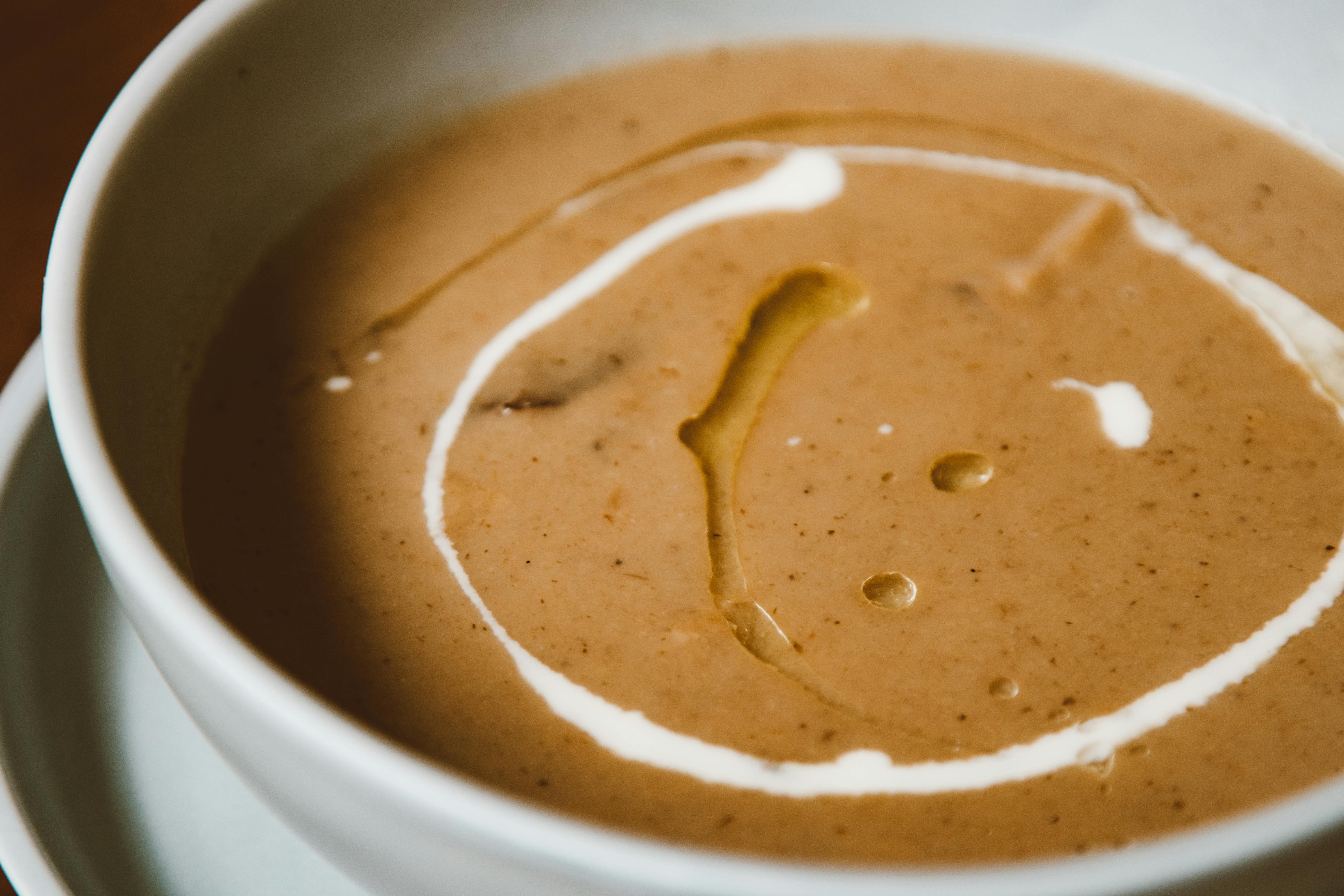
Photo: ROMAN ODINTSOV / Pexels
Cameroonian
Achu Soup
The diets react (see scores below)
Common Ingredients
- palm oil
- cocoyam
- beef
- tripe
- crayfish
- limestone
- spices
- salt
Specific recipes may vary.
Incompatible with 7 of 11 diets
Diet Ratings
Achu Soup is a traditional Cameroonian dish where cocoyam (taro) serves as the primary thickening and base ingredient. Cocoyam is a starchy root vegetable with very high net carbs — roughly 30-35g net carbs per 100g cooked. A standard serving of Achu Soup contains a substantial amount of pounded cocoyam, easily pushing net carbs well above the keto daily limit in a single meal. While the dish has several keto-friendly components — palm oil is an excellent keto fat source, beef and tripe provide quality protein, and crayfish and spices are negligible in carbs — the cocoyam base is fundamentally incompatible with ketosis. The dish cannot be meaningfully modified without losing its defining character.
Achu Soup contains multiple animal-derived ingredients that disqualify it from a vegan diet. Beef is a direct animal flesh product, tripe is animal organ meat (bovine stomach lining), and crayfish is a crustacean seafood ingredient commonly used as a flavor base in West and Central African cooking. All three are clear animal products with no ambiguity. The remaining ingredients — palm oil, cocoyam, limestone, spices, and salt — are plant-based or mineral, but the presence of beef, tripe, and crayfish makes this dish entirely incompatible with a vegan diet.
Achu Soup contains several non-paleo ingredients that make it incompatible with the diet. Salt is explicitly excluded from paleo. Limestone (potassium carbonate/edible clay used as a food additive and thickener in this dish) is a processed/mineral additive not part of a hunter-gatherer diet. Palm oil, while a natural fat from the palm fruit, is a seed/fruit oil that is highly processed in its common commercial form and falls outside approved paleo fats. Cocoyam (taro) is a starchy tuber that occupies a gray area but is generally more accepted than grains. Beef and tripe are fully paleo-approved proteins, and crayfish and spices are also paleo-friendly. However, the combination of salt, limestone as a food additive, and commercially processed palm oil are clear disqualifiers under strict paleo guidelines.
Achu Soup contains multiple elements that conflict with Mediterranean diet principles. Beef is the primary protein, which should be limited to a few times per month. Tripe (organ meat) adds further red meat load. Palm oil is used as the primary fat instead of extra virgin olive oil — palm oil is high in saturated fat and is not part of the Mediterranean tradition, which specifically centers olive oil as the canonical fat source. Cocoyam (taro) is a starchy root vegetable that provides some nutritional value, and crayfish adds a small seafood element, but these positives are outweighed by the combination of red meat, organ meat, and palm oil as the fat base. The dish lacks vegetables, legumes, whole grains, or olive oil that would make it compatible.
Achu Soup contains multiple plant-derived ingredients that disqualify it from the carnivore diet. Cocoyam (a starchy tuber) is the primary thickening base and is entirely plant-derived. Palm oil, while a fat, is extracted from a plant fruit and is not an animal fat. Crayfish and tripe are carnivore-approved, and salt is acceptable, but the combination of cocoyam, palm oil, spices, and limestone (a mineral additive) makes this dish fundamentally incompatible with carnivore principles. The dish is essentially a plant-starch-based soup that happens to contain animal proteins.
Achu Soup's core ingredients are largely Whole30-compatible: beef and tripe are compliant proteins, palm oil is an approved natural fat, crayfish (dried shrimp) is allowed seafood, salt and spices are permitted. Cocoyam (taro) is a starchy root vegetable that is Whole30-compliant. The most notable concern is 'limestone' (calcium carbonate/potash), a traditional alkaline ingredient used to thicken and emulsify the soup. Limestone/potash is a mineral, not a food additive in the excluded categories, and has no direct Whole30 prohibition — but it is an unusual, highly processed mineral ingredient that falls into a gray area. The 'spices' entry is generic and would require verification that no excluded additives (e.g., anti-caking agents with excluded ingredients) are present.
Melissa Urban and official Whole30 guidelines do not specifically address limestone (edible potash/calcium carbonate) as a food ingredient. Some practitioners may argue this mineral processing agent is not in the spirit of whole, unprocessed foods, while others would note it is simply a natural mineral with no excluded compounds — making its compliance genuinely ambiguous.
Achu Soup is a traditional Cameroonian dish with several ingredients that are individually low-FODMAP, but the combination raises some uncertainty. Palm oil is low-FODMAP (fat-soluble medium, FODMAPs are water-soluble). Beef is low-FODMAP. Tripe is low-FODMAP. Crayfish (dried/fermented shrimp) is low-FODMAP in typical culinary quantities. Salt is fine. The primary concern is cocoyam (taro), which Monash University has not extensively tested — taro/cocoyam contains galactooligosaccharides (GOS) and potentially other FODMAPs, and its FODMAP status is not clearly established at standard serving sizes. Limestone (calcium carbonate used as a cooking alkali in this dish) is not a FODMAP concern itself. The 'spices' category is vague — if it includes onion, garlic, or other high-FODMAP aromatics (common in many spice blends), the dish could become high-FODMAP. Given the ambiguity around cocoyam and the unspecified spices, caution is warranted during the elimination phase.
Monash University has not specifically tested cocoyam/taro or this dish, making confident FODMAP classification difficult. Some FODMAP practitioners would advise avoiding this dish entirely during elimination due to the untested cocoyam base and unspecified spices that may include onion or garlic; others may consider it acceptable given that taro in modest portions is sometimes tolerated.
Achu Soup is incompatible with the DASH diet for several compounding reasons. Palm oil is a tropical oil high in saturated fat (approximately 50% saturated), which DASH explicitly limits — it falls in the same discouraged category as coconut and palm kernel oils per NIH/NHLBI guidelines. Tripe, while a lean offal cut, is often high in cholesterol. Crayfish (dried/fermented as used in West African cooking) contributes significant sodium, as does added salt and processed spices. Limestone (kaolin/calcium carbonate used as a food additive in this dish) is not a recognized DASH food component. The combination of a tropical oil as the primary fat base, high-sodium seafood seasoning, added salt, and processed offal creates a dish that conflicts with multiple core DASH principles simultaneously: high saturated fat, high sodium, and no emphasis on the positive DASH nutrients (potassium, magnesium, fiber, calcium from food sources). While cocoyam provides some fiber and potassium as a starchy vegetable, it cannot offset the other DASH-incompatible elements in this dish.
Achu Soup presents a mixed Zone Diet profile. On the protein side, beef and tripe provide adequate protein, though tripe is relatively lean and beef can vary in fat content — both are usable Zone protein sources if portioned to roughly 25g protein per meal. Crayfish adds a favorable lean protein boost. The primary carbohydrate source, cocoyam (taro), is a starchy tuber with a moderate-to-high glycemic index — it is more favorable than white potatoes but still an 'unfavorable' carb in Zone terminology, requiring careful portioning. The most significant Zone concern is palm oil: it is high in saturated fat (roughly 50% saturated fatty acids) and lacks the monounsaturated fat profile that Sears favors (olive oil, avocado, almonds). Palm oil is also pro-inflammatory relative to omega-3s, which conflicts with Sears' anti-inflammatory focus. The limestone (food-grade calcium carbonate used as a tenderizer) and spices are nutritionally negligible for Zone purposes. To make this dish more Zone-compatible, one would need to reduce palm oil quantity significantly, control cocoyam portions carefully, and ensure lean beef is used. As traditionally prepared with generous palm oil and substantial cocoyam, the dish tilts toward unfavorable fat and carb profiles.
Some later Zone-aligned practitioners note that traditional whole-food dishes — even with palm oil — are far preferable to processed Western foods, and that palm oil's saturated fat profile is less harmful in the context of an otherwise anti-inflammatory, whole-food meal. Additionally, cocoyam has a lower glycemic index than white rice or white bread, and in small, measured portions could be treated as a usable 'unfavorable' Zone carb block. A Zone-conscious cook could reduce palm oil and control cocoyam serving size to bring this closer to the 40/30/30 ratio.
Achu Soup presents a mixed anti-inflammatory profile. The primary concern is palm oil, which is high in saturated fat (palmitic acid) and is generally limited in anti-inflammatory diets due to its pro-inflammatory potential at typical consumption levels. Cocoyam (taro) is a whole starchy tuber with reasonable fiber content and a moderate glycemic index — it's not inherently inflammatory and provides some resistant starch benefits. Beef and tripe are red meat and organ meat respectively; both are categorized as 'limit' in anti-inflammatory frameworks due to saturated fat content and arachidonic acid, though tripe is relatively lean. Crayfish (dried/ground) is a positive contributor, providing omega-3s and minerals. The 'spices' component is assumed to include traditional West African aromatics (pepper, etc.) which can have anti-inflammatory properties. Limestone (calcium carbonate) used as a food alkalizer is essentially inert nutritionally. Overall, the combination of palm oil and red meat creates a meaningful pro-inflammatory load, while crayfish, spices, and cocoyam offer partial counterbalance. This dish is acceptable occasionally but not a regular staple for an anti-inflammatory eating pattern.
Palm oil's inflammatory status is contested: it contains palmitic acid (pro-inflammatory in excess), but also significant tocotrienols and carotenoids (particularly in unrefined red palm oil) that have demonstrated antioxidant activity in some research. Some functional nutrition practitioners distinguish red/unrefined palm oil as moderately acceptable, while mainstream anti-inflammatory frameworks (Dr. Weil, AHA-aligned approaches) still recommend limiting it due to its high saturated fat content.
Achu Soup is a traditional Cameroonian dish built around a cocoyam paste and a palm oil-heavy yellow broth, making it nutritionally problematic for GLP-1 patients on several fronts. Palm oil is the dominant fat source and is very high in saturated fat — a standard serving of Achu Soup can deliver a substantial fat load that directly worsens GLP-1 side effects including nausea, bloating, and reflux, since high-fat meals are among the worst triggers when gastric emptying is already slowed. Cocoyam paste is the carbohydrate base and provides minimal protein and fiber relative to its caloric contribution. While beef and tripe do contribute some protein, the overall protein density per calorie is low because the dish is predominantly fat and starchy carbohydrate by volume. Tripe is organ meat that some patients find difficult to digest, compounding GI sensitivity. Limestone (kaolin/potash) is a traditional alkalizing agent used in the broth and is unlikely to cause direct harm in food quantities, but the overall dish composition — high saturated fat, high starch, low protein density, heavy and difficult to digest — is poorly suited to GLP-1 dietary requirements. This dish conflicts with rules 1 (protein priority), 3 (low fat), 5 (easy digestibility), and 6 (nutrient density per calorie).
Some GLP-1-aware dietitians working with West and Central African patient populations would argue that cultural food preservation matters for long-term adherence, and that a small, modified portion of Achu Soup — reduced palm oil, extra beef, eaten alongside a high-protein side — could be accommodated occasionally. The disagreement centers on individual tolerance to saturated fat and whether cultural sustainability outweighs the side-effect risk profile in a given patient.
*See how scores were generated at our methodology page.
Nutritional profile
Six traits that cut across every diet.
Fiber & Plants
How much whole-plant food and fiber it delivers.
Healthy Fats
The quality of its fats (unsaturated, omega-3).
Whole / Unprocessed
How close it is to its natural, unprocessed form.
Gut Gentle
How easy it is on digestion (low FODMAP, few irritants).
Low Glycemic
How little it spikes your blood sugar.
Protein Density
How much protein it packs per calorie.
Controversy Index
Higher controversy = more disagreement between diets.
Diet-Specific Tips
 Whole30 — 6/10
View tips
- Beef and tripe are compliant Whole30 proteins
- Palm oil is an approved natural fat
- Cocoyam (taro root) is a compliant starchy vegetable
- Crayfish (dried ground shrimp) is compliant seafood/seasoning
- Limestone/potash is a traditional thickener not explicitly addressed by Whole30 rules — gray area
- Generic 'spices' require label verification for hidden excluded ingredients
- No grains, dairy, legumes, or added sugars identified in this dish
 Low-FODMAP — 5/10
View tips
- Cocoyam (taro) is the staple base — not tested by Monash University, uncertain FODMAP status
- Palm oil is low-FODMAP (fat-based, no FODMAPs)
- Beef and tripe are low-FODMAP protein sources
- Crayfish (dried shrimp) is low-FODMAP in culinary quantities
- Unspecified 'spices' may include high-FODMAP ingredients like garlic or onion powder
- Limestone (calcium carbonate) is not a FODMAP concern
- Dish lacks Monash University testing data — confidence is inherently limited
 Zone — 4/10
View tips
- Palm oil is high in saturated fat (~50% SFA), conflicting with Zone's preference for monounsaturated fats
- Palm oil is pro-inflammatory (high omega-6, low omega-3), contrary to Sears' anti-inflammatory principle
- Cocoyam is a starchy, moderate-to-high glycemic carb — an 'unfavorable' Zone carbohydrate
- Beef and tripe are usable Zone proteins but fat content of beef varies; tripe is relatively lean
- Crayfish is a favorable lean protein addition
- No low-glycemic vegetables in the dish to meet the Zone's 8 vegetable servings goal
- Dish can be portioned into Zone blocks but requires significant quantity adjustments to palm oil and cocoyam
 Anti-Inflammatory — 4/10
View tips
- Palm oil is high in saturated fat (palmitic acid) — a pro-inflammatory concern at regular intake levels
- Beef and tripe are red meat/organ meat — categorized as 'limit' in anti-inflammatory frameworks
- Crayfish (dried seafood) contributes omega-3 fatty acids and minerals — a positive factor
- Cocoyam is a whole-food complex carbohydrate with fiber — neutral to mildly positive
- Spices likely include pepper and aromatics with anti-inflammatory polyphenols
- Unrefined red palm oil contains tocotrienols and beta-carotene — partially mitigating factor debated in research
- Dish is whole-food based with no refined carbohydrates, added sugars, or processed additives — a relative strength