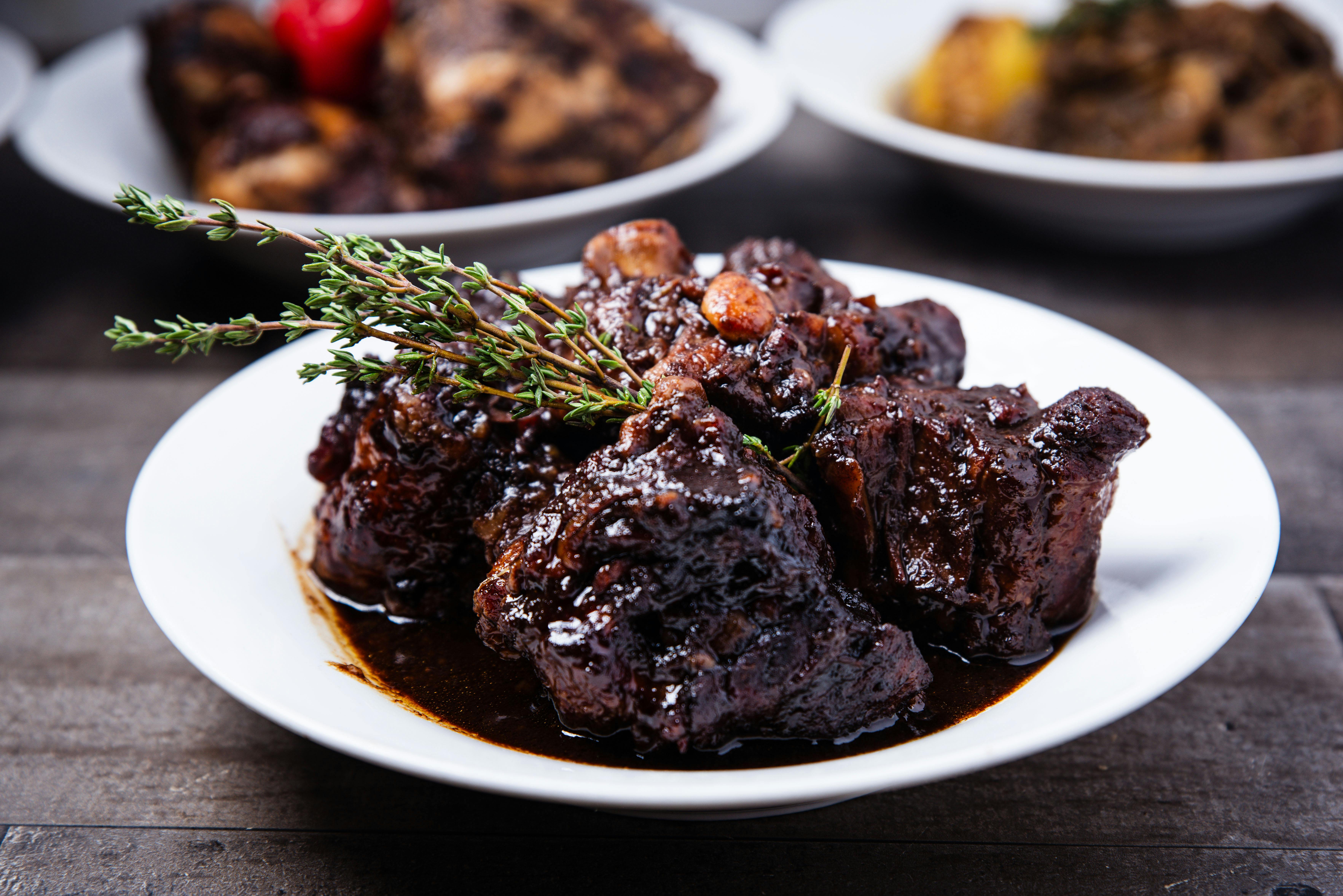
Cameroonian
Mbongo Tchobi
The diets react (see scores below)
Common Ingredients
- fish
- mbongo spice
- garlic
- ginger
- onions
- chili
- njangsa
- salt
Specific recipes may vary.
Incompatible with 3 of 11 diets
Diet Ratings
Mbongo Tchobi is a Cameroonian black stew made with fish, aromatic spices, and njangsa (Ricinodendron heudelotii) seeds, which are rich in fat and contribute a thick, oily sauce. The primary ingredients — fish, garlic, ginger, onions, chili, and spices — are all low in net carbs and keto-compatible. Njangsa seeds are naturally high in fat and fiber, supporting ketosis. Onions add minimal carbs in typical cooking quantities. The mbongo spice blend (charred spices) is generally low-carb. Overall, this dish aligns well with keto principles: high-quality protein from fish, healthy fats from njangsa, and very low net carbs from aromatics and spices. Portion control on onions is advisable but not a major concern for a single serving.
Some strict keto practitioners flag unfamiliar or proprietary spice blends like mbongo as potentially containing hidden starchy fillers or sweeteners depending on the commercial preparation; home-ground mbongo spice from whole charred ingredients is clearly keto-safe, but pre-packaged blends may warrant label scrutiny.
Mbongo Tchobi is a traditional Cameroonian black stew whose primary protein is fish, an animal product that is explicitly excluded from a vegan diet. The remaining ingredients — mbongo spice (a charred bark blend), garlic, ginger, onions, chili, njangsa (Ricinodendron heudelotii seeds), and salt — are all plant-based, but the inclusion of fish makes the dish non-vegan regardless of the other components.
Mbongo Tchobi is a traditional Cameroonian black stew where fish is cooked with a charred spice blend. Most ingredients are paleo-compliant: fish is an ideal paleo protein, garlic, ginger, onions, and chili are approved vegetables and aromatics, and njangsa (Ricinodendron heudelotii) is a wild African seed used as a spice, generally acceptable in its natural form. The two problematic elements are: (1) Salt — explicitly excluded under strict paleo rules as an 'added salt' processed mineral, though it occurs naturally in many foods and many practical paleo followers permit it; (2) Mbongo spice itself — this is a complex spice blend whose exact composition can vary and may include non-paleo additives or preservatives depending on the preparation or commercial sourcing. If both salt and the spice blend are in their most natural, additive-free forms (homemade or whole-spice mbongo), the dish leans closer to approve. The uncertainty around the spice blend composition and the salt exclusion together push this into caution territory.
Many real-food and ancestral diet practitioners, including those following Robb Wolf's practical paleo framework, permit small amounts of natural salt and whole-spice blends on the grounds that ancient humans had access to mineral salts and the anti-inflammatory, whole-food nature of the dish outweighs strict technical exclusions. Under this view, a homemade mbongo spice blend with no additives would push this dish to a solid approve.
Mbongo Tchobi is a Cameroonian fish stew built on a foundation of whole fish and aromatic plant-based ingredients — garlic, ginger, onions, and chili — that align well with Mediterranean diet principles. Fish as the primary protein meets the recommendation for 2-3 servings of seafood per week. The spice blend (mbongo, njangsa) is plant-derived and adds depth without processed additives or refined ingredients. The dish contains no red meat, added sugars, or refined grains. The main uncertainty lies in the cooking fat: traditional preparation may use palm oil rather than olive oil, which is not the canonical Mediterranean fat source. If olive oil or no added fat is used, this dish scores very highly.
Some Mediterranean diet purists would note that njangsa seeds and mbongo spice, while plant-based, are not part of the traditional Mediterranean pantry, and the likely use of palm oil (a saturated fat) rather than extra virgin olive oil distances this dish from core Mediterranean fat principles. However, most clinical interpretations focus on overall dietary pattern rather than strict regional ingredient provenance, and fish-forward whole-food stews are broadly endorsed.
Mbongo Tchobi is a traditional Cameroonian fish stew that, while built on a carnivore-compatible protein base (fish), is heavily laden with plant-derived ingredients that make it incompatible with the carnivore diet. Mbongo spice is a charred bark/seed blend of plant origin, njangsa is a plant seed used as a thickener and flavor base, garlic, ginger, onions, and chili are all plant foods explicitly excluded from carnivore. Only the fish and salt are carnivore-compliant. The dish is essentially defined by its plant-based spice and seed components — removing them would result in a completely different dish. There is clear consensus in the carnivore community that plant spices, aromatics, and seed-based ingredients are excluded, making this an 'avoid' with high confidence.
Mbongo Tchobi is a traditional Cameroonian black stew made with fish and a blend of whole spices and aromatics. The core ingredients — fish, garlic, ginger, onions, chili, and salt — are all explicitly Whole30-compatible. Njangsa (Ricinodendron heudelotii) is a wild African seed used as a thickening and flavoring agent, analogous to a nut or seed, and is not a legume, grain, dairy product, or otherwise excluded ingredient. Mbongo spice is a charred bark (Aframomum daniellii or similar botanicals) used as a spice; as a natural botanical spice with no excluded additives, it is compatible. All ingredients in their whole, unprocessed, home-cooked forms are Whole30-compliant. The caution flag is modest: if purchasing pre-mixed mbongo spice blends commercially, label-reading is warranted to confirm no added sugars, MSG (now allowed), sulfites (now allowed), or anti-caking agents are present.
Some Whole30 practitioners may be unfamiliar with njangsa and mbongo spice and urge caution simply due to lack of information; however, official Whole30 guidelines permit all herbs and spices from natural sources, and both ingredients qualify as natural botanical flavorings with no known excluded components.
Mbongo Tchobi is a traditional Cameroonian black stew featuring several high-FODMAP ingredients that make it unsuitable during the elimination phase. Garlic is a well-established high-FODMAP ingredient (fructans) and is a core flavoring. Onions are similarly high in fructans and typically used in significant quantities as a base. These two ingredients alone would classify the dish as 'avoid.' Additionally, mbongo spice (a charred bark/seed blend specific to Cameroonian cuisine) and njangsa (Ricinodendron heudelotii seeds, also called African nut meg) have not been tested by Monash University, introducing further uncertainty. Ginger and chili are generally low-FODMAP in typical culinary amounts. Fish itself is a safe, low-FODMAP protein. However, the combination of garlic and onions as primary aromatics makes this dish high-FODMAP in its traditional preparation.
Mbongo spice and njangsa are regionally specific ingredients with no Monash University FODMAP testing data, so their individual FODMAP contributions remain unknown. Some clinical FODMAP practitioners might suggest a modified version using garlic-infused oil and omitting onions and garlic, but the traditional recipe as described cannot be considered low-FODMAP.
Mbongo Tchobi is a traditional Cameroonian black stew featuring fish as the primary protein, which aligns well with DASH principles — fish is an excellent lean protein source rich in omega-3 fatty acids. The aromatic base of garlic, ginger, onions, chili, and njangsa (Ricinodendron heudelotii seeds) provides beneficial phytonutrients and anti-inflammatory compounds. Njangsa seeds contribute healthy fats and some fiber. The primary DASH concern is the inclusion of salt (amount unspecified but potentially significant in traditional preparation) and the mbongo spice blend, which is a charred/smoked bark spice mix whose sodium content is difficult to assess precisely. Traditional West/Central African cooking often uses moderate-to-high salt levels. The dish has no added sugars, no processed ingredients, no saturated-fat-heavy components, and the fish base is strongly DASH-compatible. However, sodium control during preparation is essential. With mindful salt reduction, this dish could score higher.
NIH DASH guidelines would flag this dish primarily on sodium uncertainty given the salt addition and complex spice blend. However, updated clinical interpretations focusing on overall dietary patterns would likely view this dish favorably — it is a whole-food, plant-spice-rich fish stew with no processed ingredients, aligning with the broader DASH spirit; sodium can be managed by reducing added salt and the dish's core nutritional profile is strongly DASH-aligned.
Mbongo Tchobi is a Cameroonian black stew built around fish (an excellent lean Zone protein source) and a rich blend of anti-inflammatory spices including garlic, ginger, chili, and the signature mbongo spice (charred bark blend). Fish aligns perfectly with Zone protein guidelines, providing lean protein with beneficial omega-3 fatty acids that directly support Sears' anti-inflammatory model. The aromatics — garlic, ginger, onions, and chili — are low-glycemic, polyphenol-rich vegetables that Zone strongly favors. Njangsa (Ricinodendron heudelotii) seeds add fat to the dish; they contain a meaningful amount of fat that serves as the primary fat block. The carbohydrate load from this dish is low (mostly from onions, garlic, and spices), meaning it would typically be served with a starchy side (fufu, plantains) in traditional settings — but evaluated as a standalone protein-and-fat component, it fits Zone logic well. To complete a Zone meal, the cook should pair it with low-glycemic carb sides (non-starchy vegetables or a small portion of legumes) rather than high-GI fufu or white rice. The spice profile (mbongo, ginger, garlic, chili) is excellent from an anti-inflammatory polyphenol standpoint, which aligns strongly with Sears' later nutritional writings.
Confidence is medium because njangsa seeds are not commonly profiled in Western nutritional databases, making their precise fat profile (saturated vs. monounsaturated vs. polyunsaturated) uncertain. If njangsa seeds carry a higher saturated fat content, Sears' earlier Zone guidelines (Enter the Zone era) would flag this as a caution item. Additionally, traditional serving with high-GI starches like fufu could make the full meal Zone-unfavorable — the dish itself scores well, but the cultural eating context may require significant modification for Zone compliance.
Mbongo Tchobi is a Cameroonian black stew built on a foundation of fish — a lean, omega-3-rich protein — combined with a powerful anti-inflammatory spice profile. Garlic, ginger, and chili pepper are each well-documented anti-inflammatory agents (gingerols, allicin, capsaicin). The signature mbongo spice blend (derived from the charred bark of Aframomum daniellii) contains polyphenols and has demonstrated antioxidant activity in limited studies. Njangsa (Ricinodendron heudelotii) seeds contribute healthy fats and are used medicinally in Central African traditions, though Western anti-inflammatory research on njangsa is sparse. Onions provide quercetin, a flavonoid associated with reduced inflammatory markers. The dish is notably free of refined carbohydrates, seed oils, processed additives, and added sugars. The main uncertainty lies in the specific fish used — fatty fish like mackerel or tilapia common in Cameroon vary considerably in omega-3 content — and in the limited peer-reviewed research on mbongo spice and njangsa within the anti-inflammatory nutrition literature specifically.
The anti-inflammatory credentials of mbongo spice and njangsa are supported primarily by traditional use and preliminary in-vitro antioxidant studies rather than robust clinical trials, so practitioners who require stronger evidence (e.g., those following evidence-based anti-inflammatory protocols focused on well-researched compounds) may rate this dish more conservatively. Additionally, the type of fish matters: if prepared with a lower omega-3 species and cooked in palm oil (a common regional variation not listed here but sometimes used), the score would drop due to saturated fat content.
Mbongo Tchobi is a traditional Cameroonian fish stew built around a charred black spice paste (mbongo spice) with aromatic ingredients including garlic, ginger, onions, chili, and njangsa (a fat-rich seed similar in profile to a nut or oilseed). The fish base is a strong positive: it delivers lean, high-quality protein and, depending on species used (often catfish or bream), may contribute omega-3 fatty acids. Garlic, ginger, and onions are GLP-1 friendly — anti-inflammatory, easy to digest, and nutrient-dense at low calorie cost. The concern factors are two: (1) Njangsa seeds are relatively high in fat, and while this is largely unsaturated fat, the quantity used in a full stew portion can meaningfully raise the fat content of the dish, potentially worsening nausea or bloating in GLP-1 patients who are sensitive to fat-heavy meals. (2) The chili content is a meaningful GI risk — mbongo tchobi is typically moderately to heavily spiced, and chili/pepper can aggravate reflux and nausea, which are already primary GLP-1 side effects. Mbongo spice itself (a charred bark) is generally well-tolerated and adds negligible macronutrient impact. Overall this dish has a genuinely strong nutritional foundation — high protein, low refined carbohydrate, real whole-food ingredients — but the fat contribution from njangsa and the spice intensity introduce meaningful GLP-1 tolerability risk for some patients.
Some GLP-1-focused dietitians would rate this dish more favorably, arguing that njangsa fat is predominantly unsaturated and present in modest per-serving quantities, and that patients who tolerate spice well lose no benefit from this dish. Others would rate it more cautiously, noting that fat and spice thresholds in GLP-1 patients are highly individual and that patients in early weeks of treatment or at higher doses face disproportionate GI risk from both factors simultaneously.
*See how scores were generated at our methodology page.
Nutritional profile
Six traits that cut across every diet.
Fiber & Plants
How much whole-plant food and fiber it delivers.
Healthy Fats
The quality of its fats (unsaturated, omega-3).
Whole / Unprocessed
How close it is to its natural, unprocessed form.
Gut Gentle
How easy it is on digestion (low FODMAP, few irritants).
Low Glycemic
How little it spikes your blood sugar.
Protein Density
How much protein it packs per calorie.
Controversy Index
Higher controversy = more disagreement between diets.
Diet-Specific Tips
 Keto — 8/10
View tips
- Fish is an excellent keto protein source with zero carbs
- Njangsa seeds are high in fat and fiber, supporting ketosis
- Garlic, ginger, onions, and chili are low net-carb aromatics in typical amounts
- No grains, starches, or added sugars in the ingredient list
- Mbongo spice blend from whole charred spices is naturally low-carb
- Fatty sauce from njangsa aligns with the high-fat keto macro requirement
 Paleo — 5/10
View tips
- Fish is a core paleo-approved protein
- Garlic, ginger, onions, and chili are all paleo-compliant aromatics
- Njangsa is a natural wild seed used as a spice — generally paleo-acceptable
- Salt is explicitly excluded under strict paleo rules as an added processed mineral
- Mbongo spice blend composition is variable and may contain non-paleo additives depending on sourcing
- Homemade preparation with whole, unprocessed spices would significantly improve paleo compliance
 Mediterranean — 8/10
View tips
- Fish as primary protein supports twice-weekly seafood guideline
- Garlic, ginger, onions, chili are whole plant aromatics aligned with Mediterranean principles
- Njangsa seeds are plant-based fats, though not traditional to Mediterranean cuisine
- Likely use of palm oil rather than olive oil is a potential concern
- No red meat, refined grains, or added sugars
- Whole-food preparation with minimal processing
 Whole30 — 7/10
View tips
- Fish is a primary Whole30-approved protein
- Mbongo spice (charred bark/botanical) is a natural spice with no excluded ingredients in pure form
- Njangsa seed is a natural fat/flavoring source, not a legume or excluded ingredient
- Garlic, ginger, onions, chili, and salt are all fully Whole30-compliant
- No grains, dairy, legumes, alcohol, or added sugars present
- Pre-mixed commercial spice blends should be label-checked for non-compliant additives
 DASH — 6/10
View tips
- Fish is a DASH-approved lean protein rich in omega-3 fatty acids
- Garlic, ginger, onions, and chili are DASH-friendly aromatics with cardiovascular benefits
- Njangsa seeds provide healthy fats and fiber but require portion awareness
- Mbongo spice is a traditional charred bark blend — sodium content variable and uncertain
- Added salt is the primary DASH concern; quantity in traditional preparation may be high
- No added sugars, no processed ingredients, no tropical oils or saturated fat sources
- Low-sodium preparation would elevate this dish closer to an 'approve' verdict
 Zone — 8/10
View tips
- Fish is an ideal Zone lean protein with omega-3 anti-inflammatory benefits
- Spice blend (garlic, ginger, chili, mbongo) is rich in polyphenols — strongly Zone-favorable
- Njangsa seeds provide fat blocks but fat profile (saturated vs. unsaturated) is uncertain
- Low carbohydrate base makes it compatible with Zone ratios when paired with low-GI sides
- Traditional pairings (fufu, plantains) are high-GI and would need substitution for full Zone compliance
- Anti-inflammatory spice profile aligns well with Sears' later nutritional writings
 Anti-Inflammatory — 8/10
View tips
- Fish as primary protein provides lean, potentially omega-3-rich base (species-dependent)
- Garlic and ginger are well-validated anti-inflammatory ingredients
- Chili pepper contributes capsaicin, a documented anti-inflammatory compound
- Onions provide quercetin and other flavonoids
- Mbongo spice shows antioxidant activity but limited clinical anti-inflammatory research
- Njangsa seeds contribute healthy fats and phytochemicals but lack extensive anti-inflammatory research
- No refined carbohydrates, added sugars, seed oils, or processed additives
- Dish is whole-food, minimally processed in its traditional form
 GLP-1 Friendly — 6/10
View tips
- Fish is an excellent lean protein source and primary macronutrient driver — strong GLP-1 positive
- Njangsa seeds contribute meaningful unsaturated fat that may worsen nausea or bloating in fat-sensitive GLP-1 patients
- Chili content poses reflux and nausea risk, which compounds existing GLP-1 GI side effects
- Garlic, ginger, and onions are anti-inflammatory, easy to digest, and nutrient-dense — all positives
- No refined carbohydrates, no added sugar, no fried components — structurally a whole-food dish
- Spice and fat tolerance on GLP-1 is highly individual; early-treatment patients or those at higher doses should use caution
- Dish lacks fiber-rich components (no legumes, whole grains, or high-fiber vegetables listed) — would benefit from pairing with a fiber source