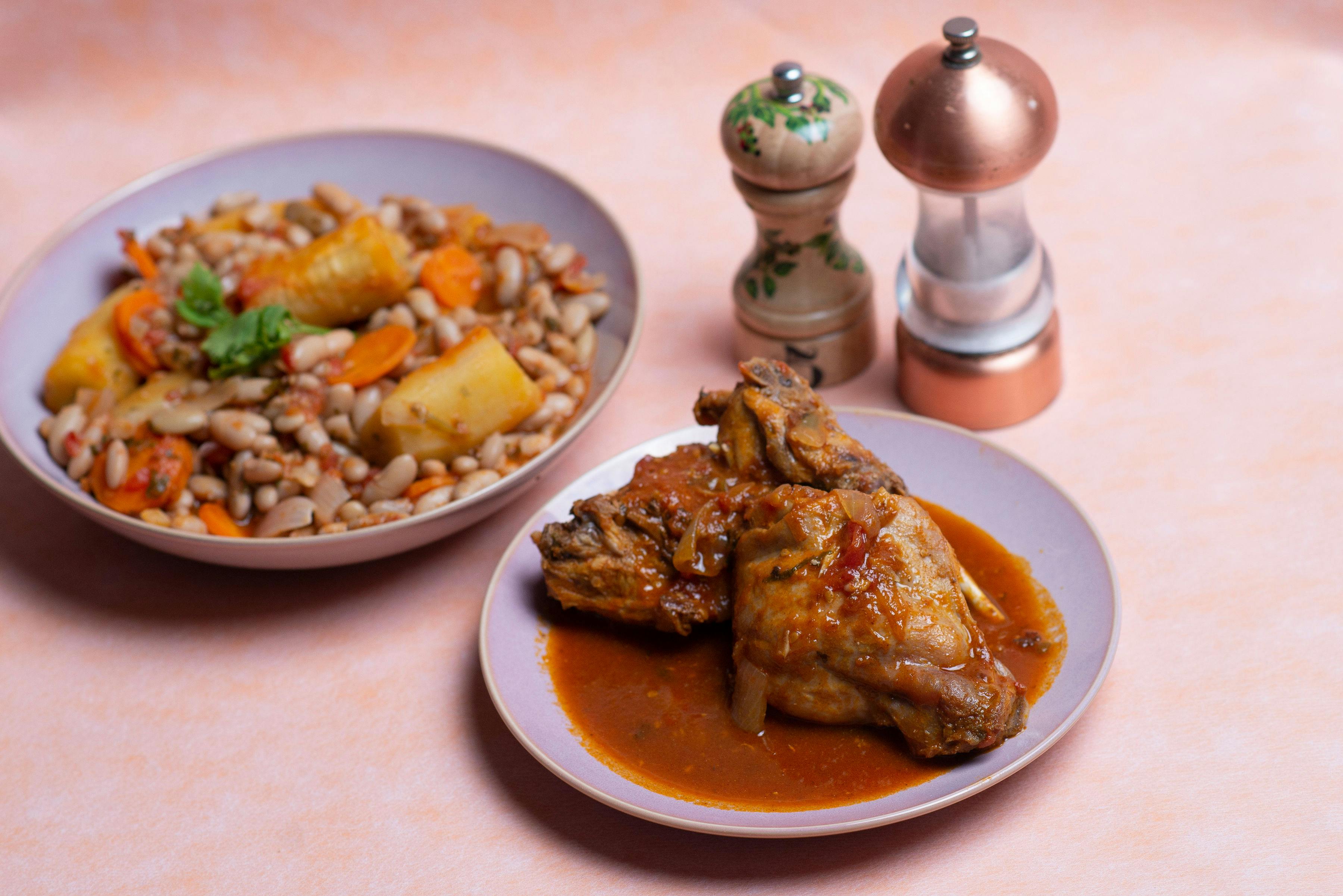
Photo: Lionel Ntasano / Pexels
Cameroonian
Poulet DG
The diets react (see scores below)
Common Ingredients
- chicken
- plantains
- tomatoes
- onions
- bell peppers
- garlic
- carrots
- vegetable oil
Specific recipes may vary.
Incompatible with 5 of 11 diets
Diet Ratings
Poulet DG is fundamentally incompatible with ketogenic eating due to the inclusion of fried plantains as a core ingredient. Plantains are starchy fruits with approximately 24-27g of net carbs per 100g — a single serving in this dish could easily contribute 40-60g of net carbs, instantly exceeding or maxing out the entire daily keto carb budget. The chicken, tomatoes, onions, bell peppers, garlic, and carrots are individually manageable in small portions, but carrots also add moderate carbs. Together with plantains, this dish's carbohydrate load makes it impossible to consume in any realistic portion while maintaining ketosis. The vegetable oil is acceptable from a fat standpoint, and chicken is a fine keto protein, but the plantains are a non-negotiable dealbreaker.
Poulet DG is a Cameroonian dish whose name literally translates to 'Director General's Chicken.' Chicken is the primary protein and a core, non-optional component of this dish. Chicken is animal flesh and is unambiguously excluded from a vegan diet. No plant-based substitution is implied by the dish as traditionally defined.
Poulet DG is a flavorful Cameroonian dish with a strong paleo foundation — chicken, plantains, tomatoes, onions, bell peppers, garlic, and carrots are all whole, unprocessed foods fully compatible with a paleo diet. However, the dish is traditionally made with vegetable oil, which is a seed oil (typically palm olein, sunflower, or generic 'vegetable oil' blends). Seed oils are explicitly excluded from paleo due to their high omega-6 polyunsaturated fat content and industrial processing. This single ingredient disqualifies the dish as prepared. With a simple oil swap to coconut oil, palm oil (red/unrefined), or avocado oil, this dish would score an 8-9 and earn a strong approve.
Poulet DG is a Cameroonian dish featuring chicken (poultry) as the primary protein, which fits Mediterranean diet guidelines as a moderate-consumption food (a few times per week). The vegetable base — tomatoes, onions, bell peppers, garlic, and carrots — is strongly aligned with Mediterranean principles, providing a rich array of plant-forward ingredients. Plantains add starchy carbohydrates; while not a traditional Mediterranean ingredient, they function similarly to other starchy vegetables or legumes and are not inherently problematic. The main concern is the use of generic vegetable oil rather than extra virgin olive oil, which is the canonical fat source in the Mediterranean diet. If substituted with olive oil, this dish would score higher. Overall, it is a nutritious, whole-food dish that aligns reasonably well with Mediterranean principles, but the poultry-centric nature and non-olive oil fat source keep it in the 'caution' (moderation) category.
Some modern Mediterranean diet practitioners apply the framework broadly to any whole-food, plant-rich dish regardless of regional origin, which could push this dish toward 'approve' given its abundant vegetables and lean protein. However, traditional Mediterranean diet guidelines specifically emphasize olive oil as the primary fat, and plantains are not a recognized staple in the canonical Mediterranean food pattern.
Poulet DG is heavily incompatible with the carnivore diet. While chicken is an acceptable animal protein, it is outnumbered by a long list of plant-based ingredients: plantains, tomatoes, onions, bell peppers, garlic, carrots, and vegetable oil. Plantains are a starchy fruit and a major carbohydrate source explicitly excluded from carnivore. Tomatoes, bell peppers, onions, garlic, and carrots are all vegetables/plant foods that are strictly off-limits. Vegetable oil is a plant-derived fat that carnivore practitioners universally reject in favor of animal fats like tallow or lard. The dish is fundamentally a plant-heavy stew with chicken as a secondary component, making it essentially the opposite of a carnivore meal.
Poulet DG (Directeur Général) is a classic Cameroonian dish featuring chicken, fried plantains, and vegetables cooked together. All listed ingredients — chicken, plantains, tomatoes, onions, bell peppers, garlic, carrots, and vegetable oil — are fully compliant with Whole30 rules. Meat, vegetables, fruits (plantains are botanically a fruit), and natural fats are all explicitly allowed. There are no grains, legumes, dairy, added sugars, or other excluded ingredients in this traditional preparation.
Poulet DG contains multiple high-FODMAP ingredients that make it unsuitable during the elimination phase. Garlic is one of the highest-FODMAP foods tested by Monash University, rich in fructans, and is a core flavoring ingredient in this dish — it cannot be omitted without fundamentally changing the recipe. Onions are similarly high in fructans and are a staple component. Together, garlic and onions alone are sufficient to classify this dish as high-FODMAP. Plantains add further concern: while green plantains are lower in FODMAPs, ripe plantains (typically used in Poulet DG for flavor and texture) are higher in fructans and polyols at standard serving sizes. Tomatoes and bell peppers are low-FODMAP in standard portions. Carrots are low-FODMAP. Chicken and vegetable oil are low-FODMAP. However, the combination of garlic and onions as foundational aromatics makes this dish a clear avoid during elimination.
Poulet DG is a Cameroonian dish featuring chicken (lean protein), plantains (starchy fruit with potassium and fiber), and an array of DASH-friendly vegetables including tomatoes, onions, bell peppers, garlic, and carrots. The ingredient profile aligns well with DASH principles — lean protein, no red meat, abundant vegetables, and vegetable oil instead of tropical or saturated fats. However, the dish earns a 'caution' rather than 'approve' because: (1) plantains are calorie-dense and higher in carbohydrates, often fried in significant amounts of vegetable oil in the traditional preparation, which increases total fat and caloric load; (2) frying the plantains and chicken adds considerable oil, requiring portion control; (3) sodium content depends heavily on preparation — traditional recipes may include added salt, bouillon cubes, or seasoning mixes that are high in sodium. If prepared with skinless chicken, baked or pan-fried plantains with minimal oil, and low-sodium seasonings, this dish can score higher on the DASH scale. The vegetable base is a genuine strength.
NIH DASH guidelines emphasize lean poultry and abundant vegetables, which this dish delivers — some DASH-aligned clinicians would approve this dish outright if prepared with minimal added salt and moderate oil. However, traditional Cameroonian preparation often includes bouillon cubes (high sodium) and deep-frying plantains, which shifts the dish toward caution under strict DASH sodium and fat guidelines.
Poulet DG is a flavorful Cameroonian dish that has several Zone-friendly elements but is held back primarily by the plantains. The chicken is an excellent lean protein source that aligns well with Zone principles at approximately 7g protein per block. The vegetable base — tomatoes, onions, bell peppers, garlic, and carrots — is largely Zone-favorable, providing low-to-moderate glycemic carbohydrates rich in polyphenols and fiber, consistent with Sears' anti-inflammatory emphasis. The main concern is plantains, which are classified as an 'unfavorable' carbohydrate in Zone methodology due to their higher starch content and glycemic load, similar to how bananas and corn are treated. Vegetable oil is a potential secondary concern — if it is a seed oil high in omega-6 (e.g., sunflower or soybean oil), it conflicts with Zone's anti-inflammatory principles; if it is olive or avocado oil, this concern diminishes. The dish is not a Zone disaster — it has real protein, real vegetables, and no processed ingredients — but the plantain-heavy carbohydrate profile makes precise block balancing difficult and tips the glycemic load higher than ideal. A Zone-adapted version would reduce plantain portions significantly, increase the vegetable component, and use olive oil, which could bring this dish closer to a 6-7.
Some Zone practitioners, particularly those following Sears' later work emphasizing polyphenol-rich whole foods over strict glycemic indexing, would argue that unripe or green plantains have a lower glycemic index than ripe ones and are a whole-food carbohydrate source preferable to processed grains. In that framing, a moderate serving of plantains alongside lean chicken and colorful vegetables could be treated as an acceptable 'unfavorable' carbohydrate in controlled block portions rather than a red flag. The dish's complete absence of processed foods, added sugars, or refined grains supports a more permissive Zone reading.
Poulet DG is a Cameroonian dish built on a foundation of largely anti-inflammatory whole ingredients. Chicken (lean protein) is acceptable in moderate amounts per anti-inflammatory guidelines. Tomatoes, bell peppers, onions, and garlic are rich in antioxidants, polyphenols, and organosulfur compounds that actively reduce inflammatory markers. Carrots contribute carotenoids (beta-carotene). Plantains are a whole-food complex carbohydrate with resistant starch and some polyphenol content, generally considered neutral to mildly beneficial. The main concern is the 'vegetable oil' component, which in Cameroonian cooking can refer to palm oil (saturated fat, though crude red palm oil contains some tocopherols and carotenoids) or refined seed oils high in omega-6 (e.g., sunflower or soybean oil). Both are flagged under anti-inflammatory guidelines — refined seed oils for omega-6 overload, palm oil for saturated fat content. If extra virgin olive oil were substituted, this dish would score notably higher. The overall dish is vegetable-forward with lean protein, which earns it a cautious approval, but the oil ambiguity keeps it out of the approve tier.
Mainstream anti-inflammatory nutrition (Dr. Weil's framework, Mediterranean-aligned approaches) would view this dish more favorably if made with olive oil, praising the abundance of colorful vegetables and whole-food ingredients. However, AIP and strict omega-6-reduction protocols would flag unspecified vegetable oil and even the nightshade ingredients (tomatoes, bell peppers) as potentially problematic for individuals with autoimmune conditions.
Poulet DG is a Cameroonian dish featuring chicken (good lean protein source) cooked with fried plantains and a tomato-onion-pepper sauce in vegetable oil. The chicken provides solid protein to support GLP-1 dietary goals, and the tomatoes, onions, bell peppers, garlic, and carrots contribute fiber, antioxidants, and micronutrients. However, the plantains are typically deep-fried before being added to the dish, which significantly increases the fat content and caloric density while adding a starchy, heavy component that slows digestion further on top of GLP-1-induced delayed gastric emptying. The vegetable oil used in cooking can also add substantial fat depending on quantity. The dish is not inherently poor, but the fried plantain preparation and oil-heavy cooking method introduce meaningful GI side effect risk (nausea, bloating, reflux) and reduce the nutrient density per calorie. A modified version with boiled or baked plantains and minimal oil would rate considerably higher (7-8). As traditionally prepared, it sits in the caution range — acceptable occasionally and in small portions, with the chicken component being the most valuable element.
Some GLP-1-focused dietitians may rate this more favorably if the chicken is skinless and the plantains are baked rather than fried, arguing that the overall vegetable load and whole-food ingredients make it a nutritionally reasonable choice in modest portions. Others will flag fried plantains as a consistent GI trigger for GLP-1 patients and recommend avoiding the dish in its traditional preparation entirely until GI side effects are well managed.
*See how scores were generated at our methodology page.
Nutritional profile
Six traits that cut across every diet.
Fiber & Plants
How much whole-plant food and fiber it delivers.
Healthy Fats
The quality of its fats (unsaturated, omega-3).
Whole / Unprocessed
How close it is to its natural, unprocessed form.
Gut Gentle
How easy it is on digestion (low FODMAP, few irritants).
Low Glycemic
How little it spikes your blood sugar.
Protein Density
How much protein it packs per calorie.
Controversy Index
Higher controversy = more disagreement between diets.
Diet-Specific Tips
 Mediterranean — 6/10
View tips
- Chicken is a moderate-consumption protein — acceptable but not a staple
- Rich vegetable content (tomatoes, bell peppers, onions, garlic, carrots) strongly aligns with Mediterranean principles
- Plantains are a whole-food starchy carbohydrate — acceptable but not traditional to Mediterranean cuisine
- Vegetable oil used instead of extra virgin olive oil — a notable departure from core Mediterranean fat guidelines
- No processed ingredients, added sugars, or refined grains — a positive factor
- Dish is whole-food and minimally processed overall
 Whole30 — 7/10
View tips
- Chicken is an approved protein on Whole30
- Plantains are a compliant whole fruit/starchy vegetable
- All vegetables (tomatoes, onions, bell peppers, garlic, carrots) are fully compliant
- Vegetable oil is a compliant fat source
- No excluded ingredients present in the traditional recipe
- Whole, unprocessed ingredients consistent with Whole30 spirit
 DASH — 6/10
View tips
- Lean chicken protein aligns with DASH guidelines
- Rich vegetable base (tomatoes, bell peppers, onions, garlic, carrots) supports DASH micronutrient goals
- Plantains provide potassium and fiber but are calorie-dense and often fried
- Vegetable oil is preferred over tropical oils under DASH, but quantity matters
- High sodium risk if bouillon cubes or heavy salting used in traditional preparation
- Skin-on chicken and frying method increase saturated/total fat content
- No added sugar, no full-fat dairy, no red meat — positives for DASH
 Zone — 5/10
View tips
- Chicken is a lean, Zone-ideal protein source
- Plantains are classified as 'unfavorable' high-starch carbohydrates in Zone methodology
- Bell peppers, tomatoes, onions, and carrots are Zone-favorable low-glycemic vegetables rich in polyphenols
- Vegetable oil type is unspecified — seed oils high in omega-6 conflict with Zone anti-inflammatory principles
- No processed ingredients, refined sugars, or grains — a positive for Zone
- Portion control of plantains is critical to maintain 40/30/30 macro balance
- Garlic provides additional polyphenol benefit consistent with Sears' anti-inflammatory emphasis
 Anti-Inflammatory — 6/10
View tips
- Rich in anti-inflammatory vegetables: tomatoes (lycopene), bell peppers (vitamin C, carotenoids), garlic (allicin), onions (quercetin), carrots (beta-carotene)
- Chicken is an acceptable lean protein per anti-inflammatory guidelines
- Plantains are whole-food complex carbohydrates — neutral to mildly beneficial
- Unspecified 'vegetable oil' is the primary concern — likely palm oil or a refined seed oil, both flagged by anti-inflammatory frameworks
- No added sugars, refined carbohydrates, or processed additives
- Nightshade ingredients (tomatoes, bell peppers) may be a concern for autoimmune-sensitive individuals per AIP protocols
 GLP-1 Friendly — 5/10
View tips
- Chicken provides good lean protein supporting the 100-120g daily target
- Plantains are typically deep-fried, adding significant fat and worsening GLP-1 GI side effects
- Vegetable oil quantity can substantially increase fat content and caloric density
- Tomatoes, bell peppers, onions, carrots, and garlic add fiber and micronutrients
- Starchy fried plantains combined with slowed gastric emptying increases bloating and nausea risk
- Small portions of the chicken and vegetable components are more GLP-1 friendly than the dish as a whole
- Dish is portion-sensitive — a small serving focused on chicken and vegetables is far preferable to a full traditional serving