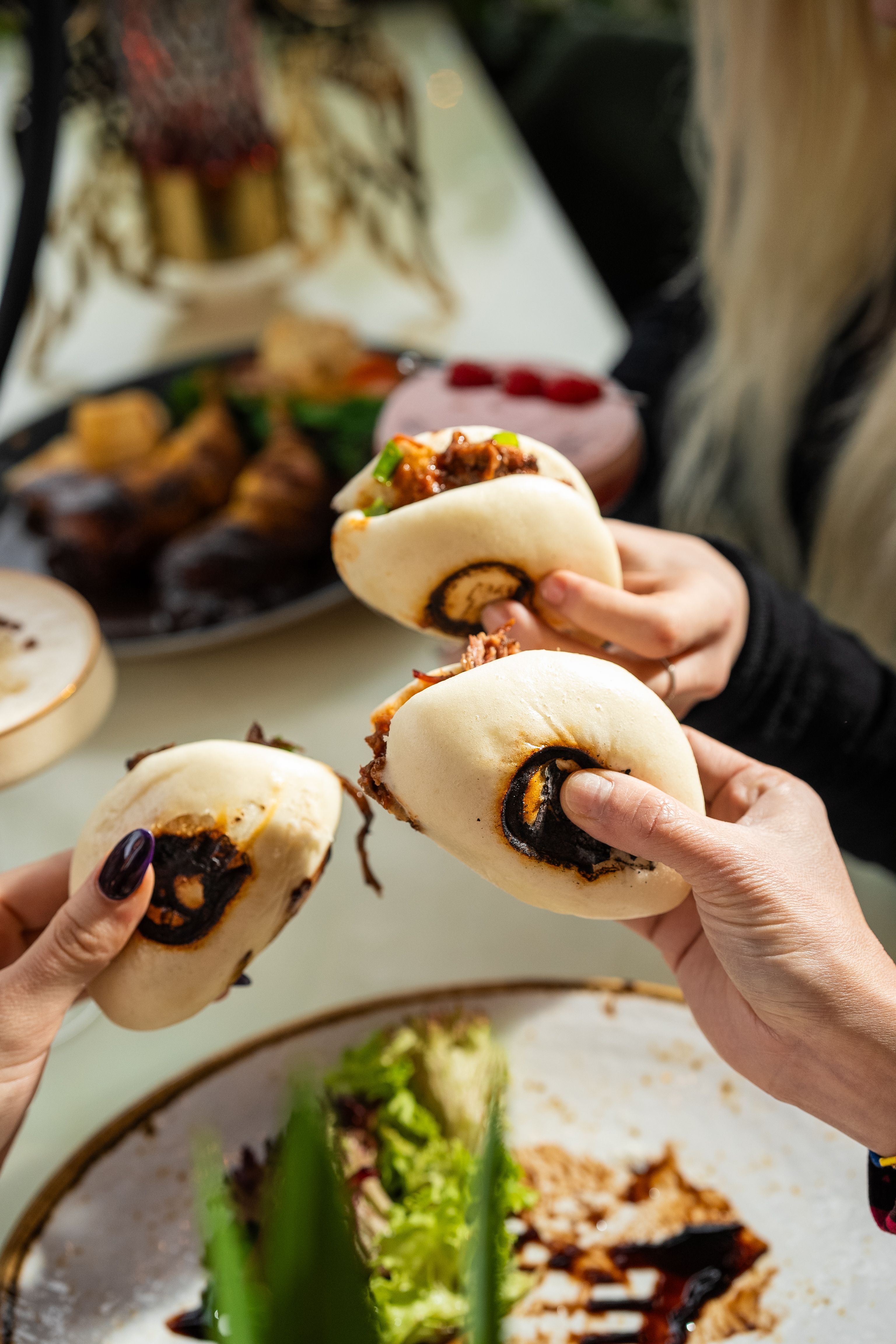
Photo: The Castlebar / Pexels
Chinese
Char Siu Bao
The diets react (see scores below)
Common Ingredients
- char siu pork
- flour
- yeast
- sugar
- hoisin sauce
- oyster sauce
- soy sauce
- scallions
- shallots
Specific recipes may vary.
Incompatible with 10 of 11 diets
Diet Ratings
Char Siu Bao is fundamentally incompatible with a ketogenic diet. The bao bun itself is made from wheat flour and yeast, making it a high-carb grain-based wrapper that alone can contain 30-40g of net carbs per bun. The char siu pork filling is marinated with sugar and coated in hoisin sauce (very high in sugar and starch), oyster sauce (contains sugar and starch), and soy sauce. The combination of a flour-based bun plus multiple sugar-laden sauces makes this one of the most keto-incompatible foods possible. Even a single bao would likely exceed an entire day's net carb allowance for a strict keto dieter. There is no reasonable portion size that makes this compatible with ketosis.
Char Siu Bao contains multiple animal-derived ingredients that disqualify it from a vegan diet. The primary filling is char siu pork, a roasted barbecue pork — a direct animal product. Oyster sauce is derived from oysters (shellfish), adding a second animal-derived ingredient. These two violations alone make this dish clearly incompatible with veganism, regardless of the plant-based components (flour, yeast, sugar, hoisin sauce, soy sauce, scallions, shallots) also present.
Char Siu Bao is fundamentally incompatible with the paleo diet on multiple fronts. The bao bun itself is made from refined wheat flour and yeast — a grain-based product that is unambiguously excluded from paleo. The char siu pork filling, while pork is paleo-approved, is heavily processed with hoisin sauce (contains soy and sugar), oyster sauce (often contains added sugar and starch), and soy sauce (a soy/wheat-derived fermented condiment) — all non-paleo ingredients. Sugar is used both in the dough and the marinade. Nearly every component of this dish violates core paleo principles, making it one of the clearest 'avoid' cases possible.
Char Siu Bao contradicts Mediterranean diet principles on multiple fronts. The primary protein is char siu pork — a barbecued red meat that is both processed and sweetened, placing it firmly in the 'limit to a few times per month' category. The bun itself is made from refined white flour with added sugar, representing exactly the refined grains and added sugars the diet discourages. The sauces (hoisin, oyster, soy) add significant sodium and sugar, and are highly processed condiments absent from the Mediterranean culinary tradition. While scallions and shallots are minor plant positives, they do not offset the core issues. There is no olive oil, no whole grains, no legumes, and no emphasis on vegetables. This dish is fundamentally incompatible with Mediterranean diet principles.
Char Siu Bao is fundamentally incompatible with the carnivore diet. The bao bun itself is made from flour, yeast, and sugar — all plant-derived and explicitly excluded. The char siu pork filling, while animal-based, is marinated with hoisin sauce (contains sugar, soy, vinegar, garlic), oyster sauce (contains starch and sugar), and soy sauce (fermented soy — a legume). Scallions and shallots are plant vegetables. The only carnivore-compatible element is the pork itself, but even that is heavily processed with plant-based sauces and sugar. This dish is a highly processed, carbohydrate-heavy street food with virtually no redeeming carnivore qualities beyond the base protein source.
Char Siu Bao (Chinese BBQ pork buns) is fundamentally incompatible with Whole30 on multiple levels. First, the bao dough is made from flour (wheat/grain), which is explicitly excluded. Second, even if the dough were somehow omitted, the dish itself would constitute a baked good/bread product that violates Rule 4 against recreating bread and buns. Third, the char siu pork filling typically contains sugar, which is excluded. Fourth, hoisin sauce contains soy and sugar. Fifth, soy sauce contains soy (a legume) and wheat (a grain). Oyster sauce often contains added sugar and sometimes soy. Essentially every core component of this dish contains at least one excluded ingredient, and the dish form itself (a filled bun) is on the explicit banned list.
Char Siu Bao is highly problematic for the low-FODMAP elimination phase due to multiple high-FODMAP ingredients stacking together. The bao bun itself is made from wheat flour, which is a primary source of fructans — one of the most significant FODMAPs. The filling contains shallots and scallions (both high-FODMAP due to fructans), hoisin sauce (typically contains garlic and/or onion powder, high in fructans), and oyster sauce (often contains garlic). Even if the char siu pork itself were FODMAP-safe, the combination of wheat dough plus multiple fructan-containing alliums and condiments makes this dish unavoidable in terms of FODMAP load. There is no realistic portion size that would render this dish low-FODMAP during the elimination phase.
Char Siu Bao (BBQ pork buns) conflicts with DASH diet principles on multiple fronts. The filling features char siu pork — a fatty, sweet-glazed red meat — combined with hoisin sauce, oyster sauce, and soy sauce, creating a very high-sodium profile that likely exceeds 600–900mg per bun, which is a significant portion of the DASH sodium limit (1,500–2,300mg/day) in a single snack. Red meat is limited on DASH due to saturated fat content, and the pork used in char siu is typically a fattier cut. The sauce trio (hoisin, oyster, soy) is among the highest-sodium condiment combinations in Chinese cuisine. The white flour bun provides refined carbohydrates with minimal fiber, contrary to DASH's emphasis on whole grains. Added sugar is present both in the char siu glaze and the bun dough. This dish essentially combines three DASH 'limit' categories simultaneously: red meat, high sodium, and added sugar.
Char Siu Bao presents significant Zone Diet challenges across multiple macronutrient dimensions. The steamed bun wrapper is made from refined white flour, a high-glycemic carbohydrate that Dr. Sears explicitly classifies as 'unfavorable' in Zone terminology. The filling adds further complications: char siu pork is typically a fatty cut (pork belly or shoulder) glazed with sugar and hoisin/oyster sauces — contributing both saturated fat and high-glycemic sugar load simultaneously. The sauce ingredients (hoisin, oyster sauce) are sugar-dense, adding to the glycemic burden. The overall macro profile skews heavily toward refined carbs and saturated fat, with relatively modest lean protein per bao. While the scallions and shallots are Zone-favorable, they are minor components. A single bao might deliver perhaps 15-18g carbs (mostly refined/high-GI), 5-8g protein, and 4-6g fat — poorly balanced for Zone ratios and dominated by unfavorable macronutrient sources. It would be very difficult to make this food work as a Zone block without fundamentally altering the recipe.
Some Zone practitioners would note that the protein in the pork filling is real and the dish isn't pure junk food — in strict portion control (one small bao as a partial carb block alongside lean protein sources and monounsaturated fat), it could technically fit into a Zone meal plan as an 'unfavorable' carb choice. Sears acknowledges that Zone is about ratios, not exclusions, so an occasional bao balanced with other meal components isn't categorically forbidden. The score could reasonably be a 4 rather than 3 in this looser interpretation.
Char Siu Bao is a poor fit for an anti-inflammatory diet across multiple dimensions. The char siu pork filling is typically made from fatty cuts of pork (often pork belly or shoulder) with significant added sugar and honey as a glaze, making it high in both saturated fat and refined sugar — two major pro-inflammatory drivers. The bao dough is made from refined white flour with added sugar, providing minimal fiber and a high glycemic load that promotes inflammatory cascades. Hoisin and oyster sauces contribute additional sugar, sodium, and often caramel color or other additives. The dish offers essentially no omega-3 fatty acids, antioxidants, polyphenols, or other anti-inflammatory compounds. Scallions and shallots offer marginal allicin-related benefits but are present in negligible quantities relative to the overall inflammatory load. Red meat (pork) is in the 'limit' category on its own, but combined with refined carbohydrates, added sugar, high sodium processed sauces, and saturated fat, the cumulative profile is strongly pro-inflammatory.
Char Siu Bao is a poor fit for GLP-1 patients across nearly every rating criterion. The filling is char siu pork — a fatty, sweet-glazed barbecue pork typically made from pork shoulder or belly, high in saturated fat and added sugars from hoisin sauce, oyster sauce, and sugar. The bun itself is made from refined white flour with added sugar, offering negligible fiber and very low protein density per calorie. A standard steamed bao (about 60-80g) delivers roughly 5-7g of protein, 2-3g of fiber at best, and a meaningful hit of refined carbohydrates and fat. The baked version is worse — additional fat and a higher glycemic load from the glazed, enriched pastry shell. The sugar content in both the filling glaze and the dough conflicts directly with GLP-1 dietary priorities. The high fat content of char siu pork risks worsening nausea, bloating, and reflux — known GLP-1 side effects. Portion sensitivity does not rescue this food: even one or two bao provide poor nutritional return relative to the caloric cost, and the refined dough is exactly the type of empty-calorie filler that GLP-1 patients cannot afford given their reduced appetite and caloric intake.
*See how scores were generated at our methodology page.
Nutritional profile
Six traits that cut across every diet.
Fiber & Plants
How much whole-plant food and fiber it delivers.
Healthy Fats
The quality of its fats (unsaturated, omega-3).
Whole / Unprocessed
How close it is to its natural, unprocessed form.
Gut Gentle
How easy it is on digestion (low FODMAP, few irritants).
Low Glycemic
How little it spikes your blood sugar.
Protein Density
How much protein it packs per calorie.
Controversy Index
Higher controversy = more disagreement between diets.
Diet-Specific Tips
 Zone — 5/10
View tips
- Refined white flour bun wrapper is a high-glycemic, unfavorable Zone carbohydrate
- Char siu pork is typically fatty (pork belly/shoulder) with significant saturated fat — not Zone-preferred lean protein
- Sugar glaze and sugar-heavy sauces (hoisin, oyster) add high-glycemic carbohydrate load
- Poor 40/30/30 macro ratio: carb-and-fat heavy with insufficient lean protein per serving
- Minor favorable elements: scallions and shallots are Zone-approved vegetables
- Difficult to portion-control into Zone blocks without recipe modification
- Processed condiments (hoisin, oyster sauce) conflict with Zone's anti-inflammatory, whole-food emphasis