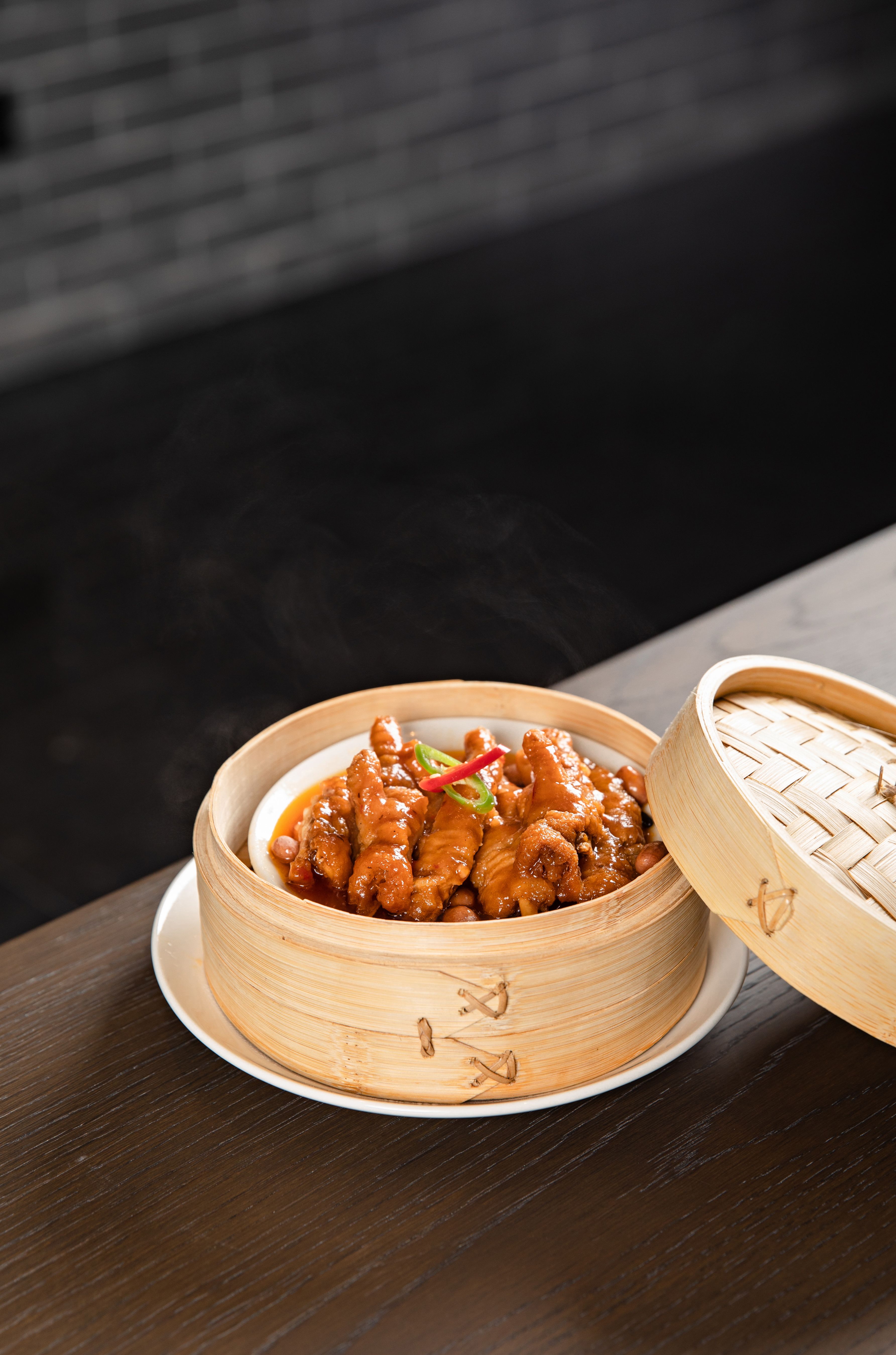
Photo: Change C.C / Pexels
The diets react (see scores below)
Common Ingredients
- chicken feet
- fermented black beans
- garlic
- oyster sauce
- soy sauce
- star anise
- sugar
- chili
- shaoxing wine
Specific recipes may vary.
Incompatible with 8 of 11 diets
Diet Ratings
Fung Zao (dim sum chicken feet) is a mixed bag for keto. Chicken feet themselves are very keto-friendly — high in collagen, fat, and protein with virtually zero carbs. However, the braising sauce introduces multiple problematic ingredients: oyster sauce and sugar are the main offenders, contributing meaningful net carbs per serving. Shaoxing wine also adds small amounts of sugar/carbs. Soy sauce, fermented black beans, garlic, star anise, and chili are manageable in the quantities typically used. A standard dim sum serving (3-4 pieces) likely contains 5-10g net carbs from the sauce, which is borderline. The dish could theoretically fit within a daily keto budget if consumed in very small portions, but as typically prepared and served in restaurants, the cumulative sauce carbs make it risky without modification.
Strict keto practitioners would flag this as avoid due to the explicit addition of sugar and oyster sauce (which contains sugar and starch), arguing that any dish with added sugar should be excluded regardless of portion size, as it can trigger insulin response and cravings. Conversely, lazy keto adherents focused purely on net carbs might approve small servings if they fit the daily 20-50g budget.
Fung Zao (鳳爪) is a classic Cantonese dim sum dish made primarily from chicken feet, which are an animal product and therefore incompatible with a vegan diet. Additionally, oyster sauce is derived from oysters, a marine animal, adding a second animal-derived ingredient to the dish. These two components alone make this dish clearly non-vegan with no ambiguity.
Fung Zao (dim sum chicken feet) contains multiple paleo-incompatible ingredients that are central to the dish, not incidental. Fermented black beans are legumes — strictly excluded from paleo. Soy sauce is derived from fermented soybeans (legume) and wheat (grain), making it doubly non-paleo. Oyster sauce is a processed condiment containing added sugar, salt, and often starch-based thickeners. Shaoxing wine is a grain-based rice wine, placing it in the grain category. Added sugar and implied added salt round out the violations. While the chicken feet themselves are a perfectly paleo protein source — collagen-rich, unprocessed animal parts fully in line with hunter-gatherer eating — the sauce and marinade components that define this dish are fundamentally non-paleo. There is no realistic way to prepare authentic Fung Zao within paleo guidelines, as removing these ingredients would eliminate the dish's identity entirely.
Fung Zao (dim sum chicken feet) is a heavily processed dish that conflicts with Mediterranean diet principles on multiple fronts. Chicken feet themselves are primarily collagen, skin, and connective tissue with minimal lean protein and high saturated fat content. The dish relies on oyster sauce and soy sauce as primary flavor bases, introducing substantial sodium and processed condiments. Added sugar is a direct contradiction of Mediterranean guidelines. Shaoxing wine and fermented black beans, while fermented, add further sodium load. The overall preparation method — typically deep-fried then braised — adds significant unhealthy fat. This dish is non-traditional to the Mediterranean, uses no olive oil, includes no vegetables of substance, and is laden with processed sauces and added sugar, placing it firmly in the 'avoid' category.
Fung Zao (dim sum chicken feet) is fundamentally incompatible with the carnivore diet despite its animal-protein base. While chicken feet themselves are an animal product and even contain beneficial collagen, the dish is heavily laden with multiple plant-based and processed ingredients that disqualify it entirely. Fermented black beans, garlic, star anise, chili, oyster sauce (contains plant starch and sugar), soy sauce (fermented soy — a legume), shaoxing wine (grain-based alcohol), and added sugar all violate core carnivore principles. The dish is essentially a plant-seasoning delivery vehicle wrapped around an animal ingredient. No modification short of completely stripping the recipe would make this carnivore-compatible.
Fung Zao (Chinese braised chicken feet) contains multiple Whole30-excluded ingredients: soy sauce (soy is a legume and excluded), oyster sauce (typically contains added sugar and often soy), sugar (added sugar, excluded), and Shaoxing wine (alcohol, excluded). Even if fermented black beans were borderline (they are legumes and excluded), the combination of soy sauce, oyster sauce, sugar, and Shaoxing wine alone makes this dish clearly non-compliant. There is no realistic compliant substitution that would preserve the dish's identity.
Fung Zao (dim sum chicken feet) contains multiple high-FODMAP ingredients that make it unsuitable during the elimination phase. Garlic is one of the highest-FODMAP foods tested by Monash University, rich in fructans, and is a core flavoring in this dish — it cannot be avoided even in small amounts. Fermented black beans are a legume-based product high in GOS (galacto-oligosaccharides), making them high-FODMAP. Oyster sauce typically contains garlic and/or onion derivatives and is rated high-FODMAP by Monash unless used in very small quantities (1 teaspoon max), but in braised dishes like this it is used in larger amounts. Star anise contains fructans and is high-FODMAP at culinary doses. Shaoxing wine may introduce additional FODMAP concerns. The chicken feet themselves are low-FODMAP (collagen/protein), and soy sauce and sugar are low-FODMAP in standard servings, but the combination of garlic, fermented black beans, oyster sauce, and star anise makes this dish clearly high-FODMAP and inappropriate during elimination.
Fung Zao (Chinese braised/dim sum chicken feet) is highly problematic for the DASH diet. The ingredient profile is dominated by high-sodium components: oyster sauce, soy sauce, and fermented black beans are each individually very high in sodium — combined in a single dish, they can easily contribute 800–1,500mg+ of sodium per serving, far exceeding what is acceptable under either the standard (<2,300mg/day) or low-sodium (<1,500mg/day) DASH targets in a single snack. Chicken feet themselves are also high in skin and collagen-rich connective tissue, contributing significant saturated fat and cholesterol, which DASH limits. The dish lacks the hallmark DASH nutrients — it is low in potassium, magnesium, calcium, and fiber. Sugar is present but in modest amounts. While garlic and chili are DASH-friendly ingredients, they do not offset the overwhelmingly high-sodium, high-saturated-fat profile of the overall dish. This is a heavily processed, sauce-intensive preparation that is explicitly contrary to DASH principles.
Fung Zao (dim sum chicken feet) presents a mixed Zone Diet profile. Chicken feet are indeed a protein source, but they are composed largely of skin, cartilage, and collagen rather than lean muscle meat, meaning the protein quality and density is lower than a Zone-ideal source like skinless chicken breast. The fat profile skews toward saturated fat from the skin rather than the preferred monounsaturated fats. The sauce components introduce meaningful Zone concerns: oyster sauce and soy sauce add sodium and moderate sugar load, while the recipe explicitly includes added sugar and Shaoxing wine, both of which are unfavorable high-glycemic carb additions in Zone methodology. Fermented black beans and garlic contribute polyphenols and are anti-inflammatory positives Sears would appreciate. Star anise and chili are Zone-neutral to positive. However, the overall macronutrient ratio of this dish is difficult to bring into 40/30/30 balance — it is high in collagen-fat, moderate in sugar-based carbs from the sauce, and low in quality lean protein. As a snack, it also lacks a meaningful vegetable carbohydrate component to fill the carb block cleanly. It can be incorporated into a Zone day in small portions but requires significant effort to balance with other meal components.
Some Zone practitioners, particularly those familiar with Sears' later anti-inflammatory writings, would note that collagen and gelatin from chicken feet may have beneficial effects on gut health and inflammation, which aligns with Sears' broader anti-inflammatory philosophy. The fermented black beans also provide beneficial polyphenols. A strict 'blocks' purist would score this lower due to the saturated fat and sugar in the sauce, while a more holistic Zone practitioner applying Sears' later work might be more forgiving of the occasional dim sum serving.
Fung Zao (dim sum chicken feet) presents a mixed anti-inflammatory profile. On the positive side, fermented black beans are a whole soy food rich in antioxidants and probiotics, which are emphasized in anti-inflammatory eating. Garlic is a well-established anti-inflammatory ingredient containing allicin. Chili peppers provide capsaicin, a known anti-inflammatory compound. Star anise contains anethole with documented anti-inflammatory properties. Shaoxing wine is used in small quantities as a cooking ingredient. The negatives include: oyster sauce and soy sauce contribute significant sodium and often added sugars and preservatives; added sugar is a pro-inflammatory ingredient to limit; and chicken feet themselves are predominantly skin and connective tissue — while collagen-rich, they are high in saturated fat relative to lean muscle meat. The dish is also relatively high in sodium overall from multiple salty condiments. The fermentation of black beans is a genuine anti-inflammatory positive, and the spice profile is favorable, but the sodium load, added sugar, and high saturated fat from chicken skin-dominated feet temper the rating. As a snack consumed occasionally in moderate portions (as is typical in dim sum context), this lands in caution territory — not actively harmful, but not strongly anti-inflammatory either.
Some anti-inflammatory nutrition advocates, particularly those focused on gut health and traditional fermented foods, would rate this more favorably — pointing to fermented black beans, collagen from chicken feet (for joint and gut lining support), and the anti-inflammatory spice blend as net positives. Conversely, stricter anti-inflammatory protocols (such as those targeting autoimmune conditions) might rate this lower due to sodium density from multiple processed condiments and added sugar, which can aggravate inflammation in sensitive individuals.
Fung Zao (dim sum chicken feet) is a poor fit for GLP-1 patients. Chicken feet are composed almost entirely of skin, cartilage, and connective tissue — they are extremely high in fat and collagen, but deliver very little usable protein by weight (roughly 5-7g per 100g serving, much of it from gelatin rather than complete muscle protein). The braising and steaming process in oyster sauce, soy sauce, sugar, and Shaoxing wine adds significant sodium and simple sugars, contributing empty calories with minimal nutritional payoff. The chili and fermented black bean sauce may aggravate GLP-1-related nausea, reflux, and gastric sensitivity. The high fat content from skin is likely to worsen nausea and bloating given slowed gastric emptying. Portion-for-portion, this is one of the lowest protein-density, highest fat items in the dim sum category. It fails on protein density, low-fat, easy digestibility, and nutrient-density-per-calorie criteria simultaneously.
Some GLP-1-focused dietitians note that collagen-rich foods may support connective tissue health during rapid weight loss, and that fermented black beans provide modest fiber and beneficial fermentation byproducts. A small 1-2 piece portion may be tolerable for patients without active GI side effects who are further along in their medication adjustment period, though this view is a minority position and not a basis for routine inclusion.
*See how scores were generated at our methodology page.
Nutritional profile
Six traits that cut across every diet.
Fiber & Plants
How much whole-plant food and fiber it delivers.
Healthy Fats
The quality of its fats (unsaturated, omega-3).
Whole / Unprocessed
How close it is to its natural, unprocessed form.
Gut Gentle
How easy it is on digestion (low FODMAP, few irritants).
Low Glycemic
How little it spikes your blood sugar.
Protein Density
How much protein it packs per calorie.
Controversy Index
Higher controversy = more disagreement between diets.
Diet-Specific Tips
 Keto — 4/10
View tips
- Chicken feet are naturally keto-friendly: high collagen, fat, zero net carbs
- Added sugar is a direct keto violation
- Oyster sauce contains sugar and starch, adding net carbs to the sauce
- Shaoxing wine contributes minor carbs
- Fermented black beans are low-carb in typical quantities
- Soy sauce is low-carb but high-sodium, generally acceptable
- Restaurant portions make carb control difficult
- Small home-prepared portions with reduced sugar/oyster sauce could be borderline acceptable
 Zone — 4/10
View tips
- Chicken feet are low in lean protein relative to total mass — primarily skin, collagen, and saturated fat, not Zone-ideal lean protein
- Added sugar and Shaoxing wine in the sauce are unfavorable high-glycemic carb sources in Zone methodology
- Oyster sauce and soy sauce add sodium and additional sugar load, complicating block calculations
- Fermented black beans and garlic are Zone-positive polyphenol sources with anti-inflammatory properties
- Fat profile is predominantly saturated (skin) rather than monounsaturated, which Zone diet discourages
- As a snack category item, lacks the low-glycemic vegetable carbohydrates Zone recommends for clean carb blocks
- Difficult to fit into a clean 40/30/30 ratio without careful pairing with other Zone-favorable foods
 Anti-Inflammatory — 5/10
View tips
- Fermented black beans: whole soy food with probiotics and antioxidants — anti-inflammatory positive
- Garlic and chili: well-established anti-inflammatory ingredients
- Star anise: contains anethole, a documented anti-inflammatory compound
- Chicken feet: high in saturated fat from skin and connective tissue, less lean than preferred poultry cuts
- Oyster sauce and soy sauce: high sodium, often contain added sugar and preservatives
- Added sugar: pro-inflammatory ingredient flagged across all anti-inflammatory frameworks
- Overall sodium load: multiple high-sodium condiments combined is a concern for inflammatory markers
- Collagen-rich dish: potential joint and gut support, though evidence for anti-inflammatory benefit is not strong