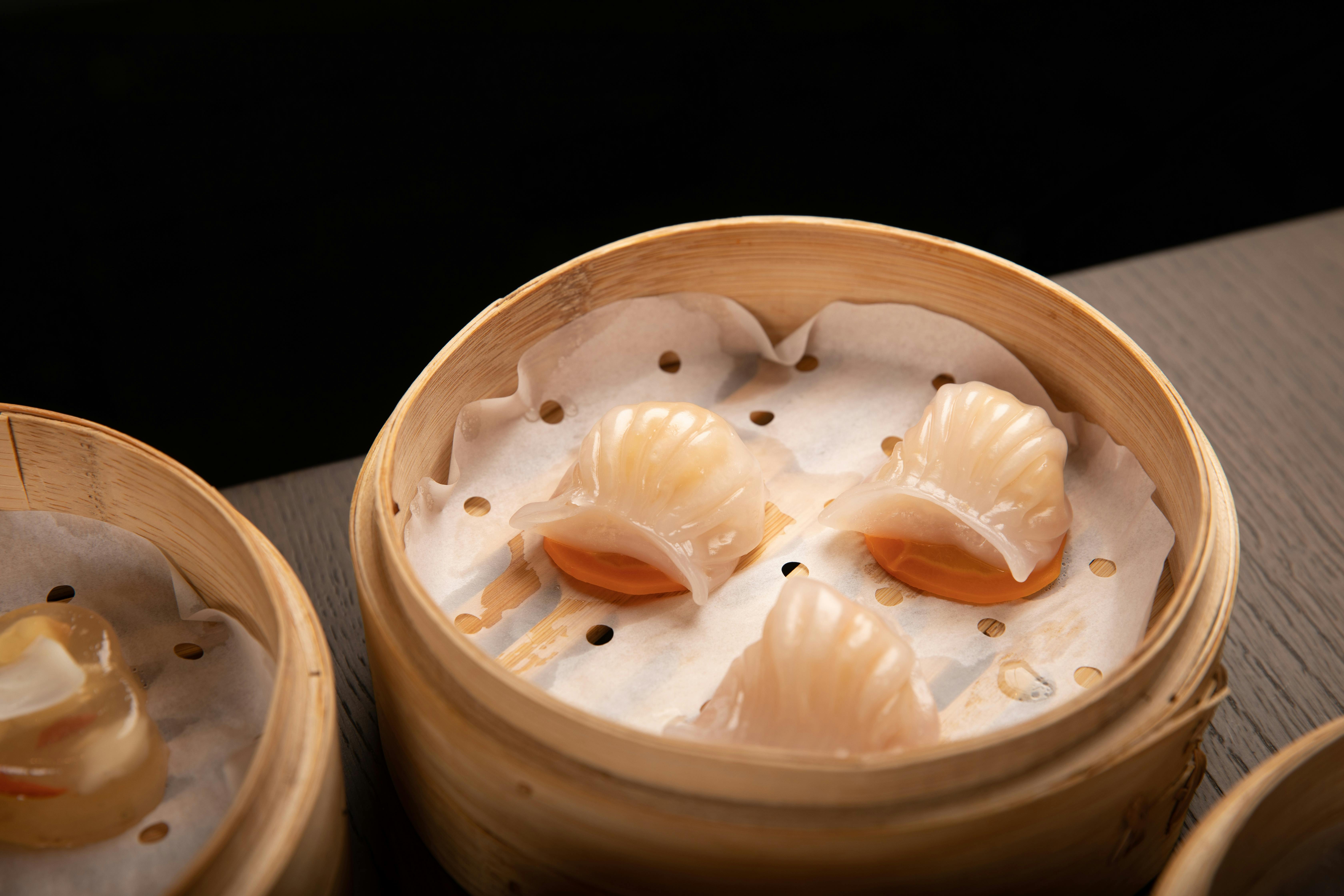
Photo: Change C.C / Pexels
The diets react (see scores below)
Common Ingredients
- shrimp
- wheat starch
- tapioca starch
- bamboo shoots
- sesame oil
- pork fat
- salt
- sugar
Specific recipes may vary.
Incompatible with 6 of 11 diets
Diet Ratings
Har Gow is a traditional Chinese dim sum dumpling whose wrapper is made primarily from wheat starch and tapioca starch — both high-carbohydrate ingredients that are fundamentally incompatible with ketogenic eating. While wheat starch has slightly less protein than regular wheat flour, it still contributes significant net carbs per piece. Tapioca starch is nearly pure starch with a very high glycemic impact. A typical serving of 3-4 pieces can easily contain 20-30g of net carbs, potentially consuming an entire day's keto carb budget. The filling ingredients (shrimp, pork fat, sesame oil, bamboo shoots) are individually keto-friendly, but the wrapper construction makes the dish as prepared essentially impossible to fit into a ketogenic diet without complete deconstruction.
Har Gow contains multiple animal-derived ingredients that are strictly incompatible with a vegan diet. Shrimp is seafood (an animal product), and pork fat is an animal-derived fat. Both are unambiguous disqualifiers under any mainstream definition of veganism. There is no meaningful debate within the vegan community about these ingredients.
Har Gow is a traditional Cantonese dim sum dumpling that is fundamentally incompatible with the paleo diet. The wrapper is made from wheat starch — a grain-derived product that is explicitly excluded from paleo. While wheat starch has less gluten than whole wheat flour, it is still a processed grain derivative. Additionally, sesame oil is a seed oil on the avoid list, and salt and sugar are added processed ingredients. The shrimp, pork fat, and bamboo shoots are paleo-compliant, but the dish as a whole is disqualified by its grain-based wrapper and seed oil. No reasonable paleo adaptation of this dish would retain its defining characteristic — the translucent dumpling skin.
Har Gow presents multiple concerns from a Mediterranean diet perspective. The wrapper is made from refined wheat starch and tapioca starch — both highly processed, nutritionally stripped starches with no whole grain content, which contradicts the Mediterranean emphasis on whole grains. Pork fat (lard) is a saturated animal fat that directly conflicts with extra virgin olive oil as the primary fat source. The dish also contains added sugar and is a processed/restaurant snack rather than a whole food. On the positive side, shrimp is an encouraged seafood protein and bamboo shoots are a vegetable, but these beneficial elements are outweighed by the refined starch wrapper, pork fat, and processed nature of the dish. Sesame oil, while a plant fat, is not a Mediterranean staple and used in minimal quantity here.
Some flexible Mediterranean diet interpretations acknowledge that shrimp is a high-quality lean seafood protein consumed 2-3 times weekly, and occasional moderate consumption of non-traditional dishes with seafood as the primary protein could be tolerated within an otherwise Mediterranean-pattern diet. The bamboo shoots also add a vegetable component.
Har Gow is a traditional Chinese dim sum dumpling that is fundamentally incompatible with the carnivore diet. While it does contain shrimp and pork fat (both animal-derived and carnivore-approved), the dish is defined by its wrapper made from wheat starch and tapioca starch — both plant-derived carbohydrate ingredients that are strictly excluded on carnivore. Additionally, bamboo shoots are a plant vegetable, sesame oil is a plant-derived oil, and sugar is an excluded additive. The animal-based components are entirely overshadowed by the multiple plant-derived ingredients that form the core structure of the dish. This is not a borderline case — it is a starch-wrapped dumpling with vegetable filling.
Har Gow contains multiple Whole30-excluded ingredients. Wheat starch, while lower in gluten than whole wheat flour, is still derived from wheat — a grain explicitly excluded from Whole30. Additionally, sugar is a directly excluded ingredient (added sugar is not permitted). These two violations alone make Har Gow clearly non-compliant, regardless of the otherwise acceptable ingredients (shrimp, bamboo shoots, sesame oil, pork fat, salt, tapioca starch).
Har Gow presents a nuanced FODMAP picture. The wrapper is made from wheat starch (not whole wheat flour), which is significant — wheat starch has the gluten proteins removed and is also substantially depleted of fructans compared to regular wheat flour. This is different from standard wheat and is generally considered lower in FODMAPs, similar to how cornstarch or tapioca starch behaves. Tapioca starch is low-FODMAP. Shrimp is a low-FODMAP protein. Sesame oil is low-FODMAP (FODMAPs are water-soluble). Salt and sugar in small culinary amounts are low-FODMAP. Pork fat is low-FODMAP. The key concern is bamboo shoots, which Monash has tested and found to be low-FODMAP at 1 cup (75g) — a reasonable serving. However, at a dim sum serving of 3-4 pieces, the cumulative bamboo shoot content combined with the wheat starch wrapper creates moderate uncertainty. Wheat starch is not the same as wheat flour, but residual fructan content, even if minimal, combined with eating multiple pieces (3-6 dumplings is typical), may push some sensitive individuals into symptomatic territory. This dish is not an obvious high-FODMAP avoid like garlic dumplings, but it is not confidently low-FODMAP either.
Monash University has not specifically tested har gow as a dish, and wheat starch (as opposed to wheat flour) lacks clear FODMAP quantification in the Monash database. Many clinical FODMAP practitioners advise avoiding all wheat-derived ingredients during the strict elimination phase regardless of processing, as the fructan depletion from starch extraction is variable by manufacturing process and difficult for patients to verify.
Har Gow (shrimp dumplings) presents a mixed DASH profile. On the positive side, shrimp is a lean, low-saturated-fat protein source rich in potassium and magnesium, and bamboo shoots are a DASH-friendly vegetable. However, several ingredients work against DASH compliance: pork fat is a source of saturated fat, which DASH limits; sesame oil adds caloric fat; and the combination of salt and sodium-rich shrimp filling means sodium content can be moderate to high per serving (restaurant dim sum portions often contain 300-500mg sodium per 3 dumplings). The refined wheat and tapioca starches provide little fiber compared to whole grains emphasized by DASH. In moderation (1 serving of 3 dumplings), Har Gow is acceptable but not a core DASH food. Homemade versions with reduced salt and omitting pork fat would score higher.
NIH DASH guidelines emphasize avoiding saturated fat sources like pork fat and refined starches over whole grains, which would push this dish toward 'avoid.' However, updated clinical DASH interpretations note that shrimp-based dishes with modest saturated fat and controlled portions can fit within a DASH pattern, especially when sodium is managed — some DASH-oriented dietitians consider occasional dim sum acceptable within weekly meal planning.
Har Gow presents a mixed Zone Diet profile. On the positive side, shrimp is an excellent lean protein source — very low in fat and high in quality protein, making it a favorable Zone protein block. Bamboo shoots are a low-glycemic vegetable addition. However, the wrapper is made from wheat starch and tapioca starch, both of which are high-glycemic, refined carbohydrate sources with minimal fiber — these are 'unfavorable' carbs in Zone terminology that spike blood sugar rapidly. Pork fat adds saturated fat rather than preferred monounsaturated fat, and sesame oil is primarily omega-6 heavy, which conflicts with Zone's anti-inflammatory emphasis. The small amount of sugar in the filling is a minor concern. As a snack portion (typically 3-4 pieces), the shrimp protein content is relatively modest, and the carbohydrate load from the starch wrappers is disproportionately high-glycemic relative to the protein delivered. A Zone practitioner could technically include 1-2 pieces as part of a meal but would need to carefully account for the glycemic carb load. The dish is not catastrophic — it's a dim sum item with real protein — but it requires significant portioning caution and doesn't fit neatly into Zone blocks.
Some Zone practitioners may rate Har Gow slightly more favorably, noting that dim sum portions are inherently small and that the shrimp-to-wrapper ratio provides meaningful lean protein. In Sears' later writings, the anti-inflammatory framework focuses heavily on the insulin response of the overall meal rather than individual ingredient purity — and a 2-piece portion of Har Gow alongside other Zone-favorable foods could be argued as manageable within a block framework. The wheat and tapioca starch issue is real, but the absolute carbohydrate quantity per piece is relatively small.
Har Gow presents a mixed anti-inflammatory profile. On the positive side, shrimp is a lean protein source that contains some omega-3 fatty acids, selenium, and astaxanthin — a potent antioxidant carotenoid. Bamboo shoots provide fiber and are a low-calorie vegetable with some anti-inflammatory phytonutrients. Sesame oil in small amounts contains sesamin and sesamolin, lignans with modest anti-inflammatory properties. However, several ingredients temper the picture: pork fat is a source of saturated fat, which in meaningful quantities is associated with increased inflammatory markers. The wrapper is made from wheat starch and tapioca starch — both refined, low-fiber carbohydrates that are essentially empty of anti-inflammatory value, though they are not pro-inflammatory in the way that added sugars or trans fats are. The added sugar and salt are minimal in typical preparation but worth noting. Critically, har gow is a steamed dim sum dish, which is a favorable cooking method — it avoids the oxidative damage and acrylamide formation of frying. Overall, har gow is a relatively clean snack by dim sum standards, but the refined starches, pork fat, and absence of strong anti-inflammatory ingredients (no turmeric, leafy greens, omega-3-rich fats) keep it in moderate territory. Acceptable occasionally, not a dish that actively supports an anti-inflammatory pattern.
Some anti-inflammatory practitioners following stricter autoimmune or grain-free protocols (e.g., AIP) would flag wheat and tapioca starches as gut-irritating and rate this lower, while others focused on the benefits of shrimp's astaxanthin and lean protein might score it more favorably, noting that steaming is one of the most anti-inflammatory cooking methods and pork fat quantities per dumpling are small.
Har Gow is a steamed shrimp dumpling, which gives it meaningful advantages over fried dim sum options: shrimp provides lean, high-quality protein, and the steamed preparation avoids added fats from frying, supporting easier digestibility. However, the wrapper is made almost entirely from wheat starch and tapioca starch — both highly refined, low-fiber carbohydrates with minimal nutritional value beyond calories. The inclusion of pork fat in the filling adds saturated fat that can worsen GLP-1 side effects like nausea and bloating, though the quantity per dumpling is typically small. Sesame oil contributes additional fat, though in modest amounts. Protein per serving is moderate — a standard serving of 3 dumplings yields roughly 9–12g of protein, falling below the 15–30g per meal target. The dish is low in fiber, offers limited nutrient density per calorie, and the refined starch wrapper provides empty carbohydrates. That said, Har Gow is portion-friendly, gentle on the stomach compared to fried alternatives, and shrimp is an excellent GLP-1-compatible protein source. It rates as an acceptable occasional choice, ideally paired with higher-protein or higher-fiber dishes to meet meal targets.
Some GLP-1-focused dietitians may rate Har Gow more favorably as a low-calorie, steamed, portion-controlled snack where the shrimp protein, however modest, is genuinely lean and easy to digest — particularly useful on high-nausea days when lighter foods are better tolerated. Others would flag the refined starch wrappers and pork fat more strongly, recommending patients choose protein sources with better protein-to-calorie ratios and no added saturated fat.
*See how scores were generated at our methodology page.
Nutritional profile
Six traits that cut across every diet.
Fiber & Plants
How much whole-plant food and fiber it delivers.
Healthy Fats
The quality of its fats (unsaturated, omega-3).
Whole / Unprocessed
How close it is to its natural, unprocessed form.
Gut Gentle
How easy it is on digestion (low FODMAP, few irritants).
Low Glycemic
How little it spikes your blood sugar.
Protein Density
How much protein it packs per calorie.
Controversy Index
Higher controversy = more disagreement between diets.
Diet-Specific Tips
 Low-FODMAP — 5/10
View tips
- Wheat starch wrapper is lower in fructans than wheat flour but still wheat-derived — FODMAP content is processing-dependent
- Tapioca starch is low-FODMAP and safe
- Shrimp is a confirmed low-FODMAP protein
- Bamboo shoots are low-FODMAP at standard servings per Monash
- Sesame oil and pork fat are fat-based and low-FODMAP
- Cumulative effect of eating 3-6 dumplings may increase FODMAP load from wheat starch
- No specific Monash University testing data exists for har gow as a dish
- Standard dim sum portions make portion control difficult in practice
 DASH — 4/10
View tips
- Shrimp is a lean DASH-compatible protein source
- Pork fat adds saturated fat, which DASH limits
- Refined wheat and tapioca starch lacks fiber versus whole grains
- Moderate-to-high sodium from salt and shrimp seasoning in restaurant preparations
- Bamboo shoots are a DASH-friendly vegetable ingredient
- Small portion sizes (3 dumplings) help limit overall saturated fat and sodium load
- Sesame oil adds unsaturated fat but increases caloric density
 Zone — 4/10
View tips
- Shrimp is an excellent Zone-favorable lean protein source
- Wheat starch and tapioca starch wrappers are high-glycemic, refined carbs with negligible fiber — 'unfavorable' in Zone terms
- Pork fat contributes saturated fat, not the preferred monounsaturated fat
- Sesame oil is omega-6 dominant, counter to Zone's anti-inflammatory focus
- Bamboo shoots are a favorable low-glycemic vegetable component
- Small portion sizes (dim sum style) partially mitigate glycemic impact
- Protein-to-carb ratio in the dish skews toward excess carbohydrate relative to protein blocks
- Minimal fiber in the wrapper increases net carb glycemic load
 Anti-Inflammatory — 5/10
View tips
- Shrimp provides omega-3s and astaxanthin (anti-inflammatory carotenoid)
- Steamed preparation avoids oxidative cooking damage
- Pork fat adds saturated fat, a pro-inflammatory concern
- Wheat starch and tapioca starch are refined, low-fiber carbohydrates
- Bamboo shoots contribute fiber and phytonutrients
- Sesame oil offers modest lignans with anti-inflammatory properties
- Small amounts of added sugar and salt are not major concerns
- No strongly anti-inflammatory ingredients (turmeric, leafy greens, EVOO, omega-3 fats)
 GLP-1 Friendly — 5/10
View tips
- Shrimp is a lean, high-quality protein source well-suited for GLP-1 patients
- Steamed preparation avoids fried fat load and supports easier digestion
- Wheat starch and tapioca starch wrappers are refined, low-fiber, low-nutrient carbohydrates
- Pork fat adds saturated fat that may worsen nausea and bloating side effects
- Protein yield per standard serving (~3 pieces) is approximately 9–12g, below the 15–30g per meal target
- Near-zero dietary fiber offers no constipation prevention benefit
- Small portion size is GLP-1 friendly and unlikely to cause overfilling
- Best consumed as part of a meal that includes higher-protein and higher-fiber components