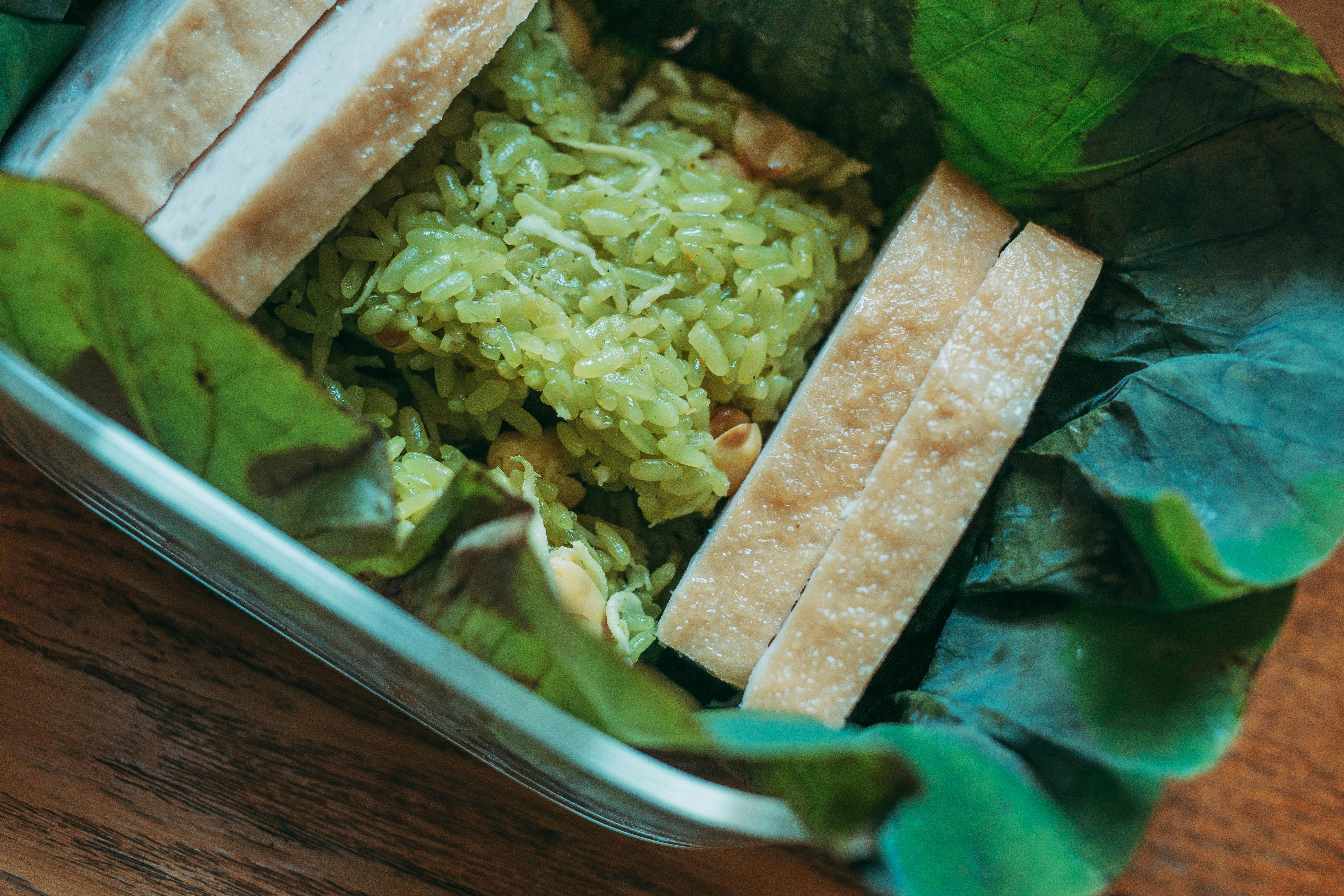
Photo: FOX ^.ᆽ.^= ∫ / Pexels
The diets react (see scores below)
Common Ingredients
- glutinous rice
- chicken
- chinese sausage
- shiitake mushrooms
- dried shrimp
- lotus leaf
- oyster sauce
- soy sauce
- scallions
Specific recipes may vary.
Incompatible with 9 of 11 diets
Diet Ratings
Lo Mai Gai is built around glutinous rice as its primary and dominant ingredient, which is one of the highest-glycemic, highest-carb foods available. A single serving of Lo Mai Gai typically contains 40-60g of net carbs from the glutinous rice alone, immediately exceeding or maxing out the entire daily keto carb allowance. Glutinous rice has essentially zero fiber, meaning there is no offset from net carb calculation. The oyster sauce also contains added sugar and starch. While some individual ingredients like chicken, shiitake mushrooms, dried shrimp, and Chinese sausage are keto-compatible in isolation, the glutinous rice base makes this dish categorically incompatible with ketosis in any reasonable serving size. There is no practical way to portion-control this dish into keto compliance without essentially not eating it.
Lo Mai Gai contains multiple animal products and animal-derived ingredients, making it clearly incompatible with a vegan diet. Chicken is direct animal flesh. Chinese sausage (lap cheong) is typically made from pork. Dried shrimp are a seafood product. Oyster sauce is derived from oysters. Any one of these ingredients alone would disqualify this dish; together they represent a heavily animal-based recipe with no meaningful plant-based interpretation in its traditional form.
Lo Mai Gai is fundamentally incompatible with the paleo diet. The primary ingredient is glutinous rice, a grain that is strictly excluded from paleo. Beyond the rice, Chinese sausage is a processed meat product typically containing added salt, sugar, and preservatives. Oyster sauce and soy sauce are both processed condiments — soy sauce is derived from fermented soy (a legume) and contains added salt and wheat, while oyster sauce contains added sugar, salt, and starch-based thickeners. Dried shrimp and shiitake mushrooms are paleo-friendly, and chicken is an approved protein, but the non-compliant ingredients dominate this dish structurally and cannot simply be removed. This is a grain-based dish at its core.
Lo Mai Gai is a traditional Cantonese dim sum dish that conflicts with Mediterranean diet principles on multiple fronts. The base is glutinous rice, a highly refined, high-glycemic starch with none of the fiber benefits of whole grains — the Mediterranean diet strongly discourages refined grains. Chinese sausage (lap cheong) is a processed, cured red meat high in saturated fat, sodium, and preservatives, which is explicitly discouraged. Dried shrimp and oyster sauce add significant sodium load. There is no olive oil, and the overall dish is not plant-forward. While shiitake mushrooms and scallions are positive Mediterranean-compatible elements, and chicken and dried shrimp offer some protein value, they are insufficient to offset the problematic core components. The dish has no traditional footing in Mediterranean cuisine and contradicts several foundational principles simultaneously.
Lo Mai Gai is fundamentally incompatible with the carnivore diet. The dish is built around glutinous rice as its primary base — a grain and therefore entirely excluded. It is wrapped in lotus leaves (plant material), flavored with oyster sauce (typically contains starch and plant additives) and soy sauce (fermented soy — a legume), and contains shiitake mushrooms (fungi/plant kingdom) and scallions (plant). While chicken, dried shrimp, and potentially Chinese sausage are animal-derived components, they are minority ingredients in a dish that is structurally and calorically dominated by plant foods, grains, and plant-based sauces. Even the most lenient carnivore frameworks (Saladino's 'animal-based') would not accommodate glutinous rice, soy sauce, lotus leaves, or mushrooms. This dish scores 1 because virtually every defining component violates carnivore principles.
Lo Mai Gai contains multiple excluded ingredients that make it clearly non-compliant with Whole30. Glutinous rice is a grain and is explicitly excluded. Soy sauce contains soy (a legume) and typically wheat (a grain), both of which are excluded. Chinese sausage (lap cheong) almost always contains added sugar, soy, and sometimes alcohol. Oyster sauce typically contains added sugar and sometimes soy-based ingredients. These are not minor or debatable exclusions — grains and soy are foundational exclusions in the Whole30 program.
Lo Mai Gai contains multiple high-FODMAP ingredients that make it unsuitable during the elimination phase. Shiitake mushrooms are high in polyols (mannitol) and are a clear avoid per Monash University. Chinese sausage (lap cheong) typically contains garlic and onion seasoning, contributing fructans. Dried shrimp is generally low-FODMAP in small amounts, but oyster sauce often contains garlic and/or onion extracts and high-fructose corn syrup, adding further fructans and excess fructose. Scallions (green tops only) are low-FODMAP, but if white bulb portions are included, they contribute fructans. Glutinous rice itself is low-FODMAP. The cumulative FODMAP load from shiitake mushrooms alone would likely disqualify this dish, and the additional contributions from Chinese sausage and oyster sauce compound the problem significantly. Even at a modest dim sum serving size, the combination of polyols and fructans makes this dish a reliable avoid during elimination.
Monash University has not tested Lo Mai Gai as a composite dish, so ingredient-by-ingredient analysis is required. Some clinical FODMAP practitioners note that very small dim sum portions (one parcel) may reduce total FODMAP load, but the shiitake mushroom and Chinese sausage content makes even partial consumption risky for most individuals during strict elimination.
Lo Mai Gai is problematic for the DASH diet primarily due to its very high sodium content. The combination of oyster sauce, soy sauce, dried shrimp, and Chinese sausage (lap cheong) creates an extremely sodium-dense dish — a single serving can easily contain 800–1,200mg or more of sodium, a significant portion of even the standard DASH limit of 2,300mg/day and well over the low-sodium DASH limit of 1,500mg/day. Chinese sausage is also high in saturated fat and processed meat, which DASH specifically limits. Dried shrimp adds further concentrated sodium. While glutinous rice provides carbohydrate energy, it is a refined starch with minimal fiber compared to whole grains emphasized by DASH. Shiitake mushrooms and scallions are DASH-friendly, and chicken as a lean protein is acceptable, but these positives are overwhelmed by the high-sodium, high-saturated-fat ingredients. The dish as traditionally prepared does not align with DASH principles.
Lo Mai Gai is fundamentally built around glutinous rice, one of the most problematic carbohydrates for Zone Diet adherence. Glutinous (sticky) rice has an extremely high glycemic index (GI ~98) and is almost entirely starch with negligible fiber, making it even worse than regular white rice from a Zone perspective. A typical Lo Mai Gai parcel contains 40-60g of glutinous rice, which would represent 4-6 carb blocks of pure high-glycemic starch with no fiber offset in net carb calculations. This makes it structurally impossible to balance within Zone ratios without consuming a trivially small portion that defeats the purpose of the dish. Compounding the problem, Chinese sausage (lap cheong) is high in saturated fat and sugar, adding unfavorable fat and additional glycemic load. The oyster sauce contributes modest added sugar. While the dish does contain favorable components — chicken provides lean protein, shiitake mushrooms are excellent low-GI vegetables, and dried shrimp adds protein — these are minor players in a dish dominated by high-glycemic glutinous rice. The lotus leaf wrapper is nutritionally neutral. Even with aggressive portioning (eating only a fraction of a parcel), the macro ratio cannot be brought into Zone balance without fundamentally deconstructing the dish. Dr. Sears explicitly categorizes glutinous rice among the most unfavorable carbohydrates in Zone methodology.
Lo Mai Gai is a mixed dish from an anti-inflammatory perspective. On the positive side, shiitake mushrooms are explicitly emphasized in anti-inflammatory frameworks for their beta-glucans and immune-modulating properties. Chicken (lean protein) is an acceptable moderate food, dried shrimp provides some omega-3s and minerals, and scallions offer flavonoids and antioxidants. The lotus leaf wrapper itself has polyphenolic compounds. Soy sauce and oyster sauce add sodium but in typical cooking quantities are not strongly pro-inflammatory. However, the dish has several concerns: glutinous rice is a refined, high-glycemic carbohydrate with minimal fiber, which can spike blood sugar and is not the whole grain emphasized by anti-inflammatory guidelines — it is essentially the opposite of the whole grain ideal. Chinese sausage (lap cheong) is a processed, cured meat that is high in saturated fat, sodium, and typically contains added sugars and preservatives — a combination of features that anti-inflammatory frameworks flag: processed meat + high saturated fat + additives. The overall dish is sodium-heavy from multiple sources (soy sauce, oyster sauce, dried shrimp, sausage), and sodium load can contribute to inflammatory environments. The dish is not inherently 'bad' — it has real anti-inflammatory contributors — but the glutinous rice base and Chinese sausage weigh it down significantly. As an occasional food with the sausage minimized or omitted, it would score higher, but as traditionally prepared it lands in the caution range.
Some whole-food-focused anti-inflammatory practitioners would rate this more harshly, pointing to glutinous rice as no better than white rice in glycemic impact, and processed meats like Chinese sausage as clearly pro-inflammatory regardless of cultural context. Conversely, a Mediterranean or traditional Asian diet perspective might be more permissive, noting that small amounts of preserved meats in an otherwise vegetable- and mushroom-rich dish reflect traditional eating patterns associated with longevity in Asian populations.
Lo Mai Gai is a dim sum classic built around glutinous rice, which is the primary nutritional concern for GLP-1 patients. Glutinous rice is a refined, low-fiber starch with a high glycemic index and virtually no protein per calorie — it is the opposite of what GLP-1 patients need to prioritize. A standard serving (one lotus leaf parcel) typically contains 350–500 calories, with the majority coming from starchy carbohydrate. The chicken component does provide some lean protein, but the quantity is modest relative to the rice volume. Chinese sausage (lap cheong) is a significant red flag: it is high in saturated fat, high in sodium, and calorie-dense per gram — precisely the type of processed fatty meat GLP-1 guidelines caution against. Dried shrimp adds a small protein contribution but also substantial sodium. Shiitake mushrooms are a positive: fiber-rich, nutrient-dense, and easy to digest. Oyster sauce and soy sauce add flavor with minimal calories but contribute meaningfully to sodium load, which can worsen water retention and bloating. The lotus leaf wrapping is nutritionally neutral. Digestibility is a moderate concern: glutinous rice is dense and slow to digest, which compounds GLP-1's already-slowed gastric emptying and may worsen bloating or fullness discomfort. The dish is not fried and is not overtly spicy, which prevents a lower score. It is not an avoid because it contains real food ingredients with some protein and mushroom fiber, but it scores poorly on protein density per calorie, fiber content, fat quality (sausage), and GLP-1 digestive tolerance.
Some GLP-1-focused dietitians may rate this slightly more favorably if the Chinese sausage is omitted or reduced and the chicken portion is generous — in that modified form, the protein-to-carb ratio improves and the saturated fat concern largely disappears. However, the glutinous rice base remains a low-fiber, high-GI starch regardless of modifications, and most obesity medicine RDs would still flag it as a poor calorie investment for patients eating significantly reduced volumes.
*See how scores were generated at our methodology page.
Nutritional profile
Six traits that cut across every diet.
Fiber & Plants
How much whole-plant food and fiber it delivers.
Healthy Fats
The quality of its fats (unsaturated, omega-3).
Whole / Unprocessed
How close it is to its natural, unprocessed form.
Gut Gentle
How easy it is on digestion (low FODMAP, few irritants).
Low Glycemic
How little it spikes your blood sugar.
Protein Density
How much protein it packs per calorie.
Controversy Index
Higher controversy = more disagreement between diets.
Diet-Specific Tips
 Anti-Inflammatory — 4/10
View tips
- Shiitake mushrooms: strongly anti-inflammatory (beta-glucans, immune support) — a meaningful positive
- Glutinous rice: refined, high-glycemic, low-fiber carbohydrate — not a whole grain, works against anti-inflammatory principles
- Chinese sausage (lap cheong): processed cured meat, high in saturated fat, sodium, and additives — pro-inflammatory
- Lean chicken: acceptable moderate protein — neutral to mildly positive
- High sodium load from soy sauce, oyster sauce, dried shrimp, and sausage combined — net negative
- Lotus leaf and scallions: minor anti-inflammatory polyphenol contributors — modest positive
 GLP-1 Friendly — 4/10
View tips
- Glutinous rice is low-fiber, high-GI, and protein-poor — a poor calorie use for GLP-1 patients with reduced appetite
- Chinese sausage is high in saturated fat and sodium, a GLP-1 caution food
- Chicken provides some lean protein but is a small fraction of the overall dish composition
- Shiitake mushrooms contribute beneficial fiber and micronutrients
- Dense glutinous rice may worsen bloating and discomfort due to slowed gastric emptying on GLP-1s
- High sodium load from soy sauce, oyster sauce, and dried shrimp
- Not fried and not spicy — prevents a lower score
- Portion size of a full lotus parcel is likely too large for most GLP-1 patients in one sitting