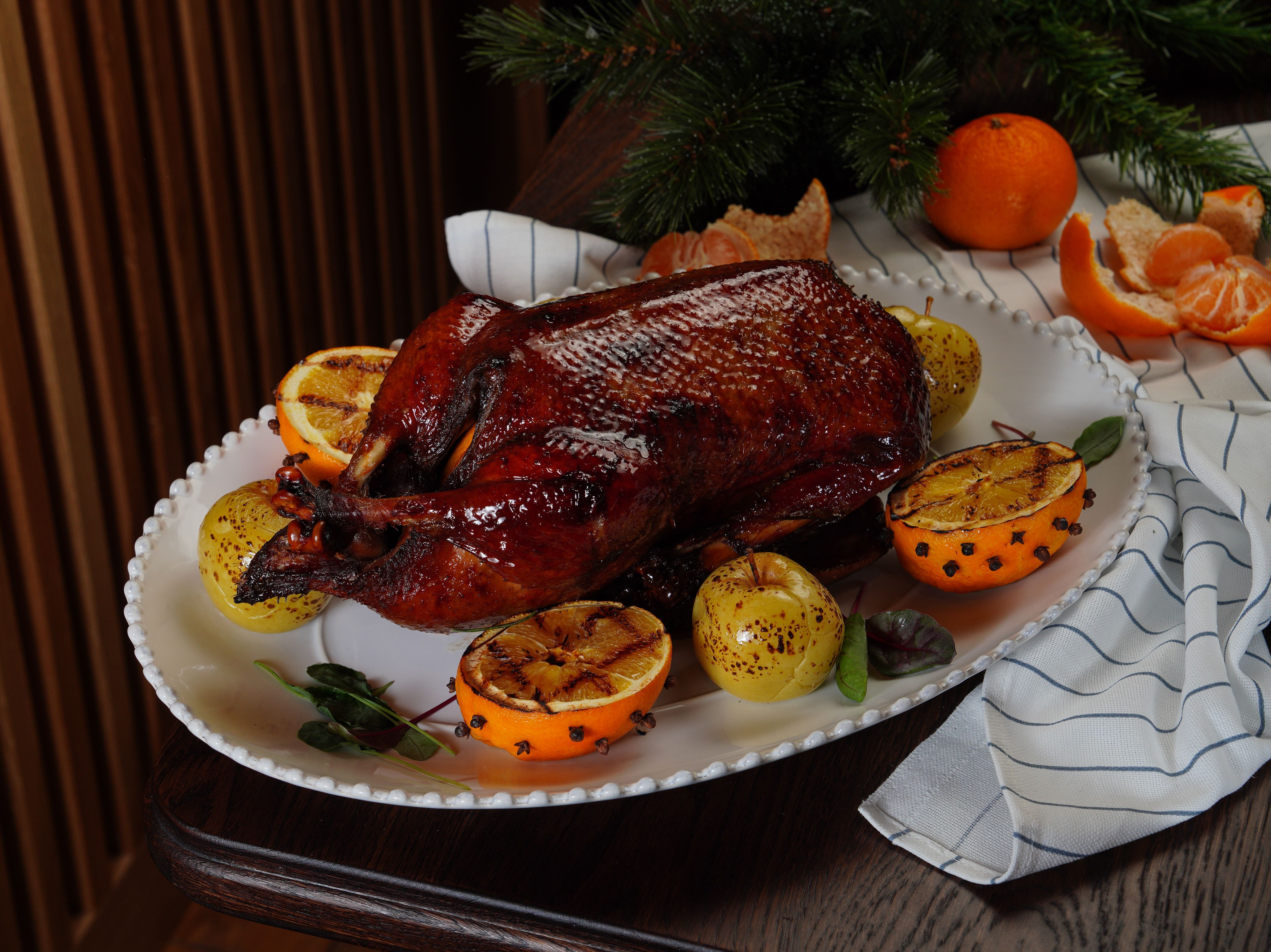
The diets react (see scores below)
Common Ingredients
- goose
- five spice
- maltose
- soy sauce
- shaoxing wine
- ginger
- garlic
- scallions
- rice vinegar
Specific recipes may vary.
Incompatible with 7 of 11 diets
Diet Ratings
Roast goose itself is an excellent keto protein source — high in fat, zero carbs. However, the Chinese roast goose preparation introduces significant keto concerns. Maltose is a disaccharide sugar used in the glaze and is highly glycemic with essentially no fiber, adding meaningful net carbs to the skin/exterior. Shaoxing wine contains carbohydrates, and the combination of soy sauce, rice vinegar, and five spice adds minor additional carbs. The marinade and glaze are absorbed primarily into the skin, so the actual carb load depends heavily on how much glazed skin is consumed versus the meat interior. A moderate portion of meat with minimal skin keeps net carbs manageable, but the maltose glaze is a real concern for strict keto adherents. The dish cannot be cleanly approved due to the sugar-based lacquering technique central to authentic preparation.
Some strict keto practitioners would push this toward 'avoid,' arguing that maltose in the glaze represents an unacceptable added sugar regardless of portion size, and that the Maillard-caramelized sugars in the skin make it impossible to separate the dish from its sugar component without fundamentally altering the recipe. Others on lazy keto may approve it, reasoning that the total sugar absorbed per serving of meat is small enough to fit within a 50g daily carb budget.
Roast Goose is unambiguously non-vegan. The primary ingredient is goose, a bird — a direct animal product. No aspect of this dish is compatible with a vegan diet. The remaining ingredients (five spice, maltose, soy sauce, shaoxing wine, ginger, garlic, scallions, rice vinegar) are plant-based, but the presence of goose as the central protein makes this dish entirely off-limits for vegans.
While goose itself is an excellent paleo protein, this Chinese roast goose recipe contains multiple non-paleo ingredients that disqualify it. Soy sauce is a fermented soy product (a legume) and also contains wheat, making it doubly non-paleo. Shaoxing wine is a grain-based rice wine (a processed grain alcohol). Maltose is a refined sugar derived from grain starch. Rice vinegar, while less problematic, is derived from rice (a grain). Five spice powder itself is generally paleo-compliant, as are ginger, garlic, and scallions. However, the combination of soy sauce, Shaoxing wine, and maltose represent clear paleo violations that are central to the dish's identity — not minor or removable additions. The dish as traditionally prepared cannot be considered paleo-compatible.
Roast goose is a poultry dish, which the Mediterranean diet classifies as acceptable in moderation (a few servings per week). Goose, however, is notably fattier than chicken or turkey, with a higher saturated fat content that edges it closer to red meat territory in terms of dietary impact. The aromatics — garlic, ginger, scallions, rice vinegar — are all Mediterranean-friendly ingredients. The maltose and soy sauce introduce added sugar and high sodium, which are minor concerns but not disqualifying. Five spice and Shaoxing wine are non-Mediterranean but not harmful. The dish is whole-food based with no refined grains or highly processed elements, but the fatty nature of goose and the added sugar from maltose temper enthusiasm. Treated as an occasional poultry serving, it fits within Mediterranean principles, but it should not be consumed as frequently as leaner poultry like chicken or fish.
Some Mediterranean diet interpretations, particularly those focused on traditional Cretan or Greek practices, would rate goose more cautiously given its saturated fat profile, arguing it should be treated more like red meat and limited to a few times per month rather than weekly. Conversely, modern flexibility-oriented Mediterranean frameworks (e.g., Oldways guidelines) accept diverse poultry broadly, which could support a slightly more permissive view.
While goose itself is a carnivore-approved animal protein, Roast Goose in the Chinese style is heavily laden with plant-based ingredients that disqualify it entirely. Five spice (a blend of star anise, cloves, cinnamon, Sichuan pepper, and fennel seeds), soy sauce (fermented soy — a legume), shaoxing wine (fermented grain alcohol), maltose (sugar derived from grain), rice vinegar (grain-derived), ginger, garlic, and scallions are all plant-derived. The goose itself accounts for very little of the overall dish composition from a carnivore standpoint — the marinade and glaze are fundamentally plant-based and processed. This is effectively a plant-seasoned meat dish, not a carnivore meal.
This dish contains multiple Whole30-excluded ingredients. Soy sauce is a soy-based product (legume derivative) and is explicitly excluded on Whole30 — coconut aminos must be substituted instead. Shaoxing wine is an alcoholic ingredient (rice wine), and alcohol is excluded on Whole30 in all cooking forms except botanical extracts. Maltose is a sugar derived from grain starch and counts as added sugar, which is excluded. These three ingredients make this dish non-compliant as traditionally prepared. Rice vinegar is explicitly allowed per Whole30 guidelines. The remaining ingredients — goose, five spice, ginger, garlic, scallions — are all compliant.
Roast Goose contains multiple high-FODMAP ingredients that make it unsuitable during the elimination phase. Garlic is one of the highest-FODMAP foods known, rich in fructans, and is used as a marinade ingredient here — even small amounts of garlic used in cooking can transfer fructans to the dish. Scallions (spring onions) are high-FODMAP in the white bulb portion, which is typically used in Chinese marinades. Five spice powder commonly contains star anise, which is high-FODMAP at standard culinary quantities. Shaoxing wine, while not extensively tested by Monash, contains wheat and is generally flagged by FODMAP practitioners. Maltose (used for the lacquered skin) appears to be low-FODMAP, and soy sauce is low-FODMAP at typical serving sizes (though check for wheat-containing varieties). Ginger and rice vinegar are low-FODMAP. The goose meat itself is naturally FODMAP-free. However, the combination of garlic, the white parts of scallions, and five spice makes this dish clearly high-FODMAP overall during the elimination phase.
Chinese Roast Goose is problematic for DASH in multiple ways. Goose is an inherently fatty bird — even without the skin, it contains significantly more saturated fat than chicken or turkey, and it is almost always served with the skin on, dramatically increasing both total fat and saturated fat content. DASH explicitly limits saturated fat and total fat. Beyond the protein source itself, the marinade and glaze contain soy sauce (very high sodium — a single tablespoon contains ~900mg sodium), maltose-based glaze (high added sugar), and Shaoxing wine (adds sodium). Together, a typical serving of Chinese roast goose can deliver well over 1,000mg of sodium and substantial saturated fat in one dish, likely exceeding half the daily DASH sodium budget (2,300mg standard; 1,500mg low-sodium). The aromatic ingredients (ginger, garlic, scallions, five spice, rice vinegar) are DASH-friendly in isolation, but they cannot offset the core issues. This dish conflicts with DASH's core directives to limit saturated fat, total fat, sodium, and added sugars.
Roast goose presents a mixed Zone Diet profile. Goose is a legitimate protein source, but it is significantly fattier than Zone-preferred lean proteins like skinless chicken breast or fish. Goose skin is rich in saturated fat, and even skinless goose meat carries substantially more fat than chicken or turkey. The 40/30/30 ratio becomes difficult to manage because the fat blocks are largely consumed by the protein source itself, leaving little room for the preferred monounsaturated fat additions. The marinade ingredients are generally acceptable — ginger, garlic, scallions, rice vinegar, and five spice are low-calorie flavor enhancers with polyphenol benefits. However, maltose is a high-glycemic disaccharide (higher GI than table sugar), and soy sauce adds sodium. The maltose glaze contributes unfavorable carbohydrates that spike glycemic load. To use roast goose in a Zone context, one would need to remove the skin, control portion size carefully (keeping protein to ~3 oz), and pair it with abundant low-glycemic vegetables to balance the carb block, while minimizing or eliminating added fat since the goose itself provides substantial fat. The dish as traditionally prepared — with skin on and maltose glaze — makes Zone balancing challenging but not impossible.
Some Zone practitioners, particularly those following Sears' later anti-inflammatory writings (Toxic Fat, The Mediterranean Zone), may be more permissive about naturally occurring animal fats from whole-food sources like goose, noting that the fat profile includes some oleic acid alongside saturated fat. These practitioners might view skinless goose in controlled portions as an acceptable 'unfavorable' protein block. Conversely, strict early-Zone followers applying Enter the Zone guidelines would flag goose as too fatty relative to leaner protein choices and the maltose as a clearly unfavorable high-GI carb.
Roast goose is a mixed profile dish from an anti-inflammatory standpoint. On the positive side, goose contains meaningful amounts of iron, zinc, selenium, and B vitamins, and its fat profile — while high in saturated fat — also contains a notable proportion of monounsaturated fatty acids, somewhat analogous to duck. The marinade ingredients are genuinely anti-inflammatory: five spice (star anise, cloves, cinnamon, fennel, Sichuan pepper) is rich in polyphenols and antimicrobial compounds; garlic and ginger are well-documented anti-inflammatory agents; rice vinegar may support gut health; and Shaoxing wine contains trace antioxidants. Soy sauce in small amounts is not a significant concern. However, goose skin is exceptionally high in saturated fat, and traditional roast goose is typically served with the skin — this is the primary liability. Maltose adds refined sugar, which is mildly pro-inflammatory, though the quantity per serving is modest. The dish is not processed, contains no trans fats or seed oils, and the anti-inflammatory herb/spice matrix is a genuine asset. Overall, this is a red-meat-adjacent poultry dish with a high saturated fat burden (especially if skin is consumed), landing it firmly in 'moderate' territory — acceptable occasionally but not a regular feature of an anti-inflammatory diet.
Some anti-inflammatory practitioners (aligned with Dr. Weil's broader framework) would accept goose as an occasional whole-food protein given its rich micronutrient profile and the beneficial spice marinade, arguing the skin-on preparation is the main issue rather than the bird itself. Others following stricter anti-inflammatory or AIP protocols would flag goose as too high in saturated fat and arachidonic acid to recommend even occasionally, preferring fatty fish or plant proteins instead.
Roast goose is a poor fit for GLP-1 patients primarily due to its exceptionally high fat content. Goose is one of the fattiest poultry options available — even the breast meat carries significant intramuscular and subcutaneous fat, and traditional Chinese roast goose preparation retains the skin, which is where the majority of fat is concentrated and is considered essential to the dish. A typical serving delivers 20-30g of fat, much of it saturated, which directly worsens the GLP-1 side effect profile: nausea, bloating, reflux, and prolonged gastric discomfort are all amplified by high-fat meals in the context of slowed gastric emptying. The maltose glaze adds a meaningful sugar load, contributing empty calories and a glycemic spike that is counterproductive for this patient population. While the dish does provide protein and the aromatics (five spice, ginger, garlic, scallions, rice vinegar, shaoxing wine) are nutritionally neutral to mildly beneficial, the fat and sugar profile of the dish as typically prepared overwhelms these positives. This is not a portioning problem that can be managed easily — the fat is distributed throughout the meat and skin, not concentrated in a removable component. Even a small serving carries a high fat burden per calorie, making nutrient density per calorie poor for GLP-1 patients.
*See how scores were generated at our methodology page.
Nutritional profile
Six traits that cut across every diet.
Fiber & Plants
How much whole-plant food and fiber it delivers.
Healthy Fats
The quality of its fats (unsaturated, omega-3).
Whole / Unprocessed
How close it is to its natural, unprocessed form.
Gut Gentle
How easy it is on digestion (low FODMAP, few irritants).
Low Glycemic
How little it spikes your blood sugar.
Protein Density
How much protein it packs per calorie.
Controversy Index
Higher controversy = more disagreement between diets.
Diet-Specific Tips
 Keto — 5/10
View tips
- Goose meat is naturally high-fat and zero-carb — ideal keto protein
- Maltose glaze is a high-glycemic disaccharide sugar — primary keto concern
- Shaoxing wine contributes additional carbohydrates to the marinade
- Five spice, soy sauce, and rice vinegar add minor but non-zero net carbs
- Carb exposure is concentrated in the lacquered skin, not the interior meat
- Portion control (favoring meat over skin) can reduce net carb impact
- Authentic preparation cannot omit maltose without changing the dish fundamentally
 Mediterranean — 5/10
View tips
- Goose is poultry, acceptable in moderation under Mediterranean guidelines
- Goose is significantly higher in saturated fat than chicken or turkey, reducing its score
- Maltose adds sugar, a minor negative
- Garlic, ginger, scallions, and rice vinegar are health-positive aromatics
- No refined grains or highly processed ingredients
- Not a traditional Mediterranean ingredient or preparation, but evaluated on nutritional principles
 Zone — 4/10
View tips
- Goose is significantly higher in fat than Zone-preferred lean proteins (skinless chicken, fish), making 40/30/30 ratio management difficult
- Goose skin adds substantial saturated fat, should be removed for Zone compliance
- Maltose (high-GI disaccharide) in the glaze is an unfavorable carbohydrate source that spikes glycemic load
- Aromatics (ginger, garlic, scallions, five spice) are Zone-friendly flavor additions with polyphenol benefits
- Rice vinegar is low-glycemic and acceptable in Zone
- Soy sauce adds sodium but minimal macronutrient impact in typical quantities
- Portion control is critical — traditional serving sizes may exceed Zone protein block targets
- Pairing with low-glycemic vegetables is necessary to complete a balanced Zone meal
 Anti-Inflammatory — 5/10
View tips
- Goose is high in saturated fat, particularly when skin is included — primary pro-inflammatory concern
- Monounsaturated fat content partially offsets the saturated fat profile
- Five spice blend (cloves, cinnamon, star anise) provides significant anti-inflammatory polyphenols
- Garlic and ginger are well-evidenced anti-inflammatory aromatics
- Maltose adds refined sugar, a mild pro-inflammatory element in the glaze
- No trans fats, seed oils, artificial additives, or highly processed ingredients
- Whole-food preparation with anti-inflammatory spice and aromatic matrix is a genuine asset
- Best treated as an occasional dish rather than a dietary staple on an anti-inflammatory plan