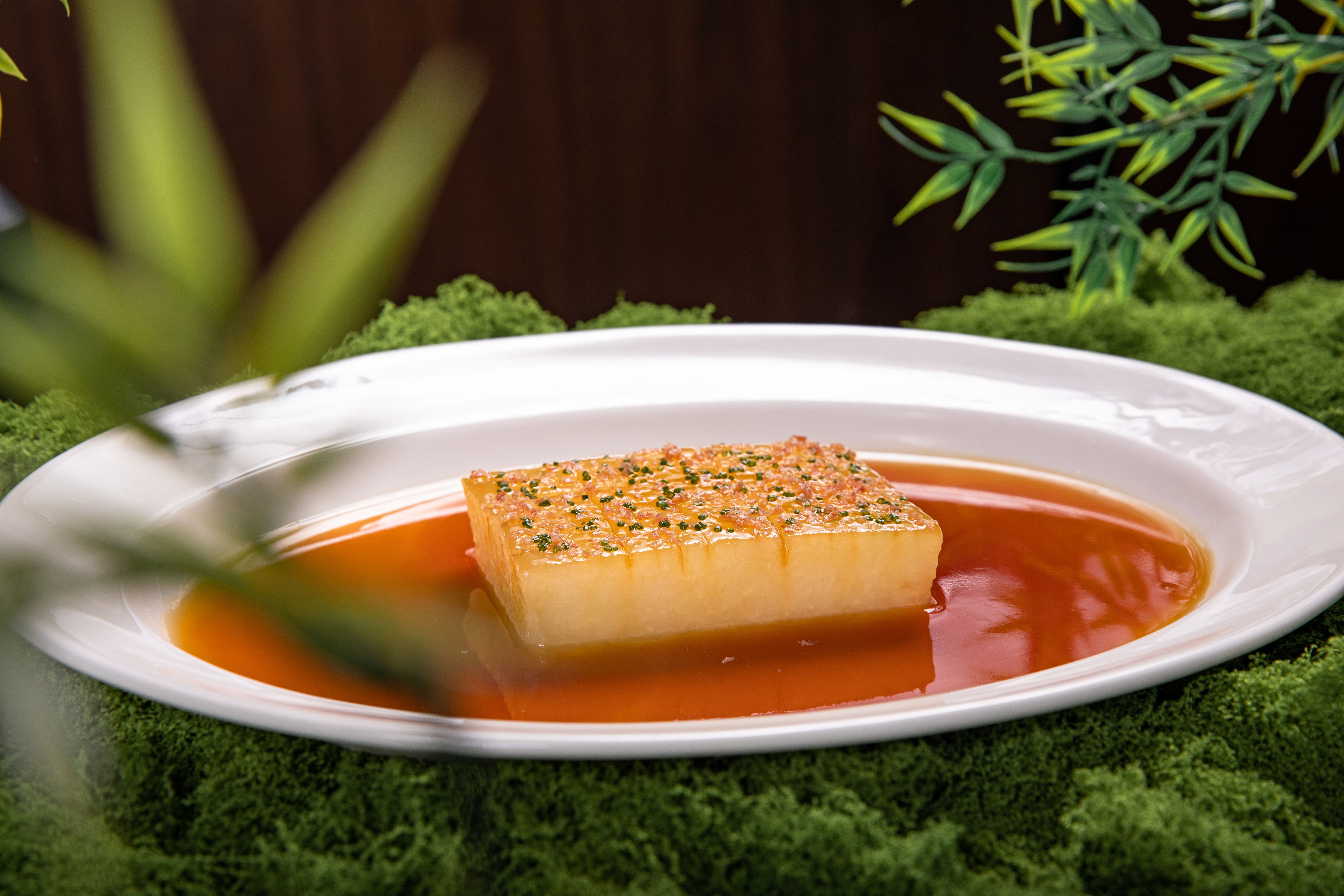
Photo: Change C.C / Pexels
The diets react (see scores below)
Common Ingredients
- daikon radish
- rice flour
- dried shrimp
- chinese sausage
- shiitake mushrooms
- scallions
- white pepper
- oyster sauce
Specific recipes may vary.
Incompatible with 7 of 11 diets
Diet Ratings
Turnip cake (lo bak go) is fundamentally incompatible with ketogenic diet due to rice flour being its primary structural ingredient. Rice flour is a high-glycemic grain starch with approximately 79g of net carbs per 100g. A typical serving of turnip cake contains a significant quantity of rice flour baked into the cake structure, making it impossible to consume without a large carbohydrate load. While daikon radish itself is relatively low in carbs and other ingredients like dried shrimp and Chinese sausage are keto-friendly, the rice flour binder dominates the macronutrient profile and cannot be separated out. Oyster sauce also contains added sugars. The dish as prepared is simply a grain-based starch product and will spike blood glucose and break ketosis regardless of portion size.
Turnip Cake as described contains multiple animal-derived ingredients that make it incompatible with a vegan diet. Dried shrimp is a seafood product, Chinese sausage (lap cheong) is typically made from pork, and oyster sauce is derived from oysters. Any single one of these ingredients would disqualify the dish; together they represent a clear and unambiguous violation of vegan principles. While the base ingredients — daikon radish, rice flour, shiitake mushrooms, and scallions — are fully plant-based, the dish as traditionally prepared cannot be considered vegan. A vegan version of turnip cake can be made by substituting or omitting dried shrimp, replacing Chinese sausage with a plant-based alternative, and using mushroom-based or soy-based oyster sauce substitute.
Turnip Cake contains multiple non-paleo ingredients that make it clearly incompatible with the paleo diet. Rice flour is a grain-based ingredient and is explicitly excluded. Chinese sausage (lap cheong) is a heavily processed meat containing added sugar, soy, and preservatives. Oyster sauce is a processed condiment with added sugar, salt, and thickeners. White pepper as an added seasoning and added salt concerns aside, the foundational ingredient — rice flour — alone disqualifies this dish. While daikon radish, dried shrimp, and shiitake mushrooms are individually paleo-compliant, they cannot redeem a dish whose structure and flavor base depend on excluded ingredients.
Turnip cake contains several elements that partially align with Mediterranean principles but also diverge significantly. Daikon radish and shiitake mushrooms are excellent vegetables consistent with a plant-forward diet. Dried shrimp provides seafood protein, which is encouraged. However, the base is rice flour — a refined grain with no whole-grain equivalent here — which Mediterranean guidelines discourage in favor of whole grains. More problematically, Chinese sausage (lap cheong) is a processed, cured red meat high in saturated fat and sodium, which directly contradicts Mediterranean principles limiting red meat and minimizing processed foods. Oyster sauce adds sugar and sodium. The dish is also typically pan-fried in oil, though olive oil is rarely used in authentic preparation. The combination of refined grain base, processed meat, and high sodium makes this a cautious-at-best item.
Some Mediterranean diet interpreters would note that the seafood component (dried shrimp) and vegetable content (daikon, mushrooms) are positive elements, and that small amounts of processed meat used as flavoring rather than a primary protein — a common practice in many traditional cuisines — may be acceptable occasionally. The dish could be modified (omitting sausage, using whole-grain flour) to improve compatibility.
Turnip Cake is fundamentally incompatible with the carnivore diet. The dish is primarily composed of plant-based ingredients: daikon radish as the bulk ingredient, rice flour as a binder, shiitake mushrooms, scallions, and white pepper — all strictly excluded on carnivore. The only animal-derived components are dried shrimp and Chinese sausage (which itself typically contains sugar and fillers), neither of which can redeem a dish that is structurally built around grains and vegetables. Oyster sauce also contains sugar and plant-derived additives. This is essentially a starchy vegetable-and-grain cake with trace animal ingredients.
Turnip cake contains multiple excluded ingredients. Rice flour is a grain product and is explicitly excluded on Whole30 (grains include rice and rice-derived products). Additionally, oyster sauce typically contains added sugar and often wheat/starch, and Chinese sausage (lap cheong) almost universally contains added sugar, soy, and sometimes alcohol — all excluded on Whole30. Even setting aside the spirit-of-the-program concern about recreating a starchy cake-like snack food, the core ingredient (rice flour) alone disqualifies this dish outright.
Turnip Cake (lo bak go) contains multiple high-FODMAP ingredients that make it problematic during the elimination phase. Shiitake mushrooms are high in polyols (mannitol) and are a clear avoid. Chinese sausage (lap cheong) typically contains garlic and sometimes onion, both high in fructans. Oyster sauce almost universally contains garlic and/or onion extract, adding further fructan load. Scallions (green tops only are low-FODMAP, but the white bulb portions are high in fructans, and in Chinese cooking both parts are commonly used). Dried shrimp is generally low-FODMAP, and daikon radish is low-FODMAP at standard servings (up to 100g per Monash). Rice flour is safe. However, the combination of shiitake mushrooms, Chinese sausage with garlic, oyster sauce, and potentially whole scallions creates a dish with several overlapping FODMAP sources that cannot easily be separated or portioned around. Even a small serving would likely deliver a meaningful FODMAP load from shiitake mushrooms and garlic-containing processed ingredients alone.
Monash University has not specifically tested turnip cake as a composite dish, so the rating depends on ingredient-level assessment. A modified version using only green scallion tops, omitting shiitake mushrooms, replacing Chinese sausage with a garlic-free alternative, and using a FODMAP-friendly sauce could potentially shift this to a caution or even approve rating — some clinical FODMAP practitioners may allow home-prepared versions with these substitutions.
Turnip cake as commonly prepared is problematic for DASH diet adherence due to multiple high-sodium ingredients. Dried shrimp is extremely high in sodium (can exceed 1,500mg per 100g), Chinese sausage (lap cheong) is a processed cured meat high in sodium and saturated fat — both clearly in the 'limit' category under DASH guidelines. Oyster sauce adds further significant sodium. The combination of these three ingredients alone can easily push a single serving well over the DASH sodium threshold for an entire day. Chinese sausage also contains saturated fat, another DASH-limited nutrient. While daikon radish, shiitake mushrooms, scallions, and white pepper are DASH-friendly, they are overshadowed by the heavily processed, high-sodium components. The dish is also pan-fried in oil when served, adding fat. This is not a DASH-compatible food in its traditional preparation.
Turnip cake (lo bak go) presents a mixed Zone profile. The daikon radish base is excellent — a low-glycemic, high-fiber vegetable that Zone strongly favors. Shiitake mushrooms and scallions are similarly favorable Zone carbohydrate sources. However, rice flour is the structural binder and contributes a meaningful glycemic load, acting more like a refined starch than a favorable Zone carb. Chinese sausage (lap cheong) is fatty and processed, high in saturated fat, which conflicts with Zone's preference for lean proteins and monounsaturated fats. Dried shrimp provides some lean protein but in small amounts. Oyster sauce adds sugar and sodium. The overall macronutrient ratio skews toward carbohydrates (rice flour + daikon) with saturated fat from the sausage and insufficient lean protein — making it difficult to fit neatly into Zone blocks without significant modification. As a snack, it lacks balanced block structure. It could be incorporated in small portions within a larger Zone-balanced meal, but standalone it fails the 40/30/30 target.
Some Zone practitioners might view turnip cake more favorably given that daikon radish dominates the volume and fiber content, potentially moderating the glycemic impact of the rice flour. Dr. Sears' later anti-inflammatory writings emphasize polyphenol-rich foods, and shiitake mushrooms are rich in beneficial compounds. If Chinese sausage is reduced or substituted with lean protein and the portion kept very small, a Zone practitioner could use this as a limited carbohydrate block contribution in a broader meal.
Turnip cake (lo bak go) presents a mixed anti-inflammatory profile. On the positive side, daikon radish is a cruciferous vegetable with anti-inflammatory glucosinolates, vitamin C, and digestive enzymes. Shiitake mushrooms are explicitly emphasized in anti-inflammatory frameworks for their beta-glucans and lentinan, which modulate immune response and reduce inflammatory markers. Scallions provide quercetin and other flavonoids. White pepper has mild anti-inflammatory properties. However, several ingredients introduce concern: Chinese sausage (lap cheong) is a processed, cured pork product high in saturated fat, sodium, and often contains preservatives and added sugar — aligning with the 'limit/avoid' category for processed meats. Dried shrimp, while a source of protein and some omega-3s, is very high in sodium. Oyster sauce adds further sodium and typically contains added sugar. Rice flour is a refined carbohydrate with limited fiber. Traditional preparation often involves pan-frying in oil (frequently vegetable/seed oils), adding to the concern. The dish is not inherently terrible — the mushroom and daikon base offer genuine benefits — but the processed meat and high-sodium condiment components pull it toward caution. As typically prepared and served, it sits in neutral-to-mildly-concerning territory.
Some anti-inflammatory practitioners who take a whole-food, flexible approach (aligned with Dr. Weil's pyramid) might argue that the shiitake mushrooms and daikon provide sufficient anti-inflammatory benefit to redeem the dish when consumed occasionally, and that small amounts of traditional cured meats are culturally appropriate and less harmful than Western ultra-processed foods. Conversely, stricter anti-inflammatory or AIP-leaning frameworks would flag the processed sausage, high sodium load, and refined rice flour more harshly, potentially pushing this toward 'avoid' for those with active inflammatory or autoimmune conditions.
Turnip cake (lo bak go) is a dim sum staple made primarily from daikon radish and rice flour, with small amounts of dried shrimp, Chinese sausage, shiitake mushrooms, and seasonings. As a snack category item for GLP-1 patients, it has a mixed nutritional profile. On the positive side, daikon radish provides hydration, fiber, and micronutrients with very low calories, and shiitake mushrooms add some fiber and umami without significant fat or calories. However, the dish is fundamentally a starch-forward preparation — rice flour is the binding base, meaning carbohydrate density is high relative to protein and fiber content. The primary protein sources (dried shrimp, Chinese sausage) are present in small quantities and do not meaningfully contribute toward the 15-30g per meal protein target. Chinese sausage (lap cheong) is a significant concern: it is high in saturated fat, sodium, and is a processed meat — all three of which are problematic for GLP-1 patients. Oyster sauce adds sodium. The dish is typically pan-fried or steamed; if pan-fried (the more common restaurant preparation), added oil increases fat content and digestibility concerns. Even steamed versions are low in protein and high in refined starch. The small serving size helps limit caloric damage, but the dish offers poor nutritional return per calorie and does not support protein or fiber priorities.
Some GLP-1-focused dietitians may view steamed turnip cake as a relatively gentle, easy-to-digest snack option given its soft texture and high water content from daikon — particularly useful on high-nausea days when bland, soft foods are better tolerated. However, the processed meat component (Chinese sausage) and refined starch base make it difficult to recommend broadly, and clinicians concerned with muscle preservation would note it contributes negligibly to daily protein targets.
*See how scores were generated at our methodology page.
Nutritional profile
Six traits that cut across every diet.
Fiber & Plants
How much whole-plant food and fiber it delivers.
Healthy Fats
The quality of its fats (unsaturated, omega-3).
Whole / Unprocessed
How close it is to its natural, unprocessed form.
Gut Gentle
How easy it is on digestion (low FODMAP, few irritants).
Low Glycemic
How little it spikes your blood sugar.
Protein Density
How much protein it packs per calorie.
Controversy Index
Higher controversy = more disagreement between diets.
Diet-Specific Tips
 Mediterranean — 4/10
View tips
- Daikon radish and shiitake mushrooms are Mediterranean-friendly vegetables
- Dried shrimp aligns with encouraged seafood consumption
- Chinese sausage is processed cured red meat — high in saturated fat and sodium
- Rice flour is a refined grain, not a whole grain
- Oyster sauce adds sugar and excess sodium
- Not a traditional Mediterranean dish; no olive oil in authentic preparation
- Overall dish is moderately processed with mixed nutritional profile
 Zone — 4/10
View tips
- Rice flour is a high-glycemic refined starch, classified as an 'unfavorable' carbohydrate in Zone terminology
- Daikon radish is an excellent low-glycemic Zone-favorable vegetable
- Chinese sausage is fatty, processed, and high in saturated fat — conflicts with Zone lean protein guidelines
- Dried shrimp provides minimal lean protein — insufficient to meet Zone's ~25g protein per meal target
- No monounsaturated fat sources present; fat comes primarily from saturated sources
- Macronutrient ratio likely skews heavily toward carbs with saturated fat, missing 40/30/30 balance
- Oyster sauce adds refined sugar and high sodium
- Shiitake mushrooms and scallions are Zone-favorable polyphenol-rich ingredients
 Anti-Inflammatory — 5/10
View tips
- Shiitake mushrooms: strongly anti-inflammatory (beta-glucans, lentinan)
- Daikon radish: anti-inflammatory cruciferous vegetable with glucosinolates and vitamin C
- Chinese sausage (lap cheong): processed, cured meat — high saturated fat, sodium, preservatives
- Dried shrimp: high sodium content
- Oyster sauce: added sugar and high sodium
- Rice flour: refined carbohydrate, low fiber, moderate glycemic impact
- Scallions: quercetin and flavonoids — mild anti-inflammatory benefit
- Pan-frying preparation common — may add pro-inflammatory seed oils
 GLP-1 Friendly — 4/10
View tips
- Rice flour base makes this predominantly a refined starch with low protein density
- Chinese sausage is a high-saturated-fat processed meat — problematic for GLP-1 side effect profile
- Dried shrimp adds some protein but in quantities too small to be clinically meaningful per serving
- Daikon radish provides hydration support and some fiber — a genuine positive
- Pan-fried preparation (common) adds fat and worsens digestibility for GLP-1 patients
- Steamed version is preferable but still nutritionally insufficient for protein and fiber targets
- High sodium content from oyster sauce and dried shrimp warrants attention
- Low nutrient density per calorie — does not serve the 'every bite counts' principle well