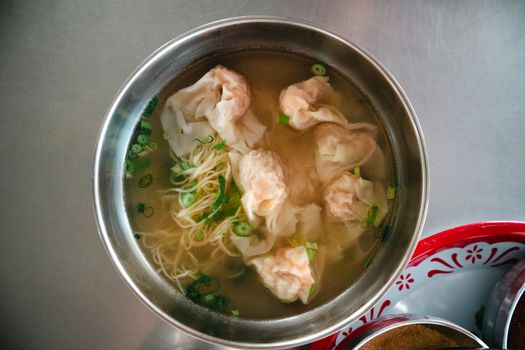
Photo: Markus Winkler / Pexels
Chinese
Wonton Noodle Soup
The diets react (see scores below)
Common Ingredients
- egg noodles
- shrimp
- pork
- wonton wrappers
- pork bones
- dried flounder
- scallions
- ginger
- soy sauce
Specific recipes may vary.
Incompatible with 8 of 11 diets
Diet Ratings
Wonton Noodle Soup is fundamentally incompatible with a ketogenic diet. The dish contains multiple high-carb components that would far exceed the daily net carb limit in a single serving. Egg noodles are a wheat-based grain product with roughly 40-50g of net carbs per serving. Wonton wrappers are also made from wheat flour, adding another 15-25g of net carbs. Together, these two ingredients alone can deliver 60-75g of net carbs, which exceeds the entire daily keto allowance. The broth, shrimp, pork, and aromatics (scallions, ginger, soy sauce) are relatively keto-friendly on their own, but the structural carbohydrate components — noodles and wrappers — make this dish categorically off-limits. There is no meaningful portion size that would make this dish keto-compatible.
Wonton Noodle Soup contains multiple animal products, making it entirely incompatible with a vegan diet. The dish includes shrimp and pork as primary proteins, pork bones used to make the broth stock, dried flounder as a flavoring agent, and egg noodles which contain eggs. Every major component of this dish — the protein, the broth base, and the noodles — is derived from animals. There is no ambiguity here.
Wonton Noodle Soup contains multiple non-paleo ingredients that are foundational to the dish. Egg noodles are a wheat-based grain product, strictly excluded from paleo. Wonton wrappers are also made from wheat flour, another core grain violation. Soy sauce contains both wheat and soy (a legume), making it doubly non-paleo. These three ingredients are not peripheral additions — they are structural components of the dish. While the shrimp, pork, pork bones, dried flounder, scallions, and ginger are all paleo-approved, they cannot redeem a dish whose defining elements (noodles, wonton wrappers, soy sauce) are among the most clearly excluded categories in the paleo framework.
Wonton Noodle Soup contains several ingredients that conflict with Mediterranean diet principles. Pork (red meat) appears twice — as a filling ingredient and as pork bones for the broth — pushing this dish into 'avoid' territory for regular consumption. The egg noodles are refined rather than whole grain, and wonton wrappers are made from refined white flour, adding another strike. The primary fat is not olive oil, and there is no olive oil presence at all. On the positive side, shrimp is an excellent Mediterranean protein and dried flounder adds a seafood element, and aromatics like scallions and ginger are perfectly compatible. However, the structural reliance on refined grains and pork — not as occasional treats but as foundational components — means this dish as a whole contradicts core Mediterranean diet principles.
Some Mediterranean diet interpreters might rate this higher, noting that the shrimp and fish (dried flounder) provide valuable seafood protein, and that broths rich in aromatics have loose parallels to Mediterranean fish soups like kakavia. A more flexible, globally-adapted view of the Mediterranean diet might score this as 'caution' if pork is used in small quantities as a flavoring rather than a primary protein.
Wonton Noodle Soup is fundamentally incompatible with the carnivore diet. The dish is built around multiple plant-based and grain-derived ingredients: egg noodles (wheat-based), wonton wrappers (wheat flour), scallions, ginger, and soy sauce (fermented soybeans). While some ingredients are carnivore-compliant — shrimp, pork, pork bone broth, and dried flounder are all excellent animal-derived foods — the dish as a whole cannot be adapted without a complete structural overhaul. The broth base would be acceptable if isolated, but the grain-based noodles and wrappers, plant aromatics, and soy sauce make this a clear avoid.
Wonton Noodle Soup contains multiple excluded ingredients that make it clearly non-compliant with Whole30. Egg noodles are a grain-based food (wheat) and are explicitly excluded. Wonton wrappers are also made from wheat flour, another excluded grain. Soy sauce contains both soy (a legume) and wheat (a grain), both of which are on the excluded list. Any one of these three ingredients alone would disqualify the dish; together they make it unambiguously non-compliant. The remaining ingredients — shrimp, pork, pork bones, dried flounder, scallions, and ginger — are all Whole30-compliant, but they cannot redeem a dish with so many core excluded components.
Wonton Noodle Soup contains multiple high-FODMAP ingredients that make it unsuitable during the elimination phase. The wonton wrappers are made from wheat flour, which is high in fructans. The egg noodles used in traditional wonton soup are also wheat-based, adding a second significant fructan source. Scallions (spring onions) are problematic — the white/bulb portion is high in fructans, and in restaurant-style preparation the entire scallion is typically used. Soy sauce traditionally contains wheat and contributes additional fructans, though tamari (gluten-free soy sauce) would be a lower-FODMAP alternative. Shrimp, pork, ginger, and pork bone broth are all low-FODMAP. Dried flounder is also low-FODMAP. However, the combination of wheat-based wonton wrappers AND wheat egg noodles represents a double fructan load that cannot be mitigated through portion control at any realistic serving size. This dish is essentially incompatible with the FODMAP elimination phase as traditionally prepared.
Wonton Noodle Soup is highly problematic for DASH compliance. The primary concern is sodium: soy sauce alone can contribute 900-1,200mg per tablespoon, and pork bone broth combined with dried flounder creates an extremely high-sodium base. A typical restaurant serving of wonton noodle soup contains 1,500-2,500mg of sodium — exceeding or consuming the entire daily DASH sodium budget (1,500-2,300mg) in a single dish. The dish also contains pork in both the wonton filling and the broth base, contributing saturated fat. Refined egg noodles and wonton wrappers offer little fiber and are not whole grain. While shrimp is a lean protein consistent with DASH, it is outweighed by the dish's other issues. The dish as commonly prepared is not DASH-compatible. A heavily modified version — low-sodium broth, reduced soy sauce or sodium-free tamari, whole-grain noodles, shrimp-only filling, and smaller portions — could shift this toward 'caution,' but as traditionally served it must be avoided.
Wonton Noodle Soup presents a mixed Zone picture. On the protein side, shrimp is an excellent lean Zone protein, and pork in the wontons, while higher in saturated fat, can be included in moderation. The broth made from pork bones and dried flounder is low-calorie and Zone-neutral. However, the primary Zone concern is the carbohydrate load: egg noodles are high-glycemic refined wheat, and wonton wrappers add additional refined starch. Together, these push the glycemic index of the dish well above Zone-favorable levels and make it difficult to hit the 40/30/30 ratio without significant modification. A typical restaurant serving would be carbohydrate-heavy and protein-light relative to Zone targets. The aromatics (scallions, ginger) and soy sauce are fine Zone additions. The dish is not a Zone meal as traditionally served, but could be adapted by dramatically reducing noodle and wrapper portions, increasing shrimp, and adding low-GI vegetables.
Some Zone practitioners would note that this dish does contain lean protein (shrimp) and a low-fat broth base, making it more adaptable than pure starchy dishes. If portion sizes are carefully controlled — a small amount of noodles and wrappers treated as the carbohydrate block, with extra shrimp as the protein anchor — it can technically be structured into a Zone-compliant meal. Sears' later writings also place more emphasis on polyphenols and omega-3s, and seafood-forward versions of this dish would score better under that lens.
Wonton Noodle Soup is a mixed dish from an anti-inflammatory perspective. On the positive side, it contains several beneficial ingredients: shrimp provides lean protein and some omega-3s; ginger is a well-established anti-inflammatory spice with gingerols that inhibit inflammatory pathways; scallions offer quercetin and other antioxidants; and the bone broth base (pork bones with dried flounder) provides glycine and minerals with some evidence of supporting gut health and reducing inflammation. Dried flounder in the broth contributes additional omega-3s. However, the dish also has notable limitations: pork (both as filling and in the broth) adds saturated fat, which is in the 'limit' category; egg noodles and wonton wrappers are refined carbohydrates offering little fiber or anti-inflammatory benefit; and soy sauce contributes significant sodium, which while not directly pro-inflammatory, may contribute to systemic stress in excess. The overall dish is far from a heavily processed or junk food meal — it's a traditional whole-food preparation — but it lacks the antioxidant-rich vegetables and fiber that would push it toward 'approve.' Moderate and occasional consumption fits well within an anti-inflammatory lifestyle, particularly when paired with additional vegetables.
Some anti-inflammatory practitioners, particularly those following autoimmune or low-sodium protocols, would score this lower due to the refined noodle/wrapper carbohydrates and the high sodium content of soy sauce, which some argue promotes fluid retention and vascular inflammation. Conversely, proponents of traditional food systems (including Dr. Weil's emphasis on whole, minimally processed foods and Asian dietary patterns) note that this dish closely mirrors the traditional Cantonese diet associated with longevity and low chronic disease rates, and would view it more favorably than its individual components suggest.
Wonton noodle soup has genuine strengths for GLP-1 patients — it is broth-based (high hydration, easy digestibility), warm and light in texture, and includes shrimp as a lean high-quality protein. The broth made from pork bones and dried flounder is nutrient-rich and easy on the stomach. However, several factors limit its rating. The protein content per standard bowl is moderate at best: wontons are small and the pork-shrimp filling is diluted by wrapper dough, making it difficult to reliably hit the 15–30g protein per meal target without a large portion. The egg noodles are refined carbohydrates with low fiber and minimal nutritional density per calorie, occupying valuable stomach space that could go toward protein. The pork component adds saturated fat, and the pork bone broth, while flavorful, tends to be high in sodium — a concern for fluid retention and blood pressure in this population. The dish is not fried and is generally easy to digest, which are meaningful positives. Overall, it is acceptable in moderation but falls short of an approve rating due to modest protein delivery, low fiber, refined noodles, and sodium load.
Some GLP-1-focused dietitians view broth-based Asian soups favorably because the high water content, warm temperature, and small portion palatability make them practical options for patients struggling with nausea and appetite suppression — prioritizing tolerance over nutritional optimization. Others flag the sodium content and low protein density as meaningful enough drawbacks to recommend modifying the dish (extra shrimp, fewer noodles) rather than ordering it as served.
*See how scores were generated at our methodology page.
Nutritional profile
Six traits that cut across every diet.
Fiber & Plants
How much whole-plant food and fiber it delivers.
Healthy Fats
The quality of its fats (unsaturated, omega-3).
Whole / Unprocessed
How close it is to its natural, unprocessed form.
Gut Gentle
How easy it is on digestion (low FODMAP, few irritants).
Low Glycemic
How little it spikes your blood sugar.
Protein Density
How much protein it packs per calorie.
Controversy Index
Higher controversy = more disagreement between diets.
Diet-Specific Tips
 Zone — 4/10
View tips
- Egg noodles are high-glycemic refined carbohydrates, classified as unfavorable in Zone terminology
- Wonton wrappers add additional refined starch, compounding the glycemic load
- Shrimp is an excellent lean Zone protein source, supporting the dish
- Pork adds saturated fat, which Zone limits but does not eliminate
- Pork bone broth is Zone-neutral and low-calorie
- Scallions and ginger contribute polyphenols, aligned with Sears' anti-inflammatory focus
- As served, carbohydrate-to-protein ratio is too high for Zone compliance without modification
- Adaptable with portion reduction of noodles/wrappers and addition of low-GI vegetables
 Anti-Inflammatory — 5/10
View tips
- Ginger is a validated anti-inflammatory ingredient with gingerols that suppress NF-κB and COX pathways
- Shrimp provides lean protein and modest omega-3 fatty acids
- Dried flounder in broth contributes additional omega-3s to the base
- Pork filling and pork bone broth add saturated fat, placing this in the 'limit' category
- Egg noodles and wonton wrappers are refined carbohydrates with minimal fiber
- Soy sauce contributes high sodium load, a consideration for overall inflammatory burden
- No vegetables in the listed ingredients — a significant missing anti-inflammatory element
- Whole, minimally processed preparation without additives, trans fats, or added sugars
 GLP-1 Friendly — 5/10
View tips
- Broth base supports hydration, a key GLP-1 priority
- Shrimp is a lean, high-quality protein but total protein per bowl is moderate and portion-dependent
- Pork filling adds saturated fat
- Egg noodles are refined carbohydrates with low fiber, reducing nutrient density per calorie
- High sodium from pork bone and dried flounder broth is a concern
- Easy to digest — no frying, warm and light texture favors GI tolerance
- Low fiber overall — does not support the 25–30g daily fiber target