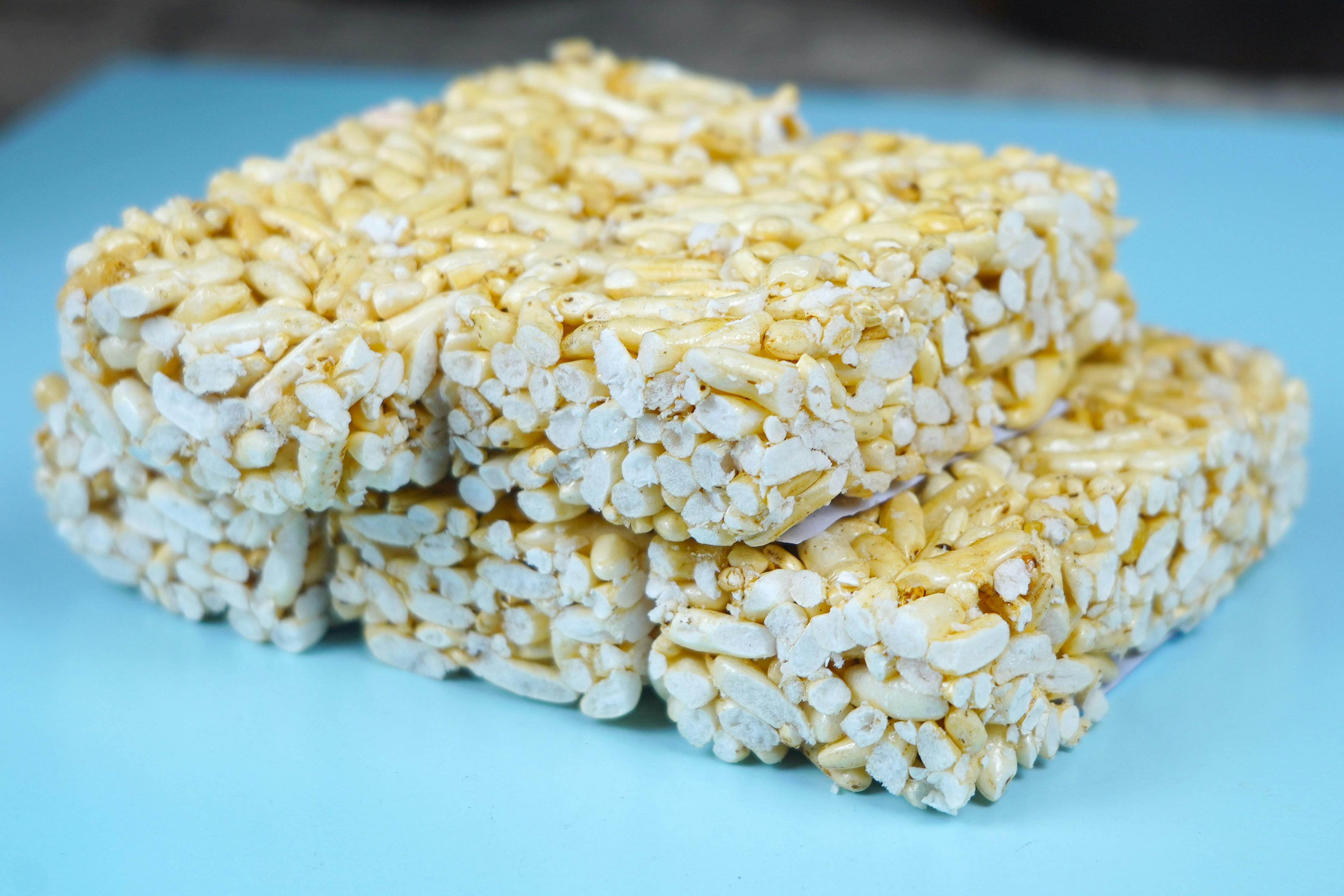
Photo: neilstha firman / Pexels
The diets react (see scores below)
Common Ingredients
- flour
- eggs
- butter
- honey
- sugar
- salt
- walnuts
- almonds
Specific recipes may vary.
Incompatible with 11 of 11 diets
Diet Ratings
Chak-Chak is a traditional Tatar confection made by deep-frying flour-based dough strands and binding them with a hot honey-sugar syrup, often topped with nuts. It is fundamentally incompatible with ketogenic eating. Flour provides massive amounts of fast-digesting carbohydrates, and the honey-sugar syrup coating is pure concentrated sugar. Together, these two components alone would deliver far more net carbs in a single small serving than the entire daily keto limit of 20-50g. While walnuts and almonds are keto-friendly and eggs and butter are also fine, they are overwhelmed by the dominant grain and sugar components. There is no realistic portion size that makes this dish compatible with maintaining ketosis.
Chak-Chak is a traditional Tatar fried dough confection that contains multiple animal-derived ingredients, making it clearly incompatible with a vegan diet. Eggs and butter are direct animal products (from hens and cows respectively), and honey is excluded by the Vegan Society and most mainstream vegan organizations as an animal product. With three distinct non-vegan ingredients, this dish fails vegan criteria decisively. A vegan version would require substituting aquafaba or flax eggs for eggs, plant-based butter or oil for butter, and agave syrup or maple syrup for honey — but as traditionally prepared, it is not vegan.
Chak-Chak is a Tatar fried dough pastry that is fundamentally incompatible with the paleo diet. The primary structural ingredient is flour (wheat), which is a grain and one of the most clearly excluded foods in paleo. Beyond flour, the dish also contains refined sugar and added salt — both explicitly excluded. Butter is a dairy product, also excluded. Honey is a natural sweetener that falls in the 'caution' zone, and walnuts and almonds are paleo-approved, but these two compliant ingredients cannot redeem a dish built on multiple core paleo violations. This is a grain-based, sugar-laden, dairy-containing deep-fried confection that contradicts paleo principles at its foundation.
Chak-Chak is a Tatar fried dough confection bound with honey and sugar syrup, made from refined white flour, eggs, butter, and significant added sugars. It is essentially a deep-fried sweet pastry — a category that squarely contradicts Mediterranean diet principles. Refined flour, frying (likely in non-olive-oil fat), butter as the primary fat, and high added sugar content (honey + sugar) make this a poor fit. While walnuts and almonds are Mediterranean-approved ingredients, they are a minor component of a dish dominated by refined grains, saturated fat, and added sugars. This is a festive treat with no meaningful alignment with Mediterranean dietary patterns.
Chak-Chak is a Tatar deep-fried dough confection that is fundamentally incompatible with the carnivore diet. The dish is built almost entirely on plant-based and processed ingredients: flour (grain), walnuts, almonds (nuts), sugar (processed sweetener), and honey. While eggs and butter are animal-derived, they are minor supporting ingredients in a recipe that is primarily a grain-based, sugar-laden dessert. No amount of the animal-derived components redeems this dish for carnivore purposes — flour alone disqualifies it entirely, and the addition of sugar, nuts, and a heavy carbohydrate base makes this one of the clearest possible 'avoid' foods on the carnivore diet.
Chak-Chak is a traditional Tatar fried dough confection that contains multiple excluded ingredients. Flour (a grain) is excluded on Whole30, making this dish non-compliant at the foundation. Additionally, sugar is explicitly listed as an excluded added sugar. Butter (regular, not ghee) is also excluded dairy. Beyond the specific ingredient violations, Chak-Chak is a fried dough/pastry treat — precisely the category of baked goods and junk food recreations that Whole30 Rule 4 prohibits even when made with otherwise compliant ingredients. This dish fails on multiple independent grounds.
Chak-Chak is a traditional Tatar fried dough confection made by binding deep-fried wheat flour strands together with a honey-sugar syrup. It contains multiple high-FODMAP ingredients that make it unsuitable during the elimination phase. Wheat flour is high in fructans at any standard serving size, making it a primary concern. Honey is high in excess fructose and is explicitly high-FODMAP — it should be replaced with maple syrup on a low-FODMAP diet. These two ingredients alone would classify the dish as 'avoid.' Additionally, while walnuts are low-FODMAP at small servings (up to 10 walnut halves), almonds become high-FODMAP above 10 nuts (due to GOS and excess fructose), and in a dense confection like Chak-Chak the combined nut load per serving could easily exceed safe thresholds. Eggs, butter, sugar, and salt are individually low-FODMAP, but the wheat flour and honey make this dish incompatible with the elimination phase regardless of portion size.
Chak-Chak is a traditional Tatar deep-fried pastry made from flour, eggs, and butter, then coated in a hot honey-sugar syrup and often studded with nuts. While walnuts and almonds are DASH-friendly, the overall dish is heavily dominated by refined flour (not whole grain), large quantities of added sugar and honey, deep-frying in fat (high saturated/total fat), and a dense caloric load with minimal fiber, potassium, magnesium, or calcium relative to its calorie content. The combination of high added sugar, refined carbohydrates, and high saturated fat places this firmly in the 'avoid' category under DASH guidelines, which explicitly limit sweets, added sugars, and refined grains while emphasizing whole grains and nutrient-dense foods. The nuts provide some redeeming nutritional value but are insufficient to offset the overall profile.
Chak-Chak is a traditional Tatar deep-fried pastry dough soaked in honey-sugar syrup and bound into a cake form, often garnished with nuts. From a Zone Diet perspective, this dish is essentially a concentrated delivery mechanism for high-glycemic carbohydrates. The primary macronutrient contributors are refined white flour (high-GI), honey, and sugar — all 'unfavorable' or outright prohibited Zone carb sources. The dish provides virtually no lean protein (eggs are present but in small ratios relative to the dough), and while walnuts and almonds contribute some favorable monounsaturated and polyunsaturated fats, they are insufficient to counterbalance the macro imbalance. The carbohydrate-to-protein ratio is wildly skewed, making it essentially impossible to construct a Zone-balanced block from this food without reducing the portion to a few bites — at which point caloric contribution becomes negligible. Butter adds saturated fat rather than preferred monounsaturated fat. The honey-sugar coating creates a high glycemic load that would spike insulin, directly opposing Zone's core anti-inflammatory and insulin-management goals. Even as a very small treat portion within a larger Zone meal, this food adds empty glycemic load with no protein anchor.
Chak-Chak is a traditional Tatar confection made of deep-fried dough pieces bound together with a hot honey-sugar syrup. The dish is essentially a dessert/sweet snack composed predominantly of refined white flour (refined carbohydrate with high glycemic index), added sugars (both honey and sugar in significant quantities), butter (saturated fat), and eggs — with the dough typically deep-fried. This combination hits multiple 'limit' and 'avoid' categories simultaneously: refined carbohydrates spike blood glucose and promote inflammatory cytokines; added sugar (especially in large amounts) is one of the most well-established dietary drivers of inflammation via AGE formation and NF-κB activation; saturated fat from butter in combination with refined carbs compounds the inflammatory burden. Deep-frying, depending on the oil used, can introduce oxidized lipids and excess omega-6. The walnuts and almonds are genuinely anti-inflammatory inclusions — walnuts in particular are rich in ALA (omega-3) and polyphenols — and honey has some antioxidant properties compared to refined sugar, but these benefits are marginal relative to the overall pro-inflammatory load of the dish. Chak-Chak is a treat with very limited redeeming anti-inflammatory value in its traditional form.
Chak-Chak is a traditional Tatar deep-fried pastry made from flour and eggs, bound together with a hot honey-sugar syrup and typically topped with nuts. It is fundamentally incompatible with GLP-1 dietary guidelines. The dish is high in refined carbohydrates (white flour, sugar, honey), high in saturated fat from deep-frying in butter or oil, and contains negligible protein and fiber relative to its calorie density. The combination of frying, high sugar content, and heavy syrup coating makes it a concentrated source of empty calories — the exact opposite of the nutrient-dense, high-protein, high-fiber profile recommended for GLP-1 patients. The frying process and high fat content are likely to worsen GLP-1 side effects including nausea, bloating, and reflux, given the medication's slowing of gastric emptying. The sugar-honey syrup creates a rapid glycemic spike with no offsetting fiber or protein to moderate it. The small nut component (walnuts, almonds) provides minimal nutritional redemption at typical serving proportions. This dish offers essentially no benefit and multiple direct risks for GLP-1 patients.
*See how scores were generated at our methodology page.
Nutritional profile
Six traits that cut across every diet.
Fiber & Plants
How much whole-plant food and fiber it delivers.
Healthy Fats
The quality of its fats (unsaturated, omega-3).
Whole / Unprocessed
How close it is to its natural, unprocessed form.
Gut Gentle
How easy it is on digestion (low FODMAP, few irritants).
Low Glycemic
How little it spikes your blood sugar.
Protein Density
How much protein it packs per calorie.
Controversy Index
Higher controversy = more disagreement between diets.