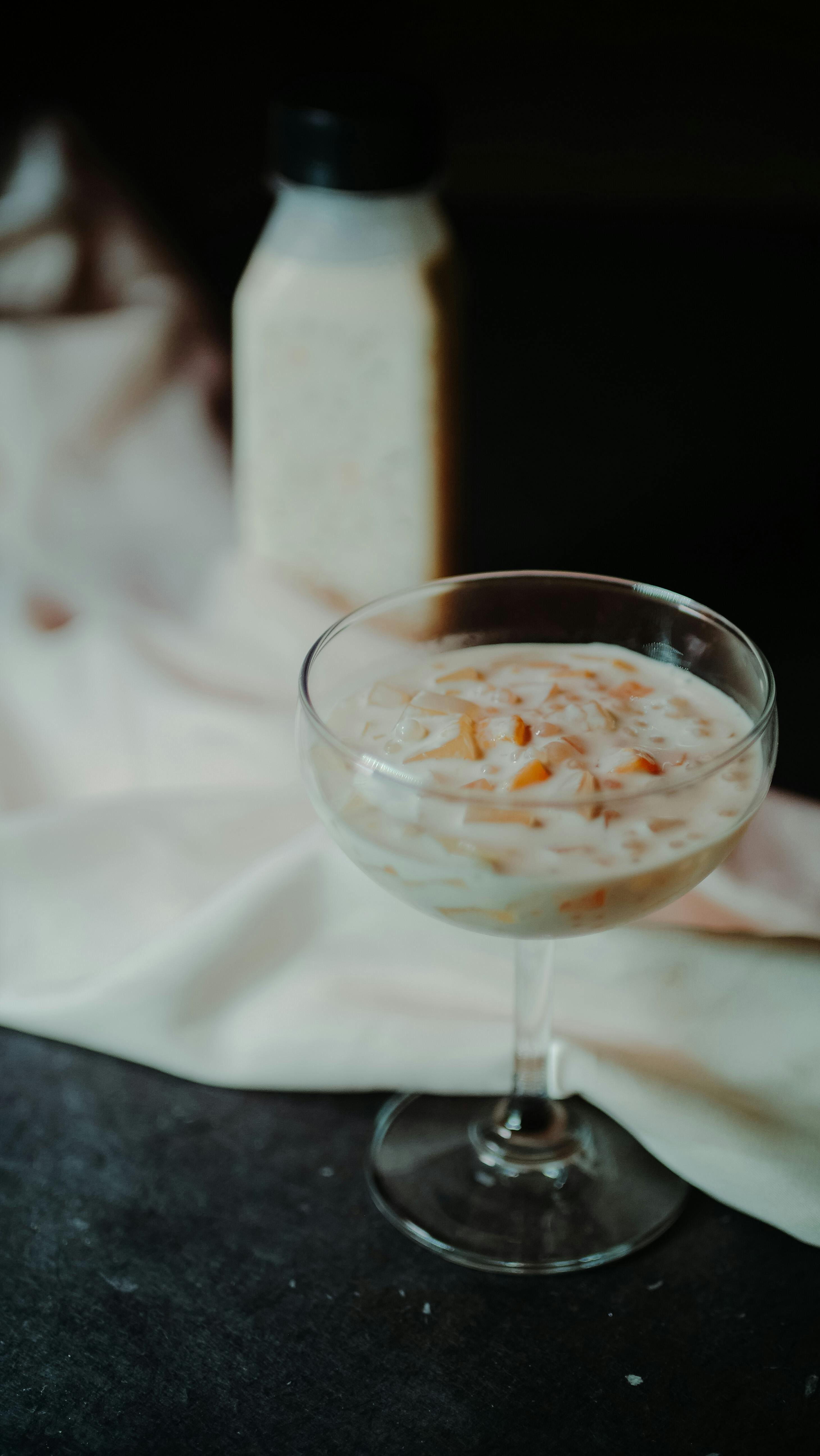
Photo: Carla Gutierrez / Pexels
The diets react (see scores below)
Common Ingredients
- banana
- coconut milk
- sugar
- tapioca pearls
- water
- salt
Specific recipes may vary.
Incompatible with 8 of 11 diets
Diet Ratings
Che Chuoi is fundamentally incompatible with a ketogenic diet. Every primary ingredient is a keto disqualifier: bananas are high in sugar and net carbs (roughly 20-25g net carbs per medium banana), tapioca pearls are nearly pure starch (extremely high glycemic, ~25-30g net carbs per small serving), and added sugar compounds the carbohydrate load further. Even the coconut milk, which would otherwise be keto-friendly due to its fat content, cannot redeem this dish. A single serving likely delivers 60-100g of net carbs, which would completely shatter daily ketogenic limits and guarantee an exit from ketosis. There is no realistic portion size that makes this dish compatible with keto.
Che Chuoi is a Vietnamese banana coconut pudding made entirely from whole or minimally processed plant ingredients. Bananas, coconut milk, sugar, tapioca pearls, water, and salt are all plant-derived with no animal products or animal-derived additives present. The dish is naturally dairy-free and egg-free, using coconut milk as its creamy base. Tapioca pearls are derived from cassava root, a plant starch. The ingredients are largely whole foods or simple plant-based derivatives, making this a strong vegan-compliant dish with good nutritional value from fruit and plant fats.
Che Chuoi contains multiple non-paleo ingredients that disqualify it from approval. Tapioca pearls, while derived from cassava (a tuber), are a heavily processed starch product inconsistent with paleo philosophy. Refined sugar is explicitly excluded from the paleo diet. Added salt is also discouraged. Coconut milk is paleo-friendly, and bananas are approved fruits, but the problematic ingredients — refined sugar, processed tapioca pearls, and added salt — make this dish clearly incompatible with paleo guidelines. The dish is essentially a sweetened, processed dessert that contradicts the core principles of unprocessed, ancestral eating.
Che Chuoi is a Vietnamese banana coconut milk pudding that presents a mixed picture from a Mediterranean diet perspective. Bananas and tapioca pearls provide carbohydrates, and bananas themselves are a whole fruit. However, the dish contains added sugar, coconut milk (a saturated fat source not aligned with olive oil as the primary fat), and refined tapioca starch — none of which are core Mediterranean diet components. It is not highly processed in an industrial sense, and the banana offers fiber and nutrients, but the combination of added sugar and coconut milk fat pushes this into caution territory rather than approval. It could be acceptable as an occasional treat, but is not a staple.
Some modern Mediterranean diet interpretations are more permissive about occasional fruit-based desserts with minimal processing, and the banana's nutritional value plus the absence of refined flour or artificial ingredients could lead some practitioners to view this more favorably than a candy bar or baked good. Traditional Mediterranean sweets also often include nuts, honey, and fruit in desserts, suggesting sweet fruit-based dishes are not categorically excluded.
Che Chuoi is a Vietnamese banana pudding dessert made entirely from plant-derived and processed ingredients. Banana is a fruit, coconut milk is a plant-based liquid, tapioca pearls are derived from cassava root, and sugar is a refined plant product. Not a single ingredient in this dish is animal-derived. This is completely incompatible with the carnivore diet at every level, including the most lenient interpretations. There is no version of this dish that could be modified to fit carnivore principles without replacing every ingredient.
Che Chuoi contains sugar, which is an explicitly excluded added sweetener on the Whole30 program. Regardless of the other ingredients (banana, coconut milk, tapioca pearls, water, and salt are either compliant or debatable on their own), the presence of added sugar makes this dish non-compliant. This is a clear-cut exclusion with no ambiguity.
Che Chuoi is a Vietnamese banana coconut pudding that presents significant FODMAP concerns, primarily from the banana and coconut milk components. Bananas are dose-dependent: unripe (green) bananas are low-FODMAP at 1 medium fruit due to resistant starch, but ripe bananas — which are standard in this sweet dessert — become high-FODMAP at portions larger than 1/3 of a medium banana due to excess fructose and fructans accumulating as the fruit ripens. In a dessert context, a standard serving will almost certainly contain more banana than the safe threshold. Coconut milk is also dose-dependent: Monash rates canned coconut milk as low-FODMAP at 1/2 cup (125ml), but many preparations of Che Chuoi use generous amounts of rich coconut milk, and portions can easily exceed the safe threshold. Sugar (sucrose), tapioca pearls, water, and salt are all low-FODMAP and pose no concern. The combination of ripe banana in a typical dessert portion and potentially high coconut milk volume makes this dish difficult to consume safely during the elimination phase.
Monash University does rate ripe banana as low-FODMAP at 1/3 medium banana and canned coconut milk as low-FODMAP at 1/2 cup, so a very carefully portioned serving of Che Chuoi could theoretically fall within safe limits. However, most clinical FODMAP practitioners would advise caution or avoidance during elimination because real-world serving sizes of this dessert almost inevitably exceed both thresholds simultaneously, and ripe bananas used in sweet desserts are more FODMAP-dense than the Monash minimum safe portion implies.
Che Chuoi is a Vietnamese banana coconut pudding that combines several DASH-problematic ingredients. While bananas are an excellent DASH food (rich in potassium and fiber), the dish is anchored by full-fat coconut milk, which is high in saturated fat from tropical oils — a category explicitly limited by DASH guidelines. Added sugar is another significant concern, as DASH restricts sweets and added sugars. Tapioca pearls are refined starch with minimal nutritional value. The combination of high saturated fat from coconut milk and added sugar makes this dessert/snack incompatible with regular DASH eating, even though the banana component is beneficial.
NIH DASH guidelines explicitly restrict tropical oils like coconut milk due to high saturated fat content. However, some updated DASH-oriented clinicians note that the medium-chain triglycerides (MCTs) in coconut milk may have a different metabolic profile than long-chain saturated fats, and that occasional small portions of this dessert — particularly if made with light coconut milk and reduced sugar — might be accommodated within a broader DASH framework as an infrequent treat.
Che Chuoi is a Vietnamese banana and coconut milk pudding that is fundamentally incompatible with Zone Diet principles. The dish combines three high-glycemic or Zone-unfavorable carbohydrate sources simultaneously: bananas (explicitly listed by Dr. Sears as an 'unfavorable' high-glycemic fruit to avoid), added sugar (a pure avoid in Zone methodology), and tapioca pearls (nearly pure starch with negligible fiber, extremely high glycemic index). The macronutrient profile is wildly unbalanced — almost entirely carbohydrate and fat with zero protein, making it impossible to construct a Zone-compliant meal without completely rebuilding the dish. The fat source (coconut milk) is high in saturated fat, which Sears historically discouraged in favor of monounsaturated fats. There are no lean protein components, no low-glycemic vegetables, and no monounsaturated fats. This dish represents a near-perfect storm of Zone unfavorable elements: high-GI carbs + added sugar + saturated fat + zero protein. Even with aggressive portion control, the absence of protein makes Zone balancing impossible for this dish as served.
Che Chuoi is a Vietnamese banana coconut pudding with a mixed anti-inflammatory profile. On the positive side, bananas provide potassium, vitamin B6, and resistant starch (especially when slightly underripe), which supports gut microbiome health — an important anti-inflammatory pathway. Coconut milk contains medium-chain triglycerides (MCTs) and lauric acid, and small amounts of beneficial minerals. Tapioca pearls are neutral — essentially pure starch with no significant pro- or anti-inflammatory properties. Salt in modest culinary amounts is not a concern. The main drawback is added sugar, which is a pro-inflammatory ingredient when consumed in excess. Traditional Che Chuoi recipes use a meaningful quantity of sugar, which can spike blood glucose and contribute to low-grade inflammation with regular consumption. Coconut milk is also relatively high in saturated fat, which is a point of debate in anti-inflammatory nutrition — some frameworks flag it, while others (particularly those emphasizing whole food sources) consider it acceptable in moderation. Overall, this dish is a lightly processed, whole-food-based dessert with some beneficial ingredients, but the added sugar and saturated fat from coconut milk prevent a strong approval. Suitable occasionally as part of an anti-inflammatory diet.
Some anti-inflammatory practitioners following stricter protocols (such as those aligned with AIP or blood sugar-focused frameworks) would rate this more negatively due to the combination of added sugar and high-glycemic tapioca starch, which can drive insulin spikes and inflammatory cascades. Conversely, whole-food-focused anti-inflammatory advocates (closer to Dr. Weil's approach) might view the coconut milk and banana as wholesome enough to rate this more favorably, especially compared to Western desserts with refined flour, trans fats, or artificial additives.
Che Chuoi is a Vietnamese banana coconut pudding that is fundamentally misaligned with GLP-1 dietary priorities. It contains no meaningful protein, is high in sugar (added sugar plus natural fruit sugar from banana), and is made with full-fat coconut milk which is high in saturated fat. The primary caloric contributors — coconut milk, sugar, and banana — are all either high in fat, high in sugar, or both, offering very low nutrient density per calorie. Tapioca pearls are a refined starch with essentially no fiber or protein. For a GLP-1 patient eating significantly reduced caloric volumes, this dish would consume a meaningful portion of daily calorie budget while contributing almost nothing toward protein (target 100-120g/day) or fiber (target 25-30g/day) goals. The high fat content from coconut milk also risks worsening GLP-1 side effects including nausea, bloating, and reflux. As a snack, it fails on every primary criterion: no protein, negligible fiber, high saturated fat, high sugar, and empty calories.
*See how scores were generated at our methodology page.
Nutritional profile
Six traits that cut across every diet.
Fiber & Plants
How much whole-plant food and fiber it delivers.
Healthy Fats
The quality of its fats (unsaturated, omega-3).
Whole / Unprocessed
How close it is to its natural, unprocessed form.
Gut Gentle
How easy it is on digestion (low FODMAP, few irritants).
Low Glycemic
How little it spikes your blood sugar.
Protein Density
How much protein it packs per calorie.
Controversy Index
Higher controversy = more disagreement between diets.
Diet-Specific Tips
 Vegan — 9/10
View tips
- Bananas are whole plant food — fully vegan
- Coconut milk is a plant-based dairy alternative — fully vegan
- Tapioca pearls derived from cassava (plant starch) — fully vegan
- Sugar is plant-derived; no bone char concerns identified in this context
- No animal products, dairy, eggs, or animal-derived additives in any ingredient
- Minimal processing overall — aligns with whole-food plant-based standards
 Mediterranean — 4/10
View tips
- Added sugar contradicts Mediterranean diet principles of minimal added sugars
- Coconut milk is high in saturated fat and is not a traditional Mediterranean fat source
- Banana is a whole fruit providing fiber and nutrients — a positive element
- Tapioca pearls are a refined starch with minimal nutritional value
- No olive oil, legumes, whole grains, or other Mediterranean staples present
- Acceptable as an occasional treat but not a regular dietary component
 Anti-Inflammatory — 5/10
View tips
- Added sugar is a primary pro-inflammatory concern and a significant component of this dish
- Bananas provide fiber, resistant starch, and antioxidants with modest anti-inflammatory benefit
- Coconut milk is high in saturated fat — debated in anti-inflammatory nutrition but accepted in moderation by many frameworks
- Tapioca pearls are nutritionally neutral — high-glycemic starch with no fiber or micronutrients
- No artificial additives, trans fats, refined grains, or omega-6-heavy oils — a relative positive
- Occasional consumption is acceptable; regular intake of added sugar is not aligned with anti-inflammatory principles